Pasta is often seen as a dish of pure indulgence, a heavy comfort food that sits on the “do not eat” list when we’re focusing on health and wellness. But it doesn’t have to be this way. Pasta is, at its core, a simple dish of wheat and water, a staple that can be easily transformed into a balanced and nutritious meal. It’s all about the how and the what you pair it with. The real magic isn’t just in the pasta itself; it’s in the sauce and the additions.
Take, for instance, this Rigatoni with Ricotta. Rigatoni, with its large, ridged tubes, is a fantastic pasta for hearty sauces. It’s built to capture rich, robust flavors. When you pair it with ricotta cheese, you’re creating something truly special. Ricotta is a unique ingredient in the world of cheese. It’s often misunderstood as high in fat, but in reality, ricotta is a “fresh” or “whey” cheese. It’s made from the whey left over from making other cheeses, which means it’s inherently lower in fat than aged cheeses like cheddar or parmesan. Better yet, it’s packed with high-quality, easily digestible protein, making it a powerful ally in building muscle and keeping you full for longer.
When you add a generous scoop of this creamy, sweet-tangy ricotta to rigatoni, you’re not just making pasta. You’re crafting a high-protein, satisfying meal that’s a direct contradiction to the idea that “healthy” food must be bland or boring. This dish is rich, velvety, and satisfying in a way that feels like a big hug, yet it’s composed of simple, whole ingredients that nourish your body.
But we’re not just aiming for “high protein.” This recipe is a canvas for nutritional power. We can transform it into a “high volume, low calorie” star. The secret? Vegetables. By loading the dish with mountains of fresh spinach, bell peppers, zucchini, and mushrooms, we create a massive portion that satisfies your appetite without the calorie overload. You can enjoy a large, steaming bowl of pasta, feel completely full, and still be within your health goals.
We can also adapt this for various dietary needs. For those who are keto or strictly low-carb, we could substitute the rigatoni for heartier roasted vegetables like zucchini “boats” or steamed cauliflower florets, filling them with the high-protein ricotta-parmesan mixture for a low-carb, high-fat feast. For gluten-free diners, the pasta aisle is full of fantastic options. Brown rice rigatoni or lentil-based rigatoni are not only gluten-free but also bring a major boost of fiber.
If you’re looking for a low-fat version, simply select a part-skim or low-fat ricotta. You’ll still get that incredible creamy texture without the additional fat grams. And let’s not forget our vegan friends. Achieving a dairy-free version of this dish is easy and delicious. There are incredible almond-based “ricottas” on the market that capture the texture and tang, or you can make your own simple tofu “ricotta” with a dash of nutritional yeast and lemon juice.
Today, we are going to focus on a stunning, “high-volume, high-fiber” version that makes standard rigatoni shine. This recipe uses hearty whole-wheat pasta for sustained energy and a massive, vibrant sauce of slow-roasted tomatoes and bell peppers that are blended with our creamy, protein-packed ricotta. This is pasta as it should be: satisfying, balanced, and a beautiful celebration of simple, wholesome ingredients.
Rigatoni with Roasted Pepper and Ricotta Cream
This dish is a testament to the power of simple ingredients. It’s a complete meal in a bowl, balancing the slow-release carbs of whole-wheat pasta, the high-quality protein of ricotta, and the incredible nutrient density of roasted vegetables. The sauce is a game-changer. Instead of just adding ricotta at the end, we roast peppers and tomatoes until they’re sweet and charred, then blend them with the ricotta to create a velvety, orange-hued cream that is naturally sweet, savory, and incredibly satisfying. The result is a high-volume dish that leaves you feeling full, happy, and energized.
The Nutritional Powerhouse in Your Pantry: A Look at the Ingredients
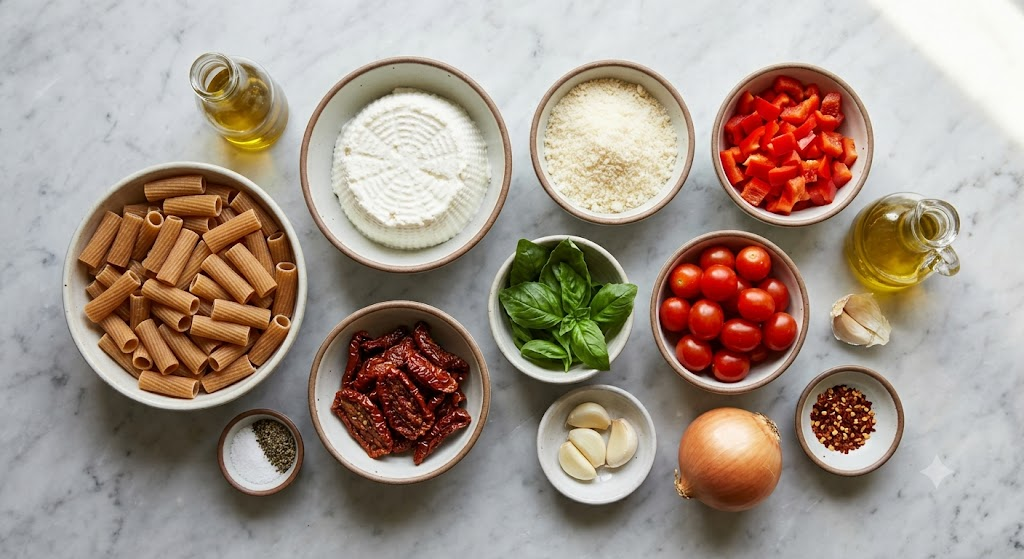
Before we dive into the method, let’s take a closer look at what we’re working with. This isn’t just a random list; each ingredient plays a specific, health-boosting role. This is where you see that healthy food is often more vibrant and more exciting than the alternative.
To start, you’ll need a sturdy, rustic surface for your ingredients flat lay. A light grey marble slab or a well-worn, light oak cutting board works perfectly. This is not about a sterile assembly line; it’s a visual catalog of freshness and potential.
Start by placing a large, rustic ceramic bowl on your chosen surface and fill it with your main ingredient: Rigatoni. For this healthy recipe, we strongly recommend whole-wheat rigatoni or, for a major fiber and protein boost, a chickpea or lentil-based pasta. Whole-wheat pasta provides complex carbohydrates that break down slowly, giving you sustained energy. Pulse-based pastas are an absolute nutritional powerhouse, offering almost as much protein as chicken per serving and a massive dose of fiber, all while being inherently gluten-free.
Nestled right next to the pasta should be another ceramic bowl, this one filled with beautiful, creamy ricotta cheese. Go for a high-quality, whole-milk ricotta if your dietary plan allows; the natural fats make it incredibly satisfying and rich. If you’re focusing on a lower-calorie, lower-fat option, part-skim ricotta works beautifully too. It will be slightly less rich but just as creamy. We’ll also use this as our primary protein source.
Adjacent to the ricotta, place a small, olive wood bowl holding finely grated Parmesan cheese. While ricotta brings creaminess and protein, Parmesan provides the salty, umami depth that makes this dish feel truly Italian. Don’t underestimate this small addition—a little goes a long way in terms of flavor.
The vegetable component is key to the high-volume nature of this dish. Arrange the vibrant red bell peppers—two large ones, seeded and roughly chopped—directly on the marble. Next to them, place the sweet cherry tomatoes, perhaps a small punnet’s worth. When these are roasted, they transform. Their high water content (low-calorie volume) concentrates, and their natural sugars caramelize, creating a sweet and smoky base for our sauce.
Add a large yellow onion and a few plump cloves of garlic to the layout. These aromatic staples are foundational, providing not just flavor but also incredible prebiotic fiber and immune-boosting properties.
We’ll need our healthy fats: a dark glass bottle of extra virgin olive oil and a small bowl of sun-dried tomatoes. The olive oil is essential for heart health and for helping our bodies absorb all the wonderful fat-soluble vitamins in the vegetables. The sun-dried tomatoes (use the kind packed in oil, just be sure to drain them) are little flavor bombs of concentrated savory goodness, adding complexity and chew.
For spice, a small pinch of red pepper flakes is essential. And for freshness, the dish must be crowned with fragrant, emerald-green fresh basil leaves. This is where you’ll get your final visual pop. Don’t forget basic salt and freshly ground black pepper.
This visual list isn’t just about aesthetic pleasure. It’s a reminder of all the wholesome, natural ingredients that are going into your body. This setup shows that you’re not “giving up” anything to be healthy; you’re simply choosing to eat better, more vibrant, and more satisfying food.
The Preparations: Setting Up for a Nutrient-Dense Feast
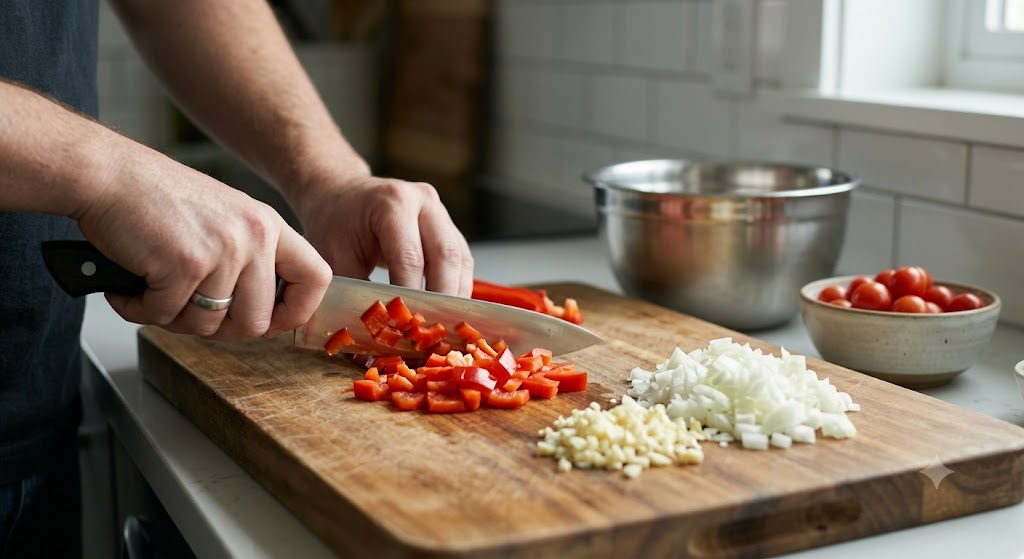
With your beautiful ingredients gathered, it’s time to move into the active prep phase. Cooking is an act of creation, and preparation is the essential first step. This is where we lay the foundation for all the flavor and texture that will define the final dish. The prep stage isn’t just about mechanics; it’s about respect for the ingredients and mindfulness in the kitchen.
Clear your workspace. The best place for this is a well-lit corner of a modern kitchen counter or, for a more rustic feel, a large, well-worn wooden cutting board. This stage focuses on the vegetables—the massive volume that will make this pasta dish both satisfying and low in calorie density.
Your main task here is to transform the red bell peppers and the aromatics. Take the large red bell peppers. Using a sharp chef’s knife, slice off the top and bottom, remove the core and seeds, and then cut them into rough, large chunks. These don’t need to be precise, as they’ll be roasted and then blended.
The onion is next. Peeling away the papery outer skin reveals the crisp, pale yellow layers. This is sliced from root to stem, then diced into neat, uniform pieces. This precision ensures that the onion cooks evenly, turning sweet and translucent rather than burning. The garlic cloves—which we’ll use generously—are smashed with the flat side of the knife to easily release their skins before being finely minced.
As you work, the raw ingredients should be neatly organized. The large pile of chopped, vibrant red peppers sits in one section of the cutting board. Adjacent to it are the neatly diced onions and the pile of minced garlic. A small glass bowl holds the colorful cherry tomatoes, while another contains the drained sun-dried tomatoes.
This is a key moment for setting up your mise en place. Measuring out your oil—perhaps that extra virgin olive oil you have on hand—and your seasonings will streamline the cooking process. Get your large roasting pan ready. Pre-heat your oven to a high temperature, like 400°F (200°C), which is crucial for achieving the depth of flavor that comes from roasting.
A final, beautiful touch of prep: take the fresh basil and use a chiffonade technique. Stack several leaves, roll them into a tight “cigar,” and then make fine, ribbon-like cuts across the roll. These emerald-green ribbons will bring a final burst of fresh, herbal sweetness to the dish. This meticulous preparation is what sets a great cook apart, and it’s a beautiful, mindful ritual before the cooking even begins.
The Cooking Process: Layering Flavors and Textures
The cooking process is a symphony of scent and texture, a transformation where raw ingredients are coaxed into their most flavorful forms. It’s a multi-stage process, and we’re going to highlight two critical moments: the high-heat roasting of the vegetables and the final, creamy assimilation of the sauce.
Step 1: The High-Heat Roast.
Our first goal is to unlock the deep, complex sweetness in the red peppers and cherry tomatoes. This happens through roasting. Preheat your oven to a blazing 400°F (200°C). This temperature isn’t random; it’s high enough to cause rapid evaporation and caramelization without immediately burning.
On a large, rimmed baking sheet (or a robust metal roasting pan), toss the large chunks of red bell peppers and the sweet cherry tomatoes with a generous tablespoon of extra virgin olive oil and a pinch of salt. Don’t be shy with the oil; it’s a healthy fat and essential for conveying heat. Spread them in a single, even layer. This is crucial—crowding the pan will cause them to steam, not roast, and you’ll miss out on that vital char.
Roast for 25–30 minutes. You’ll know they are ready when the cherry tomatoes have burst and collapsed, releasing their sweet juices, and the edges of the red peppers are soft, tender, and beautifully charred. These darkened edges are pure flavor. Set them aside to cool slightly.
Step 2: Building the Aromatic Foundation.
While the vegetables roast, get your largest pot of salted water boiling for the rigatoni. In a separate large, wide skillet or Dutch oven, heat another teaspoon of olive oil over medium heat. Add your precisely diced onion and cook, stirring frequently, until it is soft, translucent, and just beginning to turn a pale golden color (about 8–10 minutes). Add the minced garlic and red pepper flakes and cook for one minute more, just until fragrant. Be careful not to burn the garlic.
Step 3: The Blend of Cream and Savor.
This is the magic moment. Transfer the entire contents of your roasting pan (the peppers, burst tomatoes, and all those glorious caramelized juices) into a blender. Add the creamy ricotta, the aromatic onion-garlic mixture, the sun-dried tomatoes, and about half of the Parmesan cheese. Blend on high until the sauce is completely smooth and velvety. The color will transform into a stunning, vibrant, creamy orange.
While the sauce blends, cook your rigatoni in the boiling salted water according to the package directions, but aim for al dente (slightly firm to the bite). This is essential for a great pasta dish. Crucially, before draining the pasta, ladle out at least one full cup of the starchy, cloudy pasta cooking water. This is your liquid gold.
Step 4: The Assimilation.
Drain the pasta and immediately return it to the large, empty pot. Pour the stunning, creamy, blended roasted pepper-ricotta sauce directly over the hot rigatoni. Add about half of the reserved pasta water. Place the pot back over low heat and gently toss everything together for 1–2 minutes.
This is where magic happens. The heat activates the starch in the pasta water, helping the velvety sauce cling to the ridges of the rigatoni. As you toss, the sauce will thicken and become glossier. If it seems too thick, simply add a splash more pasta water. The texture should be fluid and rich, not sticky.
The Midway Point: A Moment of Transformation
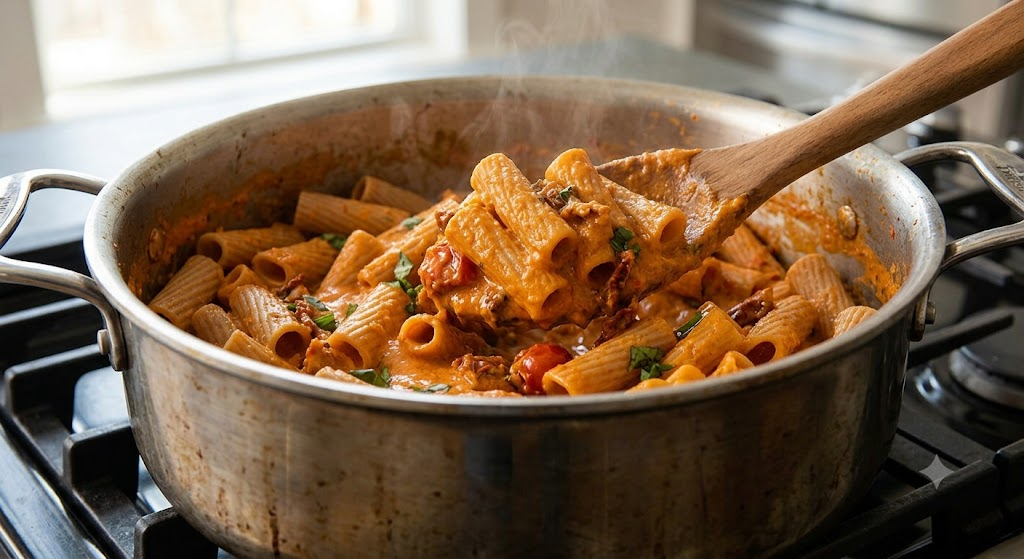
We’ve seen the ingredients, we’ve prepared them, and we’ve initiated the cooking process. Now, let’s take a look at a crucial midway point—a visualization of the change that is actively occurring in our Dutch oven. This is the moment where the separate elements have been combined, but they are still in the process of becoming a unified dish.
A close-up view of the interior of our wide, well-used stainless steel Dutch oven reveals a landscape of flavor and texture. The pot is brimming with the mixture. We see the large, ridged, whole-wheat rigatoni—a healthy, fiber-rich alternative to refined pasta. They are no longer dry and pale; they have absorbed some of the moisture and are beginning to take on a beautiful, warm, orange-amber color.
The sauce, which was just minutes ago in the blender, is a thick, velvety cream that heavily coats the pasta. It’s a rich, deep orange hue, signaling the sweetness of the roasted peppers and the creaminess of the ricotta. Specks of charred, blistered red pepper skin are visible throughout, highlighting that essential high-heat roast that defines the flavor profile.
But look closer. This is a point of transformation. We see how the sauce is starting to settle into the hollows and cling to the ridges of the rigatoni, proving its function. The individual components—the minced garlic, the caramelized onion, and the intense sun-dried tomatoes—are nestled in the creamy landscape. Steam rises gently, suggesting that the pot is being kept over low heat to encourage this beautiful, starchy embrace.
A large wooden spoon is actively engaged, lifting a hearty scoop of the pasta. The texture of the spoon itself is worn and rustic, grounding the high-tech modern stainless steel of the pot. The sauce clings to the spoon and drips slowly, emphasizing its thick, velvety consistency. This is a crucial visual cue: the sauce must be rich, not runny.
This image is a reminder that cooking is not just an endpoint; it’s a process. This midway point is where you adjust, ensure the sauce is clinging, and make sure that high-volume, veggie-packed goodness is fully integrated with your healthy, fiber-rich pasta choice. It’s a moment of great promise, and it looks absolutely incredible.
The Grand Finale: A Masterpiece of Healthy Comfort
The journey is complete. We’ve sourced our beautiful, whole-food ingredients, precisely prepared them, and guided them through a multi-stage cooking process that optimized flavor and nutrition at every step. We’ve roasted our vegetables at high heat to concentrate their sweetness, blended them with protein-packed ricotta, and used starchy pasta water to create a creamy sauce that defies the need for heavy cream. Now, it’s time to reveal the masterpiece.
This final image—the close-up—is an editorial celebration of the dish. This isn’t just food to be eaten; it’s a visual feast designed to inspire.
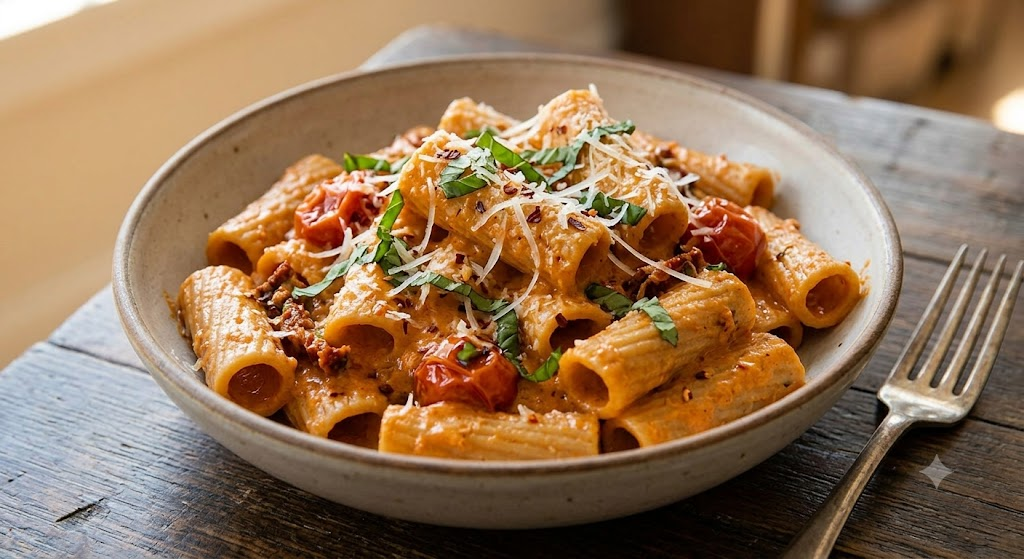
We return to our rustic setting, but now the focus is sharp and intimate. A generous serving of the finished Rigatoni with Roasted Pepper and Ricotta Cream rests in a stunning, wide ceramic bowl. The bowl has a warm, cream-colored glaze and a tactile, raw, unglazed rim, sitting on a dark, weathered wood table—the perfect contrast of textures.
The depth of field is incredibly shallow, blurring the background into a warm, inviting glow. This technique puts the spotlight exactly where it belongs: on the intricate details of the food. Every tube of the whole-wheat rigatoni is visibly coated in the thick, velvety, orange sauce. The sauce, as promised, is rich and clings beautifully, filling the hollow centers.
We see the results of our careful preparation. Tiny, concentrated specks of the caramelized red pepper skins and pieces of the savory sun-dried tomatoes are clearly visible, adding textural contrast and visual proof of flavor complexity. The creamy white ricotta is fully integrated but still suggests its presença, providing a satisfying, protein-rich density.
The crowning glory is the fresh garnish. A generous dusting of finely grated Parmesan cheese clings to the pasta, catching the light and suggesting a final savory kick. The finely ribboned (chiffonade) fresh basil we prepared in Image 3 provides a brilliant, vibrant pop of emerald green, a fresh herbal note that balances the richness of the sauce. A final crack of coarse black pepper is visible, hinting at the subtle, earthy heat.
The lighting is soft and natural, coming from a large side window (the same source that warmed our ingredients flat lay), creating gentle, warm highlights and inviting, soft shadows. It makes the dish feel honest, wholesome, and profoundly comforting. A tarnished silver antique fork is resting to the side, ready to dive in.
This close-up isn’t just about hunger; it’s about signaling quality and intention. This image shows that a “healthy” meal can be incredibly beautiful, deeply satisfying, and a true culinary achievement. This is high-volume, high-fiber, and high-protein comfort food, elevated to art.