
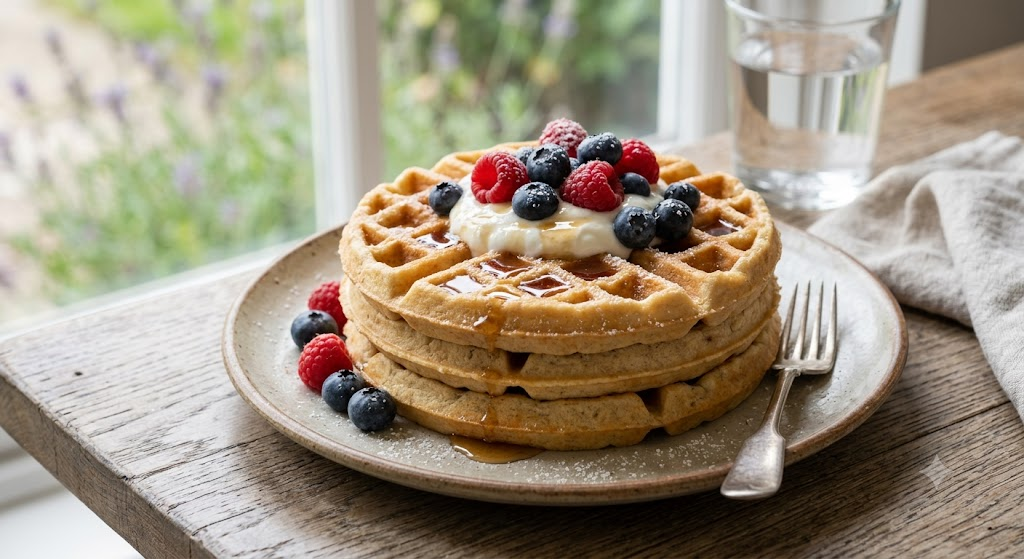
Welcome to The Healthy Plate Lab! We are thrilled to share this recipe, which embodies our entire philosophy of transforming classic, comforting dishes into optimized nutritional powerhouses without sacrificing texture or flavor. If you struggle to meet your daily protein goals or find yourself reaching for sugar-laden options in the morning, these Fluffy Protein Waffles are the game-changer you’ve been searching for. We’ve moved beyond the dry, dense protein snacks of the past, focusing on advanced ingredient combinations to deliver a gourmet waffle experience that fuels your body with clean energy and supports your fitness and wellness objectives.
The Story & Nutritional Philosophy
The inspiration for these waffles came from the common frustration of trying to balance satiety, flavor, and a high-protein diet. Traditional waffles are a comforting staple, but they are typically composed of refined flours and sugars, leading to rapid insulin spikes and subsequent energy crashes by mid-morning. We set out to change this paradigm. We believe that breakfast must be strategic. It should provide sustained fuel and, crucially, initiate muscle protein synthesis after a night of fasting.
Our philosophy is rooted in scientific optimization. We’re not simply dumping protein powder into a standard batter. That often results in a rubbery texture that compromises the enjoyment of the food. At The Healthy Plate Lab, we employ an “optimized macronutrient matrix.” We combine a carefully selected high-quality protein blend with complex carbohydrates and healthy fats. This approach slows digestion, ensuring a steady release of glucose into the bloodstream and providing a prolonged feeling of fullness.
Protein is the cornerstone. By utilizing a mix of whey and casein (or a high-quality plant-based equivalent), we achieve a superior texture. The specific brand we use is formulated for baking, ensuring it integrates smoothly without grittiness. But protein isn’t enough. We incorporate complex fibers, like oat flour, to provide essential carbohydrates for energy and digestion. Healthy fats from eggs and, in some variations, a touch of avocado oil, are included not only for nutritional balance but to coat the gluten strands, keeping the waffle tender. The result is a waffle that has a crispy exterior, a light and airy interior, and a nutritional profile that outperforms many dedicated protein bars, delivering over 25 grams of protein per serving with minimal sugar.
Ingredients & Nutritional Benefits
The success of this recipe lies in the intentionality behind every ingredient. We don’t include fillers; every component is selected to maximize health benefits and culinary performance. The base is constructed from an optimized flour and protein blend, designed to absorb moisture correctly and structure the waffle while providing a comprehensive amino acid profile. We emphasize whole, real-food sources where possible, which is why we include functional add-ins like cottage cheese (a secret weapon for moisture and protein) or mashed banana (for sweetness and potassium).
We encourage quality: organic eggs from pasture-raised chickens for superior omega-3 content and real, unsweetened almond or cashew milk. The sweetener is minimal and strategic, often using Stevia or Monk Fruit to keep the glycemic impact negligible. This combination ensures that the waffles provide sustained energy and satiety.
Here is a closer look at the elements that make this dish a true nutritional powerhouse:
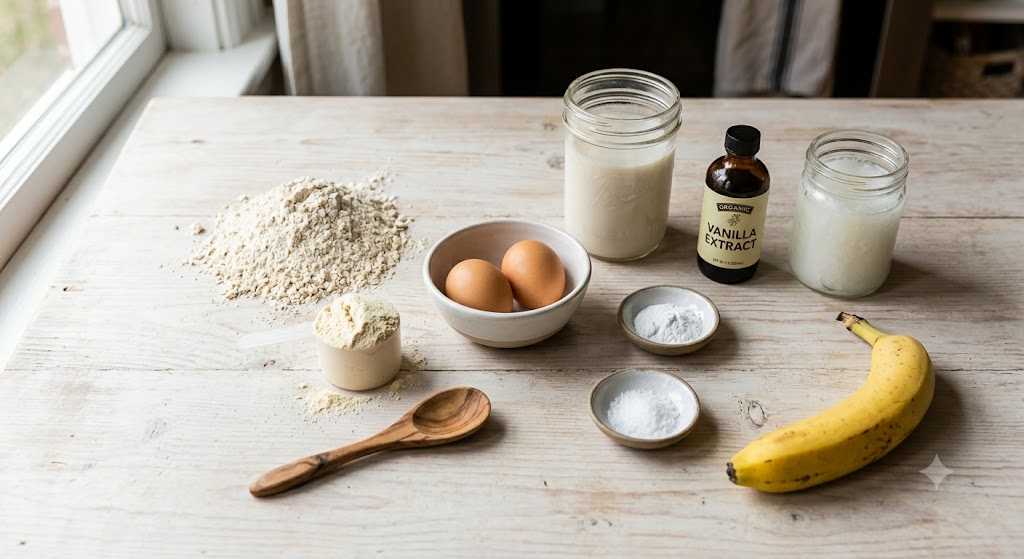
- The Protein Blend (1 scoop, ~30g): The core of the recipe. A mix of whey and casein is ideal for texture, but we tested high-quality vegan blends (pea/rice) with great success. This provides the essential amino acids necessary for muscle repair and satiety.
- Oat Flour (1/2 cup): A complex carbohydrate that adds fiber and structure. It releases energy slowly, preventing spikes in blood sugar. Chef’s Tip: You can easily make your own by blending rolled oats in a high-speed blender until fine.
- Eggs (2 large, organic): Essential for binding the batter and providing healthy fats and additional high-quality protein. The yolks also contain choline, important for brain health.
- Unsweetened Almond or Cashew Milk (1/2 cup): Used to achieve the correct batter consistency while keeping calories and sugar low. You can substitute any milk of your choice.
- Cottage Cheese or Mashed Banana (1/4 cup): The ‘secret’ moisture element. Cottage cheese (blended into the wet ingredients) boosts protein further and keeps the waffle incredibly tender. Banana adds natural sweetness and potassium.
- Baking Powder (1 tsp): The leavening agent that creates the airy, fluffy texture by releasing carbon dioxide bubbles during cooking.
- A Pinch of Sea Salt & Vanilla Extract (1 tsp): Flavor enhancers that create depth and complexity.
- Optional: Sweetener (e.g., Monk Fruit/Stevia to taste): We find the protein powder often provides enough sweetness, but a teaspoon can be added if desired.
Chef’s Prep Secrets & Tips
Before you plug in your waffle iron, success is often determined by the preparation. The phrase “mise en place” (everything in its place) is critical here. This isn’t just about organizing ingredients; it’s about timing and temperature. When making protein waffles, ensure your wet ingredients—eggs, milk, and especially cottage cheese if using—are at room temperature. Cold ingredients won’t emulsify smoothly, which can lead to clumps in your batter and a dense waffle.
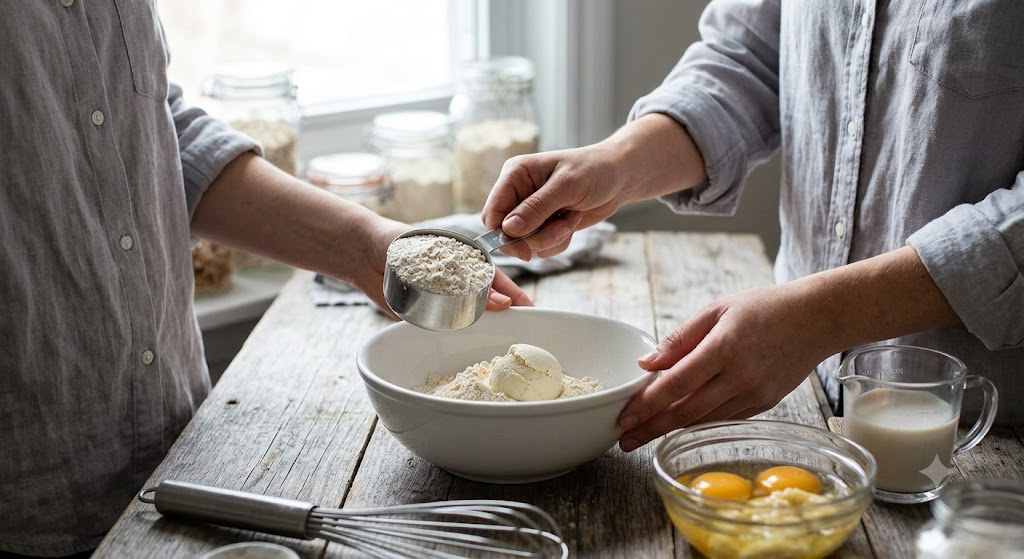
The biggest secret to fluffiness lies in handling the leavening agents correctly. Once the baking powder activates, you are on a clock. You want to mix the batter thoroughly but quickly and get it onto the iron before the air bubbles escape. We like to whisk the dry ingredients separately first to ensure the protein powder and baking powder are perfectly distributed within the oat flour. This prevents any concentrated pockets of leavening, ensuring an even rise.
Pro-Tip: If your kitchen is particularly warm or you are making a large batch, mix the wet and dry ingredients just before you are ready to cook. If the activated batter sits for too long (over 15-20 minutes), you will lose the ‘lift’ that makes these waffles so special. For maximum crispiness, preheat your oven to 200°F (95°C) and place a wire rack inside. As waffles finish cooking, transfer them directly to the rack. This allows air to circulate, preventing steaming and keeping them crisp until you are ready to serve.
Step-by-Step Culinary Method
Preparing these waffles is a streamlined process, but success is found in respecting the timing of the leavening. We will detail the sensory cues you should look for at each stage, ensuring a consistent, gourmet result.
1. Activate the Iron & Prep the Dry Blend: Start by preheating your waffle iron. Sensory Cue: A faint click or the illumination of an indicator light on your iron signals it’s ready. In a large bowl, whisk together the oat flour, your chosen protein powder, baking powder, and sea salt. Sensory Cue: Whisk until the mixture is uniform in color and texture—ensure no lumps of protein powder remain, as these will become dry pockets in the finished waffle.
2. Optimize the Wet Ingredients: In a separate medium bowl, we combine the wet components. Whisk the two large eggs vigorously until they are pale and slightly foamy. If you are using cottage cheese (which we highly recommend!), blend it first with the almond milk and vanilla extract until completely smooth in a small blender. This is crucial for a homogeneous texture. Add this smooth mixture to the whisked eggs. If using mashed banana, mash it extremely well before incorporating it with the wet ingredients.
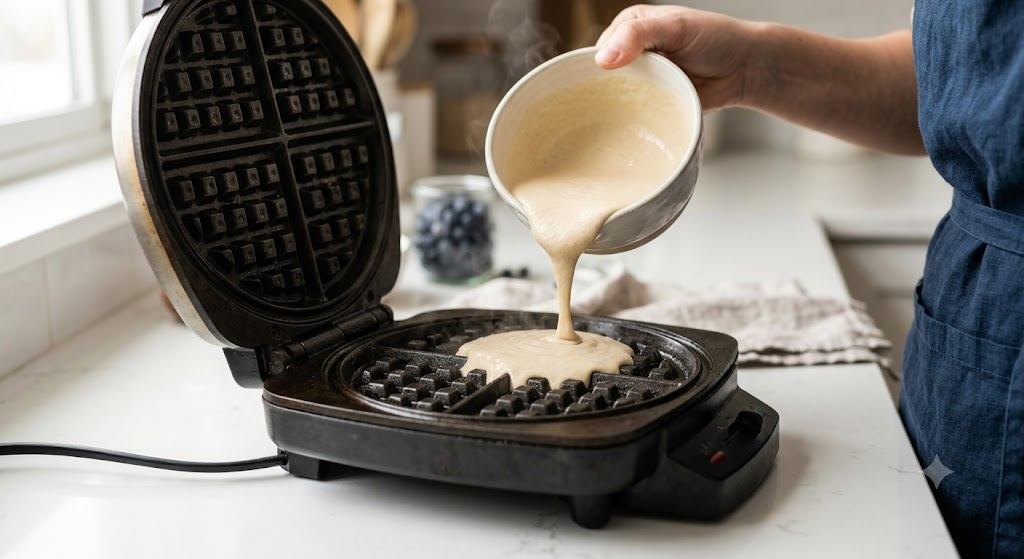
3. Execute the Sizzle: Now, we combine the elements. Pour the wet mixture into the large bowl containing the dry flour and protein blend. Using a spatula or a large spoon, gently fold the ingredients together. Sensory Cue: Be mindful not to overmix! Stop as soon as the dry flour is just moistened. The batter will be thick, slightly lumpy, and perhaps have a few small bubbles forming—this is the baking powder activating. This thick consistency is correct.
Generously coat the heated waffle iron grids with avocado oil spray or coconut oil. Using a ladle or a measuring cup, pour the batter onto the center of the preheated grids. Sensory Cue: You should hear an immediate and satisfying sizzle as the batter makes contact with the hot iron. This is the moisture flashing into steam, which initiates the rise. Close the lid promptly to trap the heat. The indicator light may go out.
4. Monitor the Texture Shift: The most common mistake when baking protein-based items is opening the iron too early. Sensory Cue: Watch the steam escaping from the sides of the iron. At first, it will be heavy and rapid. As the moisture cooks out and the interior structures set, the steam will decrease significantly. Resist all temptation to peek for at least 3-4 minutes.
When the steam slows significantly and the waffle iron indicates it is ready (the light may illuminate again), gently unlatch the lid. If you feel resistance, the waffle isn’t set; close it immediately and give it another 30–60 seconds.

5. Extract and Crisp:Sensory Cue: When cooked, the waffle should be a beautiful golden-brown on both the top and bottom. Using a fork or silicone-tipped tongs, carefully lift the finished waffle from the grids. We recommend immediately placing it onto a cooling rack rather than a plate to allow air circulation. If you are making a larger batch, this is the moment to transfer the finished waffles to the preheated oven (200°F) to maintain warmth and crispiness while you repeat the process.
Plating & Final Presentation
Your Protein Waffle journey is complete, and now it’s time to honor your creation. We often skip standard sugary syrups in favor of toppings that enhance the macronutrient profile. Start by stacking two or three of your golden, golden-brown waffles on a rustic ceramic plate. We recommend adding a generous dollop of zero-percent plain Greek yogurt, which mimics a creamy glaze while adding an extra 10–15 grams of protein. For sweetness and crucial micronutrients, we rely on a vibrant medley of fresh organic blueberries and raspberries. Chef’s Tip: For a warm fruit compote, gently heat the berries in a small saucepan with a splash of water until they just begin to burst.
To finish, add textures that delight: a spoonful of warm almond or peanut butter (healthy fats), a few crushed walnuts (Omega-3s), and maybe a dusting of powdered monk fruit for that classic aesthetic without the sugar. This isn’t just a high-protein breakfast; it’s a beautiful, sensory-rich experience that leaves you completely satisfied and fueled for hours.

Frequently Asked Questions
A core part of The Healthy Plate Lab mission is education. We don’t just want you to follow a recipe; we want you to understand the why. Based on dozens of kitchen tests, here are the answers to the most common questions about optimizing protein waffles.
Can I use any protein powder? Not all protein powders behave equally in heat. For baking, we strongly recommend a blend of whey and casein. Whey protein alone can sometimes turn dry or spongy, while casein is exceptionally absorbing, helping to create a tender crumb. Many dedicated plant-based baking blends work very well. However, we do not recommend using pure collagen peptides as the primary protein source here, as they do not provide the necessary structure and will result in a flat, gummy waffle.
Can I make these vegan or gluten-free? Absolutely. We designed this recipe specifically to accommodate functional swaps. To make it vegan, replace the two eggs with two flax eggs (1 tablespoon ground flaxseed meal mixed with 3 tablespoons water, set aside for 5 minutes). Use a plant-based baking protein (pea and rice blends are excellent) and your preferred non-dairy milk. Ensure your mashed banana or alternative is robust for binding.
For gluten-free waffles, the oat flour we use is naturally gluten-free. Just verify that your oat flour is certified gluten-free to avoid cross-contamination if you have celiac disease. The structure remains identical.
How should I store and reheat leftovers? These waffles are excellent for meal prep! Allow them to cool completely on a wire rack first. Store them in an airtight container or a freezer-safe bag in the refrigerator for up to 4 days or in the freezer for up to 3 months. When ready to serve, reheat them in a toaster or a toaster oven on a low setting. This will revive the exterior crispness without drying out the interior.
Why are my waffles dense and not fluffy? Density usually stems from one of three factors: overmixing, expired leavening, or cold ingredients. Review the “Chef’s Prep Secrets” section! Ensure your baking powder is fresh, that you use room-temperature ingredients (especially the cottage cheese blend), and that you stop mixing as soon as the dry ingredients are just incorporated. If your protein powder is very casein-heavy, you may also need to increase the milk slightly to achieve the correct thick-but-pourable consistency.
Final Nutrition Facts Table
These waffles are optimized to deliver sustained energy and high protein with a controlled caloric density. The nutrition data below is calculated using standard whey-casein baking powder, oat flour, eggs, unsweetened almond milk, and cottage cheese, excluding additional toppings.
| Nutrient | Per Serving (2 Waffles) |
| Calories | 315 |
| Total Fat | 11g |
| Saturated Fat | 3g |
| Cholesterol | 195mg |
| Sodium | 340mg |
| Total Carbohydrates | 29g |
| Dietary Fiber | 5g |
| Sugars (Natural) | 4g |
| Protein | 26g |