
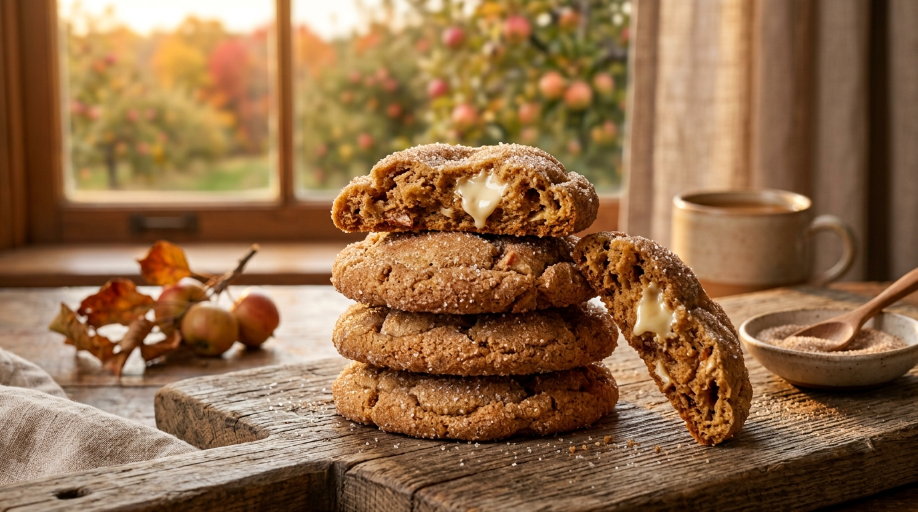
Soft, warmly spiced cookies made with concentrated apple cider and white chocolate.
A Cozy Fall Cookie With Real Apple Flavor
Apple Cider Cookies capture the cozy flavor of a fall apple orchard in a soft, chewy cookie. The key is reducing real apple cider before it goes into the dough, which concentrates its apple flavor without adding excess liquid. Warm cinnamon and nutmeg support the cider, while white chocolate chips add creamy sweetness and a little contrast. A light cinnamon-sugar coating gives the cookies a delicate crisp edge while the centers stay tender. This is an approachable small-batch-style cookie recipe that works for autumn gatherings, lunchboxes, bake sales, or an afternoon treat with coffee or tea. The dough does need chilling, so plan ahead rather than trying to bake it immediately after mixing. Using a cookie scoop also helps keep the portions consistent, which means the cookies bake more evenly and the nutrition estimate is easier to interpret.
Why You’ll Love This Recipe
- Real apple cider: Reduced cider gives the cookies a concentrated apple flavor without making the dough watery.
- Soft centers: Brown sugar and a short bake help create a tender, chewy middle.
- Warm spice: Cinnamon and nutmeg make the apple flavor taste distinctly autumnal.
- Creamy chips: White chocolate chips add sweetness and a smooth contrast to the spiced dough.
- Cinnamon-sugar finish: A light coating adds texture and a familiar snickerdoodle-style touch.
- Consistent portions: A standard cookie scoop makes evenly sized cookies that bake at the same rate.
- Easy to share: The recipe yields 18 cookies, making it useful for gatherings or dessert trays.
Time Breakdown & Servings
Prep Time: 30 minutes
Cook Time: 10–12 minutes per batch
Total Time: about 1 hour 45 minutes
Servings: 18 cookies
Ingredients You’ll Need
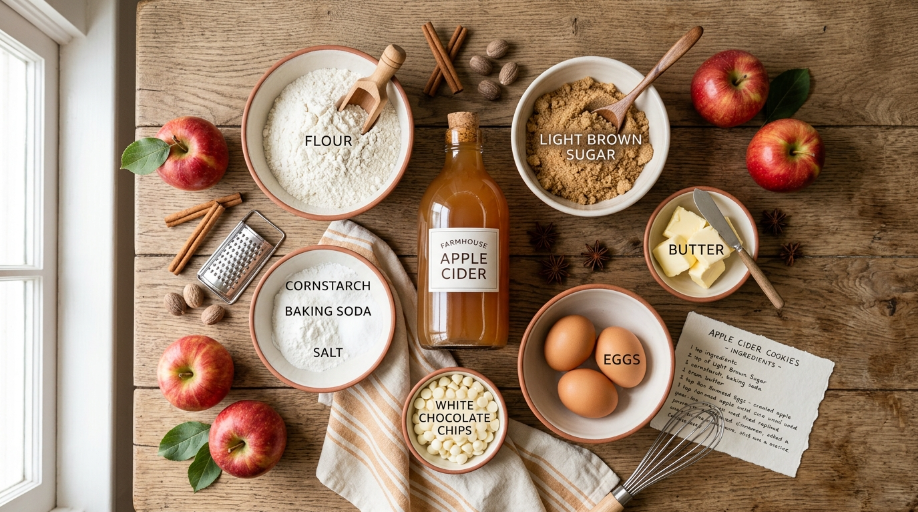
- 180 g apple cider
- 115 g unsalted butter, softened
- 100 g light brown sugar, packed
- 50 g granulated sugar
- 1 large egg
- 1 teaspoon pure vanilla extract
- 210 g all-purpose flour
- 1/2 teaspoon baking soda
- 1/2 teaspoon fine salt
- 1 teaspoon ground cinnamon
- 1/4 teaspoon ground nutmeg
- 120 g white chocolate chips
- 25 g granulated sugar, for coating
- 1 teaspoon ground cinnamon, for coating
Ingredient Notes & Practical Substitutions
- Apple cider: Use fresh, unsweetened apple cider rather than apple juice when possible. The cider is reduced before mixing, so do not skip that step.
- Butter: Use softened butter, not melted butter. Soft butter creams with the sugar and helps produce the intended cookie structure.
- White chocolate chips: Good-quality chips or chopped white chocolate both work. If you prefer less sweetness, use 100 g instead of 120 g.
- All-purpose flour: Weigh the flour for the most reliable texture. Adding too much can make these cookies dry and cakey.
- Spices: Fresh cinnamon and recently opened nutmeg have a stronger aroma. You can use apple-pie spice instead, but keep the total spice amount similar.
Kitchen Tools You’ll Need
A kitchen scale and cookie scoop are especially useful for consistent dough portions.
- Small saucepan
- Measuring cup or heatproof bowl
- Large mixing bowl
- Electric hand mixer or stand mixer
- Rubber spatula
- Cookie scoop
- Two baking sheets
- Parchment paper
- Wire cooling rack
Step-by-Step Instructions
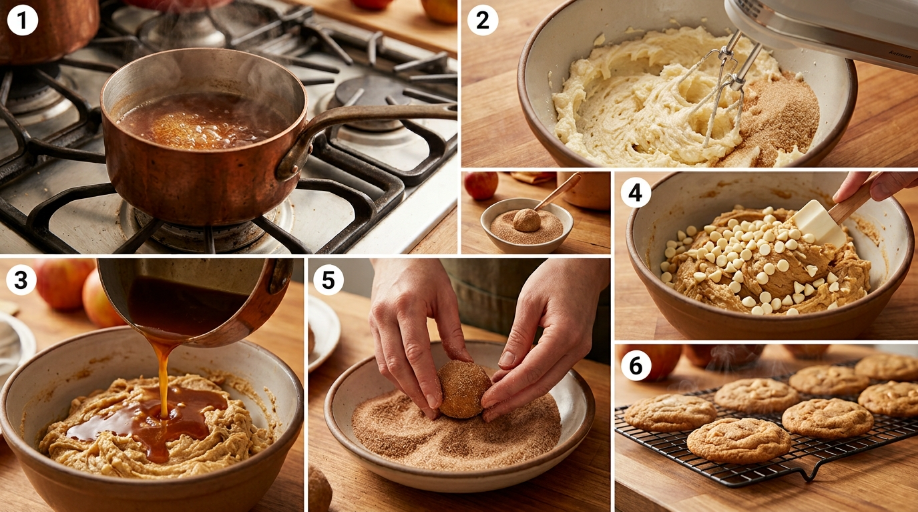
- Reduce the cider: Pour 180 g apple cider into a small saucepan. Bring it to a gentle simmer over medium heat and cook for about 10–15 minutes, until reduced to 60 g. Transfer the reduction to a heatproof bowl or measuring cup and cool completely before using.
- Prepare the baking sheets: Heat the oven to 175°C (350°F). Line two baking sheets with parchment paper. Keeping the sheets ready before the dough is mixed makes portioning quicker.
- Cream the butter and sugars: Beat 115 g softened butter, 100 g packed brown sugar, and 50 g granulated sugar for 2–3 minutes, until lighter and creamy. Scrape down the bowl so the mixture is evenly combined.
- Add the wet ingredients: Beat in 1 large egg and 1 teaspoon vanilla. Add the completely cooled 60 g cider reduction and mix just until incorporated. The mixture may look slightly loose at this stage.
- Combine the dry ingredients: In a separate bowl, whisk 210 g flour, 1/2 teaspoon baking soda, 1/2 teaspoon salt, 1 teaspoon cinnamon, and 1/4 teaspoon nutmeg. Add the dry mixture to the wet mixture and stir with a spatula just until no dry flour remains.
- Add the chocolate: Fold in 120 g white chocolate chips, distributing them evenly without overworking the dough.
- Chill the dough: Cover the bowl and refrigerate for 45–60 minutes. The dough should become firm enough to scoop without spreading immediately on the baking sheet.
- Shape and coat: Mix 25 g granulated sugar with 1 teaspoon cinnamon in a shallow bowl. Scoop the chilled dough into 18 portions, about 40 g each, roll into balls, and coat lightly in the cinnamon sugar. Arrange them on the prepared sheets with about 5 cm between cookies.
- Bake and cool: Bake at 175°C (350°F) for 10–12 minutes, one sheet at a time, until the edges are set and lightly golden while the centers still look slightly soft. Cool on the baking sheet for 5 minutes, then transfer to a wire rack to cool completely.
Expert Tips for Best Results
- Reduce the cider fully: The finished reduction should weigh about 60 g. Too much liquid can make the dough spread.
- Cool the reduction: Hot cider can soften the butter mixture and interfere with the intended dough texture.
- Chill generously: If your kitchen is warm or the dough still feels soft after 45 minutes, chill it longer before scooping.
- Do not overbake: The centers should look a little soft when the cookies leave the oven; they continue setting on the tray.
- Use the same scoop: Consistent dough portions help every cookie finish at roughly the same time.
Common Mistakes To Avoid
- Skipping the cider reduction: Using the full 180 g cider would add too much liquid and weaken the dough.
- Using melted butter: Melted butter changes the creaming process and can make the cookies spread more.
- Adding flour by packed cups: Extra flour can make the finished cookies dry. Weigh it when possible.
- Skipping the chill: Warm dough is more likely to spread before the edges have time to set.
- Overbaking: Waiting for deeply browned centers will produce a firmer cookie than intended.
Recipe Variations
- Apple-pie spice: Replace the cinnamon and nutmeg with 1 1/4 teaspoons apple-pie spice.
- Pecan apple cider cookies: Fold in 60 g finely chopped toasted pecans with the white chocolate chips.
- Dark chocolate version: Replace the white chocolate with 100 g chopped dark chocolate for a stronger chocolate contrast.
- Gluten-free: Use a certified gluten-free 1:1 all-purpose baking flour blend by weight.
- Glaze finish: Skip the cinnamon-sugar coating and drizzle cooled cookies with a thin powdered-sugar-and-cider glaze.
What to Serve With This Dish
- Plain Greek yogurt: Its tangy flavor and protein balance the sweetness of the cookie.
- Fresh apple slices: Crisp apple reinforces the cider flavor without making the dessert heavier.
- Unsweetened black tea: A warm cup of tea complements cinnamon and nutmeg.
- Coffee: Coffee provides a pleasantly bitter contrast to white chocolate.
- Warm apple cider: For a full autumn pairing, serve a small cup alongside the cookies.
Storage & Reheating Guide
Store: Keep cooled cookies in an airtight container at room temperature for up to 4 days.
Reheating: Warm one cookie for 5–8 seconds in the microwave if you want a softer texture; do not overheat the white chocolate.
Estimated Nutrition Information
| Calories | Protein | Carbs | Fat | Fiber | Sugar |
| 216 kcal | 2.4 g | 29.0 g | 10.2 g | 0.7 g | 18.1 g |
Nutrition disclaimer: Nutrition values are estimates calculated from the listed ingredient quantities using standard reference values. Actual values vary by brands, product formulations, and portion size.
Frequently Asked Questions
- Can I use apple juice instead of cider?
Yes, but cider generally has a fuller apple flavor. If using juice, choose an unsweetened variety and reduce it to the same 60 g weight.
- Why did my cookies spread too much?
The dough may have been too warm, the cider may not have been reduced enough, or the butter may have been too soft. Chill the dough until firm before baking.
- Can I freeze the dough?
Yes. Portion the chilled dough into balls and freeze them on a tray, then transfer them to an airtight freezer container. Bake from frozen, adding a few minutes to the baking time.
- Can I leave out the white chocolate?
Yes. The cookies will be less sweet and slightly less rich, but the apple-cider flavor will still come through.
- How do I keep them soft?
Cool them completely, then store them in an airtight container. Avoid leaving them uncovered because the edges will dry out.
Conclusion
Apple Cider Cookies are a simple way to turn a seasonal drink into a bake-shop-style cookie. Reducing the cider is the step that makes the biggest difference, concentrating the apple flavor while keeping the dough balanced. Keep the dough chilled, watch the centers closely, and let the cookies finish setting on the baking sheet. Save this Apple Cider Cookies recipe on Pinterest so you can return to it throughout apple season.