
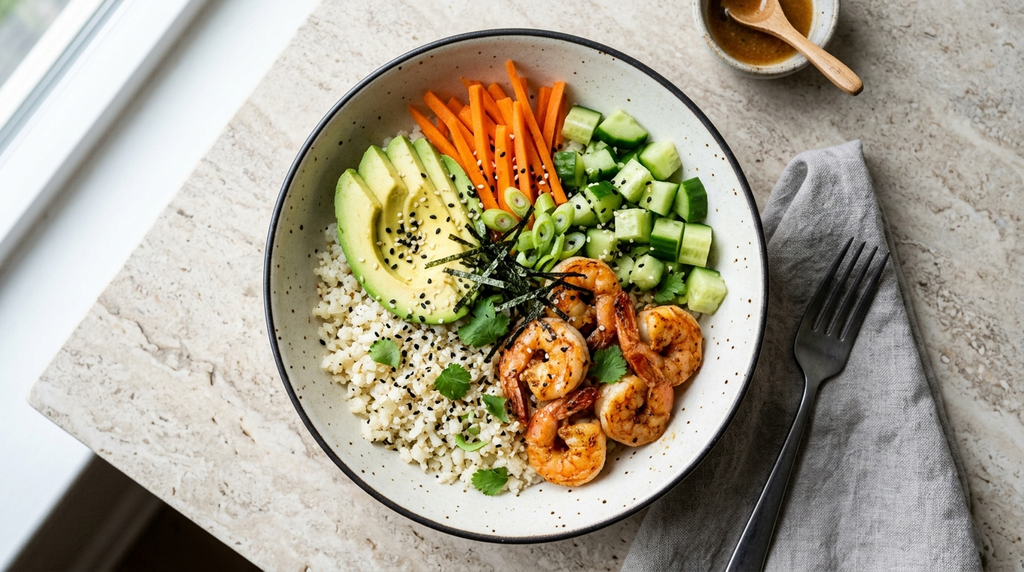
All the flavor of a sushi-inspired shrimp bowl with a lighter, vegetable-packed cauliflower rice base.
A Fresh, Protein-Packed Sushi-Inspired Bowl
This Shrimp Cauliflower Rice Bowl brings together tender, seasoned shrimp, fluffy cauliflower rice, crisp vegetables, creamy avocado, and a flavorful spicy sauce for a satisfying meal that feels fresh without being complicated. It takes inspiration from shrimp sushi bowls, poke bowls, and Japanese-style rice bowls while using cauliflower rice as the base.
The shrimp cook quickly, making this a practical option for lunch or dinner when you want something flavorful without spending a long time in the kitchen. A combination of soy sauce, rice vinegar, sesame oil, garlic, and sriracha gives the shrimp a savory, slightly spicy finish, while cucumber, carrots, avocado, and green onion add contrasting textures.
Whether you are looking for a shrimp sushi bowl, a cauliflower rice sushi bowl, or a simple Japanese-inspired shrimp meal, this recipe gives you plenty of flavor and texture in one balanced bowl.
Why You’ll Love This Recipe
- High in protein: Shrimp provide a substantial amount of lean protein while keeping the meal relatively light.
- Vegetable-packed: Cauliflower rice, cucumber, carrots, avocado, and green onion add color, texture, and a variety of nutrients.
- Sushi-inspired flavor: Soy sauce, rice vinegar, sesame oil, ginger, and sriracha create the familiar savory, tangy, and spicy flavors associated with sushi-style bowls.
- Quick to prepare: Shrimp cook in just a few minutes, making this much faster than preparing traditional sushi.
- Customizable: You can easily adjust the vegetables, spice level, toppings, and sauce according to your preferences.
- No sushi-making required: Everything is assembled in a bowl, so there is no rolling, slicing, or special sushi equipment involved.
- Great texture contrast: Warm cauliflower rice and shrimp pair with cool cucumber, creamy avocado, crunchy carrots, and sesame seeds.
Time Breakdown & Servings
Prep Time: 15 minutes
Cook Time: 15 minutes
Total Time: 30 minutes
Servings: 4
Ingredients You’ll Need
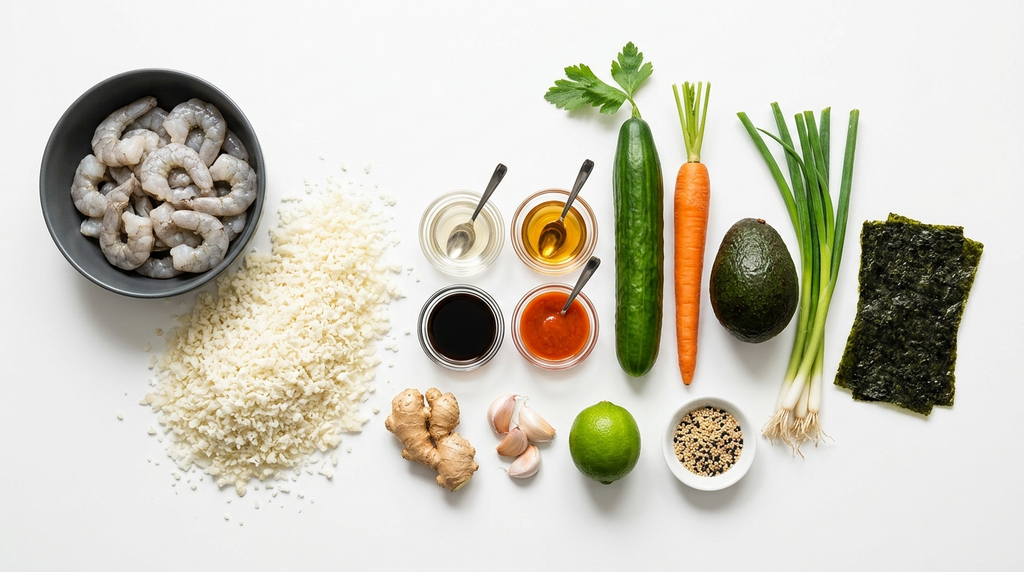
- 600g raw shrimp, peeled and deveined
- 600g cauliflower rice, fresh or frozen
- 15ml olive oil, divided
- 30ml low-sodium soy sauce
- 15ml rice vinegar
- 10ml toasted sesame oil
- 15ml sriracha
- 2 garlic cloves, finely minced
- 10g fresh ginger, finely grated
- 150g cucumber, diced
- 100g carrot, julienned or grated
- 150g avocado, diced
- 40g green onions, thinly sliced
- 10g sesame seeds
- 15g nori sheets, cut into thin strips
- 15ml fresh lime juice
- 1/4 tsp salt
- 1/4 tsp black pepper
Ingredient Notes & Practical Substitutions
- Shrimp: Medium or large raw shrimp work well. If using frozen shrimp, thaw them completely and pat them very dry before cooking so they sear rather than steam.
- Cauliflower rice: Fresh cauliflower rice gives a slightly firmer texture, while frozen cauliflower rice is convenient. If using frozen, cook it uncovered so excess moisture can evaporate.
- Soy sauce: Low-sodium soy sauce provides the savory flavor without making the bowl excessively salty. Tamari can be used as an alternative.
- Sriracha: Adjust the amount according to your preferred spice level. For a milder bowl, reduce it or replace part of it with a little extra rice vinegar.
- Nori: Nori adds a distinctly sushi-inspired flavor. If you do not have it, the bowl will still work without it, although the seaweed flavor will be less pronounced.
Kitchen Tools You’ll Need
A few basic kitchen tools are all you need to prepare and assemble these bowls.
- Large nonstick skillet
- Medium skillet or saucepan
- Mixing bowl
- Cutting board
- Sharp knife
- Grater or microplane
- Measuring spoons
- Wooden spoon or spatula
- Four serving bowls
Step-by-Step Instructions
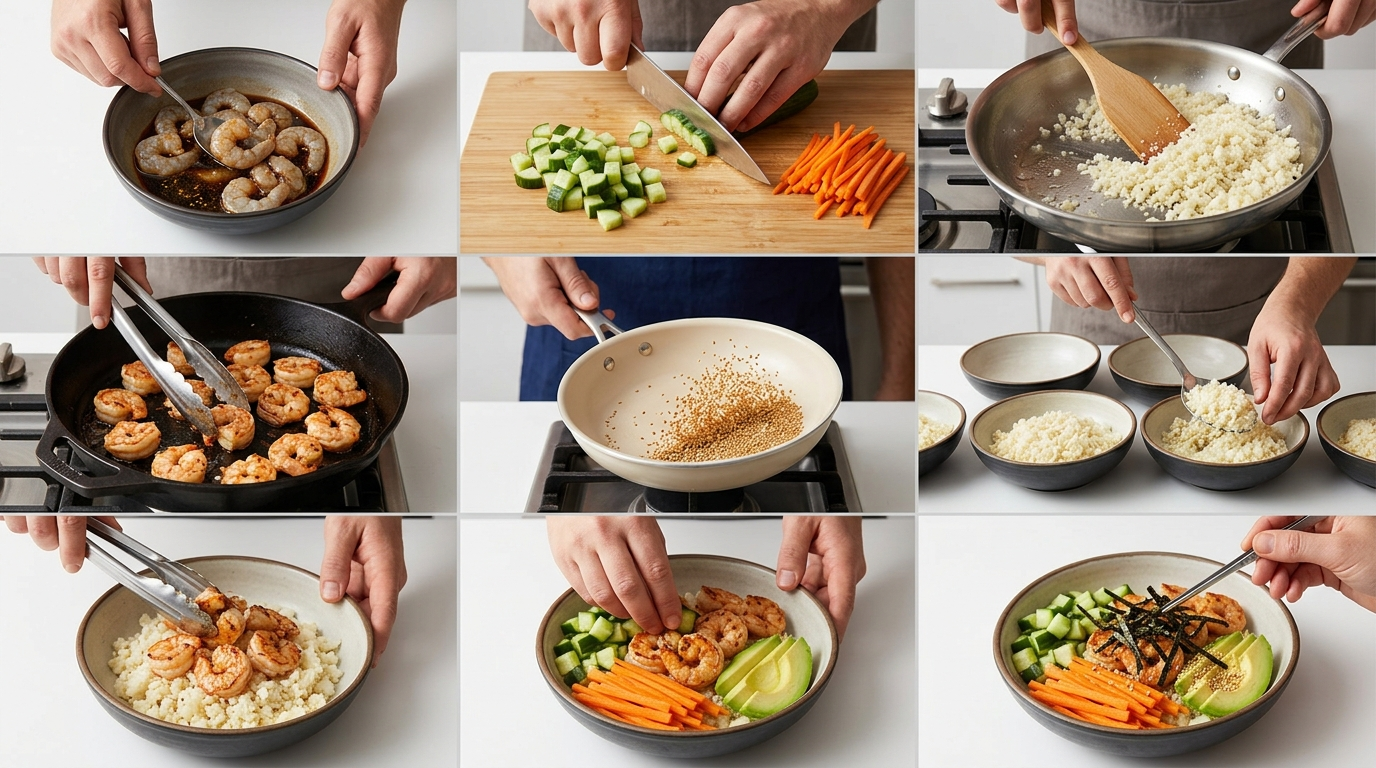
- Prepare the shrimp marinade: In a medium bowl, combine 15ml soy sauce, 15ml rice vinegar, 10ml toasted sesame oil, 15ml sriracha, the 2 minced garlic cloves, and 10g grated ginger. Stir until evenly combined.
- Season the shrimp: Add the 600g peeled and deveined shrimp to the marinade and toss until every shrimp is coated. Let them stand for about 5 minutes while you prepare the remaining ingredients. Avoid leaving raw shrimp in the acidic marinade for an extended period because the texture can become affected.
- Prepare the vegetables: Dice the 150g cucumber, julienne or grate the 100g carrot, dice the 150g avocado, and thinly slice the 40g green onions. Set the vegetables aside separately so they are ready for assembly.
- Cook the cauliflower rice: Heat 5ml olive oil in a large skillet over medium-high heat. Add the 600g cauliflower rice and 1/4 tsp salt. Cook for approximately 5–7 minutes, stirring occasionally, until the cauliflower is tender but not mushy and excess moisture has evaporated. Remove from the heat and stir in 15ml fresh lime juice.
- Cook the shrimp: Heat the remaining 10ml olive oil in a large nonstick skillet over medium-high heat. Arrange the marinated shrimp in a single layer. Cook for approximately 2–3 minutes on the first side, then turn and cook for another 1–2 minutes. The shrimp should become opaque and firm and reach a safe internal temperature of 63°C.
- Check the texture: Avoid overcooking the shrimp. Properly cooked shrimp should be opaque throughout and gently curled rather than tightly coiled. Remove them from the skillet as soon as they are cooked.
- Prepare the toppings: If your sesame seeds are not already toasted, place them in a dry skillet over medium-low heat for 2–3 minutes, stirring frequently, until lightly golden and fragrant. Remove them immediately so they do not continue cooking in the hot pan.
- Build the cauliflower rice base: Divide the cooked cauliflower rice evenly among four bowls. Spread it across the bottom of each bowl to create an even base.
- Add the shrimp: Divide the cooked shrimp among the bowls, placing them over one section of the cauliflower rice.
- Arrange the vegetables: Add the cucumber, carrot, avocado, and green onions around the shrimp. Keeping the ingredients in separate sections creates the classic composed appearance of a sushi-inspired bowl.
- Finish with toppings: Sprinkle the sesame seeds and sliced nori evenly over the bowls. Add a small drizzle of extra sriracha if you prefer more heat.
- Serve immediately: Serve the bowls while the shrimp and cauliflower rice are warm, with the fresh vegetables and avocado providing a cool contrast.
Expert Tips for Best Results
- Dry the shrimp thoroughly: Excess water prevents proper browning. Pat thawed shrimp dry with paper towels before adding them to the marinade.
- Do not overcrowd the skillet: Cook the shrimp in a single layer. If your skillet is small, work in batches rather than allowing the shrimp to steam.
- Keep cauliflower rice relatively dry: Excess moisture is the main reason cauliflower rice becomes watery. Cook it uncovered and give it enough time for steam to escape.
- Cut vegetables consistently: Similar-sized pieces make each bite more balanced and give the finished bowl a cleaner appearance.
- Add avocado last: Avocado can brown and soften quickly. Cutting it shortly before serving keeps it fresher and creamier.
Common Mistakes To Avoid
- Overcooking the shrimp: Shrimp cook quickly. Leaving them in the skillet too long can make them tough and rubbery.
- Using wet cauliflower rice: Excess moisture creates a soggy base. Allow the cauliflower rice to cook uncovered until it is tender and relatively dry.
- Making the sauce too salty: Soy sauce already contributes significant salt, so additional salt should be kept minimal.
- Adding avocado too early: Preparing the avocado long before serving can lead to discoloration and a less appealing texture.
- Overloading the bowl with sauce: Too much sauce can overwhelm the delicate shrimp and vegetables. Start with a moderate amount and add more at the table if needed.
Recipe Variations
- Spicy Sriracha Shrimp Bowl: Increase the sriracha in the shrimp marinade and add a small amount to the finished bowls for a stronger spicy kick.
- Shrimp Poke-Style Bowl: Add edamame, shredded cabbage, or mango alongside the existing vegetables for a more traditional poke-bowl-inspired combination.
- Creamy Spicy Shrimp Bowl: Mix a little sriracha with plain Greek yogurt and use it as a creamy drizzle over the finished bowls.
- Traditional Rice Version: Replace the cauliflower rice with cooked sushi rice or short-grain rice if you prefer the texture and flavor of a conventional sushi rice bowl.
- Extra Vegetable Bowl: Add shredded purple cabbage, radishes, bell peppers, or steamed edamame for additional variety and crunch.
What to Serve With This Dish
- Edamame: Steamed edamame makes a simple protein-rich side that complements the Japanese-inspired flavors.
- Miso soup: A light bowl of miso soup works well when you want to turn the meal into a more complete Japanese-inspired dinner.
- Seaweed salad: A small serving of seaweed salad adds another layer of savory, fresh flavor.
- Fresh fruit: Pineapple, mango, or orange segments provide a naturally sweet contrast to the spicy shrimp.
- Cucumber salad: A simple rice-vinegar cucumber salad keeps the meal fresh and crunchy without making it heavy.
Storage & Reheating Guide
Store: Refrigerate cooked shrimp and cauliflower rice in airtight containers for up to 3 days; keep avocado and fresh vegetables separate when possible.
Reheating: Reheat the shrimp and cauliflower rice gently in the microwave or skillet until hot, then add the chilled vegetables and avocado after reheating.
Estimated Nutrition Information
| Nutrition | Per Serving |
|---|---|
| Calories | 360 kcal |
| Protein | 38 g |
| Carbs | 22 g |
| Fat | 15 g |
| Fiber | 8 g |
| Sugar | 7 g |
Nutrition information is estimated using standard ingredient databases and may vary depending on the specific brands, varieties, preparation methods, and portion sizes used.
Frequently Asked Questions
- Can I use frozen shrimp for this recipe?
Yes. Thaw the shrimp completely, drain them well, and pat them dry before marinating. This helps them brown properly instead of releasing excess water into the skillet. - Can I use frozen cauliflower rice?
Absolutely. Frozen cauliflower rice is convenient and works well. Cook it uncovered until the excess moisture has evaporated and the rice is tender but not watery. - Is this the same as a traditional sushi bowl?
It is a sushi-inspired bowl rather than traditional sushi. It uses familiar ingredients and flavors such as shrimp, nori, sesame, soy sauce, rice vinegar, and vegetables, but everything is served over cauliflower rice. - How can I make the shrimp less spicy?
Reduce the sriracha in the marinade or leave it out and serve a small amount separately. The soy, ginger, garlic, and sesame flavors will still give the shrimp plenty of flavor. - Can I replace the cauliflower rice with regular rice?
Yes. Cooked sushi rice, short-grain white rice, brown rice, or another preferred grain can replace the cauliflower rice. The resulting bowl will have a more traditional rice-bowl texture.
Conclusion
This Shrimp Cauliflower Rice Bowl is an easy way to enjoy the fresh flavors of a shrimp sushi bowl without the work of making actual sushi. Tender sriracha-seasoned shrimp, fluffy cauliflower rice, crisp vegetables, creamy avocado, nori, and sesame come together for a colorful meal with plenty of flavor and texture. It is also easy to customize, so you can make it as mild, spicy, vegetable-packed, or traditional as you like. Save this recipe to Pinterest so you can come back to it whenever you want a fresh sushi-inspired meal.