
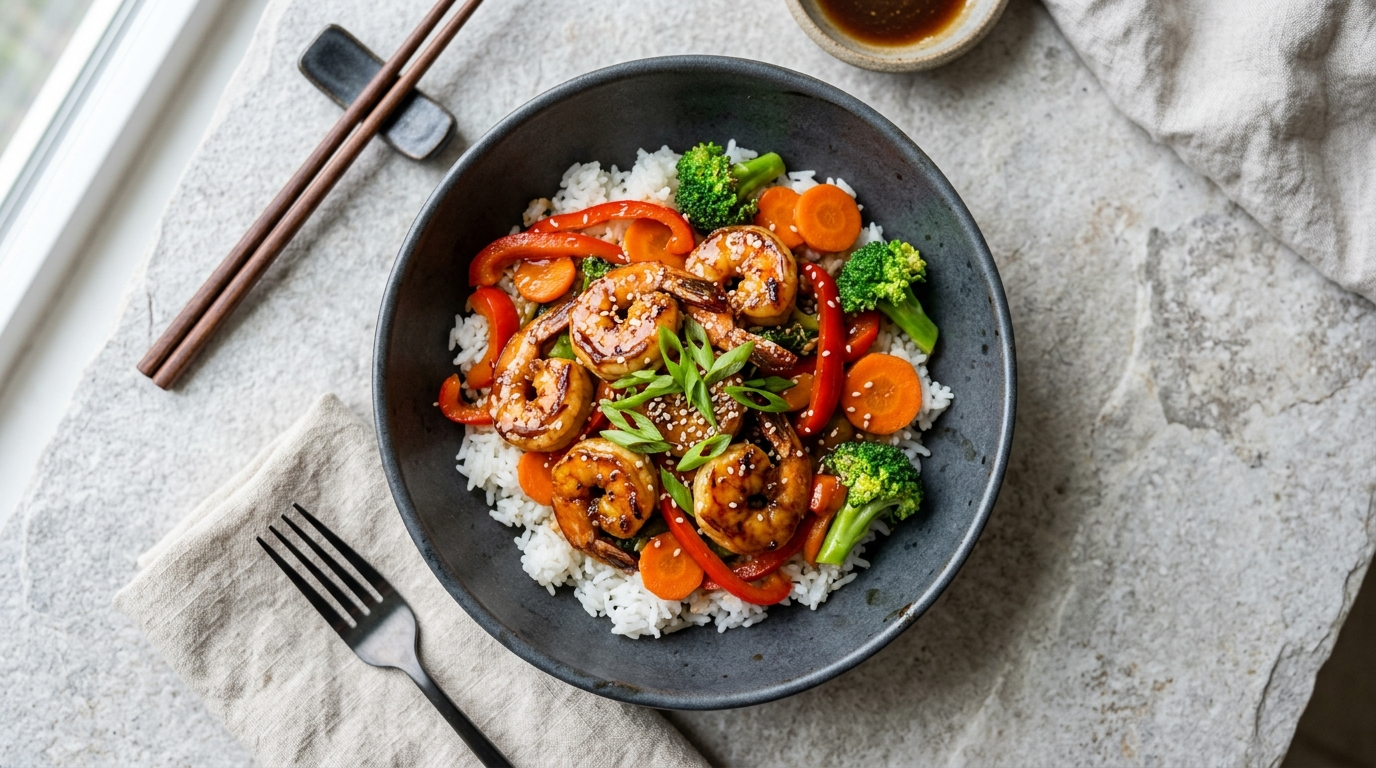
Juicy shrimp, crisp vegetables, and a glossy homemade teriyaki sauce come together in this easy, protein-rich dinner.
A Light, Flavor-Packed Shrimp Dinner
This Shrimp Teriyaki Bowl is a simple way to turn everyday shrimp and vegetables into a flavorful dinner without relying on a heavy sauce. The shrimp cook quickly, while broccoli, carrots, and bell pepper provide color, crunch, and plenty of texture.
The homemade teriyaki-style sauce combines low-sodium soy sauce, ginger, garlic, and a touch of honey for a balanced savory-sweet flavor. Instead of using a thick, sugary bottled sauce, this version keeps the sauce portion controlled while still giving the shrimp that glossy finish you expect from a teriyaki bowl.
It is naturally dairy-free and works well as a light dinner or meal-prep option. You can serve it on its own for a vegetable-forward bowl or add rice when you want a more substantial meal. Frozen shrimp work particularly well here, making this a practical recipe to keep on hand for busy days.
Why You’ll Love This Recipe
- Protein-rich: Shrimp provide a concentrated source of protein while keeping the meal relatively light.
- Quick cooking: Shrimp cook in just a few minutes, making this an efficient weeknight dinner.
- Dairy-free: There is no milk, cream, cheese, or butter in the recipe.
- Vegetable-packed: Broccoli, carrots, and bell pepper provide different colors, textures, and nutrients.
- Homemade sauce: The simple teriyaki-style sauce lets you control the sweetness and sodium.
- Frozen-shrimp friendly: Frozen shrimp can be used, making the recipe convenient when fresh seafood is not available.
- Easy to customize: Serve it over rice, cauliflower rice, or simply enjoy the shrimp and vegetables on their own.
Time Breakdown & Servings
Prep Time: 15 minutes
Cook Time: 12 minutes
Total Time: 27 minutes
Servings: 4
Ingredients You’ll Need
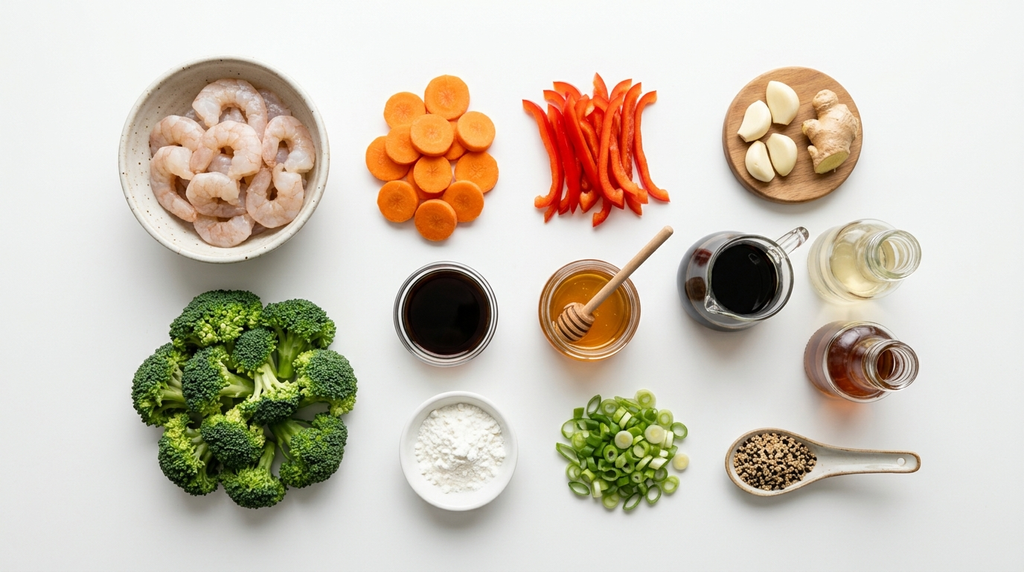
- 450 g peeled and deveined shrimp, fresh or frozen and fully thawed
- 2 cups broccoli florets, about 180 g
- 1 medium carrot, about 70 g, thinly sliced
- 1 medium red bell pepper, about 150 g, thinly sliced
- 2 teaspoons olive oil, divided
- 2 cloves garlic, finely minced
- 1 teaspoon fresh ginger, finely grated
- 3 tablespoons low-sodium soy sauce
- 1 tablespoon honey
- 1 tablespoon rice vinegar
- 1 teaspoon toasted sesame oil
- 1 teaspoon cornstarch
- 2 tablespoons cold water
- 2 green onions, thinly sliced
- 1 teaspoon sesame seeds
Ingredient Notes & Practical Substitutions
- Shrimp: Fresh or frozen peeled and deveined shrimp both work well. If using frozen shrimp, thaw them completely and pat them very dry before cooking to prevent excess water from entering the pan.
- Soy sauce: Low-sodium soy sauce keeps the sauce from becoming excessively salty. Coconut aminos can be substituted, although the flavor will be slightly sweeter and the nutritional values will change.
- Honey: Honey provides the small amount of sweetness needed to balance the salty and acidic ingredients. Maple syrup can be substituted in the same quantity.
- Cornstarch: Cornstarch thickens the sauce and gives it the glossy consistency associated with teriyaki. Arrowroot starch can be used instead.
- Vegetables: Broccoli, carrot, and bell pepper provide the intended combination of color and texture. Zucchini, snap peas, mushrooms, or cabbage can be substituted according to availability.
Kitchen Tools You’ll Need
A large skillet and a few basic prep tools are all you need for this dinner.
- Large skillet or frying pan
- Small bowl
- Chef’s knife
- Cutting board
- Measuring spoons
- Wooden spoon or spatula
Step-by-Step Instructions
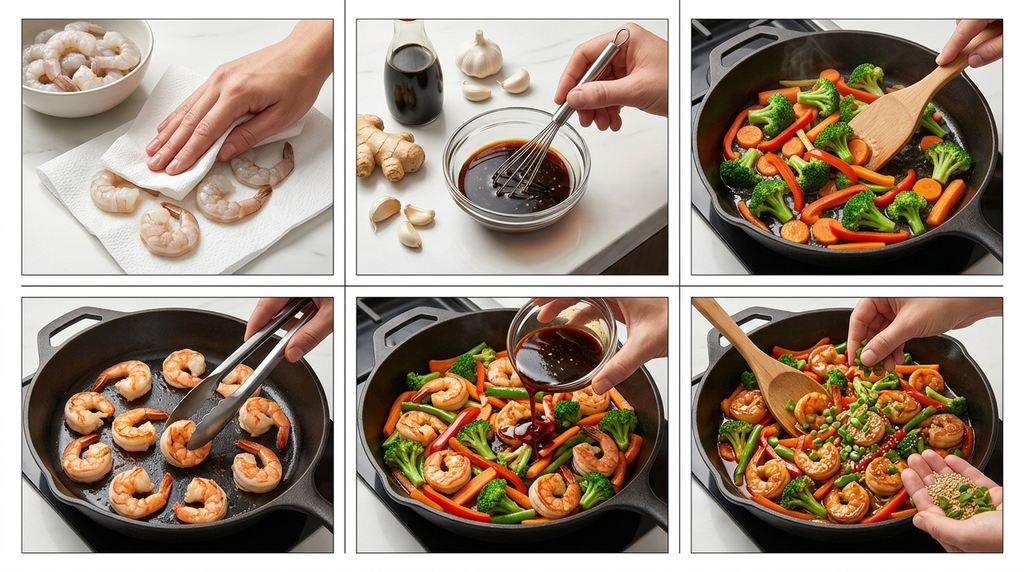
- Prepare the shrimp: If using frozen shrimp, thaw them completely according to the package directions. Pat the shrimp thoroughly dry with paper towels. This helps them sear instead of releasing excess water into the skillet.
- Mix the sauce: In a small bowl, whisk together 3 tablespoons low-sodium soy sauce, 1 tablespoon honey, 1 tablespoon rice vinegar, 1 teaspoon toasted sesame oil, 1 teaspoon cornstarch, and 2 tablespoons cold water. Whisk until the cornstarch is completely dissolved.
- Prepare the aromatics: Mince 2 garlic cloves and grate 1 teaspoon fresh ginger. Keep them ready before you start cooking because they will be added to the hot skillet quickly.
- Cook the vegetables: Heat 1 teaspoon olive oil in a large skillet over medium-high heat. Add 180 g broccoli, 70 g sliced carrot, and 150 g sliced red bell pepper. Cook for 5–6 minutes, stirring occasionally, until the vegetables are bright and tender-crisp. Transfer them to a plate. 🥦
- Cook the shrimp: Add the remaining 1 teaspoon olive oil to the same skillet. Add the dried shrimp and cook for about 1–2 minutes per side, depending on size, until they are opaque and cooked through. Do not overcrowd the pan; cook in batches if necessary.
- Add the aromatics and sauce: Reduce the heat to medium. Add the minced garlic and grated ginger and cook for about 30 seconds until fragrant. Pour in the prepared sauce and stir continuously as it comes to a gentle simmer. Cook for 1–2 minutes, until the sauce thickens and coats the shrimp. 🍤
- Finish the bowl: Return the cooked vegetables to the skillet and toss gently with the shrimp and sauce for about 30 seconds. Divide between 4 bowls and finish with the sliced green onions and 1 teaspoon sesame seeds.
Expert Tips for Best Results
- Dry the shrimp well: Moisture is one of the main reasons shrimp steam instead of developing a lightly browned exterior.
- Do not overcook the shrimp: Shrimp are ready when they become opaque and firm. Continuing to cook them well beyond this point can make them tough.
- Cut vegetables evenly: Similar-sized pieces cook at roughly the same rate and give the finished bowl a better texture.
- Mix the cornstarch before adding it: Cornstarch settles quickly, so whisk the sauce again immediately before pouring it into the skillet if it has been sitting.
- Keep the sauce moving: Stir continuously once the sauce enters the hot skillet because it thickens quickly.
Common Mistakes To Avoid
- Adding frozen shrimp directly to the skillet: Excess ice and water can lower the pan temperature and dilute the sauce.
- Overcooking the shrimp: Shrimp need only a few minutes and should be removed from the heat once cooked through.
- Using too much sauce: The sauce is concentrated, so a modest amount is enough to coat the shrimp and vegetables.
- Skipping the cornstarch slurry: Without the cornstarch, the sauce will remain considerably thinner and will not cling to the shrimp as well.
- Cooking the vegetables until soft: Teriyaki bowls benefit from vegetables that remain slightly crisp and retain their shape.
Recipe Variations
- Rice Teriyaki Bowl: Serve the shrimp and vegetables over 1/2–1 cup cooked rice per serving for a more traditional bowl.
- Cauliflower Rice Bowl: Serve over cooked cauliflower rice for a vegetable-forward alternative to regular rice.
- Spicy Teriyaki Shrimp: Add 1/2 teaspoon red pepper flakes or a small amount of sriracha to the sauce.
- Extra Vegetable Bowl: Add sliced mushrooms, snap peas, zucchini, or shredded cabbage.
- Garlic-Ginger Shrimp Bowl: Increase the fresh garlic and ginger slightly for a stronger aromatic flavor.
What to Serve With This Dish
- Steamed rice: White or brown rice absorbs the flavorful teriyaki sauce and makes the bowl more filling.
- Cauliflower rice: A lighter vegetable-based option that pairs naturally with the shrimp and sauce.
- Edamame: Adds extra plant protein and works particularly well with the Asian-inspired flavors.
- Cucumber salad: A cold cucumber salad provides a crisp contrast to the warm shrimp and vegetables.
- Fresh pineapple: A small serving of pineapple adds a bright, naturally sweet contrast to the savory teriyaki sauce.
Storage & Reheating Guide
Store: Refrigerate cooled leftovers in an airtight container within 2 hours of cooking and use within 3–4 days.
Reheating: Reheat gently in a skillet over medium-low heat or in the microwave until heated through; avoid prolonged heating to prevent the shrimp from becoming tough.
Estimated Nutrition Information
| Nutrient | Per Serving |
|---|---|
| Calories | 260 kcal |
| Protein | 31.8 g |
| Carbs | 21.0 g |
| Fat | 7.5 g |
| Fiber | 4.0 g |
| Sugar | 10.1 g |
Nutrition values are estimates calculated from the stated ingredient quantities using generic food-composition data. Actual values may vary depending on shrimp size, brands, product formulations, and exact ingredient quantities.
Frequently Asked Questions
- Can I use frozen shrimp for this recipe?
Yes. Frozen shrimp work very well. Thaw them completely before cooking and pat them dry with paper towels so they can brown properly instead of releasing excess water into the skillet.
- Can I make this recipe without rice?
Yes. The recipe is designed to work as a shrimp-and-vegetable bowl without rice. You can also serve it over cauliflower rice or another vegetable base.
- Can I use bottled teriyaki sauce?
Yes, but the flavor and nutrition will differ from the homemade sauce. Bottled sauces can also vary considerably in sugar and sodium, so check the label if those nutrients are important to you.
- How do I know when shrimp are fully cooked?
The shrimp should become opaque and firm, with no translucent center. Avoid cooking them for much longer than necessary because they can quickly become rubbery.
- Can I meal prep this shrimp bowl?
Yes. Divide the cooked shrimp and vegetables into airtight containers and refrigerate promptly. For the best texture, reheat gently and avoid repeatedly reheating the same portion.
Conclusion
This Shrimp Teriyaki Bowl makes a flavorful, protein-rich dinner from simple ingredients and a quick homemade sauce. The combination of tender shrimp, crisp vegetables, ginger, garlic, and a lightly sweet teriyaki glaze creates plenty of flavor without requiring a complicated cooking process. Serve it on its own for a lighter meal or add rice when you want something more substantial. Save this recipe to Pinterest for an easy shrimp dinner to keep in your weekly rotation.