
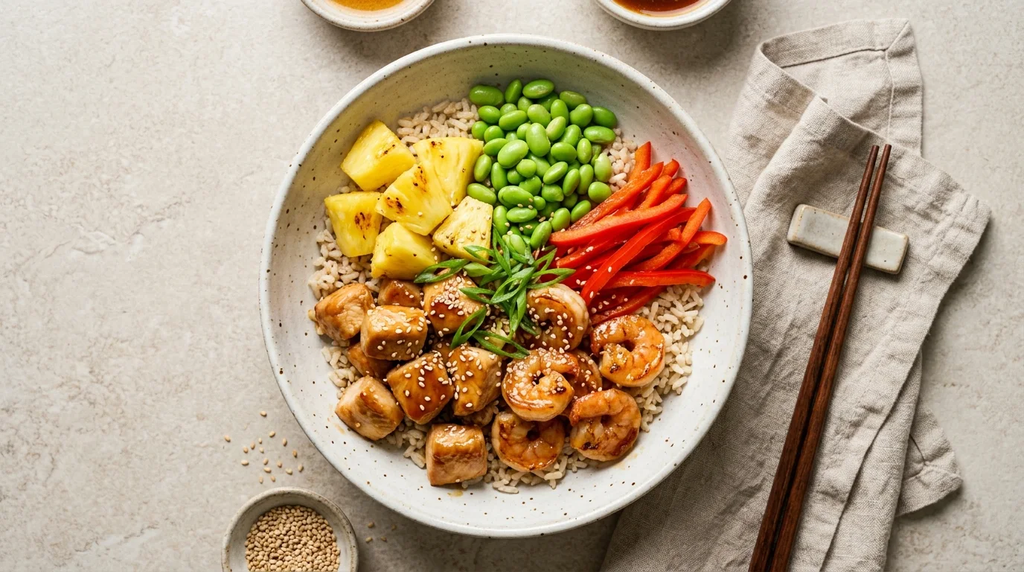
Seared chicken and shrimp in a ginger-pineapple glaze, piled over brown rice with edamame and crisp peppers.
Two Proteins, One Glossy Sauce
Why choose between chicken and shrimp when you can have both? The chicken provides a hearty, golden bite, while the shrimp cook quickly and take on the sweet-savory glaze. Instead of bottled teriyaki, this sauce combines pineapple juice, honey, fresh ginger, garlic, and low-sodium soy sauce for a bright flavor that is less syrupy.
Chicken, shrimp, and edamame provide about 48 grams of protein per bowl, while fresh pineapple and red bell pepper add juicy sweetness and crisp texture. Served over brown rice, the combination makes a filling dinner that also works well for meal prep.
Why You’ll Love This Recipe
- Double protein: Chicken, shrimp, and edamame provide roughly 48 grams of protein per bowl.
- Homemade glaze: Pineapple juice, honey, ginger, and garlic create a flavorful alternative to bottled teriyaki.
- Fast shrimp, steady chicken: Each protein is cooked separately so both retain their best texture.
- Fresh texture: Pineapple and red pepper add crunch and juiciness to the tender glazed proteins.
- Whole grain base: Brown rice adds fiber and makes the bowl more filling.
- Meal prep friendly: The components can be stored separately and reheated as needed.
- Easy to adjust: Leave out either protein or increase the other without changing the overall method.
Time Breakdown & Servings
Prep Time: 20 minutes
Cook Time: 40 minutes
Total Time: 60 minutes
Servings: 4 bowls
Ingredients You’ll Need
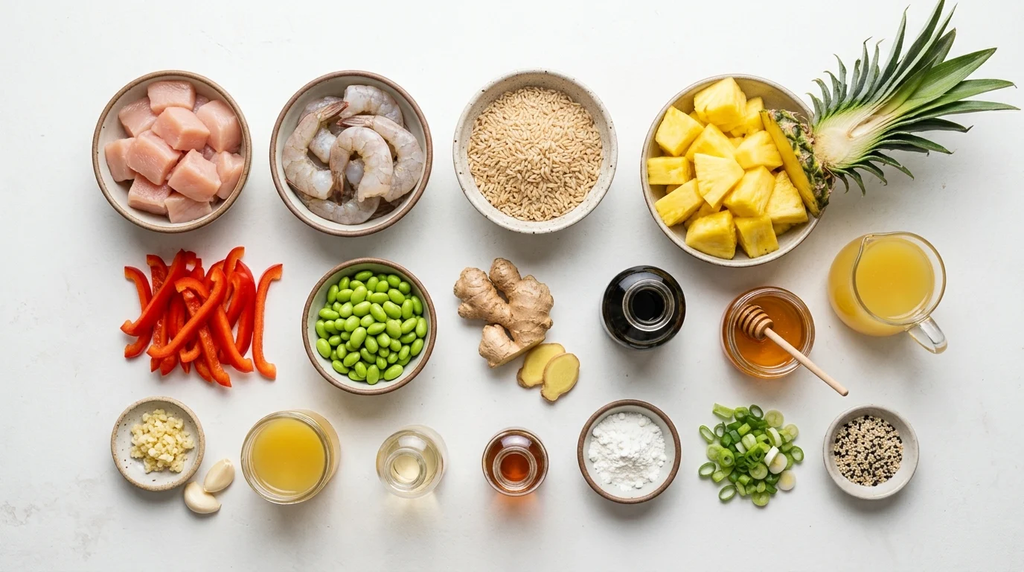
- 1 cup uncooked long-grain brown rice
- 2 cups water, for cooking the rice
- 12 ounces (340 g) boneless, skinless chicken breast, cut into 1-inch pieces
- 12 ounces (340 g) large raw shrimp (21 to 25 count), peeled and deveined
- 2 tablespoons avocado oil, divided
- 1/3 cup low-sodium soy sauce
- 1/3 cup unsweetened pineapple juice
- 2 tablespoons honey
- 1 tablespoon rice vinegar
- 1 tablespoon freshly grated ginger
- 3 garlic cloves, minced
- 1 teaspoon toasted sesame oil
- 1 tablespoon cornstarch mixed with 2 tablespoons cold water
- 1.5 cups frozen shelled edamame
- 2 cups fresh pineapple chunks
- 1 large red bell pepper, thinly sliced
- 2 scallions, thinly sliced
- 1 tablespoon sesame seeds
Ingredient Notes & Practical Substitutions
- Shrimp: Frozen raw shrimp are suitable for this recipe. Thaw them in cold water for about 10 minutes, then pat them thoroughly dry before cooking.
- Chicken breast: Boneless chicken thighs can be used instead. They remain juicier but contain slightly more fat. Cook them to 165°F.
- Low-sodium soy sauce: Tamari provides a gluten-free alternative, while coconut aminos works for a soy-free option. Since coconut aminos is sweeter, you may want to reduce the honey.
- Honey: Maple syrup can replace the honey in equal amounts. Using 1 tablespoon creates a less sweet, more savory glaze.
- Brown rice: Quinoa adds more protein, while cauliflower rice reduces the carbohydrate content. Prepare either according to its package directions.
Kitchen Tools You’ll Need
Everything here is standard equipment.
- Medium saucepan with a lid
- Large skillet
- Cutting board and sharp knife
- Small mixing bowls
- Microplane or fine grater
- Spatula or wooden spoon
- Instant-read thermometer
Step-by-Step Instructions
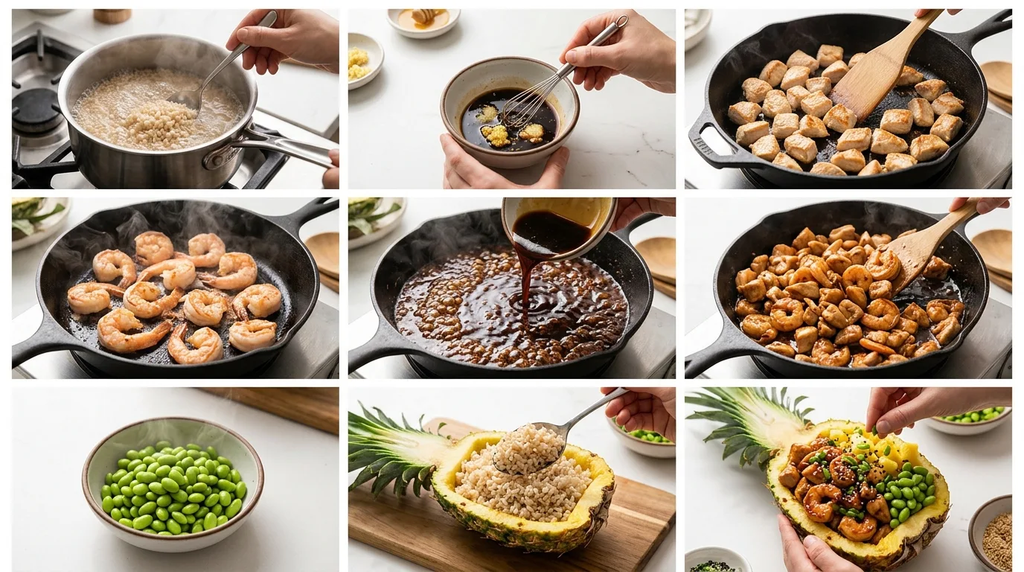
- Start the rice. Rinse the brown rice in a fine strainer. Combine it with 2 cups water in a saucepan and bring to a boil. Cover, reduce the heat to low, and simmer for 35 to 40 minutes, until the water is absorbed and the rice is tender. Let it rest covered for 5 minutes.
- Mix the sauce. Whisk together the soy sauce, pineapple juice, honey, rice vinegar, ginger, garlic, and sesame oil. In a separate bowl, stir the cornstarch into cold water until completely smooth.
- Prep the toppings. Slice the red pepper and scallions and cut the pineapple into bite-sized pieces. Keep the toppings ready for assembly.
- Dry the proteins. Pat the chicken and shrimp dry with paper towels, keeping them on separate plates. Removing surface moisture helps both proteins brown properly.
- Sear the chicken. Heat 1 tablespoon avocado oil in a large skillet over medium-high heat. Add the chicken in a single layer and cook for 5 to 6 minutes, turning occasionally, until golden and no longer pink in the center. Transfer it to a clean plate.
- Sear the shrimp. Add the remaining tablespoon of oil to the skillet. Cook the shrimp for 1 to 2 minutes per side, until pink and curled into a loose C shape. Transfer them to the plate with the chicken.
- Thicken the glaze. Reduce the heat to medium and pour the sauce into the skillet, scraping up the browned bits. Let it bubble for 1 minute. Stir the cornstarch mixture again, add it while stirring, and simmer for 2 to 3 minutes, until the sauce thickens enough to coat a spoon.
- Coat the proteins. Return the chicken and shrimp to the skillet and toss with the glaze for about 1 minute, until glossy and heated through. Check that the chicken reaches 165°F (74°C), then remove the skillet from the heat.
- Cook the edamame. Place the frozen edamame in a microwave-safe bowl with 1 tablespoon water. Cover and microwave for 2 to 3 minutes, until hot. Drain thoroughly.
- Assemble the bowls. Divide the cooked rice among four bowls. Add the chicken, shrimp, and remaining glaze. Arrange the pineapple, edamame, and red pepper around the proteins, then finish with scallions and sesame seeds.
Expert Tips for Best Results
- Cook the chicken before the shrimp so the shrimp do not sit in the pan and overcook.
- Choose shrimp that are similar in size so they finish cooking at roughly the same time.
- Stir the cornstarch mixture immediately before adding it because the starch settles quickly.
- Keep the shrimp out of the simmering sauce until the final stage to preserve their tender texture.
- Taste the glaze before serving. Add pineapple juice if it is too salty or a few drops of rice vinegar if it tastes too sweet.
Common Mistakes To Avoid
- Crowding the skillet. An overcrowded pan traps moisture and prevents proper browning. Use a large skillet or cook in batches.
- Overcooking the shrimp. Shrimp become firm and rubbery when cooked too long. Remove them once they are pink and loosely curled.
- Skipping the thermometer. Chicken breast can dry out quickly, so check the thickest piece rather than relying only on cooking time.
- Pouring cornstarch in dry. Directly adding cornstarch to hot liquid causes clumps. Always make a cold-water slurry first.
- Using sweetened pineapple juice. Added sugar can make the glaze excessively sweet and heavy.
Recipe Variations
- Salmon Teriyaki Bowl: Replace both proteins with 1.5 pounds cubed salmon. Sear for 2 to 3 minutes per side before adding the glaze.
- Blackened Shrimp Version: Season the shrimp with smoked paprika, garlic powder, and cayenne before searing, then spoon the glaze over them.
- Poke-Style Bowl: Serve cooked, chilled shrimp over rice with cucumber and avocado, using a spoonful of the sauce as a dressing.
- Low-Carb Bowl: Serve the chicken, shrimp, and glaze over cauliflower rice with additional bell pepper and cucumber.
- Shrimp-Only or Chicken-Only: Use 1.5 pounds of either protein and follow the same cooking sequence.
What to Serve With This Dish
- Steamed bok choy or broccoli
- Quick-pickled cucumbers
- Miso soup
- Sliced avocado
- Seaweed salad
Storage & Reheating Guide
Store: Keep the rice, proteins, and fresh toppings in separate airtight containers in the refrigerator for up to 3 days.
Reheating: Warm the rice and chicken in the microwave with a splash of water for 60 to 90 seconds. Reheat shrimp gently and briefly to help prevent them from becoming tough. Add the fresh toppings after reheating.
Estimated Nutrition Information
| Nutrient | Per Serving (1 bowl) |
|---|---|
| Calories | 620 |
| Protein | 48 g |
| Carbs | 70 g |
| Fat | 16 g |
| Fiber | 8 g |
| Sugar | 23 g |
Nutrition information is an estimate based on standard ingredient values and may vary by brand and portion size.
Frequently Asked Questions
- Can I use pre-cooked shrimp?
Yes. Add them during the final stage and warm them in the glaze for about 30 seconds to avoid overcooking. - Can I freeze the leftovers?
The chicken and rice freeze well for up to 2 months. Shrimp can become rubbery after thawing and reheating, so freeze portions without the shrimp if you plan to store them. - Is this gluten-free?
It can be. Use tamari or coconut aminos instead of soy sauce and check that the cornstarch is certified gluten-free if required. - Why is my sauce too thin?
Let the sauce simmer for another minute or two. If it remains too loose, add a small amount of additional cornstarch slurry. - Can I bake the chicken instead?
Yes. Bake the chicken pieces at 425°F for 15 to 18 minutes, then combine them with the thickened sauce and cooked shrimp on the stovetop.
Conclusion
Chicken and shrimp give this bowl a generous combination of textures and flavors, while the pineapple-ginger glaze brings everything together. Brown rice and edamame make it filling, while fresh pineapple and red pepper add brightness and crunch. With separate components that store well, it is a practical option for both weeknight dinners and meal prep.