
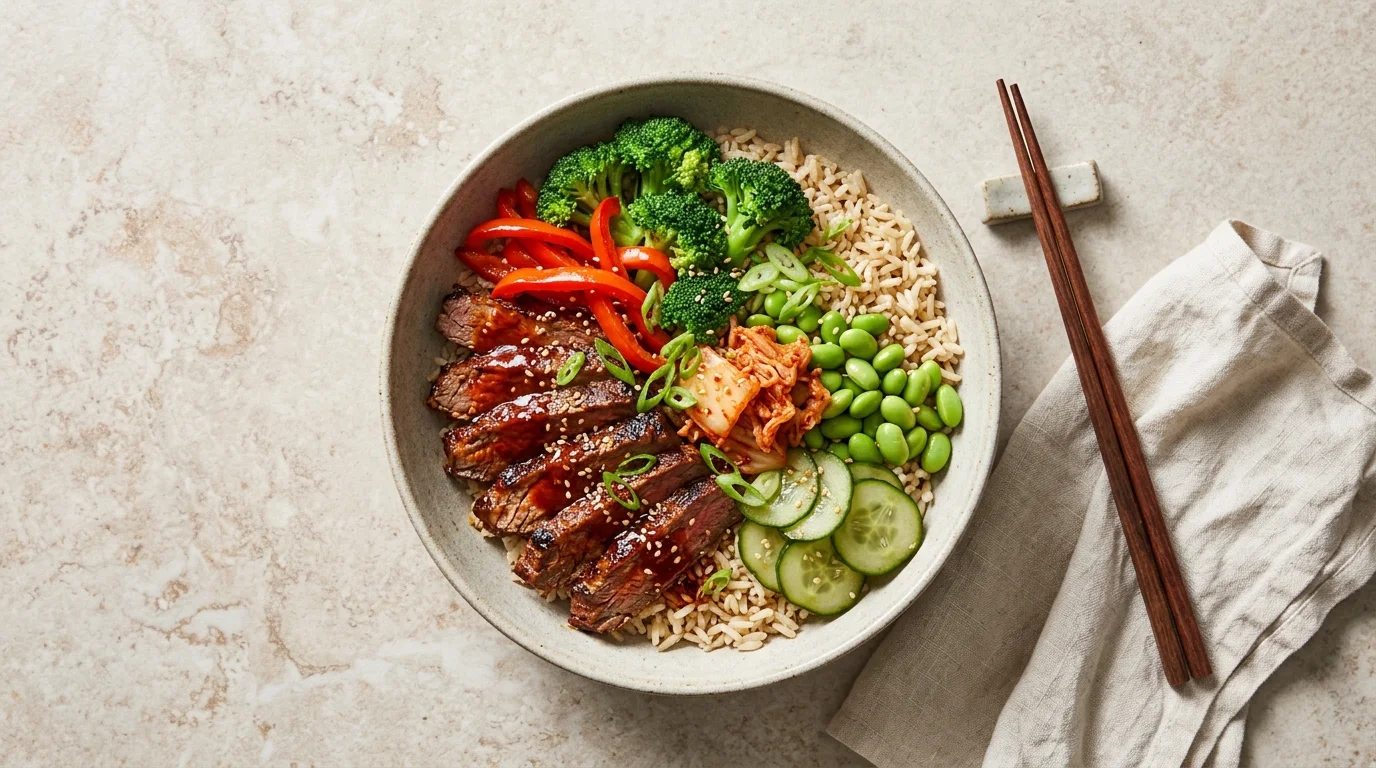
Sticky, spicy gochujang beef with crisp-tender vegetables, cooling pickled cucumbers, and a kimchi kick over brown rice.
Fire and Ice in One Bowl
This Korean Firecracker Beef Bowl combines savory, spicy beef with fresh vegetables and tangy toppings for a satisfying homemade meal. Thinly sliced flank steak is lightly coated in cornstarch and seared until browned around the edges, then tossed in a glossy sauce made with gochujang, soy sauce, honey, ginger, and garlic. The fermented Korean chili paste provides a distinctive combination of heat, sweetness, and deep savory flavor.
Quick-pickled cucumbers offer a refreshing contrast to the spicy beef, while kimchi adds tang and crunch. Broccoli, red bell pepper, edamame, and brown rice complete the bowl with a mix of vegetables, whole grains, and protein. With approximately 43 grams of protein per serving, this recipe works well for weeknight dinners and make-ahead lunches without relying on complicated ingredients or bottled stir-fry sauces.
Why You’ll Love This Recipe
- High in protein: Flank steak and edamame contribute approximately 43 grams of protein per bowl.
- Bold flavor from simple ingredients: Gochujang provides heat and savory depth without requiring a long list of seasonings.
- Refreshing contrast: Quick-pickled cucumbers balance the spicy glaze with a crisp, tangy bite.
- Crisp-edged beef: A light cornstarch coating helps the steak brown and allows the sauce to cling to each slice.
- Flavorful fermented topping: Kimchi adds a distinctive tang and crunch without additional cooking.
- Convenient for meal prep: The beef, rice, vegetables, and toppings can be stored separately for easy assembly.
- Filling and balanced: Brown rice, vegetables, and lean beef create a satisfying combination of carbohydrates, fiber, and protein.
Time Breakdown & Servings
Prep Time: 25 minutes
Cook Time: 45 minutes
Total Time: 1 hour 10 minutes
Servings: 4 bowls
Ingredients You’ll Need
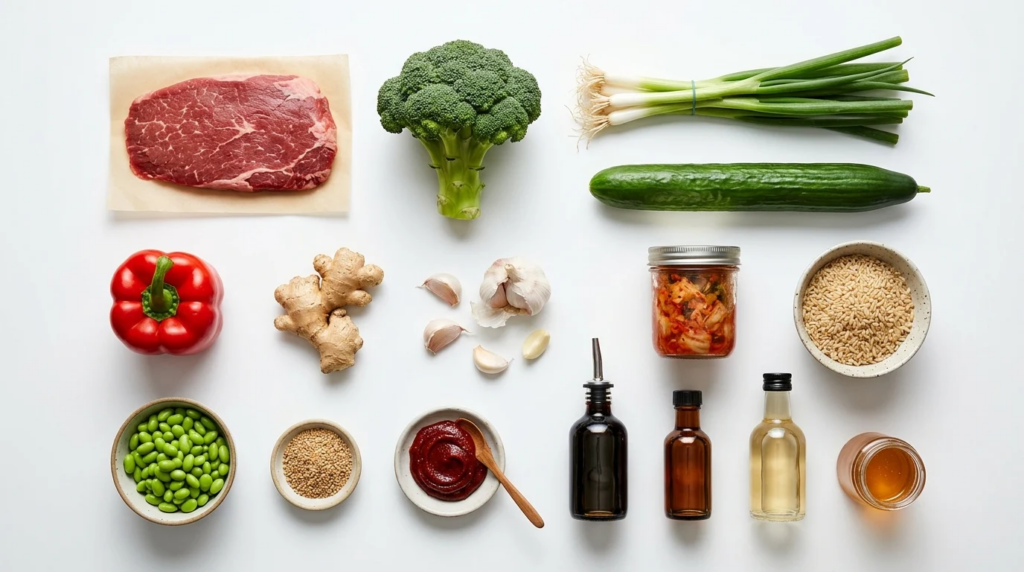
- 1.25 pounds (570 g) flank steak, trimmed
- 2 tablespoons low-sodium soy sauce, divided
- 1 tablespoon cornstarch
- 2 tablespoons gochujang
- 1 tablespoon honey
- 3 tablespoons rice vinegar, divided (1 tablespoon for the glaze, 2 tablespoons for the cucumbers)
- 2 teaspoons toasted sesame oil
- 1 tablespoon freshly grated ginger
- 4 garlic cloves, minced
- 1 tablespoon avocado oil, divided
- 3 cups broccoli florets
- 1 red bell pepper, sliced
- 1 cup (185 g) dry long-grain brown rice
- 2 cups water, plus 2 tablespoons for the broccoli
- 1/2 teaspoon fine sea salt, divided
- 1 English cucumber, thinly sliced
- 1 cup (150 g) frozen shelled edamame, thawed
- 1/2 cup chopped kimchi
- 3 scallions, thinly sliced
- 1 tablespoon toasted sesame seeds
Ingredient Notes & Practical Substitutions
- Gochujang: Heat levels vary by brand. Start with 1 tablespoon for a milder sauce, then adjust to taste. Chili flakes can add extra heat if needed.
- Flank steak: Sirloin or skirt steak also works well when sliced thinly against the grain. Thinly sliced chicken breast is another option.
- Brown rice: Jasmine rice offers a softer texture and shorter cooking time. Cauliflower rice is an alternative for those looking to reduce carbohydrates.
- Kimchi: If kimchi is unavailable or not preferred, increase the amount of pickled cucumber for additional tang and crunch.
- Honey: Maple syrup can replace honey in equal amounts while maintaining the sauce’s sweet-and-spicy balance.
Kitchen Tools You’ll Need
- Large skillet or wok
- Medium saucepan with a lid
- Two mixing bowls
- Sharp knife and cutting board
- Whisk or fork
- Meat thermometer
Step-by-Step Instructions
- Start the rice. Rinse 1 cup brown rice in a sieve under cold water until the water runs clear. Combine it with 2 cups water and 1/4 teaspoon salt in a saucepan. Bring to a boil, cover, and reduce the heat to low. Cook for approximately 40 minutes, until tender and the water has been absorbed. Remove from the heat and let it rest, covered, for 10 minutes before fluffing with a fork.
- Chill and slice the steak. Place the flank steak in the freezer for approximately 20 minutes to firm it up. Using a sharp knife, slice the beef across the grain into thin strips, ideally no thicker than 1/8 inch. This helps the meat cook quickly and remain tender.
- Pickle the cucumbers. Place the sliced cucumber in a bowl with 2 tablespoons rice vinegar and 1/4 teaspoon salt. Toss well and leave to marinate while preparing the remaining ingredients, stirring occasionally.
- Coat the beef. Toss the sliced steak with 1 tablespoon soy sauce and 1 tablespoon cornstarch. Mix until the slices have a thin, even coating.
- Mix the glaze. Whisk together 2 tablespoons gochujang, the remaining 1 tablespoon soy sauce, honey, 1 tablespoon rice vinegar, sesame oil, grated ginger, and minced garlic. Stir until the ingredients form a smooth, evenly combined sauce.
- Sear the beef. Heat 1 teaspoon avocado oil in a large skillet over high heat until shimmering. Add half the beef in a single layer and cook for 1 1/2–2 minutes, turning once, until browned with crisp edges. Transfer to a plate, add another teaspoon of oil, and repeat with the remaining beef.
- Cook the vegetables. Reduce the heat to medium-high and add the final teaspoon of avocado oil. Add the broccoli and 2 tablespoons water. Cover and steam for 2 minutes. Remove the lid, add the sliced red bell pepper, and cook for another 2 minutes, until the vegetables are bright and crisp-tender.
- Glaze everything. Return the beef to the skillet and pour in the prepared sauce. Stir for 1–2 minutes, allowing the glaze to thicken and coat the beef. Cook until the beef reaches a safe internal temperature appropriate for the cut and preparation.
- Assemble the bowls. Divide the cooked rice among four bowls. Add the glazed beef and vegetables, edamame, and drained pickled cucumbers. Finish with chopped kimchi, sliced scallions, and toasted sesame seeds.
Expert Tips for Best Results
- Slice the beef thinly against the grain to help it cook quickly and stay tender.
- Coat the steak lightly with cornstarch to encourage browning and help the glaze cling to the meat.
- Heat the skillet thoroughly before adding the beef to achieve a good sear.
- Add the glaze after searing because honey can burn if exposed to high heat for too long.
- Drain the pickled cucumbers before assembling the bowls to prevent excess liquid from diluting the sauce.
Common Mistakes To Avoid
- Slicing with the grain. Cutting flank steak in the wrong direction can produce a chewy texture. Slice across the visible muscle fibers.
- Crowding the skillet. Too much beef at once releases moisture and prevents the slices from browning properly. Cook in batches.
- Overcooking the broccoli. Prolonged cooking makes the florets soft and dull in color. Stop when they are tender but retain some bite.
- Adding too much gochujang. The paste can be quite salty and spicy, so measure it carefully and adjust the quantity to suit your preference.
- Skipping the rice rest. Resting the rice covered after cooking helps the moisture distribute evenly and produces fluffier grains.
Recipe Variations
- Chicken version: Replace the steak with thinly sliced chicken breast and cook to an internal temperature of 165°F (74°C).
- Tofu version: Use pressed, extra-firm tofu cut into cubes. Sear until golden before coating with the glaze.
- Low-carb: Serve the beef and vegetables over cauliflower rice and reduce or omit the honey if desired.
- Lettuce wraps: Spoon the glazed beef and vegetables into butter lettuce leaves instead of serving them over rice.
- Extra spicy: Add 1/2 teaspoon chili flakes to the glaze for additional heat.
What to Serve With This Dish
- Steamed bok choy with a drizzle of sesame oil
- A chilled sesame cucumber salad
- Miso soup
- Roasted seaweed snacks
- Iced green tea
Storage & Reheating Guide
Storage: Keep the beef and vegetables, rice, pickled cucumbers, and kimchi in separate airtight containers in the refrigerator for up to 4 days.
Reheating: Warm the beef and rice in the microwave for 60–90 seconds, adding a splash of water to prevent drying. Check that the food is heated evenly. Serve the pickled cucumbers and kimchi cold, adding them after reheating.
Estimated Nutrition Information
| Nutrient | Per Serving |
|---|---|
| Calories | 605 |
| Protein | 43 g |
| Carbs | 62 g |
| Fat | 21 g |
| Fiber | 8 g |
| Sugar | 11 g |
Nutrition values are estimates based on standard ingredient data and may vary by brand and portion size.
Frequently Asked Questions
- Is gochujang very spicy?Gochujang has a distinctive chili heat balanced by fermented savory notes and some sweetness. Its intensity varies by brand. Honey and pickled cucumbers help balance the flavor, and using less paste produces a milder bowl.
- Where do I find gochujang?Gochujang is commonly available in the international section of larger supermarkets and at Korean or other Asian grocery stores. It is usually sold in a tub or jar in the condiment section.
- Can I make this ahead?Yes. Cook the beef, vegetables, and rice, then refrigerate them separately. Keep the pickled cucumbers and kimchi chilled, and assemble the bowls after reheating the cooked components.
- Can I freeze the beef?Cooked beef with its glaze can be frozen in an airtight, freezer-safe container for up to 2 months for best quality. Thaw it in the refrigerator overnight and reheat thoroughly before serving.
- How do I slice flank steak thinly?Place the steak in the freezer for approximately 20 minutes to firm it up. Use a sharp knife to cut thin slices across the grain, which shortens the muscle fibers and helps the cooked beef remain tender.
Conclusion
The Korean Firecracker Beef Bowl brings together sticky gochujang-glazed beef, crisp-tender vegetables, brown rice, and refreshing toppings for a flavorful, protein-rich meal. The spicy sauce contrasts with the tangy cucumbers and kimchi, while edamame adds texture and substance. With components that can be prepared and stored separately, this bowl is a practical option for busy weeknights and make-ahead lunches.
Leave a Reply