
You’ve already figured out the basics. You know how to batch-cook chicken, portion containers, and stock a fridge that supports your goals through the week. Basic meal prep works — and if you’re reading this, you already know that. What you’re looking for now is the next level: a system sophisticated enough to fuel serious training, support real body recomposition, and keep 27 genuinely varied meals rotating through your week without ever feeling like you’re eating the same thing twice.
This is that article. Twenty-seven high-protein meal prep ideas built for intermediate preppers, macro trackers, and athletes who need more than chicken and rice. Ancient grains. Sous vide techniques. Freezer-first strategies. Plant-based protein stacks. An advanced batch cooking system that runs four proteins simultaneously in a single oven. And a macro-tracking framework that ensures your weekly prep hits the protein targets that actually drive results.
The protein goal framing that underpins everything here: one gram per pound of bodyweight per day, distributed across four to five meals. If you weigh 170 pounds, that’s 170 grams of protein daily — approximately 34–42 grams per meal. Every idea in this article is built around hitting that range at each sitting. At this level of precision, meal prep isn’t a convenience strategy. It’s a performance tool.
Advanced Protein Principles
Before the recipes, the science — because understanding why these principles matter is what separates strategic eating from meal prep that produces results from meal prep that just keeps you busy in the kitchen on Sundays.
The leucine threshold is the most important concept in muscle protein synthesis that most people outside of elite sports nutrition have never heard of. Leucine is the amino acid that acts as the primary trigger for the mTOR pathway — the signaling cascade that initiates muscle building. Research indicates that approximately 2.5 grams of leucine per meal is required to fully activate this pathway. Below that threshold, you get a diminished anabolic response regardless of total protein consumed. Above it, the response is maximized. Practically, this means that 4 ounces of chicken (approximately 2.5–3g leucine), 5 ounces of salmon (~2.8g), 4 whole eggs (~1.6g — notably lower, which is why egg whites alone underperform), or a combination of plant sources reaching 2.5g can all trigger the threshold. Every protein anchor in this article is calibrated to clear it.
Protein distribution across meals consistently outperforms front- or back-loading in research on body composition. Four meals each containing 35 grams of protein produce a meaningfully better anabolic response than one meal of 20 grams and one meal of 120 grams at the same total intake. This is why the frequency and consistency of meal prep matters as much as the total numbers — you cannot make up for skipped protein at the end of the day.
Complete versus incomplete proteins: animal proteins (meat, fish, eggs, dairy) contain all nine essential amino acids in adequate ratios and are automatically complete. Plant proteins are generally incomplete individually but can be combined within the same day — or ideally the same meal — to form a complete profile. Lentils plus rice, chickpeas plus quinoa, edamame plus hemp seeds — these pairings create amino acid profiles comparable to animal protein. The plant-based preps in Category 8 are specifically designed with these combinations in mind.
Pre-workout protein timing: consuming 20–40 grams of protein in the 1–2 hours before training supports performance and reduces muscle breakdown during the session. Post-workout is the well-known window — 30–60 minutes after training is when muscle protein synthesis is most elevated and protein uptake is most efficient. The prep ideas in this article that work best as pre- and post-workout meals are flagged in their descriptions.
The 27 Ideas — 9 Categories of 3
Category 1: High-Volume, High-Protein Bowls
High-volume eating is the advanced strategy for maintaining satiety in a calorie-controlled environment. The goal: maximum food mass and fiber for the calorie cost, built around a massive protein anchor. These three bowls deliver 44–50 grams of protein in formats that leave you genuinely full.
Idea 1: Massive Greek Chicken Bowl 50g protein | High-volume eating | Prep: 15 min | Cook: 20 min | Serves 4
The highest-protein complete meal in this article. The volume comes from a full two cups of vegetables, a generous protein portion, and a tzatziki base that adds protein from Greek yogurt rather than calories from heavy dressing.
Build each bowl: 6 oz grilled chicken breast (marinated in lemon, olive oil, oregano, and garlic before cooking), 1 cup cooked quinoa, 1 cup arugula, ½ cup cherry tomatoes, ½ cup cucumber, ¼ cup kalamata olives, 2 tbsp crumbled feta, and 3 tablespoons of Greek yogurt tzatziki (Greek yogurt, grated cucumber squeezed dry, garlic, dill, lemon, salt). The tzatziki adds an additional 5–6 grams of protein per serving beyond the chicken. Pre-assemble in containers with tzatziki in a separate small pot to preserve texture. Stores 5 days refrigerated.
Best for: Post-workout lunch or dinner. The leucine load from 6 oz of chicken comfortably clears the 2.5g threshold. The quinoa adds complementary plant protein and the carbohydrate needed for glycogen replenishment after training.
Idea 2: The Anabolic Rice Bowl 48g protein | Prep: 10 min | Cook: 20 min | Serves 4
Named for its macro profile rather than its complexity — this is a strategically constructed combination of two complete proteins (chicken and eggs) over rice with a savory umami sauce that makes it one of the most craveable meals in this entire list.
Ingredients per bowl: 5 oz baked or grilled chicken breast (sliced), 2 whole eggs (soft-boiled or fried), 1 cup cooked jasmine or brown rice, 1 cup steamed edamame, 2 tbsp coconut aminos mixed with 1 tsp sesame oil and 1 tsp rice vinegar as the sauce, sesame seeds, sliced green onions, optional drizzle of sriracha. Batch-cook the chicken and rice. Soft-boil 8 eggs Sunday morning (7 minutes at a full boil, then ice bath — the yolk stays jammy and adds richness to the sauce). Store eggs unpeeled in the fridge for the week, peeling fresh each day. The sauce keeps in a jar for 2 weeks.
Best for: Pre- and post-workout meal. The combination of chicken and eggs hits leucine from two simultaneous sources, and the rice provides fast-acting carbohydrates for post-training glycogen replenishment.
Idea 3: Bodybuilder’s Shrimp & Veggie Bowl 44g protein | Low-carb option | Prep: 10 min | Cook: 12 min | Serves 4
Shrimp delivers approximately 20 grams of protein per 3 ounces at under 90 calories — the best calorie-to-protein ratio of any animal protein available, making it the ideal centerpiece of a high-volume, lower-calorie bowl for phases focused on fat loss while preserving muscle.
Per bowl: 7 oz cooked shrimp (seasoned with garlic, smoked paprika, and cajun seasoning), 2 cups cauliflower rice (sautéed with garlic and sesame oil until slightly toasted), 1 cup roasted broccoli and bell peppers, ¼ avocado sliced, 2 tbsp clean remoulade or Greek yogurt dipping sauce. Cook shrimp in batches — overcrowding the pan steams rather than sears them, which eliminates the caramelization that makes them genuinely satisfying. Store shrimp and cauliflower rice separately and combine at serving for best texture. Stores 3–4 days refrigerated.
Best for: Cutting phases, rest day meals, or anyone tracking calories closely. The protein load at 44 grams clears the leucine threshold comfortably while the calorie total remains around 380–420 depending on sauce choice.
Category 2: Protein-Dense Soups & Stews
Soups and stews are the most underestimated meal prep vehicle for serious athletes and macro trackers. A single large pot yields 6–12 individual servings, freezes without quality loss, and delivers protein in a format that the body processes efficiently because the liquid medium predigests some of the work.
Idea 4: High-Protein Chicken & Lentil Stew 42g protein | Serves 6 | Prep: 10 min | Cook: 35 min | Batch cook for the week
Chicken and lentils together create a protein combination that exceeds the leucine threshold from two independent sources while the lentils add 16 grams of fiber per serving — a satiety multiplier that no amount of additional protein alone can replicate.
Sauté onion, garlic, and ginger in olive oil for 4 minutes in a large Dutch oven. Add 1.5 lbs diced chicken breast, brown 5 minutes. Add 1 cup dry red lentils (they dissolve into the stew and thicken it naturally), 2 cans diced tomatoes, 4 cups low-sodium chicken broth, 1 tsp turmeric, 1 tsp cumin, 1 tsp smoked paprika, and salt. Bring to a boil, then simmer 25 minutes until lentils have dissolved and stew has thickened. Stir in 2 cups spinach. Season with lemon juice, salt, and pepper. Portion into 6 containers. Stores 5 days refrigerated, 3 months frozen.
Idea 5: White Bean & Turkey Soup 38g protein | Serves 6 | Prep: 10 min | Slow cooker: 6–8 hours | Instant Pot: 35 min
White beans deliver 17 grams of protein and 12 grams of fiber per cup cooked, making them one of the most valuable additions to any high-protein soup. Combined with lean ground turkey, this soup hits 38 grams per serving without any heavy or calorie-dense ingredients.
Brown 1.5 lbs ground turkey with garlic and Italian seasoning in a skillet, then transfer to slow cooker or Instant Pot. Add 2 cans white cannellini beans (rinsed), 1 can diced tomatoes, 4 cups low-sodium chicken broth, 2 cups chopped kale, 1 tsp rosemary, 1 tsp thyme, and black pepper. Slow cook on low 6–8 hours or pressure cook on high for 25 minutes with natural release. Adjust seasoning, add lemon juice, and finish with a drizzle of olive oil. Stores 5 days refrigerated, 3 months frozen.
Idea 6: Protein-Packed Beef Vegetable Soup 40g protein | Serves 8 | Prep: 15 min | Cook: 45 min | Freezer hero
Lean beef is among the richest sources of complete protein and creatine available — a combination uniquely relevant for strength athletes. This soup uses lean ground beef or diced sirloin, giving each serving 40 grams of protein alongside a broad micronutrient profile from the vegetable base.
Brown 2 lbs lean ground beef or diced sirloin in a large pot with olive oil, garlic, and onion. Drain excess fat. Add 2 cups diced sweet potato, 2 cups chopped carrots, 1 cup celery, 1 can diced tomatoes, 1 can kidney beans (rinsed), 5 cups low-sodium beef broth, 1 tsp smoked paprika, 1 tsp cumin, 1 tsp garlic powder, and black pepper. Bring to a boil and simmer 35 minutes until vegetables are completely tender. Adjust seasoning and portion into 8 containers. This is the recipe to triple when batch cooking — it freezes for 3 months with zero quality loss and feeds a household for weeks.
Category 3: Make-Ahead Sandwiches & Wraps
The misconception about sandwiches and wraps in meal prep is that they go soggy. The solution is architectural: keep wet components separated until eating time, use structural vegetables as barriers between protein and bread, and choose wraps over sandwiches for superior structural integrity over 3–4 days.
Idea 7: Meal Prep Tuna Wrap with Avocado 36g protein | Stays fresh 3 days | Prep: 8 min per wrap | Makes 4
The layering order is what keeps this wrap fresh: spread the avocado directly on the wrap first (it acts as a moisture barrier), then spinach, then tuna mixture. The tuna never directly contacts the wrap, which prevents sogginess for up to three days.
Tuna mixture: 2 cans chunk light tuna (drained), 2 tbsp plain Greek yogurt, 1 tsp Dijon, ¼ cup finely diced celery, 1 tbsp diced red onion, lemon juice, salt, and pepper. Assemble each large whole wheat wrap with mashed avocado spread edge to edge, a layer of baby spinach, then a generous scoop of tuna mixture. Roll tightly, wrap in parchment paper (not plastic wrap — parchment breathes and prevents condensation), and refrigerate. Slice at serving. Stores 3 days wrapped in parchment in the fridge.
Idea 8: Turkey & Hummus Protein Box 38g protein | No-cook | Prep: 8 min | Makes 4
The highest-protein no-cook meal prep option in this article. Everything is assembled cold, requires zero cooking, and delivers 38 grams of protein through a combination of deli turkey, hummus, and Greek yogurt dipping sauce — a format that works equally well as lunch at a desk or a pre-workout meal on the go.
Per box: 5 oz clean deli turkey (sliced, no nitrates), 3 tbsp classic hummus, 1 cup cucumber and carrot sticks, ½ cup cherry tomatoes, 4 whole grain crackers, 2 tbsp Greek yogurt ranch dip (Greek yogurt, dill, garlic, lemon, salt). Arrange in a divided meal prep container with crackers in a separate dry section. Seal and refrigerate. Stores 4 days refrigerated. Eat cold — no reheating ever required or desired.
Idea 9: Chicken Caesar Wrap with Greek Yogurt Dressing 40g protein | Prep: 12 min | Makes 4 | Dressing stores 1 week
The Greek yogurt Caesar dressing replaces the traditional oil-and-egg-yolk base with a higher-protein, lower-calorie alternative that tastes almost identical when seasoned properly — and because it’s yogurt-based, it stays creamy rather than separating in the fridge.
Greek yogurt Caesar: ½ cup plain Greek yogurt, 1 tbsp lemon juice, 1 tsp Worcestershire sauce, 1 tsp Dijon, 1 clove garlic minced, 1 tbsp Parmesan, salt, and black pepper. Blend until smooth. Make each wrap: spread 1 tbsp Caesar inside a large spinach or whole wheat wrap, add 1 cup chopped romaine, 5 oz sliced grilled chicken, 1 tbsp Parmesan, and a few anchovies if using (they add 2 additional grams of protein and the depth of flavor that makes a Caesar a Caesar). Roll tightly, wrap in parchment, and refrigerate. Keep remaining Caesar dressing in a jar — it stores up to 7 days and improves as the garlic infuses.
Category 4: Egg-Based Batch Meals
Eggs are the most complete, affordable, and preparation-friendly protein source available. Whole eggs provide all nine essential amino acids plus fat-soluble vitamins (A, D, E, K) that are absent in egg whites alone. These three batch prep ideas use eggs in high-volume formats that maximize servings per cooking session.
Idea 10: Giant Baked Frittata (8 Servings) 28g protein per slice | Prep: 12 min | Cook: 30 min | Makes 8 servings
A frittata made in a 9×13 baking dish rather than a skillet produces eight generous slices from a single 30-minute oven session. The addition of cottage cheese — stirred directly into the egg mixture where it becomes invisible but contributes significant protein — pushes each slice well above the protein content of a standard frittata.
Whisk 12 large eggs with 1 cup low-fat cottage cheese, salt, pepper, and garlic powder. Sauté 1 cup each of diced bell peppers, mushrooms, and spinach in olive oil for 4 minutes. Transfer to a greased 9×13 dish. Pour egg mixture over, scatter 4 oz crumbled goat cheese or feta on top. Bake at 375°F for 28–32 minutes until fully set and golden. Cool, slice into 8 portions, and store in individual containers. Refrigerates for 5 days. Reheats in a toaster oven at 325°F for 5 minutes or microwave for 60 seconds.
Idea 11: Sous Vide Egg Bites 20g protein per 2 bites | Prep: 10 min | Cook: 60 min | Makes 12
The Starbucks egg bite is a legitimate high-protein breakfast format with a serious flaw: $7 for two bites. Made at home using a sous vide bath or an Instant Pot with the sous vide function, the texture is genuinely superior — silkier, more custard-like, and more consistent than anything baked in a muffin tin.
Blend 8 large eggs, ½ cup cottage cheese, ½ cup shredded gruyère or cheddar, salt, pepper, and any add-ins (bacon bits, roasted red pepper, jalapeño, spinach) until completely smooth. Pour into greased silicone egg molds or a silicone muffin tray. If using sous vide: seal in a bag or cook directly in the molds in a 172°F water bath for 60 minutes. If using Instant Pot: place molds on the trivet with 1 cup water, pressure cook on low for 8 minutes with quick release. Cool, pop from molds, and refrigerate. Stores 5 days refrigerated, 1 month frozen.
Idea 12: Loaded Egg Salad Prep 24g protein | Prep: 10 min | Makes 4 servings | On rice cakes or lettuce
The upgrade from standard egg salad: replacing mayonnaise entirely with Greek yogurt adds protein while reducing fat calories, and the add-ins — avocado, Dijon, capers, and fresh dill — create a complex flavor profile that makes this feel like a restaurant-quality lunch rather than a weekday fallback.
Mash 8 hard-boiled eggs (roughly — leave some texture) with ½ cup plain Greek yogurt, 1 tbsp Dijon, 1 tbsp capers (roughly chopped), 2 tbsp fresh dill, 1 tbsp lemon juice, salt, and white pepper. Fold in ½ avocado cut into small pieces at serving (not in advance — it oxidizes). Portion into 4 containers. Serve over rice cakes, in lettuce cups, or wrapped in collard green leaves. Stores 4 days refrigerated without the avocado added.
Category 5: Protein-Packed Grains
Ancient and specialty grains contain significantly more protein per serving than white rice and offer micronutrient profiles that brown rice cannot match. These three preps introduce teff, farro, and edamame quinoa combinations to a meal prep rotation that has likely grown too dependent on the same grain base every week.
Idea 13: Teff & Chicken Power Bowl 36g protein | Prep: 12 min | Cook: 20 min | Serves 4
Teff is an Ethiopian grain with approximately 10 grams of protein and 7 grams of fiber per cooked cup — among the highest of any grain — and a slightly nutty, slightly earthy flavor that pairs exceptionally well with bold spices and lean animal protein.
Cook 1 cup dry teff in 3 cups water or chicken broth for 15 minutes until the water is absorbed and the grain is creamy and porridge-like. Season with salt and a drizzle of olive oil. Pair each portion with 5 oz spiced roasted chicken breast (seasoned with berbere or smoked paprika and cumin to complement teff’s Ethiopian origin), 1 cup sautéed kale with garlic and lemon, and a dollop of plain Greek yogurt on top. The teff porridge reheat best with a splash of broth — add 2 tablespoons before microwaving and stir to loosen. Stores 4 days refrigerated.
Idea 14: Edamame Quinoa Prep Bowl 30g protein | Plant-based protein bomb | Prep: 10 min | Cook: 15 min | Serves 4
Quinoa provides 8 grams of protein per cooked cup as a complete protein. Edamame adds 17 grams per cup. Together in a single bowl, before any additional protein is added, the plant-based protein foundation is already substantial enough to approach the leucine threshold when paired correctly.
Cook 1.5 cups dry quinoa per standard instructions. Combine in containers with 1 cup shelled edamame (steamed from frozen), ½ cup shredded purple cabbage, ½ cup diced cucumber, 1 tbsp hemp seeds (3.5g additional complete protein), 1 tbsp sesame seeds. Dressing: 2 tbsp tamari, 1 tbsp rice vinegar, 1 tsp sesame oil, 1 tsp ginger, 1 tsp honey. Add tofu or a soft-boiled egg per serving to push the protein above 40 grams if desired. Stores 5 days refrigerated.
Idea 15: Farro & Roasted Chicken Prep 34g protein | Nutty, filling, unique | Prep: 10 min | Cook: 30 min | Serves 4
Farro is an ancient wheat grain with 7 grams of protein and 3.5 grams of fiber per cooked cup, a satisfyingly chewy texture that holds up in the fridge without going mushy, and a nutty depth that makes grain bowls feel like an actual meal rather than a vehicle for toppings.
Cook 1.5 cups dry farro in 4 cups water or broth for 25–30 minutes until tender with a slight chew. While it cooks, roast 4 chicken thighs (bone-in, skin-on) at 425°F for 35 minutes until skin is crispy. Remove skin before storing to reduce saturated fat. Slice or shred meat. Build bowls: farro base, roasted chicken, 1 cup roasted cherry tomatoes and zucchini, 2 tbsp fresh herb vinaigrette (parsley, olive oil, red wine vinegar, garlic, Dijon, honey, salt). Stores 4 days refrigerated.
Category 6: Freezer-First Meal Prep
Freezer-first meal prep means cooking with the explicit intention of building a frozen meal bank rather than a weekly fridge rotation. The goal: stock the freezer with 20–30 individual high-protein portions so that a protein-complete meal is never more than 10 minutes from the table on any day of the month.
Idea 16: Protein Breakfast Burritos 32g protein | Prep: 20 min | Makes 8 | Freeze and reheat
Assembled and frozen before eating, these burritos reheat from frozen in 90 seconds in a microwave or 8 minutes in a toaster oven and deliver 32 grams of protein with enough volume to function as a complete breakfast for anyone training at any intensity.
Filling per burrito: 3 scrambled eggs, 2 oz clean turkey sausage (cooked and crumbled), 2 tbsp black beans (rinsed), 2 tbsp shredded cheddar, 2 tbsp clean salsa. Cook all filling components, cool completely (hot filling creates condensation inside the burrito that makes tortillas soggy after freezing). Wrap in a large whole wheat tortilla, roll tightly, wrap individually in foil, then in a plastic wrap layer. Freeze in a single layer first, then transfer to a freezer bag. Label with date and protein content. Stores frozen 3 months.
Idea 17: Turkey Meatballs in Tomato Sauce 36g protein | Prep: 20 min | Cook: 20 min | Makes 24 meatballs | Freeze in sauce
The technique of freezing meatballs directly in their sauce rather than dry produces superior results: the sauce protects the meatballs from freezer burn, keeps them moist during reheating, and means the entire serving is ready in one step — pull the container from the freezer, thaw overnight, reheat in a pan.
Make the meatball batch from the Strategy 1 base in Article 7 scaled to 2 lbs of turkey. Bake at 400°F for 18–20 minutes. Make clean marinara: sauté garlic in olive oil, add two 28-oz cans crushed tomatoes, 1 tsp oregano, 1 tsp basil, salt, and a pinch of red pepper flakes. Simmer 20 minutes. Cool both components completely. Portion 4 meatballs into each container and ladle enough sauce over them to submerge. Freeze. Serve over zucchini noodles, spaghetti squash, or whole grain pasta.
Idea 18: High-Protein Chili 40g protein per bowl | Serves 12 | Prep: 15 min | Cook: 45 min | One pot
The highest-yield batch cook in this article: one pot, one cooking session, 12 complete servings. High-protein chili uses both ground beef and kidney beans as dual protein anchors, reaching 40 grams per bowl without any protein powder or supplement additions.
Brown 2 lbs lean ground beef with 1 large diced onion, 4 cloves garlic, 2 tsp cumin, 2 tsp chili powder, 1 tsp smoked paprika, and salt in a large Dutch oven. Drain excess fat. Add 2 cans kidney beans (rinsed), 2 cans black beans (rinsed), 2 cans diced tomatoes, 1 can tomato paste, 2 cups beef broth, 1 tsp oregano, and ½ tsp cayenne. Simmer on low heat for 35–40 minutes, stirring occasionally. Adjust seasoning. Portion into 12 containers once cooled. Top at serving with plain Greek yogurt (not sour cream), diced avocado, and fresh cilantro. Refrigerates 5 days, freezes 4 months.
Category 7: Snack & Protein Supplement Preps
Between-meal protein is where most people’s daily targets fall apart — not at lunch or dinner, but in the gaps. These three prep ideas close the between-meal protein deficit with portable, make-ahead options that require no heating and take under 10 minutes to produce for the entire week.
Idea 19: High-Protein Overnight Oats Jars (×5) 30g protein each | Prep: 10 min for all 5 | Refrigerate Sunday, eat Monday–Friday
Preparing five jars simultaneously on Sunday takes exactly 10 minutes and eliminates every breakfast decision for the entire week. Each jar hits 30 grams of protein through the combination of Greek yogurt, protein powder, and chia seeds without requiring any cooking.
Per jar: ½ cup rolled oats, 1 scoop vanilla protein powder, ½ cup plain Greek yogurt, ¾ cup unsweetened almond milk, 1 tbsp chia seeds, 1 tsp raw honey. Mix thoroughly in each jar, ensuring protein powder fully dissolves — a small whisk or fork stirred vigorously for 30 seconds achieves this. Seal and refrigerate. Toppings (berries, granola, nut butter) are stored separately in small bags and added fresh each morning to preserve texture. Rotate topping combinations across the five jars for maximum variety from identical base jars.
Idea 20: DIY Protein Bars 20g protein per bar | Prep: 15 min | Refrigerate 1 hour | Makes 10 bars | No bake
Store-bought protein bars consistently contain more sugar alcohols, artificial sweeteners, and palm oil than their “clean” marketing implies. These no-bake bars use five whole-food ingredients, take 15 minutes to assemble, and cost a fraction of commercial alternatives at the same protein content.
Combine in a food processor: 1.5 cups rolled oats, 2 scoops vanilla or chocolate protein powder, ½ cup natural almond butter, ⅓ cup raw honey, 2 tbsp dark chocolate chips, and 2–3 tablespoons of water (add gradually until the mixture holds together when pressed). Press firmly into a parchment-lined 8×8 dish to a uniform 1-inch thickness. Refrigerate 1 hour until firm. Cut into 10 equal bars. Wrap individually in parchment and store in the fridge up to 10 days or freeze individually for up to 2 months. Add a tablespoon of hemp seeds or pumpkin seeds to the mixture for additional plant protein and micronutrient density.
Idea 21: Greek Yogurt & Nut Butter Protein Pots 28g protein | Prep: 5 min for all 5 | 5 min total prep time
The fastest protein snack prep on this list. Five pots in five minutes, each delivering 28 grams of protein from two clean sources, require zero cooking and nothing beyond a spoon to consume at any point throughout the day.
Per pot: 1 cup plain full-fat Greek yogurt, 1 tbsp natural almond or peanut butter, 1 tsp raw honey, ¼ tsp vanilla extract, 1 tbsp hemp seeds. Stir honey and vanilla into the yogurt base. Top with nut butter and hemp seeds. Seal. Store refrigerated up to 5 days. At serving, stir the nut butter down through the yogurt to distribute it — this creates a ripple effect where the peanut butter flavor intensifies in certain bites in a way that makes this pot genuinely satisfying rather than merely functional.
Category 8: Plant-Based High-Protein Preps
Plant-based high-protein meal prep at an advanced level means engineering amino acid completeness into every meal deliberately — not hoping that a large enough volume of plant food will cover the deficit. These three preps are specifically constructed to hit the leucine threshold through strategic protein pairing.
Idea 22: Tempeh Taco Bowl 30g protein | High satiety | Prep: 10 min | Cook: 12 min | Serves 4
Tempeh is the most protein-dense, most fiber-rich, and most fermented of the major plant proteins — fermentation removes the phytic acid that reduces mineral absorption in unfermented soy, making tempeh’s protein and minerals more bioavailable than tofu. It also holds up to high heat and aggressive seasoning in a way that tofu cannot.
Crumble 2 packages (16 oz total) of tempeh into a large skillet with avocado oil. Season with 2 tsp cumin, 1 tsp chili powder, 1 tsp smoked paprika, 1 tsp garlic powder, and coconut aminos. Cook over medium-high heat 8–10 minutes, breaking apart continuously, until browned and slightly crispy at the edges. Assemble bowls: brown rice or quinoa base, seasoned tempeh, black beans, corn, shredded cabbage, fresh salsa, and a drizzle of avocado-lime crema (blended avocado, lime, garlic, cilantro, and water). Stores 5 days refrigerated.
Idea 23: Tofu & Edamame Poke-Style Bowl 28g protein | Prep: 15 min (+ 30 min tofu marinade) | Serves 4
The poke-style format — raw or barely cooked protein over rice with clean, bright toppings — works as well with plant proteins as with fish when the marinade is strong enough and the tofu is properly prepared (pressed, marinated, and either baked or pan-fried rather than used soft and underprepared).
Press 2 blocks extra-firm tofu for 20 minutes, then cube and marinate in tamari, rice vinegar, sesame oil, ginger, and garlic for 30 minutes. Bake at 400°F for 25 minutes until golden and slightly crispy, or pan-fry in avocado oil until browned on all sides. Assemble each bowl: brown rice base, baked tofu, 1 cup shelled edamame, ¼ avocado, sliced cucumber, shredded carrots, and nori strips. Dressing: tamari, sesame oil, rice vinegar, ginger, a pinch of honey. Stores 4 days refrigerated with dressing on the side.
Idea 24: Black Lentil & Roasted Veggie Power Bowl 24g protein | Iron + protein | Prep: 10 min | Cook: 25 min | Serves 4
Black lentils (also called beluga lentils for their caviar-like appearance) hold their shape after cooking unlike red or green lentils, making them the ideal lentil for bowl construction where texture is important. They provide approximately 18 grams of protein and 15 grams of fiber per cup cooked, alongside the highest iron content of any lentil variety.
Cook 1.5 cups dry black lentils in seasoned vegetable broth for 20–25 minutes until just tender — check frequently after 18 minutes, as they can go from perfectly cooked to mushy quickly. Roast 3 cups of mixed root vegetables (beets, carrots, and parsnips) with olive oil, cumin, and coriander at 400°F for 25 minutes. Build bowls: lentil base, roasted vegetables, 2 tbsp pumpkin seeds (additional complete protein), wilted spinach, and a lemon-tahini dressing. The iron in lentils absorbs more efficiently when consumed alongside vitamin C sources — the lemon juice in the dressing serves this function directly.
Category 9: Advanced Technique Preps
These three ideas require equipment or techniques beyond a standard skillet and oven — but each one produces a result that standard methods cannot replicate, and each technique, once learned, transforms the quality of a meal prep rotation permanently.
Idea 25: Sous Vide Chicken Breast Batch 45g protein | Ultra-tender | Prep: 5 min | Cook: 90 min (hands-off) | Makes 6 servings
Chicken breast cooked sous vide at 140°F for 90 minutes reaches an internal temperature that pasteurizes it completely while retaining a moisture and tenderness that no dry-heat method can produce. The texture is closer to a perfectly poached chicken than a baked or grilled breast — it shreds differently, holds moisture differently in reheating, and stays palatable eaten cold directly from the fridge in a way that conventionally cooked chicken does not.
Season 6 chicken breasts individually with salt, pepper, garlic powder, and a sprig of thyme or rosemary. Vacuum-seal individually (or use the water displacement method with zip-lock bags). Cook in a 140°F sous vide bath for 90 minutes. Remove, pat dry, and sear in a screaming-hot cast-iron pan for 60 seconds per side to develop color — this is optional but adds the browning and flavor development that sous vide alone doesn’t provide. Cool and refrigerate up to 7 days or vacuum-seal after searing and refrigerate up to 2 weeks. Slice differently for each day’s bowl to vary the eating experience from the same batch.
Idea 26: Overnight Marinated Salmon Fillets 38g protein | Prep: 5 min | Marinate overnight | Cook: 15 min | Serves 4
Marinating salmon overnight in an acidic, flavorful mixture accomplishes two things simultaneously: it begins to denature the surface proteins slightly, accelerating the cooking process and improving texture, and it creates a deeper, more complex flavor than any same-day marinade can produce — particularly important when batch-cooking multiple fillets that will be eaten across several days and need to remain interesting.
Marinade for 4 fillets: 3 tbsp white miso paste, 2 tbsp mirin, 1 tbsp tamari, 1 tbsp rice vinegar, 1 tsp sesame oil, 1 tsp grated ginger, 1 tsp honey. Whisk until smooth and coat each salmon fillet thoroughly. Refrigerate in a sealed container overnight (up to 24 hours). The next day, bake at 400°F for 12–15 minutes or grill 4–5 minutes per side. The miso caramelizes on the surface during cooking, creating a lacquered, deeply savory crust. Pair with brown rice and steamed bok choy for a complete meal or keep the fillets whole in individual containers and add sides at serving. Stores 3–4 days refrigerated.
Idea 27: Instant Pot High-Protein Bean & Turkey Ragù 42g protein | Set and forget | Prep: 10 min | Instant Pot: 25 min | Serves 8
A ragù — a slow-cooked, deeply flavored meat sauce — traditionally takes 3–4 hours on the stovetop. The Instant Pot compresses that time to 25 minutes under pressure while producing results that genuinely rival the long-cooked version, making it the most time-efficient route to a deeply flavored, high-protein batch prep that serves eight.
Sauté 2 lbs lean ground turkey with onion, garlic, and Italian seasoning in the Instant Pot on the sauté function until browned. Add 2 cans crushed San Marzano tomatoes, 1 can cannellini beans (rinsed), ½ cup red wine (optional — sub with additional broth), 1 cup low-sodium chicken broth, 1 tsp oregano, 1 tsp basil, red pepper flakes, and salt. Seal and pressure cook on high for 18 minutes with natural release for 10 minutes. The beans partially dissolve into the sauce, thickening it naturally and adding invisible plant protein. Adjust seasoning, stir in fresh basil. Portion into 8 containers. Serve over zucchini noodles, spaghetti squash, or whole grain pasta. Stores 5 days refrigerated, 4 months frozen.
The Macro-Tracking Meal Prep System
The difference between meal prep that produces results and meal prep that simply keeps food available is intentionality at the planning stage. Knowing that you cooked chicken and rice is not enough — knowing that your five meal prep boxes each contain 40 grams of protein, 45 grams of carbohydrates, and 12 grams of fat, and that four of those boxes consumed over the course of Tuesday puts you at 160 grams of protein for the day, is the level of awareness that drives real progress.
Calculate your weekly protein target before you shop or cook. Multiply bodyweight in pounds by 1 (or 1.2 for aggressive muscle building phases) to get the daily target. Multiply by 7 for the weekly total. Divide by the number of meals per day (typically 4–5) to get the per-meal protein target. This number — usually 35–45 grams — becomes the protein anchor for every meal you prep.
Verify macros before cooking using a spreadsheet or a macro tracking application. MyFitnessPal and Cronometer both allow recipe creation where you input all ingredients in the amounts used for a full batch and divide by the number of servings — this gives you accurate per-serving macros before a single ingredient hits a pan. Building this verification step into the planning stage prevents the common scenario of completing a full Sunday prep only to discover that the meals don’t hit the targets.
The protein anchor method is the simplest framework for ensuring every prepped meal clears the leucine threshold: build every meal from the protein source outward. Choose the protein first (and ensure it contributes at minimum 30 grams), then add the grain, then the vegetable, then the sauce. The protein is the structural anchor around which everything else orbits — not an addition to a grain base.
Advanced Batch Cooking Techniques
If you want a structured starting point before implementing these advanced techniques, the free 3-Day Kickstart at healthyplatelab.com maps out the foundational system — it includes the Perfect Plate Formula, a 3-day high-protein meal plan, a protein guide, and a complete grocery list.
Sous vide produces results impossible to achieve through conventional methods for one reason: precise temperature control. A conventional oven fluctuates by 25°F in either direction around its set temperature. A sous vide bath maintains temperature within 0.1°F indefinitely. This precision means proteins cook to a specific internal temperature and stop — they cannot overcook while still in the water bath. The equipment investment is modest: a sous vide immersion circulator costs $70–$150 and requires no additional specialized cookware beyond a large stockpot or container.
The overnight slow cooker method deserves specific mention for athletes and busy professionals who cannot allocate a dedicated Sunday prep window. Set the slow cooker before bed on Saturday night with a full batch of shredded chicken, bean and turkey ragù, or lentil stew. Wake Sunday morning to 12 servings of a fully cooked, deeply flavored base protein ready to cool and portion. The 6–8 hours of low-heat cooking produces results that 20 minutes of active stovetop time cannot replicate — particularly in the depth of flavor developed in braised and slow-cooked proteins.
Vacuum sealing extends refrigerator life significantly for cooked proteins: vacuum-sealed cooked chicken stores up to 2 weeks refrigerated versus 5 days in a standard container. The absence of oxygen dramatically slows bacterial growth and oxidation. A vacuum sealer is the single piece of equipment most likely to reduce weekly food waste in a serious meal prep system — proteins can be cooked in larger batches less frequently, sealed individually, and pulled from the fridge as needed across a longer window.
Sheet pan stacking — running four proteins simultaneously in a single oven — requires temperature management and rack positioning knowledge. Place the item requiring the highest temperature on the top rack (salmon at 425°F). Place items needing slightly lower heat on the middle rack (chicken breast at 400°F). Use the lower rack for items that benefit from gentler, more ambient heat (egg frittatas, meatballs). Rotate trays at the midpoint of the longer-cooking item. With this system, four proteins that would conventionally require four separate oven sessions complete in the time of the longest single item.
27 Ideas. Infinite Combinations. This Is Your Complete High-Protein Meal Prep Playbook.
Every category in this article represents a different dimension of the same system: maximum protein, maximum variety, minimum time, and the technical precision to make the results consistent every single week rather than dependent on motivation, circumstances, or how much energy you have on a Sunday afternoon.
The 27 ideas are not meant to be executed simultaneously. Start with one category. Master the technique. Add a second category the following week. Build the system incrementally until a full Sunday session covering four or five categories feels as automatic as any other practiced skill — because that’s exactly what it becomes.
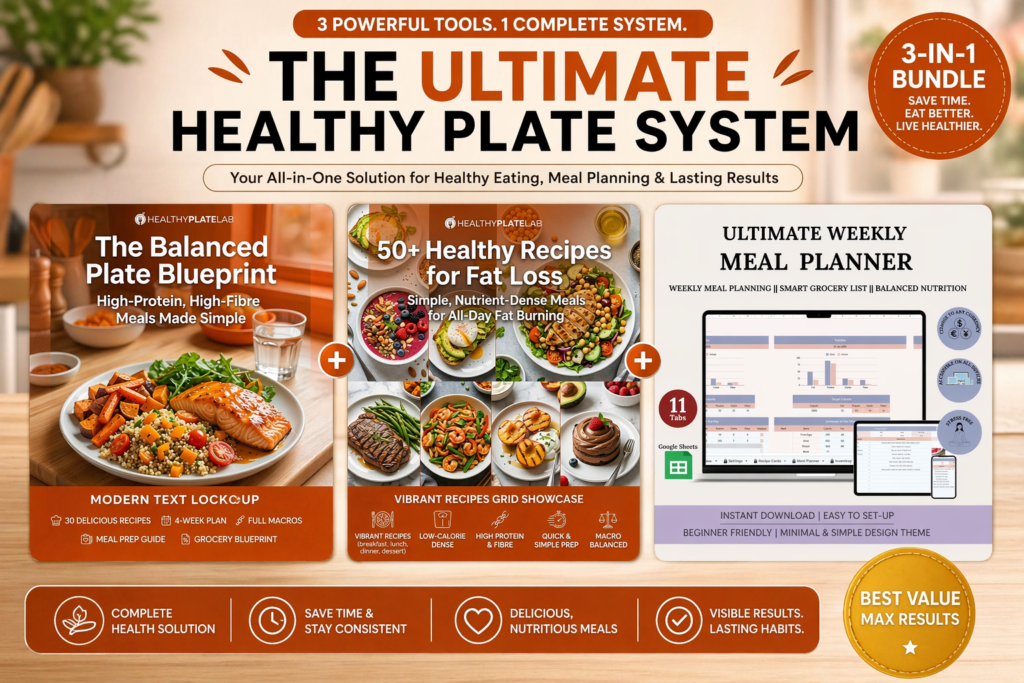
Which category are you starting with? Drop it in the comments — and if you want the full blueprint that ties all of this together with 80+ recipes, a Balanced Plate Blueprint, and an 11-Tab Smart Weekly Planner, the Complete Transformation Bundle at healthyplatelab.com is the infrastructure that makes this level of eating permanent. $9.99.