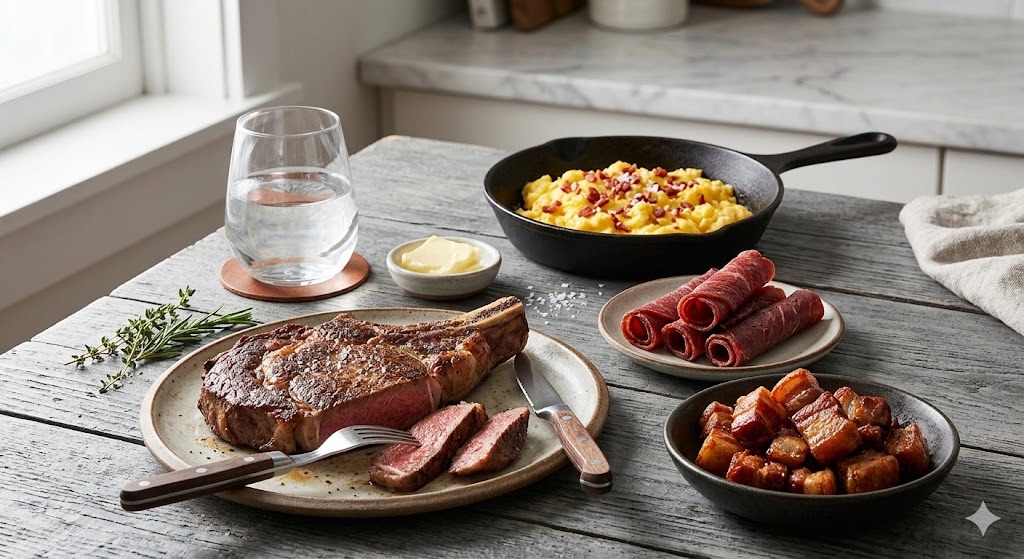
Hey friend. I see you. If you’ve been curious about the carnivore diet but feel overwhelmed by the meat-only noise, you are not alone. Transitioning can feel intense—the carb cravings, energy dips, and that nagging is this safe? feeling. While many guides seem geared toward intense gym guys, I wanted to create something approachable specifically for women starting out.
This list isn’t about perfection; it’s about simple, nutrient-dense meals that actually keep you full, balance your energy, and make the adjustment period so much easier. These recipes are minimal effort but maximum satiety, perfect for busy days when you just need reliable fuel that supports fat loss without making you feel deprived. Let’s make this simple.
Why These Meals Work
Entering the carnivore world helps simplify your nutrition completely. By centering meals on high-quality animal protein, you naturally eliminate processed foods, sugar, and inflammatory vegetable oils. This dramatic shift is incredibly effective for stabilizing blood sugar. When insulin stops spiking, those intense cravings disappear, making consistent fat loss much easier without counting every calorie.
For women, prioritizing protein is crucial. Protein is the most satiating macronutrient, meaning it keeps you fuller, longer, reducing the urge to snack. It also protects your lean muscle mass while you lose body fat, which is essential for a healthy metabolism. These meals focus on nutrient density, supplying essential B vitamins, iron, and healthy fats that support hormonal balance and sustained energy, helping you feel capable, not depleted.
1. Perfect Ribeye Steak
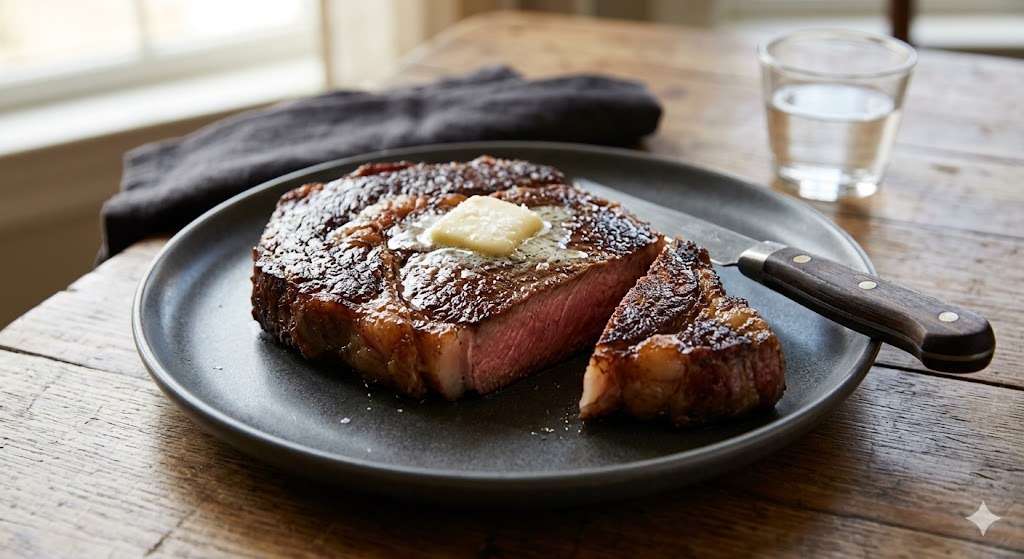
This is the quintessential carnivore meal, offering the perfect ratio of protein and healthy fats to lock in satiety for hours. A properly cooked ribeye requires zero complex ingredients, just heat and salt, delivering unparalleled flavor and essential nutrients like zinc and B vitamins. Using a reliable meat thermometer ensures you hit your preferred doneness every single time, making this an easy victory for beginners.
Ingredients
- 1 (12–16 oz) ribeye steak, ideally 1.5 inches thick
- 1 tbsp tallow or ghee (optional, for searing)
- 1–2 tsp coarse sea salt
- 1 pat grass-fed butter (optional, for finishing)
Steps
- Remove the steak from the refrigerator 30–45 minutes before cooking to bring it closer to room temperature, ensuring even cooking. Pat it completely dry with paper towels.
- Generously season all sides of the steak with the coarse sea salt.
- Heat a heavy cast-iron skillet over high heat until it is just beginning to smoke. If your steak is very lean, you can add a tiny bit of tallow or ghee.
- Carefully place the steak in the hot skillet. Sear without moving for 3–4 minutes, developing a deep, dark crust.
- Flip the steak and sear the other side for another 3–4 minutes. Use tongs to sear the fat strip on the edge as well.
- For a medium-rare steak, cook until the internal temperature reaches 130°F (54°C) on your food scale/thermometer. (The temperature will rise slightly as it rests).
- Remove the steak from the pan and let it rest on a cutting board for at least 8–10 minutes before slicing. This is crucial for retaining the juices. Top with a pat of butter if using.
Macros
- Calories: 845
- Protein: 62g
- Carbs: 0g
- Fat: 65g
2. Savory Ground Beef Breakfast Scramble
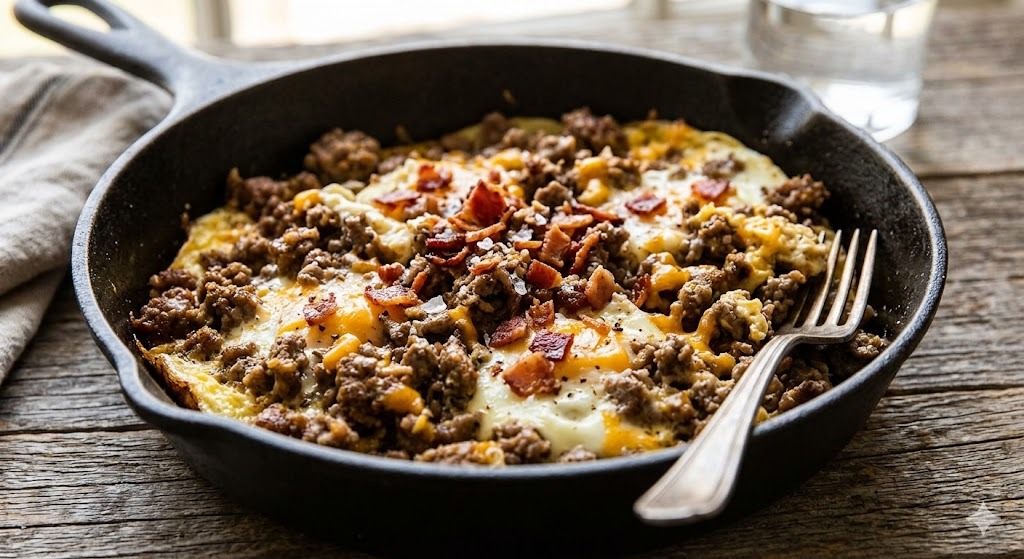
Starting your day with this savory scramble completely crushes sweet cravings and sets a stable baseline for your blood sugar. It’s a high-protein, beginner-friendly option that uses affordable ground beef and eggs, providing essential nutrients that keep energy high all morning. This meal ensures you won’t experience the mid-morning crash common with carb-heavy breakfasts.
Ingredients
- 8 oz (80/20) ground beef
- 3 large eggs
- 1 tbsp tallow, ghee, or butter
- 1 oz shredded sharp cheddar cheese (optional, if tolerating dairy)
- 1/2 tsp sea salt
Steps
- Heat a skillet or nonstick skillet over medium heat and add the ground beef. Cook, breaking it up with a spoon, until fully browned (about 5–7 minutes).
- Drain excess fat if desired (though keeping it maximizes satiety), then add the tallow or butter to the pan.
- In a small bowl, whisk the eggs with the sea salt.
- Pour the eggs over the ground beef in the skillet. Stir gently and constantly, scraping the bottom of the pan as the eggs set.
- Just before the eggs are fully cooked, stir in the shredded cheese (if using) and let it melt.
- Serve immediately, topped with extra flaky salt if you like.
Macros
- Calories: 715
- Protein: 51g
- Carbs: 1g
- Fat: 55g
3. Crispy Pork Belly Bites
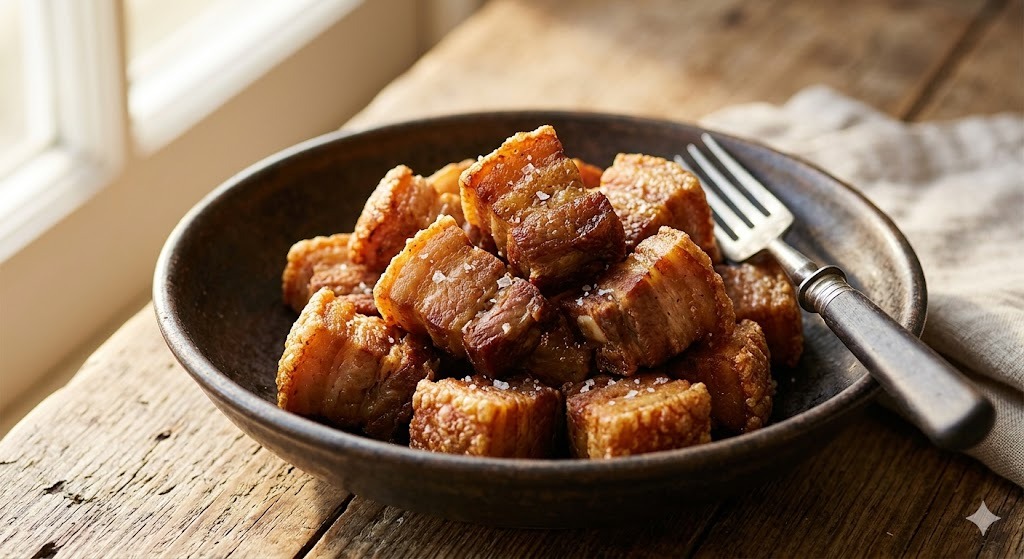
When you need a high-fat meal that tastes like an indulgence, pork belly bites are the answer. They are incredibly simple to make, especially using an air fryer, which renders the fat into a perfect, crispy crust. This dish is excellent for boosting your fat intake, which is essential for energy and hormonal health when starting a carnivore diet.
Ingredients
- 1 lb raw pork belly (skin-on or off, depending on preference)
- 1–2 tsp coarse sea salt
Steps
- If the pork belly is in one slab, cut it into uniform 1-inch cubes.
- Generously season all sides of the pork belly cubes with the coarse sea salt.
- Place the cubes in a single layer in the basket of your air fryer. Do not overcrowd; work in batches if necessary.
- Air fry at 400°F (200°C) for 15–20 minutes, flipping them halfway through, until they are golden brown and very crispy on the outside. (Cooking times may vary slightly between air fryers).
- If you don’t have an air fryer, roast them on a wire rack over a baking sheet at 400°F for about 30–35 minutes, turning occasionally.
- Remove the bites and place them on a paper towel-lined plate to absorb excess surface fat before serving.
Macros
- Calories: 1130
- Protein: 41g
- Carbs: 0g
- Fat: 105g
4. Quick Brown Butter Burger Bowls
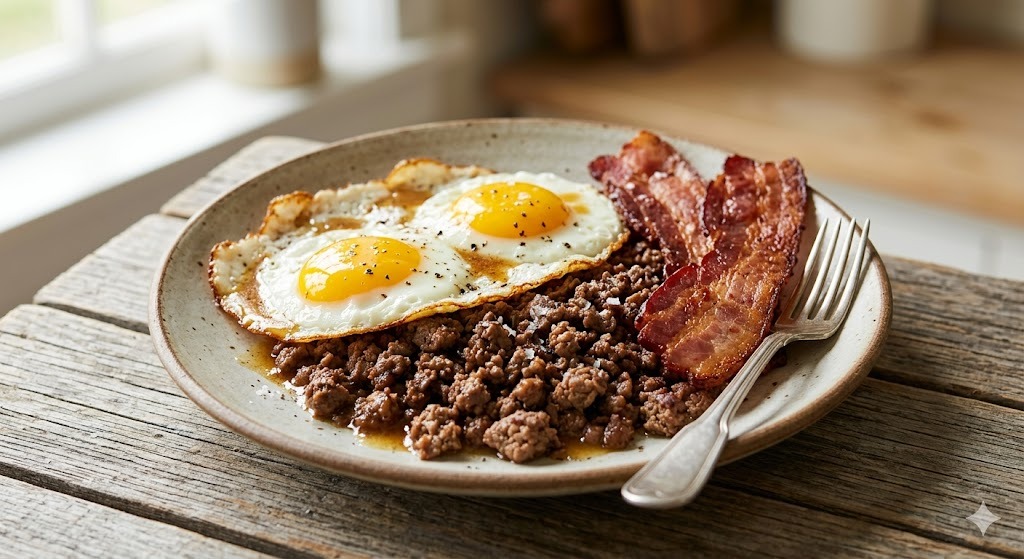
This bowl is a fantastic example of a high-volume, satiating carnivore meal that takes less than 15 minutes. By browning the butter, you create a rich, nutty sauce that elevates simple ground beef into a meal you actually look forward to. Burger bowls are highly customizable; if you are tolerating dairy, a slice of cheese melted on top is a perfect addition to this fat-loss friendly dinner.
Ingredients
- 8 oz (80/20) ground beef patties or bulk beef
- 2 tbsp grass-fed butter
- 1/2 tsp sea salt
- 1 fried egg (optional, for topping)
Steps
- If using bulk ground beef, form it into one or two thick patties. (Patties often sear better than loose meat). Season both sides generously with sea salt.
- Heat a skillet (cast iron is great here) over medium-high heat. Add the patties and cook for 3–4 minutes per side, or until they have a deep sear and are cooked through.
- While the burgers cook, melt the butter in a separate small, light-colored saucepan or nonstick skillet over medium heat.
- Watch the butter closely. It will melt, then foam, then start to crackle as the water evaporates. After 3–5 minutes, you will see little brown specks form, and it will smell nutty. Immediately remove from heat so it doesn’t burn.
- Place the cooked burger patties (or crumble the meat if preferred) into a bowl. Top with a fried egg if desired.
- Pour the warm brown butter sauce over the entire bowl just before serving.
Macros
- Calories: 720
- Protein: 46g
- Carbs: 0g
- Fat: 60g
5. Slow-Cooker Pulled Pork
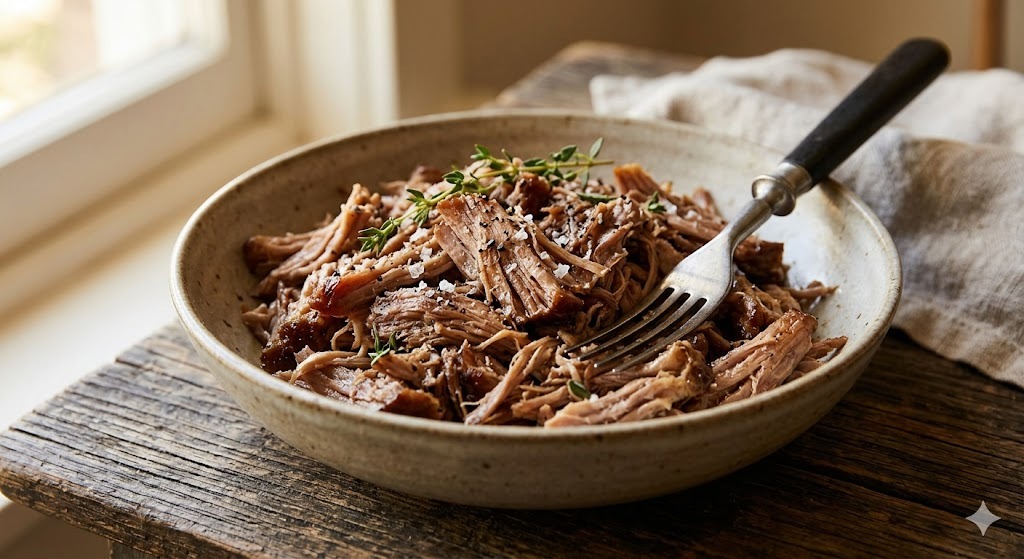
The slow cooker is your best friend on the carnivore diet. This recipe transforms an affordable pork shoulder into days of tender, fatty fuel with almost zero active effort. It’s perfect for meal prep, allowing you to have a high-protein option ready in the fridge at all times, making it beginner-friendly and helping you stay consistent on busy weeknights.
Ingredients
- 3–4 lb pork shoulder (Boston butt)
- 1 cup water or bone broth (optional, but helps create steam)
- 1 tbsp coarse sea salt
- 1 pat butter or tallow (per serving, when reheating)
Steps
- Pat the pork shoulder dry and generously season all sides with the coarse sea salt.
- Place the seasoned pork into the slow cooker. Add the water or bone broth, if using, by pouring it around the meat, not over it, so you don’t wash off the salt.
- Set the slow cooker to Low and cook for 8–10 hours, or until the pork is completely tender and pulls apart easily with a fork.
- Remove the pork shoulder to a large cutting board or dish. Using two forks, shred the meat, removing any large pieces of gristle or excess bone.
- Moisten the shredded pork with some of the fatty juices left behind in the slow cooker.
- For the best flavor, reheat individual servings in a skillet with a pat of butter or tallow until the edges become crispy.
Macros
- Calories: 360 (per 6oz serving)
- Protein: 40g
- Carbs: 0g
- Fat: 22g
6. Satiating Salmon Paté
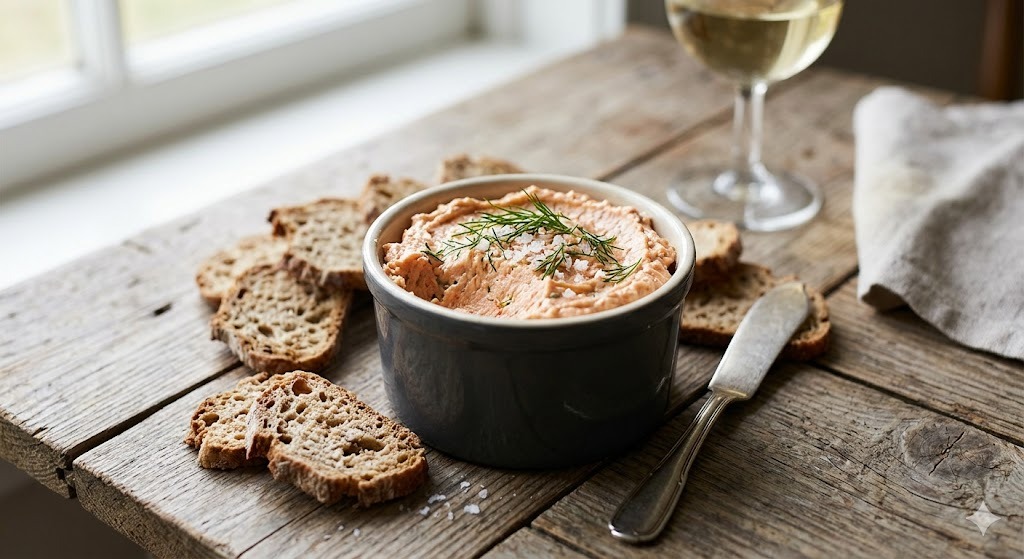
Adding seafood like salmon is a smart move for beginners, providing crucial Omega-3 fatty acids that support heart and brain health while giving your palate a break from red meat. This paté uses affordable canned salmon and cream cheese to create a rich, spreadable meal that’s incredibly satiating. It requires zero cooking and can be whipped up in minutes using a simple blender, making it perfect for a quick lunch.
Ingredients
- 1 can (14.75 oz) wild-caught pink salmon (undrained, includes skin and soft bones for nutrients)
- 4 oz full-fat cream cheese (softened, optional if avoiding dairy)
- 2 tbsp butter or ghee (melted)
- 1/2 tsp sea salt
Steps
- Open the can of salmon. You can choose to remove the largest bones and skin if they bother you, but they are soft, completely edible, and packed with calcium.
- Place the salmon (and its juices) into a blender or food processor.
- Add the softened cream cheese, melted butter (or ghee), and sea salt.
- Blend on high for 30–60 seconds, or until the mixture is completely smooth and creamy.
- Transfer the paté to a small crock or bowl. You can eat it immediately, but the texture improves significantly if chilled in the refrigerator for at least an hour.
- Serve as a main meal, eating it with a spoon or using crispy pork rinds as a “dipper.”
Macros
- Calories: 880
- Protein: 78g
- Carbs: 3g
- Fat: 61g
7. Simple Egg & Bacon Bites

These egg and bacon bites are the ultimate carnivore grab-and-go meal, perfect for busy mornings or as a highly satiating emergency snack. They are incredibly beginner-friendly because they require minimal prep and use staple ingredients that provide high-quality protein and fats, essential for fat loss. You can make a batch on Sunday and have reliable fuel ready in the fridge all week long.
Ingredients
- 6 large eggs
- 6 slices thick-cut bacon (ensure no added sugar)
- 1 tbsp ghee or butter (for greasing the pan)
- 1/4 tsp sea salt
Steps
- Preheat your oven to 375°F (190°C). Generously grease six cups of a standard muffin tin with ghee or butter.
- Take one slice of bacon and wrap it around the inside edge of each greased muffin cup, creating a “nest.” If the bacon is very long, you can trim the ends or overlap them.
- In a small bowl, whisk the eggs with the sea salt.
- Carefully pour the egg mixture into the center of each bacon nest, filling each cup about 3/4 of the way full.
- Bake for 15–20 minutes, or until the eggs are set and slightly golden on top, and the bacon edges are crispy.
- Let the bites cool in the pan for a few minutes before using a knife to gently pop them out. Serve warm or store in an airtight container for meal prep.
Macros
- Calories: 150 (per bite)
- Protein: 11g
- Carbs: 0g
- Fat: 12g
8. Ribeye Bone Broth

Bone broth is a non-negotiable for anyone starting the carnivore diet, especially women, as it’s essential for gut healing, joint support, and managing the “keto flu” symptoms. This ribeye bone broth uses the leftover bones from your steak dinners, making it incredibly resource-efficient. It’s rich in collagen and amino acids, providing a deep level of nourishment and hydration that’s crucial for success.
Ingredients
- 2–3 lb beef bones (ideally from ribeye or other fatty cuts; can also use marrow bones)
- 12–16 cups water (enough to fully cover the bones)
- 1 tbsp apple cider vinegar (optional, helps extract minerals)
- 1–2 tsp coarse sea salt (added after cooking)
Steps
- If using raw bones, roast them on a baking sheet at 400°F (200°C) for 30–45 minutes until they are deeply browned. This significantly improves the flavor of the broth. (If using bones saved from cooked steaks, you can skip this step).
- Place the roasted bones (and any juices from the baking sheet) into a large slow cooker or stockpot.
- Add the water and the apple cider vinegar, ensuring the bones are fully submerged.
- If using a slow cooker, cook on Low for 24–48 hours. The longer it cooks, the more collagen and nutrients will be extracted. If using a stockpot, bring to a boil, then immediately reduce to a very low simmer, cover, and cook for at least 18–24 hours.
- Once finished, turn off the heat. Strain the broth through a fine-mesh sieve or cheesecloth into large glass jars.
- Discard the bones. Let the broth cool slightly before refrigerating. A layer of fat will solidify on top; you can leave this for satiety or scrape it off and use it as tallow for cooking. Add salt to taste just before drinking.
Macros
- Calories: 80 (per 1 cup serving)
- Protein: 15g
- Carbs: 0g
- Fat: 2g
9. Creamy Whipped Cottage Cheese
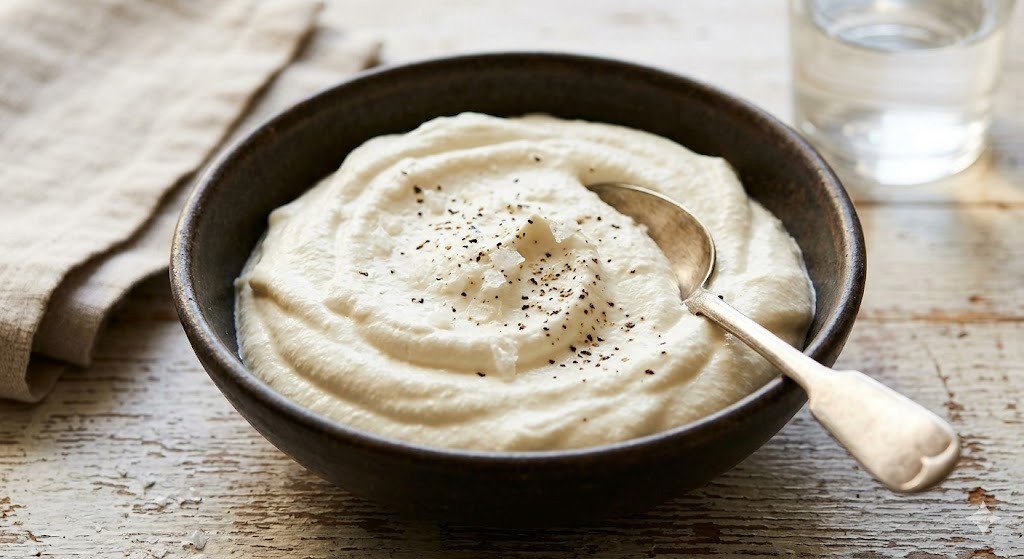
If you are tolerating dairy, this whipped cottage cheese is a game-changer. It transforms a standard, lumpy ingredient into a light, airy, mousse-like treat that feels incredibly indulgent while packing a massive protein punch. This requires just two ingredients and a blender, making it a perfect, non-red meat option that helps you hit your protein goals and keeps you incredibly full.
Ingredients
- 1 cup full-fat (4%) cottage cheese
- 1/4 tsp sea salt
Steps
- Place the cottage cheese and sea salt into a blender or food processor.
- Blend on high for 30–60 seconds, scraping down the sides as needed.
- Continue blending until the mixture is completely smooth, creamy, and aerated, with zero lumps remaining. It should have the consistency of a light mousse.
- You can eat it immediately, but it is often better if chilled in the refrigerator for 30 minutes to firm up slightly.
- Serve as is for a quick meal, or top with a few crispy bacon crumbles for texture.
Macros
- Calories: 220
- Protein: 25g
- Carbs: 6g
- Fat: 11g
10. Tender Chicken Livers with Ghee
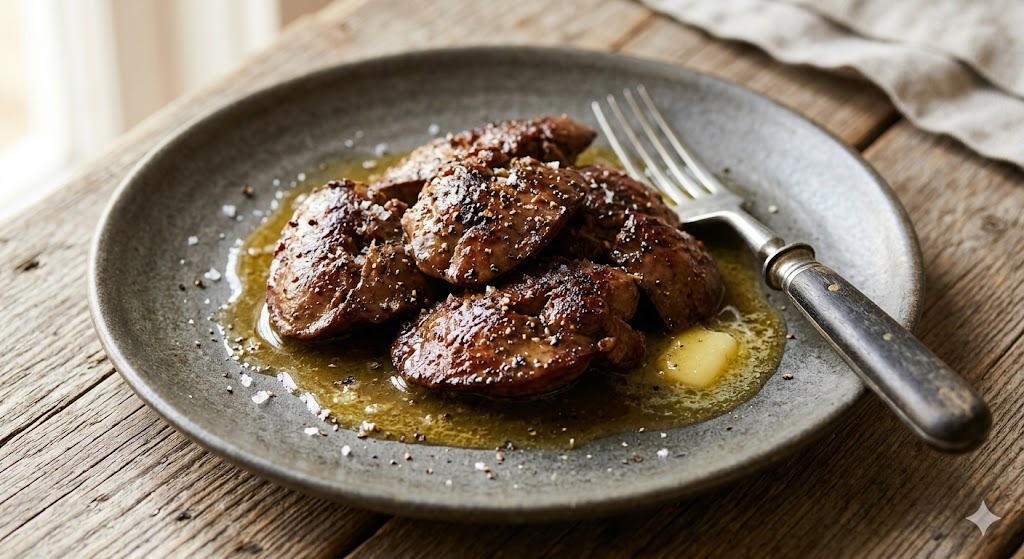
Organ meats are the most nutrient-dense foods on the planet, and chicken livers are the perfect entry point for beginners. They have a much milder flavor than beef liver and are incredibly tender when quick-seared in ghee. This simple meal provides an unparalleled boost of Vitamin A, B12, and iron, which is essential for women’s energy levels and hormonal health. It’s affordable, fast, and remarkably nourishing.
Ingredients
- 8 oz chicken livers (cleaned and patted dry)
- 2 tbsp ghee or butter
- 1/2 tsp sea salt
Steps
- Thoroughly rinse the chicken livers under cold water and pat them completely dry with paper towels. (This is essential for getting a good sear).
- Season the livers generously with the sea salt.
- Heat a skillet (cast iron works well) over medium-high heat. Add the ghee or butter and let it melt until it is hot and shimmering.
- Carefully add the chicken livers to the hot pan in a single layer. Do not overcrowd.
- Sear for 2–3 minutes without moving to develop a nice crust.
- Flip the livers and sear the other side for another 2–3 minutes. They should be browned on the outside but still slightly pink in the middle. (Do not overcook, or they will become tough and bitter).
- Serve immediately, pouring any remaining ghee from the pan over the livers.
Macros
- Calories: 410
- Protein: 38g
- Carbs: 0g
- Fat: 28g
Starting the carnivore diet is a major shift, but it doesn’t have to be complicated. By focusing on these simple, high-protein, fatty meals, you are giving your body the nutrient-dense fuel it needs to adapt, heal, and thrive. Consistency is key, not perfection. If you have a chaotic day, don’t stress—just make the next best meat-based choice you can. These recipes are tools to help you feel strong and capable as you find your rhythm. Take it one day, one meal at a time. You’ve totally got this.