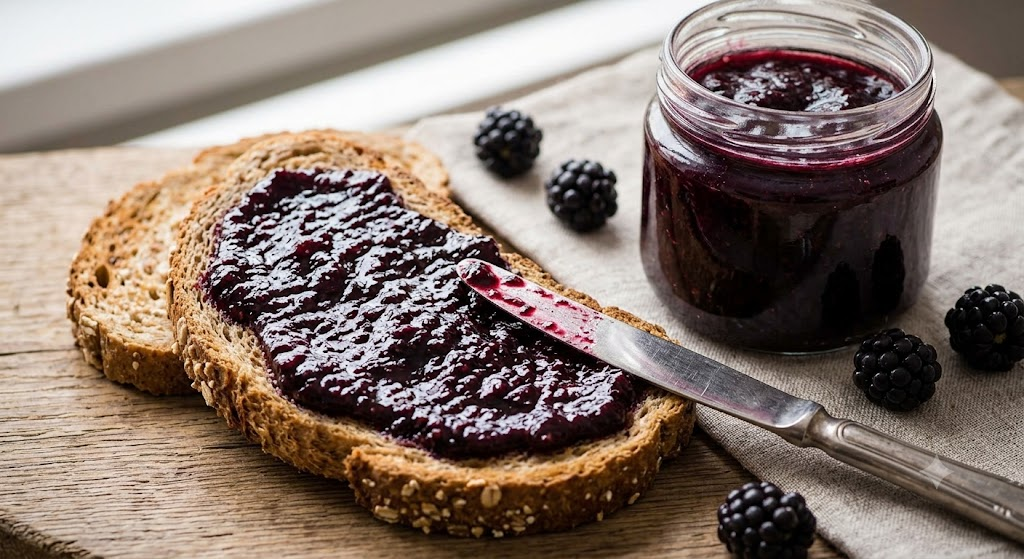
Blackberry jam is a staple in many kitchens, known for its deep, complex flavor. But traditional versions often load this vibrant fruit with large amounts of refined sugar, compromising its nutritional value and bright, tart taste. This recipe reimagines the classic jam as a health-forward, low-sugar, and keto-friendly alternative, perfect for anyone conscious of their sugar intake or following specific dietary plans like keto or vegan.
By reducing the sugar, we allow the natural flavor of the blackberries to take center stage, resulting in a jam that is truly bursting with fruit. We use natural thickeners and a carefully chosen alternative sweetener, ensuring a satisfying texture and sweetness profile without the refined-sugar spike. Whether you’re enjoying it on toast, stirring it into yogurt, or incorporating it into low-carb desserts, this healthy blackberry jam is a simple, delicious way to elevate your snacks and meals while adhering to your wellness goals.
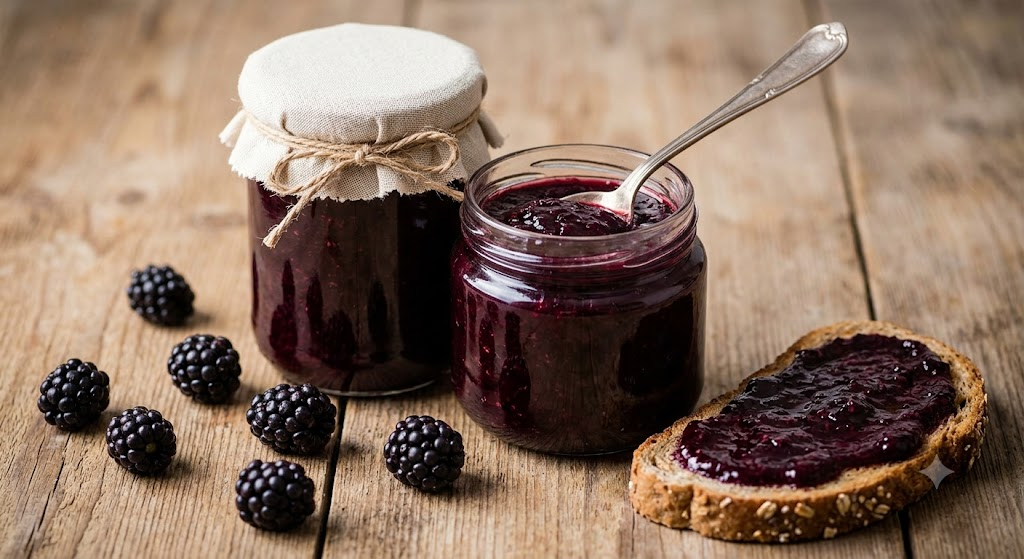
Low-Sugar Blackberry Jam: A Healthy, Berry-Forward Recipe
Welcome to the future of jam making, where flavor is paramount and refined sugar is a distant memory. This Low-Sugar Blackberry Jam is a celebration of simple ingredients and clean eating. It is keto-friendly, low-carb, vegan, gluten-free, and high in fiber, specifically designed to satisfy your sweet tooth while keeping your nutritional goals aligned.
Unlike conventional jams, which use excessive sugar to achieve gelation and preservation, this recipe leverages the natural gelling power of blackberries and a specialized natural thickener. This shift reduces the overall calorie and sugar content dramatically. It’s a versatile recipe that can be customized to your preferred sweetness, ensuring a truly personalized, gourmet experience.
The process is remarkably simple, transforming a handful of raw ingredients into a rich, spreadable preserve in under an hour. By making this jam from scratch, you bypass the preservatives and corn syrup common in store-bought options, opting instead for a vibrant, homemade alternative.
The Nutrient Profile of Your Berries
To understand why this jam is so exceptional, we must first appreciate its star ingredient: the blackberry. Blackberries are not merely delicious; they are nutritional powerhouses.
First and foremost, blackberries are an excellent source of dietary fiber. A single cup provides nearly 8 grams, essential for digestive health, blood sugar regulation, and feelings of satiety. This is why the recipe inherently qualifies as High Fiber. When combined with the thickening agent in this jam, the overall fiber count is significantly boosted.
They are also rich in antioxidants, particularly anthocyanins, which give the berries their deep purple hue. These compounds work to neutralize free radicals in the body, supporting overall cellular health. They contain significant levels of Vitamin C and Vitamin K, crucial for immune function and bone health, respectively.
Understanding the Sugar Alternatives
Creating a low-sugar jam necessitates choosing an effective, high-quality sugar substitute. Traditional sugar (sucrose) serves two functions in jam: sweetness and structure. It helps form the pectin gel and acts as a preservative.
In this recipe, we must select an alternative that sweetens without the glycemic impact or high calorie count. Our preferred choice is Allulose.
Allulose is a rare sugar, physically found in small quantities in foods like figs and raisins. It tastes very close to sugar—it is about 70% as sweet—but is not metabolized by the body in the same way. The majority of allulose passes through the body without contributing significantly to blood glucose or insulin levels. This makes it a perfect choice for Low Carb and Keto diets.
Furthermore, Allulose has a unique property among sugar substitutes: it has excellent solubility and bulking properties. Unlike erythritol, which can sometimes crystallize in the refrigerator, Allulose helps create a smooth, syrup-like consistency, improving the mouthfeel of the finished jam. It doesn’t affect the gelling process negatively, as some bulk sweeteners might.
Another popular choice is Monk Fruit Sweetener (often blended with Erythritol). If you use a Monk Fruit blend, it will work well for sweetness. However, be aware that erythritol may slightly crystallize when cooled, although the chia seeds/pectin usually mitigate this effect effectively in jam. Both of these options are Vegan and Low Calorie.
Gathering Your Ingredients
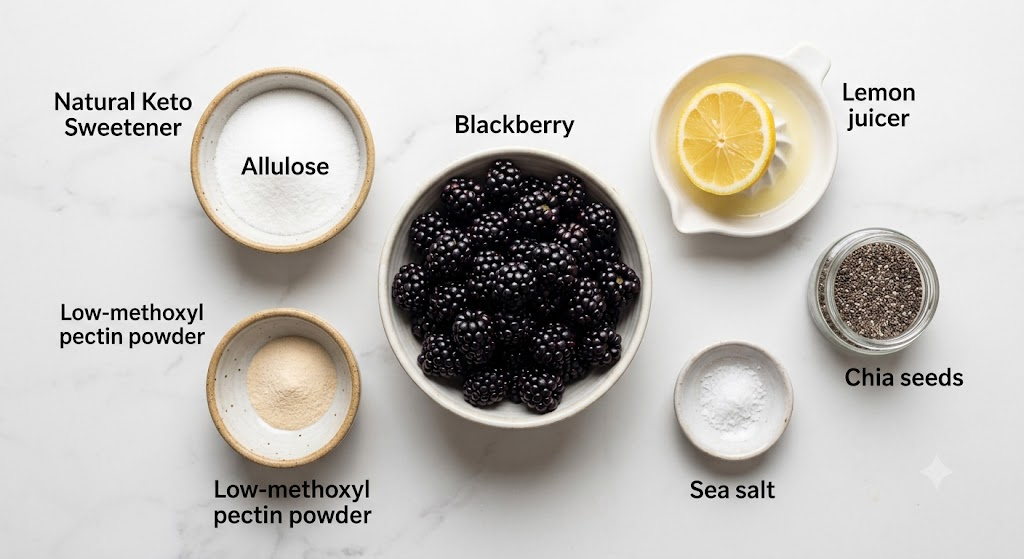
The beauty of this recipe lies in its simplicity. Let’s explore the essential components for creating this vibrant, low-sugar spread. The specific quantities are listed in the detailed recipe section below.
First and foremost, you will need Blackberries. The quality of the berry dictates the quality of the jam. For the absolute best flavor and natural gelling capability, opt for fresh, in-season blackberries. However, frozen blackberries are a highly convenient and nutrient-dense alternative, as they are often picked at peak ripeness and flash-frozen.
Next is the natural gelling agent. Conventional pectin (the kind that usually requires heavy sugar) will not work effectively here because it needs high sugar concentrations (55–65% total solids) and specific pH levels to activate.
Instead, we recommend using Low-Methoxyl Pectin (LM Pectin), specifically marketed as “Low Sugar” or “No Sugar Needed” pectin. LM Pectin forms a gel when activated by calcium ions, which are often bundled with the pectin powder (sometimes labeled as “calcium water” powder). This type of pectin is highly effective with minimal sweetener.
An excellent alternative gelling agent—and one that boosts the nutrient profile even further—is Chia Seeds. Chia seeds have powerful gelling properties when mixed with liquid, creating a thick, pudding-like consistency. While they yield a slightly different texture (like a textured seed preserve rather than a smooth gel), they are excellent for creating High Volume and increasing the fiber content and healthy omega-3 fatty acids of the jam. In this recipe, you can choose to use either specialized pectin or chia seeds for structure, based on your texture preference and available ingredients. The method described below primarily features the LM Pectin for that classic jam feel.
For sweetness and volume, you will need Allulose (or your chosen natural keto sweetener). The amount is adjustable, but it helps bulk the jam and balance the tartness of the blackberries.
A splash of fresh Lemon Juice is critical. The acidity of the lemon juice brightens the berry flavor and, crucially, helps activate the low-sugar pectin.
Finally, a tiny pinch of Salt enhances all the other flavors.
Let’s see what all these healthy ingredients look like before they are transformed.
The Process: Step-by-Step
Making this healthy blackberry jam is efficient and satisfying. It’s a fast-boil method that preserves the fresh fruit flavor better than a long-simmer jam. Below we detail the process, from prep to preserving.
Preparing Your Kitchen and Ingredients
Before you begin the cooking process, it is essential to prepare your ingredients and sterilize your equipment. Proper sterilization is critical for the jam’s longevity, as we are not using the high levels of sugar found in conventional recipes, which act as a preservative.
1. Sterilize Jars and Equipment
Start by selecting clean glass jars and their corresponding lids. Sterilize them in a rolling boil for at least 10 minutes, then let them air dry on a clean towel. Ensure all spoons and ladles you use are also clean. This is crucial for Vegan preservation methods where traditional high-sugar preservation isn’t used.
2. Wash and Measure
If you are using fresh blackberries, wash them thoroughly in cold water and drain. If using frozen, there is no need to thaw them beforehand; you can put them directly into the pot.
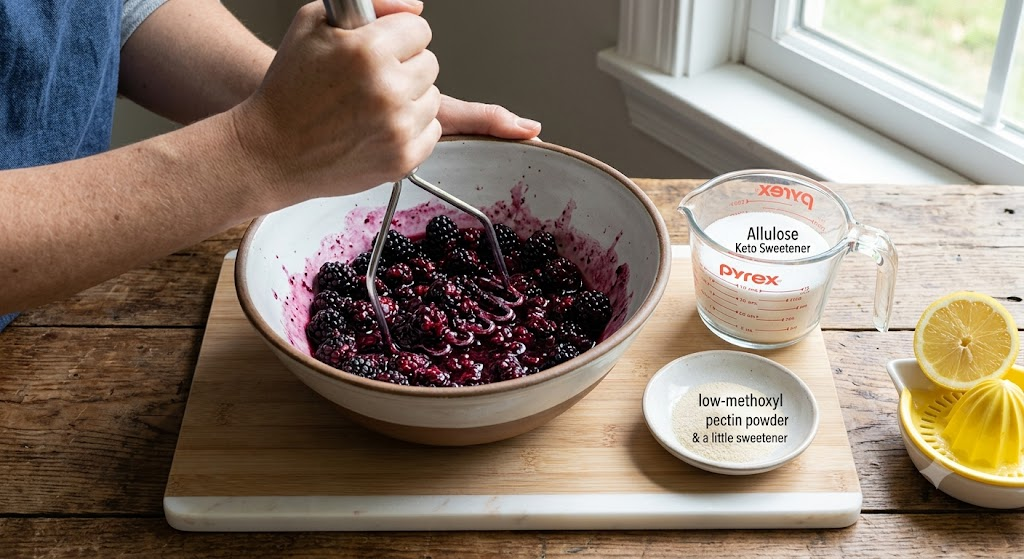
Measure out your allulose, lemon juice, and Low-Methoxyl Pectin accurately. If your LM pectin requires it (check the packaging), mix the pectin powder with a small amount of the sweetener to prevent clumping, or prepare the calcium water as directed.
This is what your kitchen setup will look like right before the cooking begins:
Cooking the Jam
With your preparation complete, the cooking process moves quickly. Ensure you are using a large, heavy-bottomed pot, as the mixture will foam significantly when it boils. This recipe focuses on keeping it Low Calorie.
3. Start the Boil
Place the blackberries in your large pot. If you are using fresh berries, you can lightly mash them now to release their natural juices, which helps them cook down faster. Add the fresh lemon juice to the pot. Heat the pot over medium-high heat, stirring constantly to prevent sticking and encourage the berries to break down.
4. Introduce the Pectin and Sweetener
Once the mixture is starting to steam and liquefy, add the Low-Methoxyl Pectin (pre-mixed with a tablespoon of sweetener if the package suggests) into the fruit mixture. Stir the powder in vigorously to ensure it dissolves completely. If you are using calcium water as part of your LM pectin kit, add it now according to the instructions. This pectin choice keeps the recipe Gluten Free and suitable for keto.
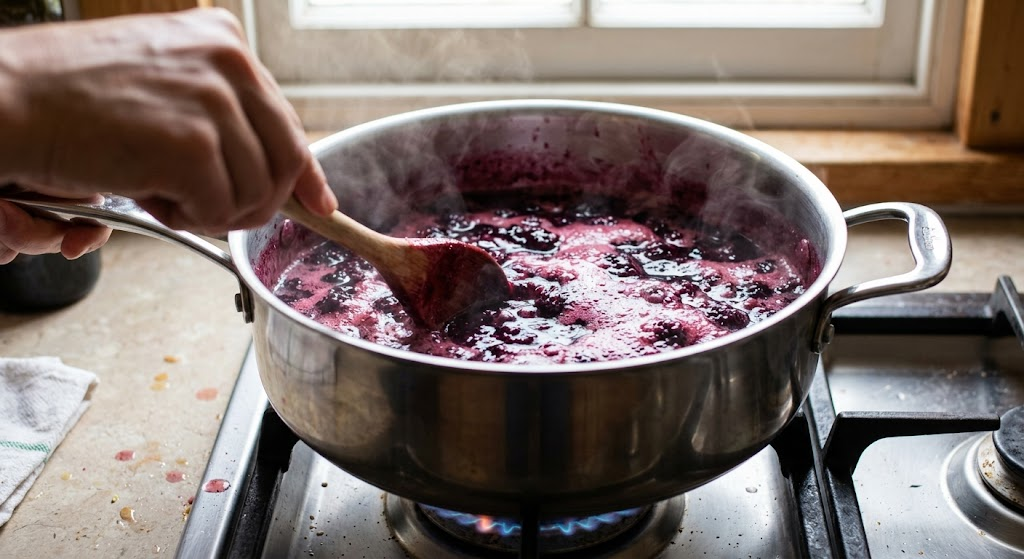
Bring the berry mixture to a full, rolling boil. A rolling boil is one that does not stop bubbling even when you stir it.
Once the rolling boil is achieved, add the remainder of your Allulose (or chosen keto sweetener) all at once. Stir until the sweetener is completely dissolved.
Continue to cook at a rolling boil for exactly 1 minute. Do not boil for much longer than this, as you want to preserve the fresh, vibrant flavor and texture of the berries. You are creating a High Volume low-calorie treat.
Observe the change as the mixture vigorously boils:
5. Check the Set and Finish
After the minute of rolling boil, remove the pot from the heat. This step is critical in ensuring your jam achieves the perfect consistency without overcooking.
You might see some foam on the surface of the jam. This is normal and purely an aesthetic concern. If you wish, you can skim this foam off with a cold metal spoon.
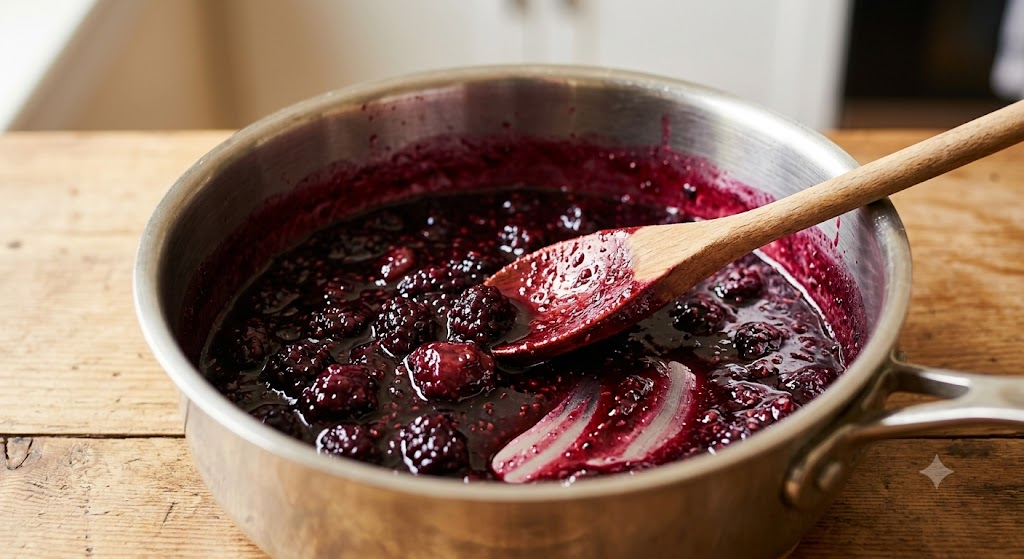
At this stage, you have a hot, rich, ruby-purple liquid. It will not be thick like jam yet. Low-sugar pectin and chia seeds only set up properly after they begin to cool. It is crucial not to keep boiling the mixture in an attempt to thicken it, as you may cook off the gelling power of the pectin or lose the fresh flavor of the berries.
Here is what the jam looks like midway through its transformation: it has the deep, glossy color, but still retains its fluid, molten texture, emphasizing its High Fiber potential. We are moments away from a perfect, low-carb preserve.
6. Jarring and Storage
Immediately ladle the hot jam into your sterilized, warm jars. Leave about 1/4 inch (0.5 cm) of headspace at the top of the jar. This headspace allows the food to expand during cooling and helps create a vacuum seal.
Wipe the rims of the jars with a clean, damp cloth to ensure no jam residue interferes with the seal. Place the sterilized lids on the jars and screw the bands on until they are just fingertip tight. Do not overtighten.
Let the jars cool completely on a towel-lined countertop. As they cool, you may hear the satisfying “pop” of the lids, indicating that the vacuum seal has formed.
Once fully cooled, store the jars in the refrigerator. Unlike high-sugar jams which can keep for weeks at room temperature, low-sugar jams must be refrigerated. This is a crucial distinction for this Low Sugar and Vegan recipe. If the jars have sealed properly, they will last 3–4 weeks in the fridge. For longer storage, you can freeze this jam (ensure you leave at least 1/2 inch of headspace for expansion) for up to 6 months.
Low-Sugar Blackberry Jam: The Final Result
Creating your own Low-Sugar Blackberry Jam is a rewarding experience. It’s a simple change that dramatically improves the nutritional value of a classic condiment. By eliminating the massive amounts of refined sugar, you are left with a preserve that actually tastes like the fruit it’s made from—vibrant, complex, and intensely berry-forward.
This jam is more than just a spread; it’s a versatile ingredient in a healthy kitchen. Because it is Low Carb, Keto, and Low Calorie, it can be incorporated into numerous dietary plans. It’s an excellent way to add fiber (High Fiber) and antioxidants to your meals.
Imagine stirring this rich, glossy, textured spread into homemade chia pudding, using it as a filling for low-carb crepes, or creating a Vegan and Gluten Free thumbprint cookie. Its robust flavor allows you to use less, making it a sustainable choice for your wellness journey.
This recipe proves that eating healthily doesn’t mean sacrificing flavor or the joy of cooking. Enjoy the simple, profound taste of real fruit, preserved perfectly for your enjoyment.
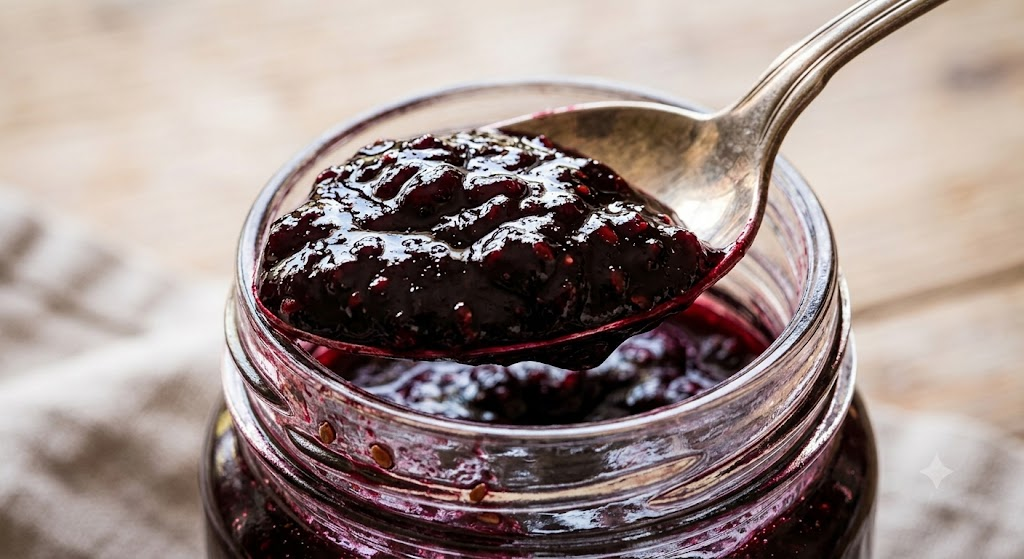
Here is the complete recipe with detailed measurements and instructions:
Healthy Low-Sugar Blackberry Jam (Keto, Vegan, High Fiber)
This recipe yields approximately 3 half-pint (8 oz / 240ml) jars.
Prep time: 15 minutes Cook time: 10 minutes Total time: 25 minutes (plus cooling time)
Ingredients
- 4 cups Fresh or Frozen Blackberries (approx. 600g)
- 1/4 cup Lemon Juice (freshly squeezed)
- 3 tbsp Low-Methoxyl Pectin (e.g., Pomona’s Universal Pectin or “No Sugar Needed” pectin powder)
- 3/4 cup Allulose Sweetener (or granulated Monk Fruit/Erythritol blend; adjust to preferred sweetness)
- A pinch of Sea Salt
- Optional: 1 tsp Vanilla Extract
Instructions
- Sterilize Jars: Before starting the jam, ensure your jars, lids, and bands are clean. For longer shelf life, sterilize the jars by submerging them in boiling water for 10 minutes, then keep them warm in the water while you prepare the jam.
- Prepare Fruit: Thoroughly wash fresh blackberries. If using frozen berries, there is no need to thaw. Place the blackberries and lemon juice into a large, heavy-bottomed pot.
- Mash: Using a potato masher, lightly mash the berries to release their juices.
- Dissolve Pectin: In a small, dry bowl, mix the Low-Methoxyl Pectin powder with about 1 tablespoon of your sweetener (this helps prevent clumping when it’s added to the pot). Set this mixture aside.
- Heat Mixture: Bring the fruit and lemon juice mixture to a boil over medium-high heat.
- Add Pectin: Once the fruit is boiling, add the pectin-sweetener mixture vigorously into the pot. Stir constantly for 1–2 minutes to ensure the pectin is completely dissolved.
- Add Remaining Sweetener: Add the remaining Allulose, the pinch of salt, and the vanilla extract (if using). Stir until the sweetener is completely dissolved.
- Rolling Boil: Bring the entire mixture back to a full, rolling boil (a boil that cannot be stirred down). Boil for exactly 1 minute.
- Remove from Heat: Immediately remove the pot from the heat. If desired, you can skim any foam off the surface with a metal spoon.
- Fill Jars: Carefully ladle the hot jam into the sterilized jars, leaving about 1/4 inch of headspace. Wipe the rims of the jars clean with a damp towel. Apply the lids and bands until just fingertip tight.
- Cool and Seal: Let the jars sit undisturbed on a towel-lined countertop until cooled completely. As they cool, the lids should create a vacuum seal (you will likely hear a pop sound). Check for a proper seal: the center of the lid should not bounce back when pressed.
- Storage: Store the unsealed or opened jars in the refrigerator for up to 4 weeks. If the jars have sealed properly, they can be stored in the refrigerator for 3–4 weeks. Low-sugar jam must be kept refrigerated once cooled. For longer storage, freeze unsealed jars for up to 6 months (ensure you leave adequate headspace for expansion).