
Introduction
If you’ve been dealing with persistent joint pain, constant fatigue, brain fog that won’t lift, or just a general feeling that your body is working against you — chronic inflammation might be a big part of what’s going on. And while inflammation gets talked about a lot in wellness circles, the practical side of actually eating to reduce it rarely gets explained in a useful way.
Here’s the simple version: certain foods consistently trigger inflammatory responses in the body, and certain foods consistently calm them. Processed oils, refined sugar, and ultra-processed foods fan the flames. Fatty fish, leafy greens, berries, turmeric, olive oil, and fiber-rich whole foods do the opposite. The research on this is genuinely solid.
The problem isn’t knowing what to eat. It’s having it ready when you’re tired, busy, or just hungry right now. That’s where meal prep changes everything. These recipes are built to be made ahead, stored well, and eaten throughout the week — so your anti-inflammatory diet actually happens instead of just existing as a good intention.
Why These Meals Work
Anti-inflammatory eating works through several overlapping mechanisms. Omega-3 fatty acids found in fatty fish, walnuts, and flaxseed directly compete with and suppress inflammatory pathways in the body. Polyphenols — the compounds that give berries, dark leafy greens, and olive oil their color and bitterness — neutralize free radicals that drive cellular inflammation.
Fiber feeds beneficial gut bacteria, and a healthy gut microbiome is one of the most powerful regulators of systemic inflammation in the body. Compounds like curcumin in turmeric, gingerol in ginger, and quercetin in onions and apples have direct anti-inflammatory effects that are well-supported by research. These recipes stack as many of these compounds as possible into meals that are practical, delicious, and genuinely prep-friendly.
1. Golden Turmeric Chicken and Rice Meal Prep Bowls

Turmeric is the star here — curcumin, its active compound, is one of the most studied natural anti-inflammatories in existence. Paired with black pepper (which dramatically increases curcumin absorption), ginger, and garlic, this bowl is essentially a delicious delivery system for some of the most powerful anti-inflammatory compounds in food. It preps beautifully and holds well for four days.
Ingredients:
- 1.5 lbs boneless skinless chicken breast
- 1.5 cups brown rice, dry
- 2 tsp turmeric
- 1 tsp ground ginger
- 1 tsp garlic powder
- ½ tsp black pepper
- 1 tsp smoked paprika
- 2 tbsp olive oil
- Juice of 1 lemon
- Salt to taste
- 2 cups baby spinach per bowl to serve
- Fresh parsley to garnish
Steps:
- Whisk together olive oil, turmeric, ginger, garlic powder, black pepper, paprika, lemon juice, and salt to make a marinade.
- Coat chicken breasts thoroughly and marinate at least 30 minutes or overnight.
- Cook brown rice according to package directions.
- Grill or bake chicken at 400°F for 22–25 minutes until cooked through.
- Slice chicken and divide with rice among four meal prep containers.
- Add a handful of fresh baby spinach to each container before sealing.
- Garnish with fresh parsley. Refrigerate up to four days.
Macros: ~420 cal / 44g protein / 38g carbs / 9g fat
2. Wild Salmon and Roasted Vegetable Sheet Pan

Salmon is the single most powerful anti-inflammatory protein you can eat — its omega-3 fatty acid content is unmatched in everyday foods. This sheet pan version keeps things simple: everything goes on one tray, roasts together, and divides into containers that hold for three to four days. The vegetables here — broccoli, red onion, and cherry tomatoes — are all rich in anti-inflammatory polyphenols.
Ingredients:
- 4 wild salmon fillets (5 oz each)
- 2 cups broccoli florets
- 1 cup cherry tomatoes
- 1 red onion, sliced into wedges
- 2 tbsp extra virgin olive oil
- 3 garlic cloves, minced
- 1 tsp dried oregano
- 1 tsp smoked paprika
- Juice of 1 lemon
- Salt and black pepper to taste
- Fresh dill to garnish
Steps:
- Preheat oven to 400°F (200°C). Line a large baking sheet.
- Toss broccoli, cherry tomatoes, and red onion with 1 tbsp olive oil, garlic, salt, and pepper. Spread on the baking sheet.
- Roast vegetables 10 minutes.
- Push vegetables to the edges and place salmon fillets in the center.
- Drizzle salmon with remaining olive oil, paprika, oregano, and lemon juice.
- Return to oven and bake 12–15 more minutes until salmon flakes easily.
- Cool completely before dividing into meal prep containers. Garnish with dill.
Macros: ~380 cal / 40g protein / 12g carbs / 18g fat
3. Anti-Inflammatory Lentil and Vegetable Soup

Lentils are one of the most underrated anti-inflammatory foods available — they’re loaded with fiber, plant protein, folate, and polyphenols. This soup is thick, warming, and genuinely filling, with turmeric and ginger running through the base for extra anti-inflammatory impact. It makes a massive batch that freezes beautifully and gets better over two to three days as the flavors develop.
Ingredients:
- 1.5 cups green or brown lentils, rinsed
- 1 can (14 oz) diced tomatoes
- 1 can (14 oz) light coconut milk
- 3 cups low-sodium vegetable broth
- 1 large white onion, diced
- 3 garlic cloves, minced
- 1 tbsp fresh ginger, grated
- 1.5 tsp turmeric
- 1 tsp cumin
- 1 tsp coriander
- ½ tsp black pepper
- 2 cups baby spinach
- 1 tbsp extra virgin olive oil
- Juice of ½ lemon
- Salt to taste
Steps:
- Heat olive oil in a large pot over medium heat. Add onion and cook 4 minutes until softened.
- Add garlic and ginger, cook 1 minute.
- Stir in turmeric, cumin, coriander, and black pepper — cook 30 seconds until fragrant.
- Add lentils, diced tomatoes, coconut milk, and broth. Stir to combine.
- Bring to a boil, then reduce heat and simmer 25–30 minutes until lentils are completely tender.
- Stir in spinach until wilted.
- Finish with lemon juice and adjust seasoning.
- Cool and portion into containers. Keeps four days refrigerated or three months frozen.
Macros: ~310 cal / 16g protein / 42g carbs / 8g fat
4. Ginger Sesame Edamame and Quinoa Bowls
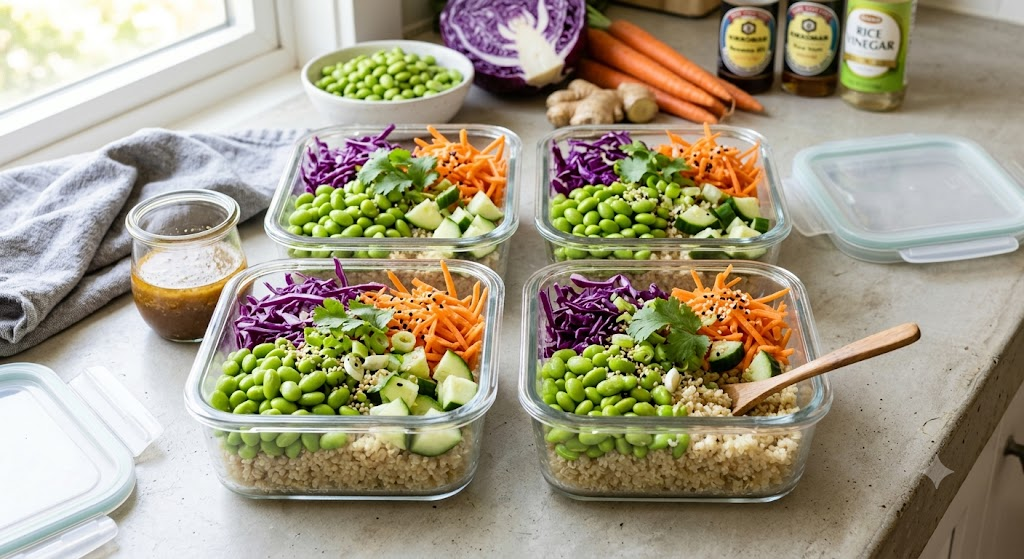
Quinoa is one of the few plant foods that provides all nine essential amino acids, making it a complete protein as well as an anti-inflammatory carbohydrate source. Edamame adds additional plant protein and isoflavones. The ginger-sesame dressing ties everything together with fresh ginger, which contains gingerol — one of the most potent natural anti-inflammatory compounds in food.
Ingredients:
- 1.5 cups quinoa, dry
- 2 cups shelled edamame (frozen, thawed)
- 1 cup shredded purple cabbage
- 1 cup shredded carrots
- 1 cup cucumber, diced
- 3 tbsp low-sodium soy sauce or tamari
- 2 tbsp rice vinegar
- 1 tbsp fresh ginger, grated
- 1 tbsp sesame oil
- 1 tsp honey
- 1 tbsp sesame seeds
- 2 green onions, sliced
Steps:
- Cook quinoa according to package directions. Let cool to room temperature.
- Whisk together soy sauce, rice vinegar, ginger, sesame oil, and honey to make the dressing.
- Combine cooled quinoa, edamame, cabbage, carrots, and cucumber in a large bowl.
- Pour dressing over and toss well to coat.
- Divide into four meal prep containers.
- Top each with sesame seeds and green onion before sealing.
- Refrigerate up to four days. Dressing keeps the bowl from drying out.
Macros: ~375 cal / 20g protein / 48g carbs / 12g fat
5. Mediterranean Baked Chicken with Olives and Artichokes
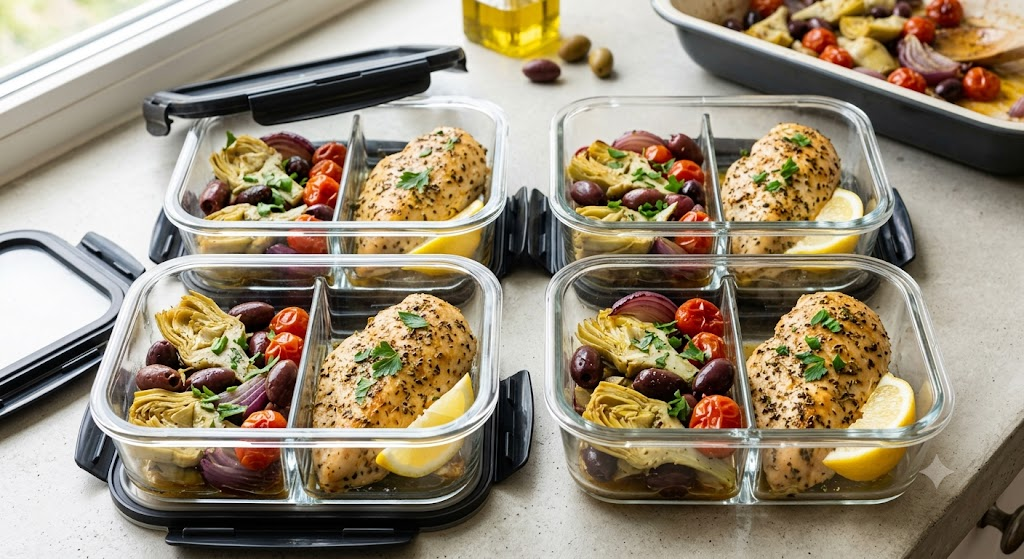
The Mediterranean diet consistently ranks as one of the most anti-inflammatory eating patterns studied — and this dish captures everything that makes it work. Extra virgin olive oil, olives, artichoke hearts, tomatoes, and herbs all contain significant anti-inflammatory polyphenols. This batch holds well for four days and tastes better on day two once the flavors have had time to settle.
Ingredients:
- 1.5 lbs boneless skinless chicken breast or thighs
- 1 can (14 oz) artichoke hearts, drained and halved
- ½ cup kalamata olives, pitted
- 1 cup cherry tomatoes
- ½ red onion, sliced
- 3 garlic cloves, minced
- 2 tbsp extra virgin olive oil
- 1 tsp dried oregano
- 1 tsp dried thyme
- Juice of 1 lemon
- Salt and black pepper to taste
- Fresh flat-leaf parsley to finish
Steps:
- Preheat oven to 400°F (200°C).
- Place chicken in a large baking dish.
- Scatter artichoke hearts, olives, cherry tomatoes, red onion, and garlic around the chicken.
- Drizzle everything with olive oil and lemon juice.
- Season generously with oregano, thyme, salt, and pepper.
- Bake 25–30 minutes until chicken is cooked through and edges are golden.
- Finish with fresh parsley. Divide into containers and refrigerate.
Macros: ~355 cal / 42g protein / 10g carbs / 14g fat
6. Blueberry Walnut Overnight Oats Meal Prep

Blueberries contain more antioxidants per serving than almost any other fruit — their deep blue color comes from anthocyanins, which are among the most powerful anti-inflammatory plant compounds known. Walnuts add omega-3 fatty acids, making this one of the most nutritionally dense breakfast preps you can make. Four jars, prepped in ten minutes, ready all week.
Ingredients:
- 2 cups rolled oats
- 2 cups unsweetened almond milk
- 1 cup plain non-fat Greek yogurt
- 1 cup fresh or frozen blueberries
- ¼ cup raw walnuts, roughly chopped
- 2 tbsp chia seeds
- 2 tbsp ground flaxseed
- 2 tsp cinnamon
- 2 tbsp honey or maple syrup
- 2 tsp vanilla extract
Steps:
- Divide oats evenly among four mason jars.
- Mix almond milk, Greek yogurt, chia seeds, flaxseed, cinnamon, honey, and vanilla together in a bowl.
- Pour the liquid mixture evenly over each jar of oats and stir.
- Top each jar with blueberries and walnuts.
- Seal jars and refrigerate overnight — minimum 6 hours.
- Stir before eating. Add a splash more almond milk if you prefer a looser texture.
- Keeps up to five days refrigerated.
Macros per jar: ~380 cal / 18g protein / 48g carbs / 14g fat
7. Turmeric Roasted Cauliflower and Chickpea Bowls
Chickpeas are high in fiber, plant protein, and resistant starch — all of which feed beneficial gut bacteria and support the gut-inflammation connection. Roasting them until crispy transforms their texture entirely, and combined with turmeric-roasted cauliflower and a tahini dressing, this bowl is satisfying enough that you won’t miss meat. Pairs well with a side of brown rice or quinoa for a more complete meal.
Ingredients:
- 1 large head cauliflower, cut into florets
- 2 cans (15 oz each) chickpeas, drained and rinsed
- 2 tbsp extra virgin olive oil
- 1.5 tsp turmeric
- 1 tsp cumin
- 1 tsp smoked paprika
- ½ tsp black pepper
- Salt to taste
- 3 tbsp tahini
- 2 tbsp lemon juice
- 1 garlic clove, minced
- 2–3 tbsp water to thin
- Fresh parsley and pomegranate seeds to garnish
Steps:
- Preheat oven to 425°F (220°C). Line two large baking sheets.
- Pat chickpeas completely dry — this is critical for crispiness.
- Toss cauliflower and chickpeas separately with olive oil, turmeric, cumin, paprika, black pepper, and salt.
- Spread across baking sheets in a single layer without crowding.
- Roast 30–35 minutes, flipping halfway, until cauliflower is golden and chickpeas are crispy.
- Whisk tahini, lemon juice, garlic, and water into a dressing.
- Divide cauliflower and chickpeas into containers. Drizzle with tahini dressing before serving.
Macros: ~390 cal / 18g protein / 48g carbs / 14g fat
8. Ginger Miso Salmon Noodle Jars

Miso is a fermented food, which means it supports gut health and the gut-inflammation axis directly. Combined with salmon’s omega-3 content, fresh ginger, and fiber-rich soba noodles (made from buckwheat, which has strong antioxidant properties), this is one of the most nutritionally layered anti-inflammatory meal preps on this list. The jar format keeps everything fresh and makes it easy to grab and go.
Ingredients:
- 4 salmon fillets (4 oz each)
- 8 oz soba noodles
- 2 tbsp white miso paste
- 1 tbsp low-sodium soy sauce
- 1 tbsp fresh ginger, grated
- 1 tbsp sesame oil
- 1 tbsp rice vinegar
- 1 tsp honey
- 2 cups shredded purple cabbage
- 1 cup shredded carrots
- 4 green onions, sliced
- 1 tbsp sesame seeds
Steps:
- Whisk miso, soy sauce, ginger, sesame oil, rice vinegar, and honey into a glaze.
- Brush salmon with half the glaze and bake at 400°F for 14–16 minutes.
- Cook soba noodles according to package directions. Rinse with cold water and drain.
- Toss noodles with remaining glaze.
- Layer into four jars: noodles first, then cabbage, then carrots, then flaked salmon.
- Top with green onion and sesame seeds.
- Seal and refrigerate up to three days.
Macros: ~415 cal / 36g protein / 40g carbs / 12g fat
9. Anti-Inflammatory Berry and Spinach Smoothie Packs

Meal prepping smoothies sounds almost too easy — but portioning out the ingredients into individual freezer bags means that on any given morning, you’re thirty seconds away from one of the most antioxidant-dense breakfasts possible. Spinach disappears completely in the blend and adds iron, folate, and anti-inflammatory vitamin K without affecting flavor.
Ingredients (per pack — makes 4):
- 1 cup frozen mixed berries (blueberry, strawberry, blackberry)
- 1 cup baby spinach (fresh, freezes well)
- ½ banana, sliced and frozen
- 1 tbsp ground flaxseed
- ½ tsp turmeric
- ¼ tsp black pepper
- 1 cup unsweetened almond milk (add at blend time, not in bag)
- 1 scoop vanilla protein powder (add at blend time)
Steps:
- Divide berries, spinach, banana, flaxseed, turmeric, and black pepper among four zip-lock freezer bags.
- Seal, label with date, and freeze flat.
- When ready to use, empty one bag into a blender.
- Add almond milk and protein powder.
- Blend until completely smooth — about 60 seconds.
- Drink immediately. Packs keep frozen for up to three months.
Macros per smoothie: ~280 cal / 28g protein / 30g carbs / 5g fat
10. Walnut and Herb Stuffed Sweet Potatoes

Sweet potatoes are rich in beta-carotene — a powerful antioxidant that the body converts to vitamin A and that has documented anti-inflammatory effects. Walnuts add plant-based omega-3s, and the herb and olive oil dressing keeps everything cohesive and Mediterranean in spirit. These bake in about an hour and reheat perfectly all week.
Ingredients:
- 4 medium sweet potatoes
- 1 cup raw walnuts, roughly chopped
- 1 can (15 oz) chickpeas, drained and rinsed
- 2 tbsp extra virgin olive oil
- 1 tsp cumin
- 1 tsp smoked paprika
- 2 cups baby spinach
- Juice of 1 lemon
- 2 tbsp fresh parsley, chopped
- 2 tbsp fresh mint, chopped
- Salt and pepper to taste
- Optional: 2 tbsp pomegranate seeds per potato
Steps:
- Preheat oven to 400°F (200°C).
- Pierce sweet potatoes with a fork and bake directly on the oven rack for 45–55 minutes until completely tender.
- Toss chickpeas with 1 tbsp olive oil, cumin, paprika, salt, and pepper. Spread on a baking sheet and roast alongside potatoes for the last 20 minutes.
- Toast walnuts in a dry pan for 3–4 minutes until fragrant.
- Wilt spinach briefly in the pan after removing walnuts.
- Mix chickpeas, walnuts, spinach, lemon juice, remaining olive oil, parsley, and mint together.
- Split sweet potatoes open and fill with the walnut-chickpea mixture.
- Top with pomegranate seeds if using. Store in containers for up to four days.
Macros: ~420 cal / 14g protein / 52g carbs / 18g fat
Anti-Inflammatory Meal Prep Storage Guide
Glass meal prep containers are strongly preferred for anti-inflammatory eating — they don’t leach any chemicals into food the way some plastics can, and they’re microwave and oven safe. Mason jars work particularly well for overnight oats and smoothie packs.
Most of these meals keep for four days refrigerated. The lentil soup and smoothie packs freeze well for up to three months. Label everything with the prep date so nothing gets lost in the back of the fridge. Reheat fish-based meals gently — low heat preserves the omega-3 fatty acids better than blasting at full microwave power.
Conclusion
Anti-inflammatory eating doesn’t require expensive supplements, complicated protocols, or giving up every food you enjoy. It mostly just requires getting the right ingredients into your regular rotation — and having them ready when hunger actually hits.
These ten meal prep ideas cover breakfast, lunch, dinner, and everything in between, and every single one of them is built around ingredients with real, research-backed anti-inflammatory benefits. Start with two or three that appeal to you most, get comfortable making them, and build from there. Your body will start telling you it’s working long before any lab result will.