
The Story & Nutritional Philosophy
At The Healthy Plate Lab, we believe the most underestimated cooking technique for vegetables is live-fire grilling. There is a transformative chemistry that happens when a slice of zucchini or yellow squash makes contact with a hot grill grate — sugars caramelize, moisture evaporates and concentrates, and a smoky, slightly charred edge develops that no oven roasting or sautéing can fully replicate. What was once a mild, watery vegetable becomes something genuinely craveable.
But this dish earns its place on the Healthy Plate Lab table for reasons that go well beyond flavor. Zucchini and yellow squash are two of the most nutritionally efficient vegetables available. They are exceptionally low in calories — a full cup of sliced zucchini contains just 19 calories — while delivering meaningful amounts of vitamin C, vitamin B6, potassium, folate, and manganese. Their high water content (approximately 95%) makes them naturally hydrating, and their soluble fiber content supports digestive health and sustained satiety.
The marinade we use here is built on extra virgin olive oil, which provides heart-healthy monounsaturated fats and fat-soluble vitamin absorption — critical because many of the micronutrients in zucchini and squash are fat-soluble and require dietary fat to be properly absorbed. Fresh garlic contributes allicin, one of the most studied anti-inflammatory and antimicrobial compounds in the plant kingdom. Lemon juice brightens the entire dish while providing vitamin C. Fresh herbs — Italian parsley and basil — add polyphenols and antioxidants that round out the nutritional profile beautifully.
This is clean eating at its most satisfying — a side dish that works equally well alongside grilled proteins, folded into grain bowls, layered into wraps, or served straight from the grill as a light summer meal.
Ingredients & Nutritional Benefits
For the Vegetables
- 2 medium zucchini, sliced lengthwise into ¼-inch planks — Low calorie, high water content, rich in vitamin C and potassium. Slicing lengthwise creates maximum surface area for grill marks and caramelization.
- 2 medium yellow squash, sliced lengthwise into ¼-inch planks — Nearly identical nutritional profile to zucchini with a slightly sweeter flavor and firmer texture that holds up beautifully on the grill.
- 1 tbsp extra virgin olive oil — Provides monounsaturated fats essential for fat-soluble vitamin absorption and heart health. Also prevents sticking and promotes even charring.
- 1 tsp kosher salt — Draws out excess surface moisture before grilling, which is the key to achieving a proper char rather than steaming.
- ½ tsp freshly cracked black pepper — Contains piperine, a compound shown to enhance the bioavailability of numerous nutrients including curcumin and beta-carotene.
For the Herb & Garlic Marinade
- 3 tbsp extra virgin olive oil — The base of the finishing marinade, carrying the fat-soluble flavor compounds of garlic and herbs into every bite.
- 3 cloves garlic, finely minced — Raw garlic delivers maximum allicin content. Anti-inflammatory, antimicrobial, and deeply savory.
- Zest and juice of 1 lemon — Brightness, acidity, and vitamin C. The acid also gently tenderizes the outer cell walls of the grilled vegetables, helping the marinade penetrate deeper.
- 2 tbsp fresh flat-leaf parsley, finely chopped — Rich in vitamin K and chlorophyll. Adds a clean, grassy freshness.
- 2 tbsp fresh basil, torn — Contains eugenol, a natural anti-inflammatory compound. Adds a sweet, aromatic complexity.
- ½ tsp red pepper flakes — Optional, but recommended. Capsaicin provides a gentle heat and a mild metabolic boost.
- ½ tsp dried oregano — A Mediterranean staple with potent antioxidant properties, particularly high in rosmarinic acid.
Optional Finishing Touches
- 2 tbsp crumbled feta cheese — Adds a salty, creamy contrast and a small protein boost.
- 1 tbsp toasted pine nuts — Healthy fats, a delicate crunch, and a buttery richness.
- Fresh mint leaves — Cooling aromatics that contrast beautifully with the smoky char.
Chef’s Prep Secrets & Tips
Grilling vegetables seems simple — and it is — but the difference between soggy, pale, stuck-to-the-grill slices and deeply caramelized, smoky, perfectly tender planks comes down entirely to technique. These are the details that matter:
1. Slice thickness is everything. Cut too thin (under ⅛ inch) and the slices dry out and burn before developing proper grill marks. Cut too thick (over ½ inch) and the outside chars while the inside remains raw and watery. The sweet spot is ¼ inch — thick enough to hold together and develop interior tenderness, thin enough to cook through and caramelize properly in about 3–4 minutes per side.
2. Salt and rest before grilling. Lay your sliced zucchini and squash on a sheet pan, season generously with kosher salt, and let them rest for 15–20 minutes. You’ll see visible moisture beading on the surface — this is osmosis drawing out excess water. Pat that moisture away with paper towels before oiling and grilling. This single step is the difference between caramelization and steaming.
3. Preheat your grill properly. The grill must be screaming hot before the vegetables go on — medium-high to high heat, around 400–450°F. A cold or lukewarm grill means the vegetables steam in their own moisture rather than searing. Preheat for at least 10–15 minutes with the lid closed.
4. Oil the vegetables, not the grill. Brushing oil directly onto the vegetable slices rather than the grill grates gives more even coverage, reduces flare-ups, and creates a more consistent sear. Use a pastry brush or your hands to coat each slice lightly before it goes on.
5. Make the marinade before you grill. Combine the olive oil, garlic, lemon zest, lemon juice, herbs, and red pepper flakes in a bowl and let it sit while the vegetables cook. By the time the zucchini and squash come off the grill, the garlic has had time to infuse into the oil, making the marinade dramatically more flavorful than if it were made fresh at serving.
6. Don’t move them. Once a slice goes on the grill, leave it alone for a full 3–4 minutes before attempting to flip. If it resists lifting, it isn’t ready. A properly seared vegetable releases cleanly from the grate when it’s ready to turn.
Step-by-Step Culinary Method
Step 1: Prep and Salt the Vegetables
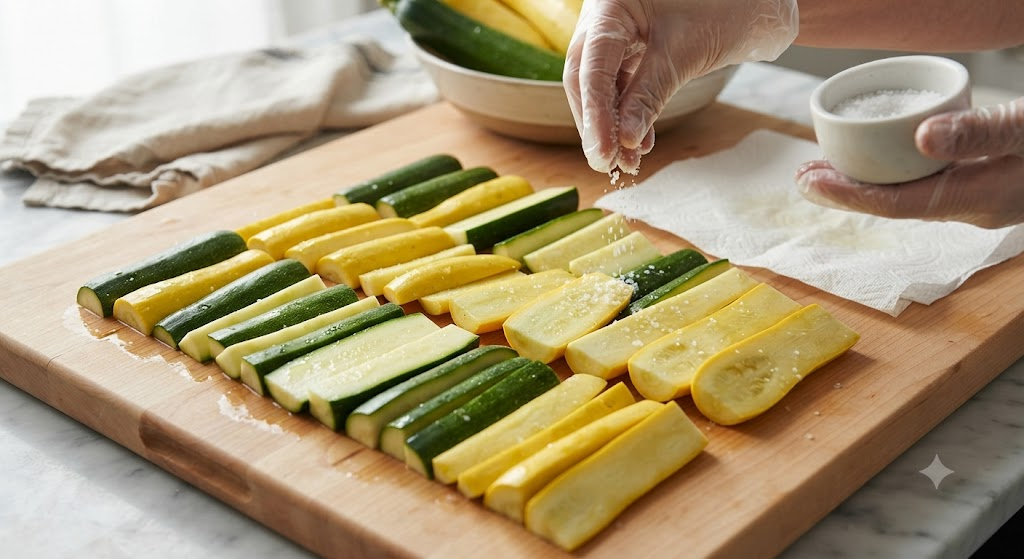
Wash and dry the zucchini and yellow squash thoroughly. Trim both ends, then slice each one lengthwise into ¼-inch planks. If the squash is very wide at the base, you can halve those larger planks crosswise for easier handling on the grill.
Arrange the slices in a single layer on a large sheet pan or cutting board. Season generously on both sides with kosher salt and allow them to rest for 15–20 minutes at room temperature. During this time, you’ll notice the surface of the vegetables becoming visibly wet — that’s the excess water being drawn out by osmosis. After resting, use paper towels to thoroughly pat each slice dry. The surface should feel noticeably less slick and more dry to the touch.
Step 2: Build the Herb Marinade
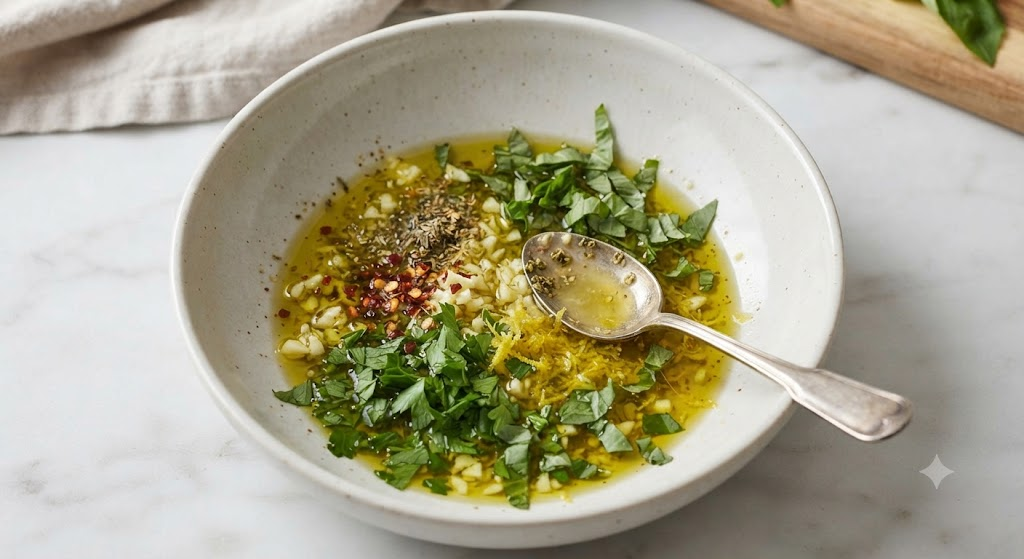
While the vegetables are resting and releasing moisture, prepare the finishing marinade. In a wide, shallow bowl large enough to toss the grilled vegetables later, combine the 3 tbsp extra virgin olive oil, minced garlic, lemon zest, lemon juice, fresh parsley, torn basil, red pepper flakes, and dried oregano. Stir well and set aside. As the marinade sits, the garlic begins to slowly cook in the lemon juice — a gentle, cold process that mellows its sharpness while preserving its depth.
Step 3: Preheat the Grill
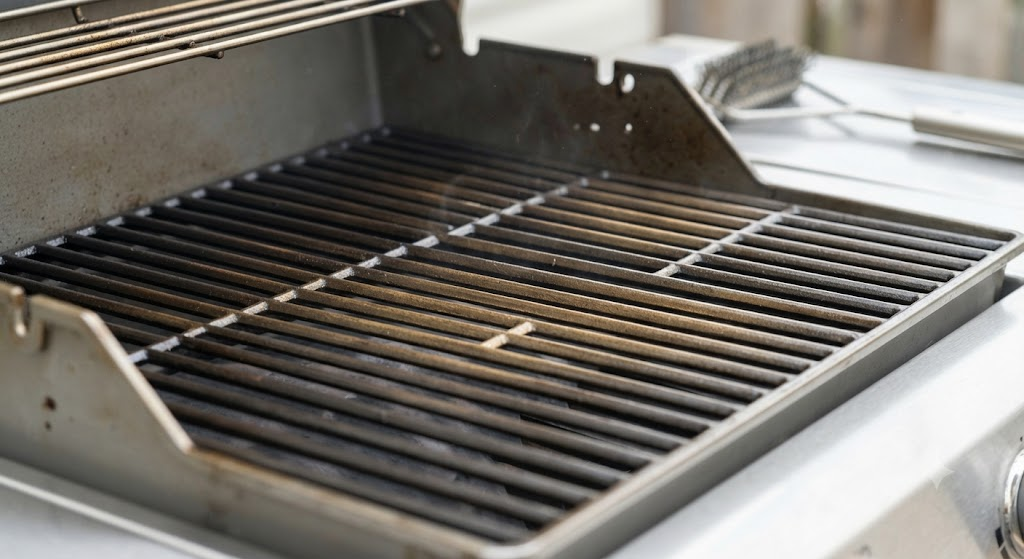
Preheat your gas or charcoal grill to medium-high heat — approximately 400–450°F. If using a charcoal grill, allow the coals to ash over fully before spreading them. Close the lid and allow the grill to preheat for at least 10–15 minutes. Clean the grates thoroughly with a grill brush while they’re hot. The grates should be immaculately clean and blazing hot.
Step 4: Oil and Season the Vegetables
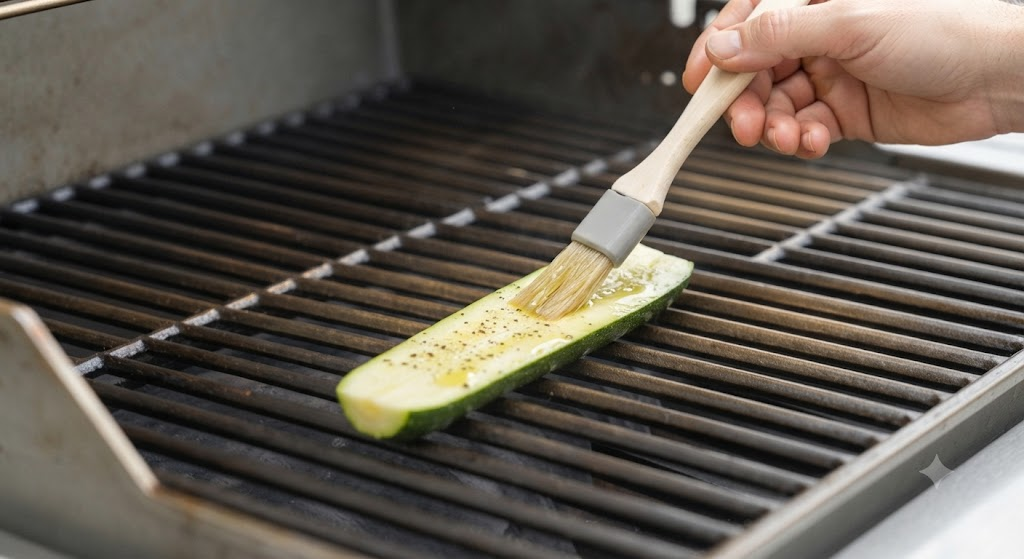
Once the vegetable slices are patted dry, brush or rub both sides of each slice with 1 tbsp of extra virgin olive oil. Season lightly with freshly cracked black pepper. The salt applied earlier is sufficient — avoid adding more at this stage or the vegetables can become overseasoned once the marinade is added later.
Step 5: Grill the First Side
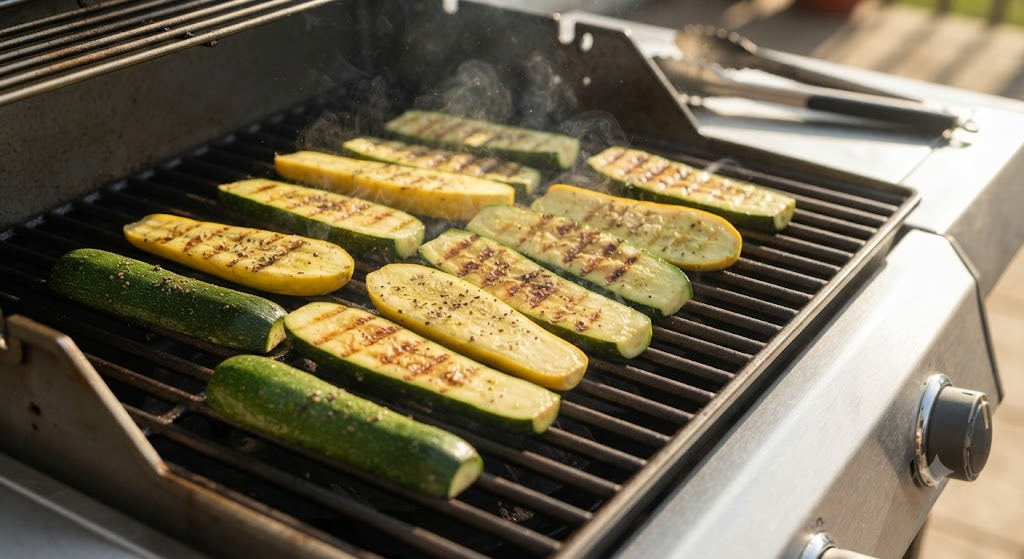
Lay the vegetable slices diagonally across the grill grates. You’ll hear an immediate, satisfying aggressive sizzle the moment each slice hits the hot metal — that sound is the surface moisture flash-evaporating and the caramelization process beginning. The smell that follows is one of the great sensory experiences of summer cooking: smoky, sweet, slightly vegetal, with a faint char note that builds over the first minute.
Close the lid and grill for 3–4 minutes without moving the slices. Resist every urge to shift, press, or peek underneath. The grill is doing its work. When the time is up, use tongs to gently lift one edge of a slice — it should release cleanly and reveal deep, well-defined grill marks that range from golden amber at the edges to a dark, caramelized brown at the peak of the contact points.
Step 6: Flip and Finish
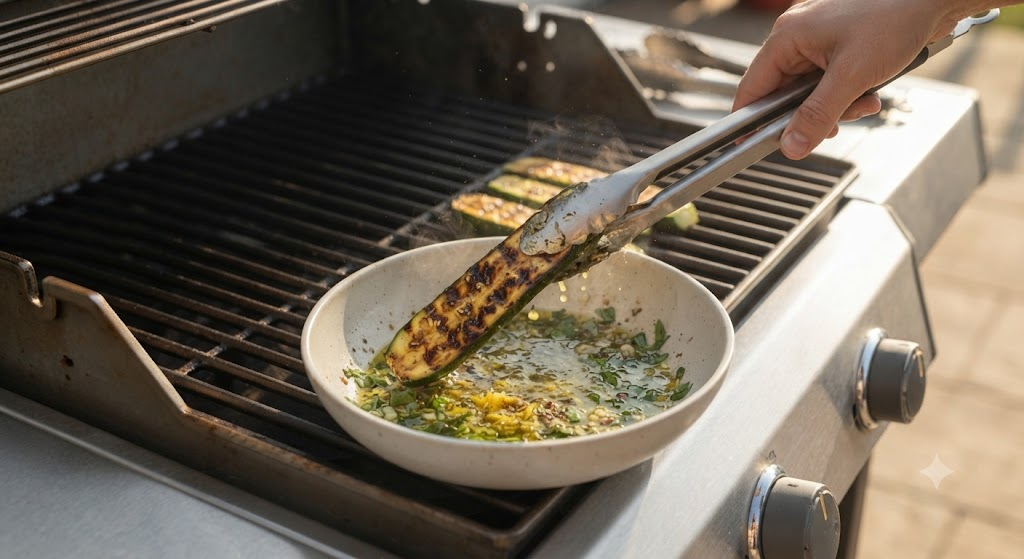
Flip each slice carefully and close the lid again. Grill the second side for another 2–3 minutes. The second side cooks slightly faster because the vegetable has already begun to soften and conduct heat more efficiently. Watch for the edges to become slightly translucent — this is the visual cue that the interior has reached the ideal texture: completely tender but not mushy, with a gentle resistance at the very center that disappears on the bite.
Remove the slices from the grill as they finish and transfer them directly into the bowl of herb marinade.
Step 7: Toss and Rest in the Marinade
Toss the hot grilled slices gently in the herb and garlic marinade. The residual heat from the vegetables will very gently cook the raw garlic — softening its sharpness just enough without eliminating its character. The lemon juice will hiss very slightly as it contacts the hot surface. Allow the vegetables to rest in the marinade for at least 5 minutes before plating. This resting period is when the real flavor development happens — the olive oil, garlic, lemon, and herbs penetrate the porous, grilled flesh of the vegetables deeply.
Plating & Final Presentation
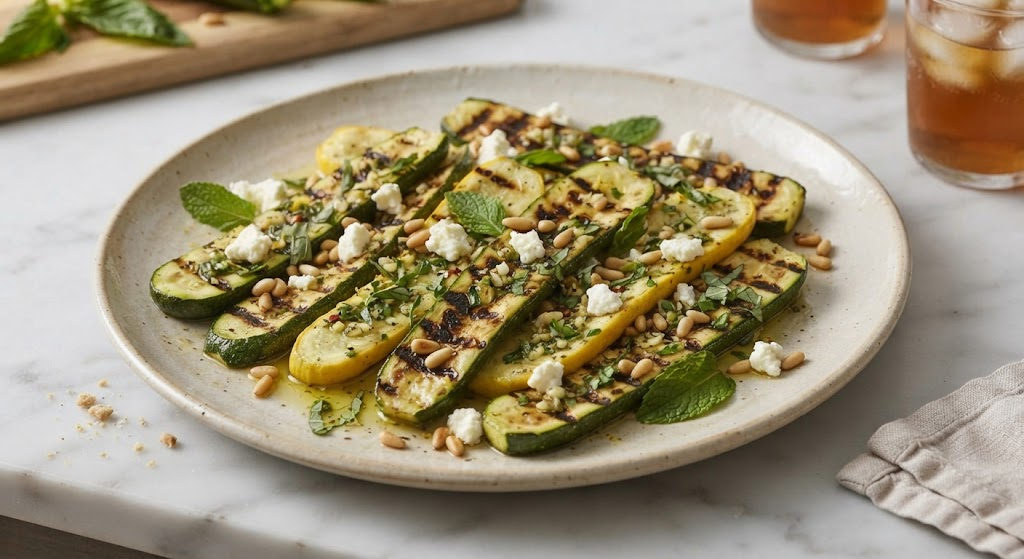
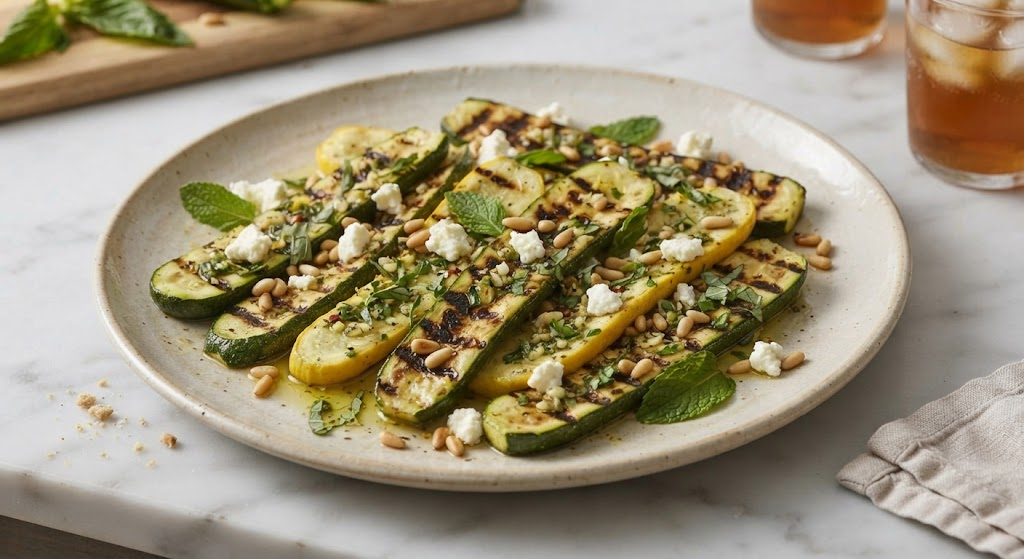
Arrange the marinated grilled slices on a large, flat serving platter, fanning them slightly and alternating the green zucchini and golden yellow squash for visual contrast. Spoon any remaining marinade and herbs from the bowl over the top generously — don’t waste a drop.
If using, scatter crumbled feta across the top in irregular clumps, followed by toasted pine nuts for crunch and richness. Finish with a few torn fresh basil leaves and fresh mint leaves, a final squeeze of lemon juice, and a light drizzle of your best extra virgin olive oil.
Serve immediately at room temperature or slightly warm. This dish is equally stunning served on a wooden board for sharing, or portioned individually as a composed side. It pairs beautifully with grilled chicken, lamb, fish, or as a standalone vegetarian main over a bed of herbed couscous or quinoa.
Frequently Asked Questions
Can I make this on a stovetop grill pan instead of an outdoor grill? Absolutely. A cast iron grill pan preheated over high heat for 5 full minutes will produce excellent results. Work in batches to avoid crowding — crowding drops the temperature and causes steaming instead of searing. Open a window, as it will smoke.
Can I prepare this in advance? Yes. The grilled and marinated vegetables keep well in an airtight container in the refrigerator for up to 3 days. The flavor actually deepens overnight as the marinade continues to infuse. Serve at room temperature or briefly warmed.
What if my vegetables are sticking to the grill? This almost always means either the grill isn’t hot enough or the vegetables were moved before they released naturally. Ensure your grill is fully preheated, and if a slice resists, wait another 60 seconds before trying again.
Can I use other vegetables alongside zucchini and squash? This marinade works beautifully with bell peppers, red onion, eggplant, asparagus, and portobello mushrooms. All can be grilled using the same method with minor timing adjustments.
Is this recipe suitable for meal prep? Yes — and it’s excellent folded into grain bowls, wraps, pasta, frittatas, or served alongside eggs for breakfast throughout the week.
Final Nutrition Facts
Per serving (recipe makes 4 servings), without optional toppings:
| Nutrient | Amount per Serving |
|---|---|
| Calories | 138 kcal |
| Total Protein | 2g |
| Total Carbohydrates | 7g |
| Dietary Fiber | 2g |
| Net Carbohydrates | 5g |
| Total Fat | 12g |
| Saturated Fat | 1.7g |
| Natural Sugar | 4g |
| Sodium | 310mg |
| Vitamin C | 35% DV |
| Vitamin B6 | 15% DV |
| Potassium | 12% DV |
| Folate | 10% DV |
With optional feta and pine nuts: approximately 185 kcal, 5g protein per serving.
Nutritional values are estimates based on USDA standard data. Actual values will vary based on vegetable size and exact oil quantities used.
Recipe developed by The Healthy Plate Lab. Share your grilling results with us using #HealthyPlateLab.