
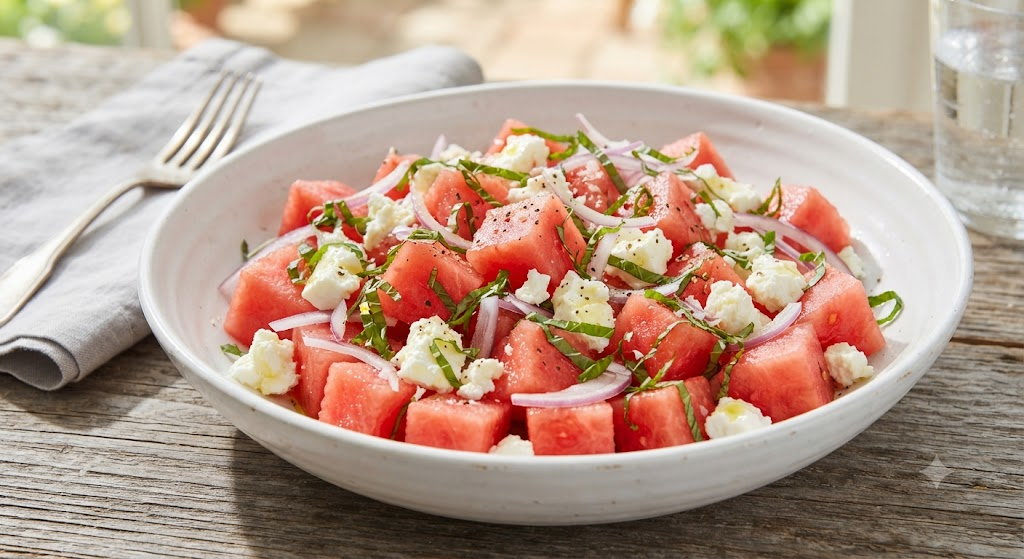
Watermelon feta mint salad is one of those rare dishes that feels indulgent and refreshing at the same time, which is exactly why it’s become a warm-weather staple on restaurant menus and home patios alike. At The Healthy Plate Lab, we love this dish because, unlike many “healthy” salads, it doesn’t need much reformulation — the bones of the classic combination are already nutritionally sound. Our job here is to refine the details: controlling the sodium and fat from the feta, maximizing the nutrient density of the produce, and building a dressing that enhances rather than masks the natural sweetness of the fruit.
Watermelon itself is a nutritional standout that often gets dismissed as “just sugar water.” In reality, it’s about 92% water, making it one of the most hydrating foods you can eat, and it’s a meaningful source of lycopene — the same antioxidant compound found in tomatoes, linked to cardiovascular and skin health support. A typical serving clocks in under 50 calories, with natural fruit sugars that come bundled with hydration and antioxidants rather than the empty sugars found in processed sweets.
The feta is where most people overdo it, and where we make our most intentional swap. Rather than a heavy-handed crumble, we use a moderate portion of a higher-quality, brined feta and let its salty tang go further by pairing it with acid (lime) and good fat (a drizzle of extra virgin olive oil) rather than piling on more cheese. Fresh mint adds a cooling, aromatic lift and a small dose of digestive-supportive compounds, while a touch of flaky salt and cracked pepper rounds out the flavor without needing any added sugar at all — a rarity for a “salad,” since most bottled dressings rely on sugar for balance. The result is a dish that’s naturally gluten-free, vegetarian, and easily adapted to vegan with a plant-based feta alternative — proof that healthy eating doesn’t always mean reinventing the wheel, sometimes it just means refining the ratios.
Ingredients & Nutritional Benefits
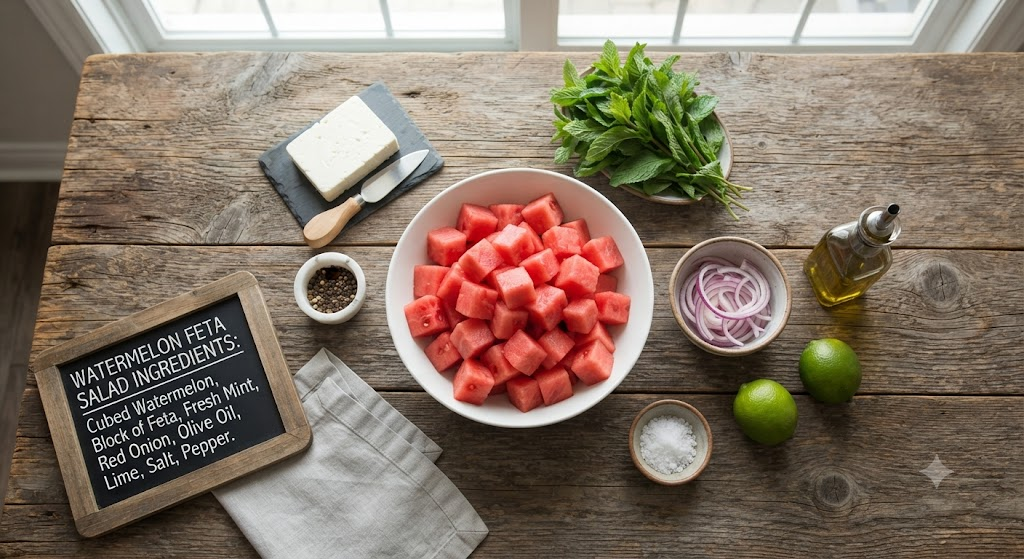
- 6 cups seedless watermelon, cut into 1-inch cubes — Hydrating, low-calorie, and rich in lycopene and vitamin C.
- 4 oz block-style feta cheese, hand-crumbled — Adds calcium, protein, and a salty tang; using block feta (not pre-crumbled) reduces added preservatives and excess sodium.
- 1/3 cup fresh mint leaves, torn or thinly sliced (chiffonade) — Adds a cooling aromatic note and supports digestion.
- 1/4 cup thinly sliced red onion, soaked briefly in cold water — Adds sharp contrast and a small dose of prebiotic fiber, with the soak reducing harsh bite.
- 2 tablespoons extra virgin olive oil — Provides heart-healthy monounsaturated fats that help the body absorb fat-soluble nutrients in the watermelon.
- 1 tablespoon fresh lime juice — Brightens the dish and enhances the perception of sweetness, reducing the need for any added sugar.
- 1/2 teaspoon flaky sea salt — Used sparingly and intentionally, since the feta already contributes sodium.
- Freshly cracked black pepper, to taste — Adds gentle warmth and aids in nutrient absorption.
- Optional: 1 tablespoon balsamic glaze, drizzled — Adds depth and visual contrast; use a reduced, no-sugar-added balsamic for the healthiest option.
This salad’s nutritional strength comes from restraint as much as from ingredients. By limiting the cheese and oil to thoughtful amounts and letting the watermelon’s natural volume carry the dish, you get a large, satisfying portion without a large calorie count.
Chef’s Prep Secrets & Tips
The biggest mistake people make with this salad is cutting the watermelon too far in advance. Watermelon releases liquid quickly once cut, and if it sits too long, you end up with a watery, diluted salad instead of clean, juicy cubes. Cut it as close to serving time as possible, and if you must prep ahead, store the cubes separately from the other ingredients and drain any accumulated juice before assembling.
For the red onion, the brief cold-water soak (5-10 minutes) is non-negotiable if you want balance rather than an overpowering bite. You’ll notice the onion slices visibly soften in color and lose some of their sharp, eye-watering aroma during the soak — that’s the sulfur compounds mellowing out.
When crumbling the feta, use your hands rather than a knife. Hand-crumbled feta breaks into irregular, craggy pieces that hold dressing better and create more textural interest than uniformly diced cheese. For the cleanest cuts on the mint, stack the leaves, roll them tightly into a cigar shape, and slice thin ribbons — this chiffonade technique prevents the bruising and blackening that comes from chopping mint with a dull or heavy hand.
Finally, dress this salad at the very last moment before serving. Salt draws moisture out of both the watermelon and the onion, and even a 15-minute head start with the salt already mixed in can leave you with a soupy bowl instead of a crisp, vibrant salad.
Step-by-Step Culinary Method
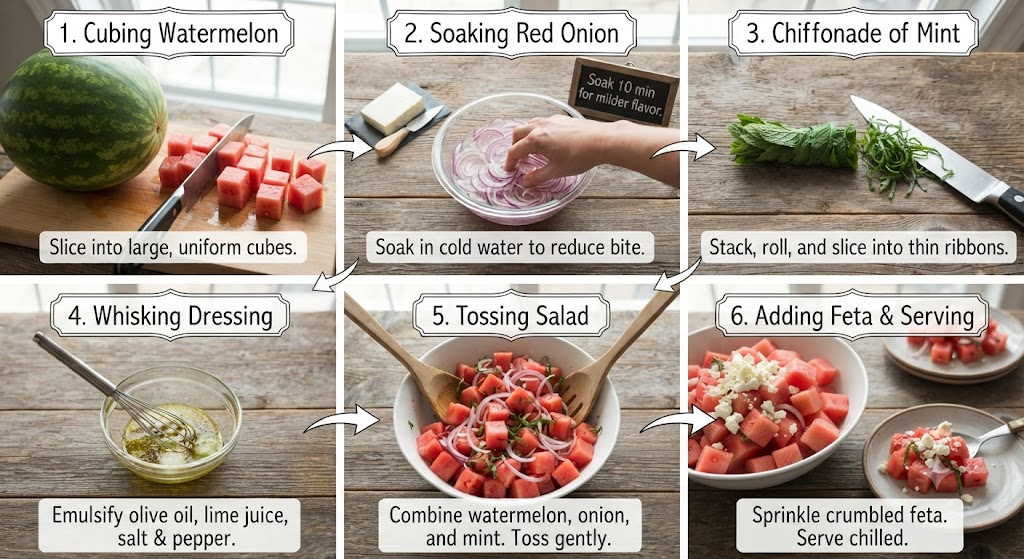
Step 1: Select and Cube the Watermelon. Choose a watermelon that feels heavy for its size with a deep, hollow sound when tapped — both signs of ripeness and high water content. Slice it into thick rounds, then into planks, then into even 1-inch cubes. As you work, you’ll notice the deep red flesh glistening and slightly weeping at the cut edges, a good sign of peak ripeness. Transfer the cubes to a colander set over a bowl for a few minutes to let any excess juice drain away before assembling — this single step does more to prevent a watery salad than almost anything else.
Step 2: Soak the Red Onion. Place the thinly sliced red onion in a small bowl of ice-cold water. Within a few minutes, you’ll see the slices turn slightly more translucent and feel the sharp, pungent smell in the kitchen begin to soften. Drain and pat the onion completely dry with a clean towel before adding it to the salad, since any leftover moisture will dilute your dressing.
Step 3: Prepare the Mint Chiffonade. Stack 8-10 mint leaves at a time, roll them tightly lengthwise, and slice crosswise into thin ribbons. As the knife passes through, you’ll catch a sudden, bright burst of mint aroma releasing into the air — a strong, fresh smell that tells you the leaves are being cut cleanly rather than bruised. Set the ribbons aside on a dry plate; do not chop them too far ahead, as cut mint begins to darken and lose aromatic intensity within 20-30 minutes.
Step 4: Build the Light Dressing. In a small bowl, whisk together the extra virgin olive oil, lime juice, and a small pinch of the flaky salt. Watch as the mixture briefly separates into distinct layers before your whisking pulls it into a loosely emulsified blend — it won’t be thick like a creamy dressing, but it should look glossy and slightly cloudy rather than fully separated. The aroma here is sharp and citrus-forward, a clean contrast to the sweetness waiting in the bowl.
Step 5: Assemble the Salad. In a large, wide serving bowl (width matters here, to avoid crushing the watermelon at the bottom), combine the drained watermelon cubes, soaked and dried red onion, and most of the mint ribbons, reserving a small handful for garnish. Drizzle the dressing evenly over the top, then use a gentle folding motion with a large spoon or your hands — never stir aggressively, as the watermelon cubes are delicate and will break down into mush under rough handling.
Step 6: Add the Feta Last. Scatter the hand-crumbled feta over the top in the final moments before serving. You’ll see the white, craggy crumbles settle into the gaps between the ruby watermelon cubes, creating an immediate, striking contrast. Finish with the reserved mint ribbons, a final crack of black pepper, and the optional balsamic glaze drizzled in thin, decorative lines across the top.
Plating & Final Presentation
This salad is as much about visual impact as flavor, so lean into the natural contrast between colors. Serve it in a wide, shallow white or light-colored bowl that lets the deep red watermelon, white feta, and bright green mint pop against the background. Avoid piling the ingredients in a tall mound — instead, spread them in a single, slightly overlapping layer so every bite gets a balanced mix of fruit, cheese, and herb. A final light drizzle of olive oil just before serving adds a subtle sheen that photographs beautifully and signals freshness. For an elevated touch, serve alongside chilled forks on a warm day; this salad is best enjoyed cold, straight from a few minutes in the refrigerator.
Frequently Asked Questions
Can I make this salad ahead of time? You can prep the components separately a few hours ahead, but assemble and dress the salad no more than 15-20 minutes before serving for the best texture.
What can I use instead of feta for a dairy-free version? A firm, brined plant-based feta alternative works well and mimics the salty, tangy profile closely.
Can I add other ingredients? Cucumber, arugula, or a few thin slices of jalapeño are popular additions that pair naturally with the existing flavor profile.
Why is my salad watery? This almost always comes from skipping the watermelon draining step or dressing the salad too far in advance.
Is this salad keto-friendly? Watermelon is higher in natural sugar than most keto-approved fruits, so while this salad is healthy and balanced, strict keto followers may want a smaller portion size.
Final Nutrition Facts Table
Per serving (based on 6 servings total)
| Nutrient | Amount |
|---|---|
| Calories | 110 kcal |
| Total Carbohydrates | 9 g |
| Dietary Fiber | 1 g |
| Sugars | 7 g (naturally occurring, no added sugar) |
| Net Carbs | 8 g |
| Protein | 4 g |
| Total Fat | 7 g |
| Saturated Fat | 2.5 g |
| Sodium | 220 mg |
| Vitamin C | 15% DV |
| Vitamin A | 10% DV |
This salad delivers a satisfying balance of hydration, protein, and healthy fat in a low-calorie package — proof that “healthy” doesn’t always mean reformulating a classic, sometimes it simply means honoring it with the right ratios.