
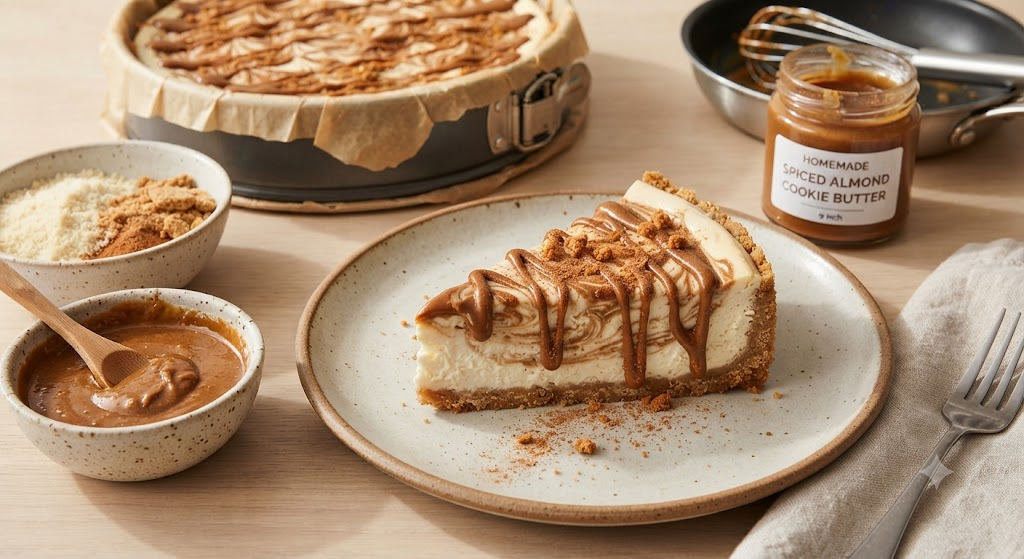
There’s a reason Biscoff has become a global obsession — that warm, caramelized spice-cookie flavor is impossible to replicate and even harder to resist. But between the cookie crust, the swirled cookie butter, and the traditional full-fat filling, a classic Biscoff cheesecake can easily clock in at 550+ calories a slice. At The Healthy Plate Lab, we set out to capture that same nostalgic, spiced-caramel flavor while rebuilding the nutritional foundation from the ground up — more protein, less sugar, and smarter fats, without losing the dessert’s signature richness.
Biscoff cheesecake sits in a strange category: it feels indulgent precisely because of its intensity — that deep, cinnamon-caramel flavor from speculoos cookies is concentrated and unapologetic. The temptation with “healthy” versions of intensely flavored desserts is to water down the flavor along with the calories, which usually results in a sad, forgettable dessert nobody actually wants to eat again. Our philosophy at The Healthy Plate Lab rejects that trade-off entirely. We believe the goal isn’t to mute the things that make a dessert craveable — it’s to find where the calories are doing decoration instead of function, and cut there.
In this recipe, that meant three targeted swaps. First, we build the base filling from a blend of Greek yogurt and reduced-fat cream cheese rather than the traditional all-cream-cheese formula, which slashes saturated fat while nearly doubling the protein content per slice. Second, we make our own lightened Biscoff-style cookie butter using toasted almond butter, cinnamon, molasses, and a touch of monk fruit sweetener — this mimics the deep caramelized-spice profile of real speculoos cookie butter while cutting the refined sugar and palm oil found in most store-bought jars. Third, the crust uses crushed digestive-style almond flour cookies (or a homemade almond-oat version) instead of a full package of Biscoff cookies, which lets the flavor come through in the swirl and topping — where it matters most — rather than being diluted across the whole crust.
Nutritionally, cinnamon itself deserves a mention here: beyond flavor, it’s been studied for its potential role in moderating blood sugar response, which pairs well with our lower-sugar sweetening strategy throughout the rest of the recipe. The result is a cheesecake that still delivers that unmistakable Biscoff warmth in every bite, just built on a foundation that won’t leave you sluggish afterward.
Ingredients & Nutritional Benefits
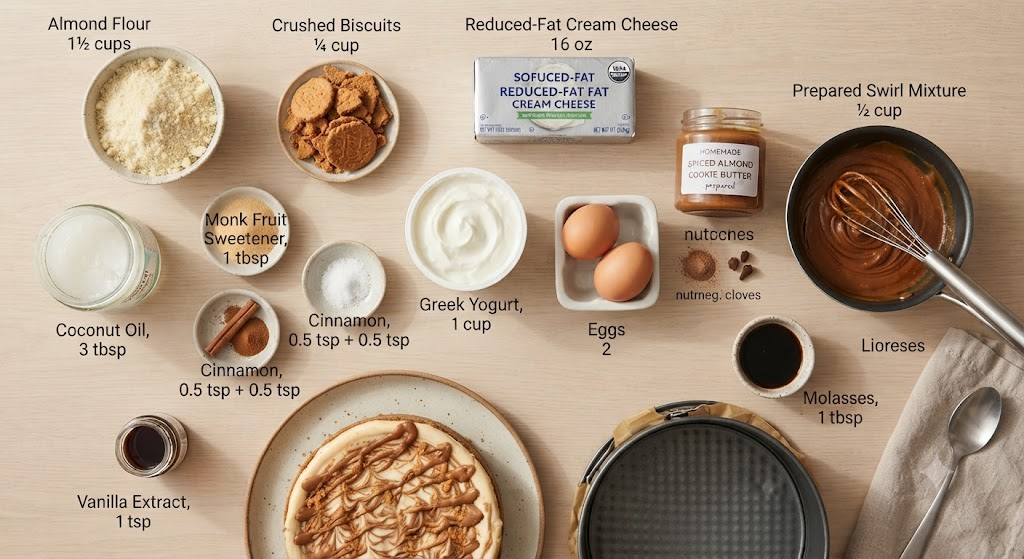
For the Crust:
- 1½ cups almond flour (protein- and fat-rich alternative to refined cookie crumbs)
- ¼ cup crushed reduced-sugar biscuit or digestive-style cookies (for authentic crunch and flavor cues)
- 3 tbsp melted coconut oil
- 1 tbsp monk fruit sweetener
- ½ tsp cinnamon
- Pinch of sea salt
For the Filling:
- 16 oz reduced-fat cream cheese, softened
- 1 cup plain Greek yogurt (adds protein, lightens the texture)
- 2 large eggs
- ⅓ cup monk fruit sweetener or allulose
- ¼ cup lightened almond-based cookie butter (recipe below)
- 1 tsp vanilla extract
- ½ tsp cinnamon
For the Lightened Cookie Butter Swirl:
- ½ cup smooth toasted almond butter (no added sugar)
- 1 tbsp molasses (adds the deep, caramelized note traditional to speculoos)
- 1 tbsp monk fruit sweetener
- ½ tsp cinnamon
- Pinch of nutmeg and ground cloves
- 1–2 tbsp warm water, to loosen
The almond butter base here isn’t a random substitution — it’s chosen specifically because its naturally toasty, slightly bitter undertone mimics the caramelized flavor of speculoos cookies far better than a plain nut butter would. The molasses adds mineral content (iron, calcium, and potassium) that refined sugar simply doesn’t have, while contributing that same deep, almost burnt-sugar complexity Biscoff is known for.
Chef’s Prep Secrets & Tips
- Toast your spices briefly. Warming the cinnamon, nutmeg, and cloves in a dry pan for 30 seconds before adding them to the cookie butter wakes up their essential oils, intensifying the “speculoos” flavor profile dramatically.
- Make the cookie butter swirl first and let it cool. Warm cookie butter will melt into the cheesecake batter instead of creating distinct marbled swirls.
- Room-temperature everything. Cold cream cheese, cold eggs, or cold yogurt will all prevent a smooth, lump-free batter — pull everything out at least an hour ahead.
- Reserve a spoonful of cookie butter for topping. Don’t use it all in the swirl; a drizzle on top after baking makes for a far more dramatic presentation.
- Water bath, no exceptions. As with any custard-based cheesecake, baking in a water bath is what prevents the surface from drying out and cracking before the center fully sets.
Step-by-Step Culinary Method
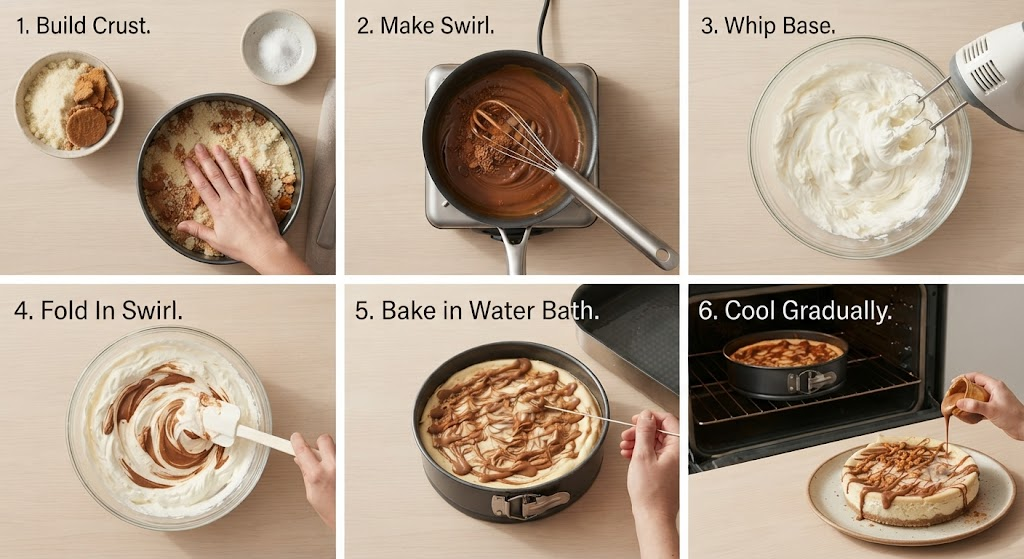
Step 1: Build the crust. Combine almond flour, crushed cookies, melted coconut oil, monk fruit sweetener, cinnamon, and salt in a bowl until the mixture resembles damp sand with visible flecks of cookie. Press firmly into a 9-inch springform pan. Bake at 325°F for 8 minutes, until the edges just turn golden and the kitchen fills with a warm, spiced aroma reminiscent of a bakery case. Set aside to cool.
Step 2: Make the cookie butter swirl. In a small saucepan over low heat, whisk together the almond butter, molasses, monk fruit sweetener, and toasted spices. As it warms, the mixture will loosen into a glossy, pourable consistency, releasing a rich, toasty aroma with sharp notes of clove and cinnamon underneath. Thin with warm water, one tablespoon at a time, until it reaches a ribbon-like consistency. Set aside to cool to room temperature — it should thicken slightly but remain swirlable.
Step 3: Whip the filling base. Beat the softened cream cheese until glossy and smooth, about 2 minutes. Add the Greek yogurt and continue mixing until fully incorporated — the texture will lighten and take on a soft, cloud-like appearance. Mix in the monk fruit sweetener, vanilla, and cinnamon.
Step 4: Add the eggs and cookie butter. Add eggs one at a time on low speed, mixing just until each disappears into the batter — overmixing here introduces air that leads to cracking later. Gently fold in ¼ cup of the cooled cookie butter, leaving a few visible streaks rather than blending it in completely; this creates pockets of concentrated Biscoff flavor throughout the finished cheesecake rather than a uniformly muted taste.
Step 5: Bake in a water bath. Pour the filling over the crust and smooth the top. Drizzle a few tablespoons of the remaining cookie butter over the surface and use a skewer or knife tip to swirl it into a marbled pattern — you’ll see the caramel-toned ribbons spread and curl as you drag the skewer through. Place the springform pan into a larger roasting pan filled halfway with hot water and bake at 325°F for 50–55 minutes, until the edges are set and the center holds a gentle, Jell-O-like wobble.
Step 6: Cool gradually. Turn off the oven, crack the door, and let the cheesecake rest inside for an hour before transferring to the refrigerator for at least 4 hours, ideally overnight. As it chills, the cinnamon and molasses notes continue to deepen, and the texture firms into a dense, sliceable custard.
Plating & Final Presentation
Release the springform latch after running a thin knife around the edge to prevent tearing. Warm the reserved cookie butter slightly and drizzle it generously over the top in a loose zigzag pattern, letting it drip down the sides for visual drama. Finish with a light dusting of cinnamon and, if desired, a few crushed cookie crumbs around the edge for texture contrast. Slice with a warm, dry knife for clean, bakery-style wedges.
Frequently Asked Questions
Can I use real Biscoff cookie butter instead of the homemade version? Yes, though it will increase the sugar and fat content significantly. The homemade almond-based version is designed to mimic the flavor while keeping the nutritional profile in line with the rest of the recipe.
Is this cheesecake gluten-free? Yes, as long as you use gluten-free digestive-style cookies in the crust — almond flour itself is naturally gluten-free.
Why is my swirl sinking instead of staying marbled? This usually means the cookie butter was too warm and thin when added. Let it cool to a thicker, more spreadable consistency before swirling.
Can I make this ahead for a party? Absolutely — in fact, it’s better made a full day ahead, as the flavors continue to develop overnight in the refrigerator.
How do I store leftovers? Keep covered in the refrigerator for up to 5 days, or freeze individual slices, well-wrapped, for up to 2 months.
Final Nutrition Facts Table
| Nutrient | Per Slice (1/10th of cheesecake) |
|---|---|
| Calories | 268 kcal |
| Protein | 11 g |
| Total Fat | 18 g |
| Saturated Fat | 6.5 g |
| Carbohydrates | 18 g |
| Fiber | 3 g |
| Sugar | 10 g |
| Sodium | 175 mg |
Compared to a traditional Biscoff cheesecake, which typically runs 550+ calories and over 35g of sugar per slice, this Healthy Plate Lab version delivers the same nostalgic, spiced-caramel indulgence at roughly half the sugar and nearly double the protein — proof that even the most decadent flavors can be rebuilt on a smarter nutritional foundation.