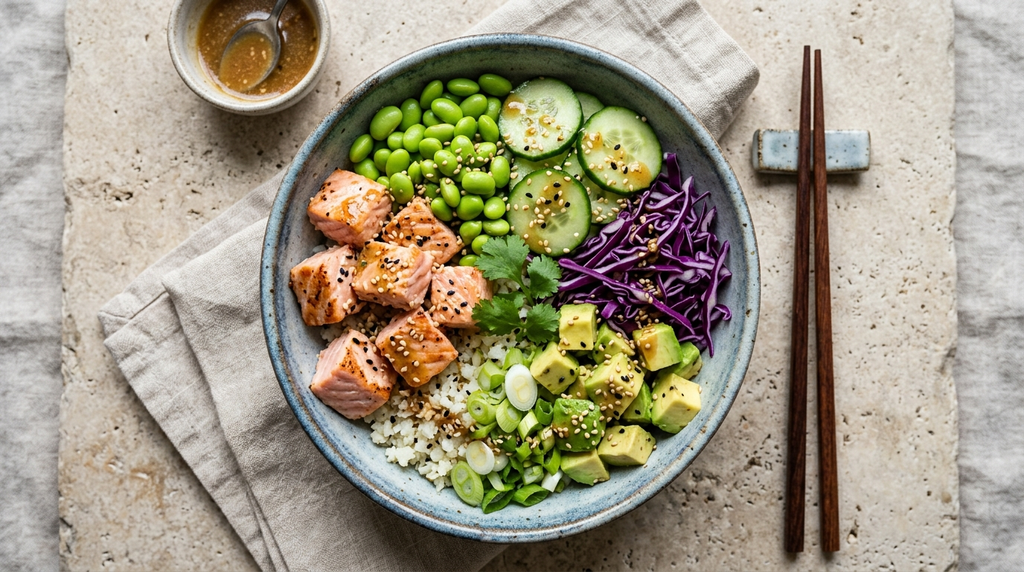
Fresh salmon, creamy avocado, crisp cucumber, and sesame-lime dressing come together in a colorful low-carb bowl.
A Fresh, Low-Carb Take on Poke
This Keto Poke Bowl brings the fresh, satisfying flavors of a sushi-style poke bowl without the traditional rice base. Instead of rice, crisp cauliflower rice creates a light foundation for buttery salmon, creamy avocado, cucumber, edamame, shredded cabbage, and scallions. A simple sesame-lime dressing adds savory, nutty flavor while keeping the bowl bright and refreshing.
The salmon is gently seasoned and quickly seared so the outside develops a little color while the inside stays moist and tender. Fresh vegetables provide plenty of crunch, while avocado adds richness and helps make the bowl feel complete. It is a practical option for anyone looking for a low-carb lunch or dinner that still feels substantial. The components can also be prepared separately ahead of time, making this bowl convenient for meal prep.
Why You’ll Love This Recipe
- Low-Carb Base: Cauliflower rice replaces traditional sushi rice while keeping the bowl light and vegetable-forward.
- Protein-Rich: Salmon and edamame provide substantial protein to make the bowl satisfying.
- Fresh and Colorful: Cucumber, cabbage, avocado, and scallions add contrasting colors and textures.
- Sushi-Inspired Flavor: Sesame oil, soy sauce, lime, ginger, and rice vinegar create a familiar poke-style flavor profile.
- Healthy Fats: Salmon, avocado, and sesame oil contribute flavorful sources of dietary fat.
- Quick to Assemble: Once the cauliflower rice and salmon are prepared, the bowls come together in minutes.
- Customizable: You can change the vegetables, protein, and toppings without losing the overall poke-bowl character.
Time Breakdown & Servings
Prep Time: 15 minutes
Cook Time: 15 minutes
Total Time: 30 minutes
Servings: 4 bowls
Ingredients You’ll Need
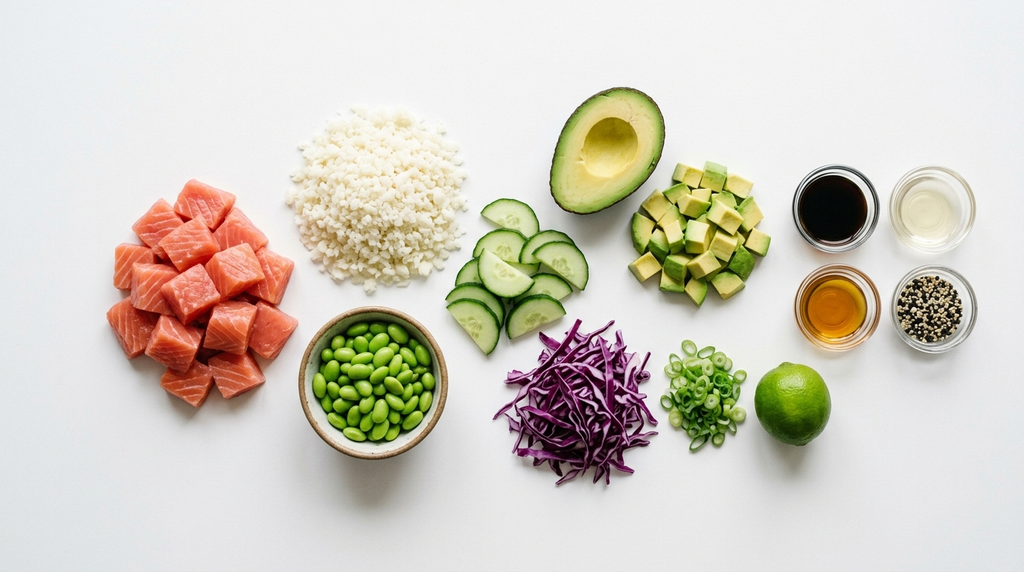
- 600 g skinless salmon fillets, cut into bite-size pieces
- 600 g cauliflower rice
- 160 g shelled edamame, cooked
- 200 g cucumber, thinly sliced
- 120 g avocado, diced
- 120 g shredded red cabbage
- 30 g scallions, thinly sliced
- 30 ml low-sodium soy sauce
- 20 ml fresh lime juice
- 15 ml rice vinegar
- 10 g toasted sesame oil
- 10 g avocado oil
- 6 g fresh ginger, finely grated
- 6 g garlic, finely minced
- 1 teaspoon sesame seeds
- 1/4 teaspoon fine salt
Ingredient Notes & Practical Substitutions
- Salmon: Skinless salmon fillets are easiest for this bowl because they can be cut directly into bite-size pieces. Trout can be substituted if preferred, although the flavor will be slightly different.
- Cauliflower Rice: Fresh or frozen cauliflower rice can be used. If using frozen cauliflower rice, cook it uncovered so excess moisture can evaporate.
- Edamame: Shelled edamame adds protein and texture. If you want to reduce the carbohydrates further, replace it with extra cucumber, cabbage, or another low-carb vegetable.
- Soy Sauce: Low-sodium soy sauce keeps the dressing from becoming excessively salty. Tamari can be used as an alternative.
- Sesame Oil: Toasted sesame oil provides strong flavor, so a small amount is enough. Do not replace it with a large quantity of regular cooking oil because the flavor profile will change considerably.
Kitchen Tools You’ll Need
A skillet, saucepan, mixing bowls, and basic cutting tools are all you need.
- Large nonstick skillet
- Medium saucepan or skillet
- Small mixing bowl
- Large mixing bowl
- Sharp knife and cutting board
- Spatula
- Measuring spoons and measuring cup
Step-by-Step Instructions
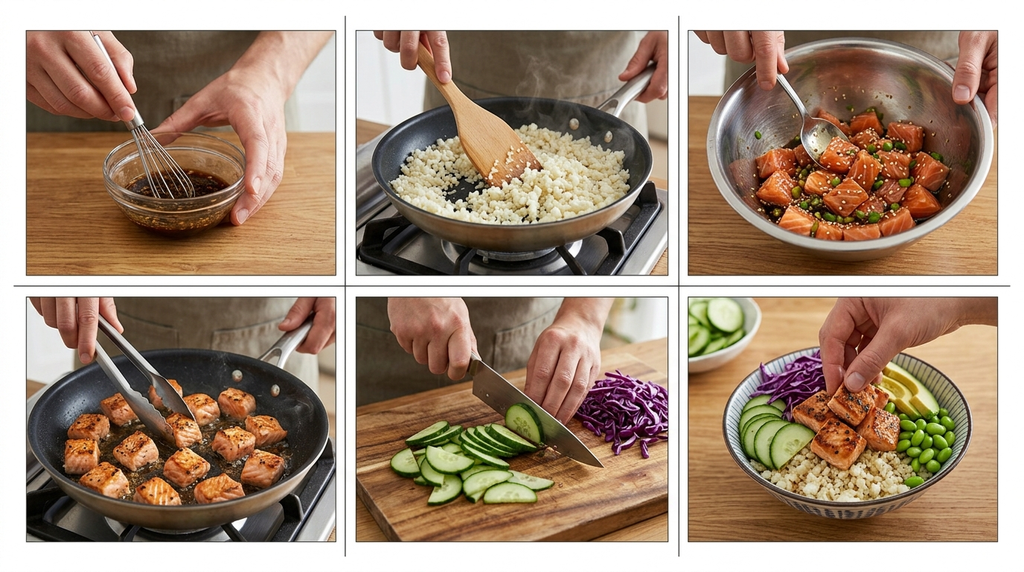
- Prepare the Dressing: In a small bowl, whisk together 30 ml low-sodium soy sauce, 20 ml lime juice, 15 ml rice vinegar, 10 g toasted sesame oil, 6 g grated ginger, and 6 g minced garlic. Whisk until evenly combined and set aside.
- Prepare the Cauliflower Rice: Heat a medium skillet over medium heat. Add 600 g cauliflower rice and cook for 5 to 7 minutes, stirring occasionally, until tender and most of the visible moisture has evaporated. Season with 1/4 teaspoon salt. Do not cover the pan because trapped steam can leave the cauliflower rice watery.
- Prepare the Salmon: Pat 600 g salmon dry with paper towels and cut it into bite-size pieces. Toss gently with about one-third of the prepared dressing, reserving the remainder for serving. Let the salmon stand for 5 minutes while you heat the skillet.
- Cook the Salmon: Heat 10 g avocado oil in a large nonstick skillet over medium-high heat. Add the salmon pieces in a single layer. Cook for approximately 2 to 3 minutes on each side, turning carefully, until the salmon is opaque and reaches a safe internal temperature of 63°C. Avoid overcrowding the pan; cook in batches if necessary.
- Prepare the Toppings: While the salmon cooks, slice 200 g cucumber, dice 120 g avocado, prepare 120 g shredded red cabbage, and slice 30 g scallions. Cook 160 g shelled edamame according to the package directions, then drain well. Keep the vegetables crisp and fresh for assembly.
- Assemble the Bowls: Divide the warm cauliflower rice among four bowls. Arrange the cooked salmon, edamame, cucumber, cabbage, avocado, and scallions over the cauliflower rice. Drizzle the remaining sesame-lime dressing over each bowl and finish with 1 teaspoon sesame seeds divided evenly among the servings.
Expert Tips for Best Results
- Remove excess moisture from the cauliflower rice before cooking so the finished base stays fluffy rather than watery.
- Pat the salmon dry before seasoning because a dry surface browns more effectively in the skillet.
- Avoid moving the salmon constantly while it cooks. Allow each side enough contact with the hot pan to develop light browning.
- Add the avocado shortly before serving so it maintains its creamy texture and fresh color.
- Taste the dressing before assembling and adjust the lime or soy sauce slightly if needed, remembering that the salmon and vegetables will dilute its intensity.
Common Mistakes To Avoid
- Covering the cauliflower rice while cooking can trap steam and leave the base soggy.
- Overcrowding the salmon in the skillet can lower the pan temperature and prevent proper browning.
- Overcooking salmon can make it dry, so begin checking it as soon as the exterior is opaque.
- Adding all of the dressing at once can make the cauliflower rice and vegetables watery.
- Cutting the avocado too early can cause it to brown before the bowl is ready to serve.
Recipe Variations
- Spicy Salmon Bowl: Add a small amount of chili paste or crushed red pepper to the sesame-lime dressing for extra heat.
- Tuna Poke Bowl: Replace the cooked salmon with high-quality tuna prepared according to appropriate food-safety guidance for raw fish, or use cooked tuna for a fully cooked option.
- Chicken Sushi Bowl: Replace the salmon with cooked chicken breast and increase the sesame-lime dressing slightly for added flavor.
- Vegetarian Poke Bowl: Replace the salmon with extra-firm tofu and increase the edamame and vegetables for a plant-forward version.
- Creamy Poke Bowl: Add a small spoonful of mashed avocado to the dressing for a richer, creamier sauce.
What to Serve With This Dish
- Seaweed Salad: A small serving of seaweed salad adds a salty, savory flavor that complements the salmon.
- Cucumber Salad: Thin cucumber dressed with rice vinegar and sesame seeds provides an especially refreshing side.
- Steamed Broccoli: Simple steamed broccoli adds another low-carb vegetable without competing with the poke flavors.
- Miso Soup: A light bowl of miso soup works well alongside the fresh, chilled toppings.
- Edamame: Additional steamed edamame can be served separately when you want to increase the protein and vegetable content.
Storage & Reheating Guide
Store: Refrigerate cooked salmon and cauliflower rice separately in airtight containers for up to 2 days. Keep the fresh vegetables, avocado, and dressing separate until serving.
Reheating: Reheat the salmon and cauliflower rice gently until hot, then assemble with the chilled vegetables. If you prefer the salmon cold, serve it directly from the refrigerator after safe storage.
Estimated Nutrition Information
| Calories | Protein | Carbs | Fat | Fiber | Sugar |
|---|---|---|---|---|---|
| 486 kcal | 35.8 g | 18.4 g | 31.0 g | 7.0 g | 5.4 g |
Nutrition is an estimate per serving calculated from the listed ingredient quantities using standard food-composition values. Actual nutrition can vary depending on the salmon, yogurt-free dressing ingredients, soy sauce, edamame, avocado, and other brands used.
Frequently Asked Questions
- Is this Keto Poke Bowl actually low in carbohydrates?
Yes. The recipe replaces traditional rice with cauliflower rice and uses vegetables as the main carbohydrate sources. The exact carbohydrate count will vary depending on the specific ingredients and brands used.
- Can I use raw salmon instead of cooked salmon?
This recipe is written for cooked salmon. If you choose to prepare a raw-fish poke bowl, use fish specifically sold and handled for raw consumption and follow appropriate food-safety guidance.
- Can I use frozen cauliflower rice?
Yes. Frozen cauliflower rice is convenient and works well. Cook it uncovered and allow excess moisture to evaporate before assembling the bowl.
- Can I prepare this bowl ahead of time?
Yes. Cook the salmon and cauliflower rice ahead and refrigerate them separately. Store the vegetables and dressing separately as well, then assemble the bowl shortly before serving.
- What can I use instead of salmon?
Cooked shrimp, chicken, trout, or firm tofu can all work. The cooking method and nutritional values will change depending on the protein selected.
Conclusion
This Keto Poke Bowl delivers the fresh, colorful experience of a poke bowl without relying on traditional rice. Tender salmon, creamy avocado, crisp cucumber, cabbage, edamame, and a savory sesame-lime dressing create plenty of flavor and texture in every bite. It is an easy low-carb meal that works for lunch, dinner, or meal prep and can be adjusted with your favorite poke-style toppings. Save this recipe to Pinterest so you have an easy low-carb bowl idea ready whenever you want something fresh and satisfying.