
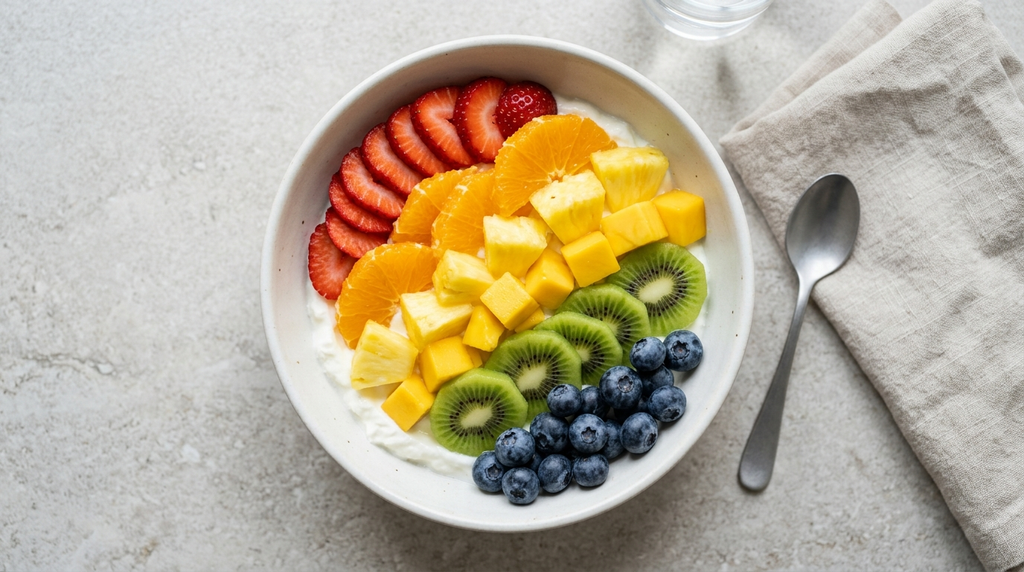
A colorful, refreshing fruit bowl layered with creamy Greek yogurt for a simple, nourishing breakfast or snack.
A Fresh and Colorful Start to the Day
This Rainbow Fruit Bowl brings together fresh strawberries, pineapple, mango, kiwi, blueberries, and orange in one naturally vibrant bowl. Instead of relying on sweet sauces or flavored yogurt, the recipe lets ripe fruit provide most of the sweetness while plain Greek yogurt adds creaminess and protein. The combination gives you contrasting textures, from juicy orange and pineapple to tender mango, crisp kiwi, and plump berries.
It is an especially practical option when you want something fresh without turning on the stove. The fruit can be prepared in advance, and the bowl takes only a few minutes to assemble. Greek yogurt makes it more substantial than a fruit-only platter, while the variety of produce makes the meal feel abundant without requiring complicated preparation. It works well for breakfast, a light lunch, an afternoon snack, or a simple dessert.
Why You’ll Love This Recipe
- Naturally sweet: Ripe fruit provides plenty of sweetness without requiring honey, syrup, or added sugar.
- Protein-conscious: Plain Greek yogurt gives the bowl a meaningful protein boost compared with fruit alone.
- Colorful: Six different fruits create a naturally vibrant combination that looks appealing without artificial colors.
- Quick to prepare: There is no cooking involved, and the bowl can be assembled in about 15 minutes.
- Fresh and refreshing: Chilled fruit and yogurt make this especially enjoyable on warm mornings or afternoons.
- Flexible: Individual fruits can be changed according to season, availability, and personal preference.
- Simple ingredients: The recipe uses recognizable whole-food ingredients without complicated sauces or toppings.
Time Breakdown & Servings
Prep Time: 15 minutes
Cook Time: 0 minutes
Total Time: 15 minutes
Servings: 2
Ingredients You’ll Need
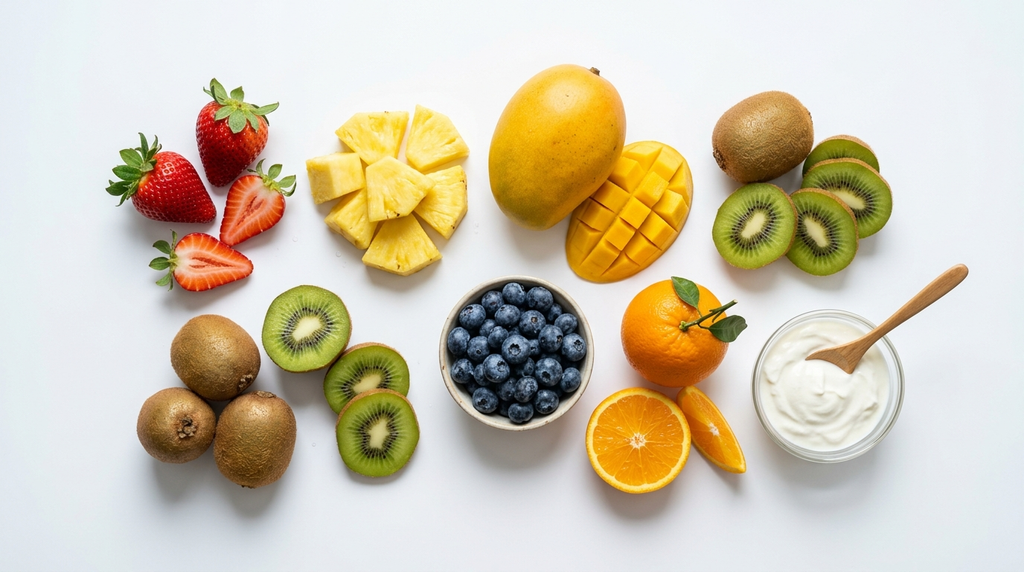
- 150 g strawberries, hulled and sliced.
- 150 g fresh pineapple, peeled, cored, and cut into bite-sized pieces.
- 150 g ripe mango, peeled and diced.
- 150 g kiwi, peeled and sliced or diced.
- 100 g blueberries, rinsed and thoroughly dried.
- 150 g orange, peeled, segmented, and cut into bite-sized pieces.
- 170 g plain nonfat Greek yogurt.
Ingredient Notes & Practical Substitutions
- Strawberries: Choose firm, fragrant strawberries without bruised or very soft areas. Raspberries can replace them when strawberries are unavailable.
- Pineapple: Fresh pineapple provides the best firm, juicy texture. Well-drained pineapple packed in juice can be used when fresh pineapple is unavailable.
- Mango: Use a ripe mango that gives slightly when gently pressed. Peaches or nectarines can replace the mango for a similar soft fruit texture.
- Kiwi: Green kiwi provides a pleasant tart contrast to the sweeter fruits. Gold kiwi can be used for a milder, sweeter flavor.
- Greek yogurt: Plain nonfat Greek yogurt keeps the bowl relatively light while contributing protein. Plain low-fat or full-fat Greek yogurt can be substituted, although the calorie and fat content will change.
Kitchen Tools You’ll Need
A few basic kitchen tools are enough to wash, prepare, and assemble this no-cook fruit bowl.
- Chef’s knife.
- Cutting board.
- Small colander or strainer.
- Two serving bowls.
- Kitchen scale or measuring cups.
Step-by-Step Instructions
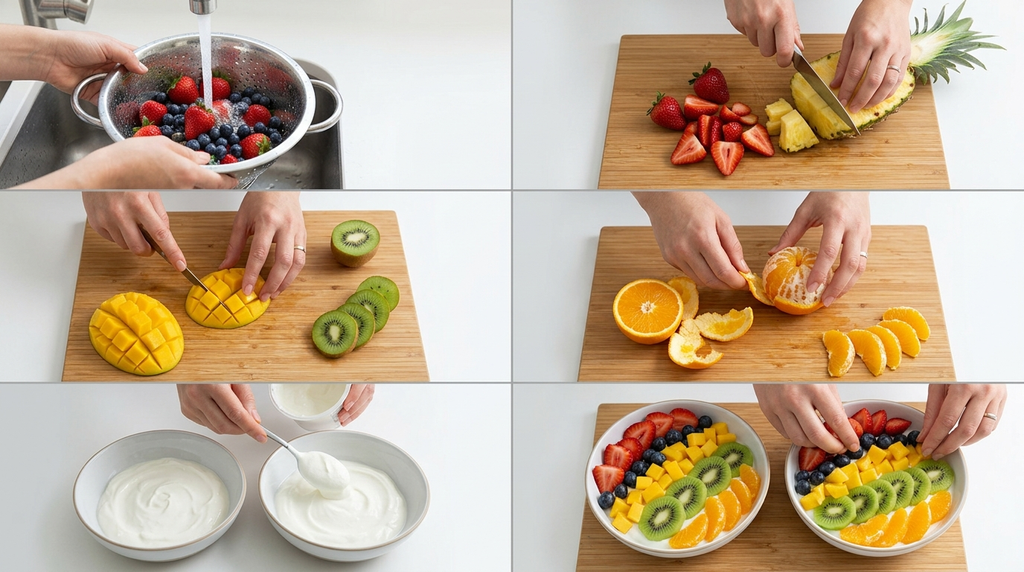
- Wash and dry the fruit: Rinse 150 g strawberries and 100 g blueberries under cool running water. Drain them well and gently pat them dry with a clean kitchen towel. Removing excess water helps prevent the yogurt from becoming watery.
- Prepare the strawberries and pineapple: Hull 150 g strawberries and slice them into bite-sized pieces. Cut 150 g pineapple into similar-sized pieces, removing the tough core before cutting. Keeping the pieces reasonably uniform makes the bowl easier to eat.
- Prepare the mango and kiwi: Peel and dice 150 g mango into spoon-friendly pieces. Peel 150 g kiwi and slice or dice it. Keep the pieces relatively similar in size to the other fruit.
- Prepare the orange: Peel 150 g orange and separate the segments. Remove obvious seeds and excess pith, then cut large segments into smaller pieces if necessary.
- Prepare the yogurt: Divide 170 g plain nonfat Greek yogurt between two serving bowls, using approximately 85 g per bowl. Spread the yogurt gently across the bottom of each bowl.
- Arrange the fruit: Divide the strawberries, pineapple, mango, kiwi, blueberries, and orange evenly between the two bowls. Arrange the fruit in separate sections or layer it over the yogurt so the different colors remain visible.
- Serve immediately: Check the fruit for any remaining seeds, tough pieces, or excess liquid. Serve the bowls while the fruit is fresh and the yogurt is cold.
Expert Tips for Best Results
- Choose ripe but firm fruit: Very soft fruit can release too much liquid and make the bowl watery. Fruit that is ripe but still holds its shape gives the best texture.
- Dry the berries properly: Even freshly washed berries can carry enough surface water to thin the yogurt, so take a moment to dry them thoroughly.
- Keep the pieces bite-sized: Large pieces can make the bowl awkward to eat and make it harder to get several fruits in one spoonful.
- Assemble close to serving: If you are preparing the ingredients ahead, store the fruit and yogurt separately and combine them shortly before eating.
- Use a kitchen scale for consistency: Weighing the ingredients gives you portions that are closer to the stated serving size and nutrition estimate.
Common Mistakes To Avoid
- Using overripe fruit: Fruit that is already collapsing or leaking juice can make the entire bowl watery.
- Adding wet berries: Do not add freshly washed berries while they are still dripping. Drain and dry them first.
- Using sweetened yogurt without checking: Flavored or sweetened yogurt can significantly change the sugar and calorie content of the recipe.
- Cutting everything too large: Oversized fruit pieces make the bowl difficult to eat and can overwhelm the creamy yogurt base.
- Preparing it too far ahead: Once cut, fruit gradually releases moisture. For the freshest texture, assemble the bowl shortly before serving.
Recipe Variations
- Higher-protein version: Use a plain Greek yogurt with a higher protein content per serving. Recalculate the nutrition using the specific product label.
- Dairy-free version: Replace the Greek yogurt with an unsweetened soy-based yogurt that provides a comparable protein content.
- Tropical variation: Replace the orange with passion fruit or add a measured portion of fresh coconut alongside the pineapple and mango.
- Seasonal version: Replace individual fruits with whatever is fresh and affordable, such as peaches, nectarines, raspberries, or watermelon.
- Crunchy version: Add a measured portion of unsalted nuts or seeds. Because these ingredients are calorie-dense, recalculate the nutrition when making this change.
What to Serve With This Dish
- Boiled eggs: A simple protein-rich addition that turns the fruit bowl into a more substantial breakfast.
- Whole-grain toast: Serve with a slice of whole-grain toast for additional carbohydrate and texture.
- Natural peanut butter: A small measured portion spread on toast adds richness and protein.
- Vegetable omelet: Pair the fruit bowl with eggs and vegetables when you want a larger breakfast.
- Unsweetened tea: A cup of unsweetened tea complements the naturally sweet fruit without adding another sugary component.
Storage & Reheating Guide
Store: Keep the prepared fruit and Greek yogurt in separate airtight containers in the refrigerator and assemble within 24 hours for the best texture.
Reheating: Not applicable; this recipe is designed to be served cold.
Estimated Nutrition Information
| Nutrition | Per Serving |
|---|---|
| Calories | 266 kcal |
| Protein | 11.9 g |
| Carbs | 57.0 g |
| Fat | 1.6 g |
| Fiber | 9.0 g |
| Sugar | 43.0 g |
Estimated values are calculated from standard reference nutrition data for the stated ingredient quantities. Actual values may vary according to fruit variety, ripeness, portion size, and the specific Greek yogurt used.
Frequently Asked Questions
- Can I prepare the Rainbow Fruit Bowl the night before?
Yes. For the best texture, wash and cut the fruit ahead of time but keep it separate from the Greek yogurt. Assemble the bowl shortly before serving.
- Can I use frozen fruit?
Yes, although fresh fruit provides a better texture. If using frozen fruit, thaw it in the refrigerator and drain excess liquid before adding it to the bowl.
- Can I make this recipe without Greek yogurt?
Yes. The fruit can be served on its own as a fruit bowl or platter. However, removing the Greek yogurt will substantially reduce the protein content shown in the nutrition table.
- What fruit can replace the mango?
Peaches or nectarines are practical substitutes because they have a similar soft, juicy texture. Use the same approximate weight and recalculate the nutrition if accuracy is important.
- How can I make the bowl more filling?
Keep the Greek yogurt as part of the recipe and add a measured portion of nuts or seeds. You can also serve the bowl alongside eggs or whole-grain toast for a more substantial breakfast.
Conclusion
This Rainbow Fruit Bowl proves that a simple breakfast can still feel colorful, fresh, and satisfying. The combination of juicy fruit and creamy Greek yogurt provides a refreshing meal with natural sweetness, useful protein, and plenty of texture. Because the fruit can easily be changed with the seasons, it is a practical recipe to keep in your regular breakfast rotation. Save this Rainbow Fruit Bowl to Pinterest so you always have a fresh, colorful breakfast idea ready to make.