
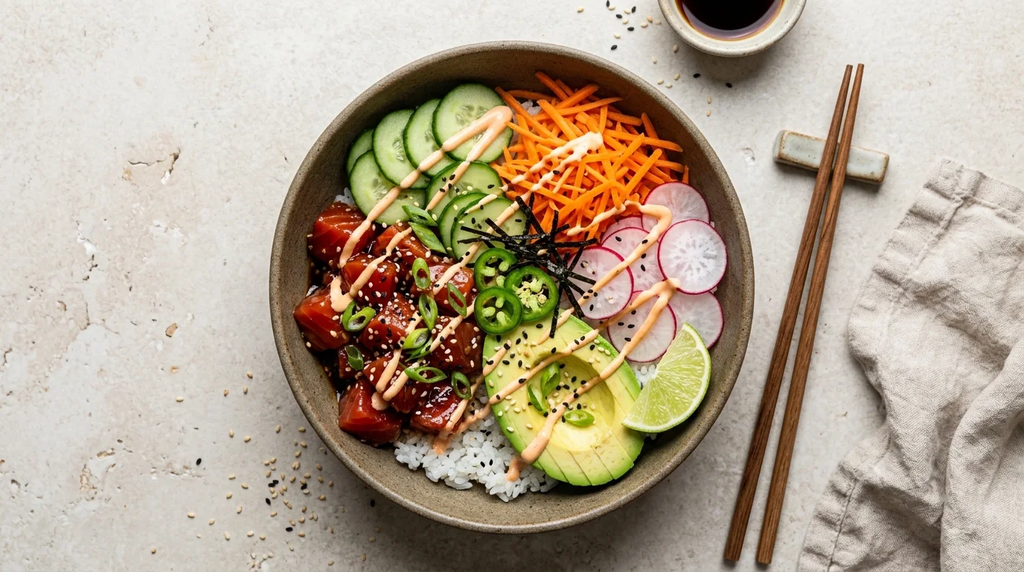
Cubed wild Alaska sockeye salmon tossed in a sesame-soy poke sauce, served over sushi rice with cool vegetables and a creamy spicy drizzle.
A Restaurant-Style Salmon Poke Bowl You Can Make at Home
A good poke bowl balances fresh ingredients, savory seasoning, and contrasting textures. This spicy salmon poke bowl brings those elements together with tender cubes of wild Alaska sockeye salmon, seasoned sushi rice, crunchy vegetables, and a creamy, spicy drizzle.
The salmon is coated in a sesame-soy sauce flavored with ginger, garlic, lime, and sriracha. Its rich, savory flavor pairs beautifully with cool cucumber, shredded carrots, crisp radishes, and creamy avocado. A sprinkle of scallions, sesame seeds, and toasted nori adds a finishing touch that makes every bite feel complete.
Sockeye salmon has a naturally deep-red color and a distinctive flavor, making it a delicious choice for this style of bowl. Salmon also provides protein and omega-3 fatty acids, while the vegetables add freshness and texture. With rice as the base and a yogurt-based spicy sauce on top, this recipe offers a satisfying homemade alternative to takeout.
The bowl takes about 45 minutes to prepare, including the rice, toppings, and sauces. Because the salmon is served raw in the traditional poke-inspired version, choosing appropriate fish and handling it safely are essential. You’ll also find a cooked variation below if you prefer not to eat raw seafood.
Why You’ll Love This Recipe
- Protein-rich and satisfying. Salmon provides substantial protein, while Greek yogurt adds a little more.
- Bold, balanced flavor. Sesame oil, ginger, garlic, lime, and sriracha create a savory sauce with tangy heat.
- Fresh and crunchy. Cucumber, carrots, and radishes contrast with the soft rice and salmon.
- A creamy spicy drizzle. Greek yogurt and light mayonnaise create a smooth sauce that complements the fish.
- Easy to customize. Adjust the heat, swap vegetables, or add your favorite poke bowl toppings.
- A colorful homemade meal. The salmon, green avocado, orange carrots, and red radishes make an inviting presentation.
- Includes a cooked option. You can bake the salmon instead of serving it raw.
Time Breakdown & Servings
- Prep Time: 20 minutes
- Cook Time: 25 minutes
- Total Time: 45 minutes
- Servings: 4 bowls
The total time does not include additional time needed to thaw frozen salmon safely.
Ingredients You’ll Need
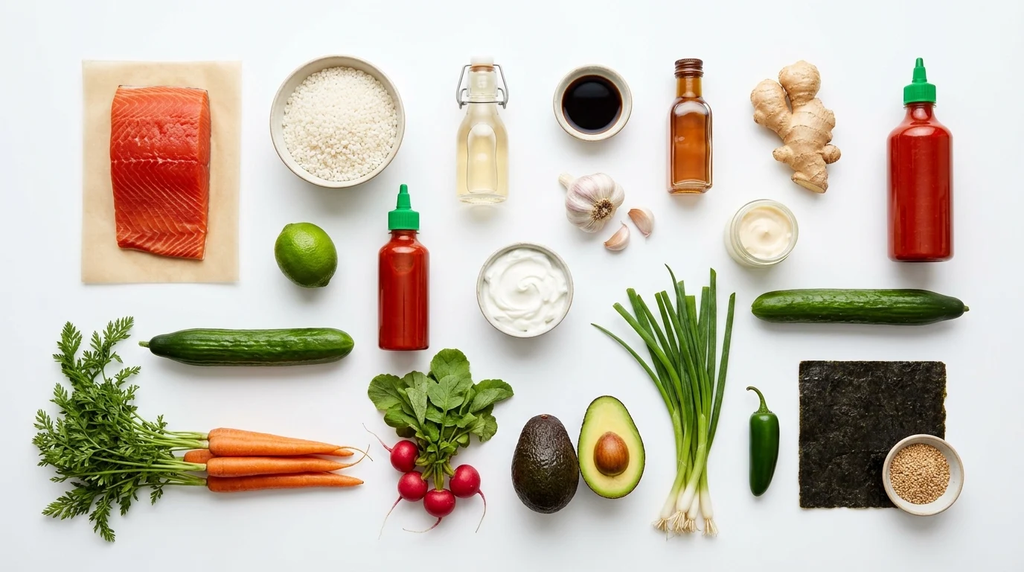
- 1 pound sushi-grade wild sockeye salmon fillet, skinless and boneless
- 3/4 cup uncooked sushi rice
- 1 cup water
- 2 tablespoons rice vinegar, divided
- 1 teaspoon granulated sugar
- 3 tablespoons low-sodium soy sauce
- 1 tablespoon toasted sesame oil
- 1 teaspoon honey
- 2 teaspoons freshly grated ginger
- 1 clove garlic, minced
- 1 tablespoon fresh lime juice
- 1 teaspoon sriracha, for the poke sauce
- 1/4 cup plain nonfat Greek yogurt
- 1 tablespoon light mayonnaise
- 2 teaspoons sriracha, for the spicy sauce
- 1 English cucumber, thinly sliced
- 1/2 cup shredded carrots
- 1/2 cup thinly sliced radishes
- 1 ripe avocado, sliced
- 3 scallions, thinly sliced
- 1 small jalapeño, thinly sliced
- 1 tablespoon sesame seeds
- 1 sheet toasted nori, cut into thin strips
Ingredient Notes & Practical Substitutions
- Wild sockeye salmon: Choose salmon from a reputable supplier who can confirm that it is intended for raw consumption and explain how it has been handled. The term sushi-grade is not a universal guarantee of safety. Fish intended to be eaten raw can still carry foodborne risks, so follow local food safety guidance. If you’re uncertain about the fish, use the cooked variation below.
- Sushi rice: Short-grain sushi rice has a slightly sticky texture that makes it easy to serve with the toppings. Brown rice is an alternative if you prefer a chewier base, while cauliflower rice works for a lower-carbohydrate version.
- Sriracha: This chili sauce adds garlic, heat, and a little sweetness. Reduce the amount for a milder bowl or add more at the table for extra spice.
- Greek yogurt and light mayonnaise: Together, they create a creamy sauce with a little tang. You can use mayonnaise alone for a richer dressing, or choose suitable dairy-free alternatives.
- Low-sodium soy sauce: This seasons the salmon without making the sauce as salty as some regular soy sauces. Tamari can be used for a gluten-free version if the label confirms it is gluten-free.
- Fresh ginger and garlic: These add a sharp, aromatic flavor that balances the sesame oil and soy sauce. Freshly grated ginger is especially useful here, but finely minced ginger also works.
- Nori and sesame seeds: These provide the finishing crunch and a savory, toasted flavor. Add them just before serving so they retain their texture.
Kitchen Tools You’ll Need
- Very sharp knife and cutting board
- Medium saucepan with lid
- Two small mixing bowls
- Medium bowl for tossing the salmon
- Rubber spatula
- Measuring cups and spoons
Step-by-Step Instructions
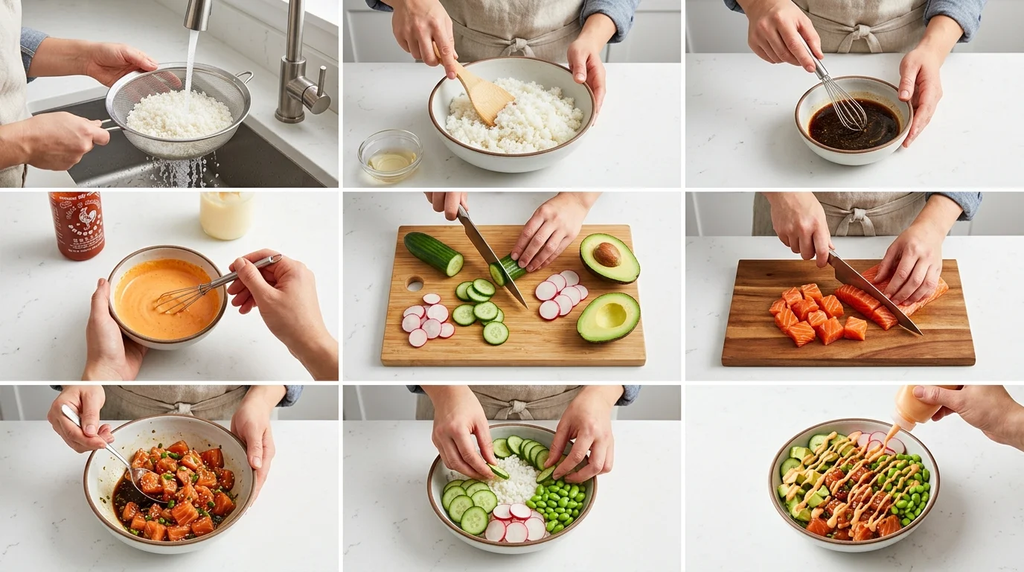
- Keep the salmon chilled. If using frozen salmon, thaw it in the refrigerator according to the package instructions. Keep it refrigerated until you are ready to prepare it, and use clean utensils and a clean cutting board for handling the fish.
- Cook the rice. Rinse the sushi rice under cold running water until the water runs mostly clear. Combine the rice and 1 cup water in a saucepan. Bring to a boil, cover, and reduce the heat to low. Cook for about 15 minutes, or according to the package instructions. Remove from the heat and let it rest, covered, for 10 minutes.
- Season the rice. Stir 1 tablespoon rice vinegar and the sugar together until the sugar dissolves. Gently fold the mixture into the cooked rice. Allow the rice to cool before assembling the bowls. Do not leave cooked rice at room temperature for an extended period; follow safe food handling practices and refrigerate it promptly if preparing components ahead.
- Make the poke sauce. In a small bowl, whisk together the soy sauce, sesame oil, remaining 1 tablespoon rice vinegar, honey, ginger, garlic, lime juice, and 1 teaspoon sriracha. Transfer half the sauce to a clean container and reserve it for serving.
- Prepare the spicy sauce. In another small bowl, whisk together the Greek yogurt, mayonnaise, and 2 teaspoons sriracha. Add a teaspoon of water if needed to create a smooth, drizzle-friendly consistency. Cover and refrigerate until serving.
- Prepare the toppings. Thinly slice the cucumber, radishes, scallions, and jalapeño. Shred the carrots and cut the toasted nori into thin strips. Keep the vegetables refrigerated while you finish preparing the other components. Wait until just before serving to slice the avocado.
- Cut and season the salmon. Using a clean, sharp knife, cut the chilled salmon into approximately 3/4-inch cubes. Place it in a clean bowl and gently fold in half the poke sauce. Keep the salmon refrigerated and serve promptly. Avoid prolonged marinating, which can change the texture of the fish.
- Assemble the bowls. Divide the rice among four bowls. Arrange the salmon, cucumber, carrots, radishes, and avocado over the rice. Drizzle with the reserved poke sauce and the creamy spicy sauce. Finish with scallions, jalapeño, sesame seeds, and nori. Serve immediately.
Expert Tips for Best Results
- Choose the fish carefully. Buy from a trusted supplier and ask whether the salmon is suitable for raw consumption and how it has been handled. Freezing alone does not guarantee that every food safety risk has been eliminated.
- Keep raw fish cold. Refrigerate the salmon until preparation and return it to the refrigerator whenever you are not actively working with it.
- Use a sharp knife. A sharp blade makes clean cuts and helps the salmon keep its shape instead of tearing.
- Cool the rice before assembling. Hot rice can warm the salmon and wilt the vegetables. Cool it safely without leaving it at room temperature for too long.
- Marinate briefly. The salmon needs only a light coating of sauce. Extended exposure to acidic ingredients can alter its texture.
- Keep the sauces separate. Reserving some sauce before it touches the raw salmon gives you a clean portion for drizzling over the finished bowls.
- Slice the avocado last. This helps it retain its fresh appearance, especially if you are serving the bowls to guests.
Common Mistakes to Avoid
- Assuming any fresh salmon is suitable for raw consumption. Ask your supplier about its intended use and handling, or choose the cooked version.
- Leaving the salmon out while preparing the toppings. Keep it refrigerated until you’re ready to assemble the bowls.
- Marinating for too long. The fish can become firmer and less silky as it sits in the sauce.
- Using overly wet rice. Measure the water carefully and follow the rice package instructions for the best texture.
- Dressing everything too early. Add the sauces just before serving to keep the vegetables crisp.
- Reusing sauce that touched raw fish. Discard any marinade that has contacted raw salmon rather than using it as a finishing drizzle.
Recipe Variations
- Cooked salmon poke bowl: For a cooked option, cut the salmon into cubes, coat with a portion of the sauce, and bake at 400°F until the fish reaches an internal temperature of 145°F. Cooking time depends on the size of the cubes; check the thickest pieces with a food thermometer. Use fresh, uncontaminated sauce for serving.
- Mango salmon bowl: Add diced mango for a sweet, tropical contrast to the savory sauce.
- Lower-carbohydrate bowl: Replace the sushi rice with cauliflower rice or shredded cabbage.
- Spicy tuna bowl: If using tuna intended for raw consumption, follow the same careful sourcing and handling guidance as for salmon. Cook the tuna instead if you are unsure about its suitability.
- Edamame bowl: Add shelled edamame for extra texture, fiber, and plant protein.
- Extra-crunchy bowl: Add thinly sliced red cabbage or cucumber ribbons for more crunch.
- Sesame-ginger bowl: Reduce the sriracha and add a little extra ginger for a milder, aromatic flavor.
What to Serve With This Dish
This poke bowl is substantial on its own, but a simple side can make it feel like a more complete meal.
- Miso soup
- Seaweed salad
- Steamed edamame
- Pickled ginger
- Sliced mango or pineapple
- Iced green tea
Storage & Reheating Guide
Raw salmon: This bowl is best assembled and eaten immediately. Keep raw salmon refrigerated and follow the supplier’s storage instructions. Do not rely on a fixed leftover window to make raw fish safe. Discard salmon that has been left out too long or handled improperly.
Rice and vegetables: Store cooked rice and prepared vegetables in separate airtight containers in the refrigerator. Refrigerate cooked rice promptly rather than leaving it at room temperature. For the best texture, keep the avocado whole until serving.
Sauces: Store the yogurt-based spicy sauce in a covered container in the refrigerator and use it within the storage period recommended for its ingredients. Keep any sauce that has contacted raw salmon separate from the clean serving sauce.
Reheating: The raw version is not reheated. For the cooked variation, reheat the salmon only if needed, until thoroughly hot, and add the cold toppings afterward. Avoid repeated reheating.
Estimated Nutrition Information
| Nutrient | Per Serving (1 bowl) |
|---|---|
| Calories | 450 |
| Protein | 32 g |
| Carbs | 45 g |
| Fat | 17 g |
| Fiber | 5 g |
| Sugar | 7 g |
Nutrition information is an estimate based on standard ingredient data and may vary depending on the salmon, rice, sauces, and portion sizes used. For publication, calculate the values using the exact ingredients and quantities in the finished recipe.
Frequently Asked Questions
Is it safe to eat raw salmon at home?
Raw salmon can carry foodborne pathogens and parasites. Choose fish specifically handled for raw consumption from a reputable supplier, keep it cold, and follow local food safety guidance. Freezing requirements depend on the fish and its handling, and the label sushi-grade alone does not guarantee safety. People who are pregnant, older adults, young children, and those with weakened immune systems should avoid raw fish.
How do I make a salmon poke bowl without raw fish?
Use the cooked variation. Bake the salmon cubes until they reach an internal temperature of 145°F, then assemble the bowl with freshly prepared sauce and toppings. Keep the raw-fish preparation surfaces and utensils separate from the cooked ingredients.
What are the key spicy salmon poke ingredients?
The main ingredients are salmon, sushi rice, soy sauce, sesame oil, ginger, garlic, sriracha, and crisp vegetables. Avocado, scallions, sesame seeds, and nori provide the finishing touches.
Can I use farmed salmon instead of sockeye?
Farmed salmon can work if it has been properly handled and is specifically suitable for raw consumption. Its flavor and fat content may differ from wild sockeye. If you cannot confirm that it is suitable for raw use, cook it before serving.
How do I make the poke bowl spicier?
Add extra sriracha to the creamy sauce, increase the jalapeño, or sprinkle a little chili flake over the finished bowl. Add heat gradually so it does not overpower the sesame, ginger, and lime.
Can I prepare the components ahead?
You can cook the rice, slice the vegetables, and prepare the sauces in advance. Store each component separately in the refrigerator and handle the salmon as close to serving time as possible. Assemble the bowl just before eating for the best texture.
Conclusion
This spicy salmon poke bowl combines sesame-soy salmon, seasoned sushi rice, crunchy vegetables, creamy avocado, and a spicy yogurt drizzle for a colorful homemade meal. Ginger, garlic, and lime keep the flavors bright, while sesame seeds and nori add a savory finish.
Prepare the components ahead to make assembly easier, and choose the cooked salmon variation if you prefer to avoid raw seafood. Save this recipe to your healthy dinner board on Pinterest for a fresh, flavorful bowl whenever you’re in the mood for a homemade poke-inspired meal.