
Why Protein Is the Most Important Macronutrient You’re Probably Under-Eating
At The Healthy Plate Lab, protein sits at the center of everything we do. It is the single macronutrient most directly tied to body composition, metabolic rate, hunger regulation, immune function, and long-term muscle preservation — and yet it remains the most chronically under-consumed nutrient in the average modern diet.
The science is unambiguous. Protein triggers the release of satiety hormones like peptide YY and GLP-1 while simultaneously suppressing ghrelin, the hormone responsible for hunger signals. It has the highest thermic effect of any macronutrient, meaning your body burns approximately 20–30% of protein’s calories simply digesting it. And unlike carbohydrates or fat, your body has no dedicated storage system for protein — which means a consistent, daily intake isn’t optional. It’s biological necessity.
Most adults need somewhere between 0.7g and 1.0g of protein per pound of bodyweight per day for optimal function, with active individuals and those looking to build or preserve muscle sitting closer to the higher end. For many people, hitting that target feels overwhelming — but it doesn’t have to be. These eight steps are practical, sustainable, and grounded in real nutritional science. No extreme dieting. No complicated meal plans. Just smarter daily habits that compound dramatically over time.
Step 1: Build Every Meal Around a Protein Anchor
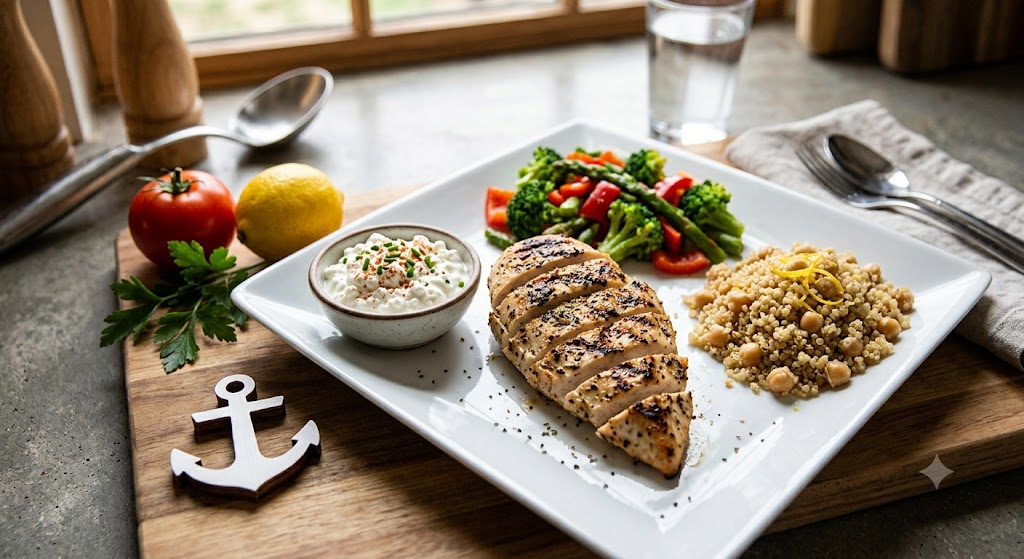
The single most effective shift you can make is changing how you think about meal construction. Most people build a meal around a carbohydrate — pasta, rice, bread — and add protein as an afterthought. At the Healthy Plate Lab, we reverse that entirely.
Choose your protein anchor first: grilled chicken breast, canned tuna, eggs, Greek yogurt, tofu, lentils, cottage cheese. Then build the rest of the meal — vegetables, complex carbs, healthy fats — around that foundation. This one mental shift alone can add 30–50g of protein per day without any dramatic change to the foods you already enjoy.
Aim for a minimum of 25–40g of protein per meal. Research from the University of Texas suggests that muscle protein synthesis is maximally stimulated at around 25–30g of high-quality protein per sitting, making this your target floor, not your ceiling.
Step 2: Upgrade Your Breakfast Immediately
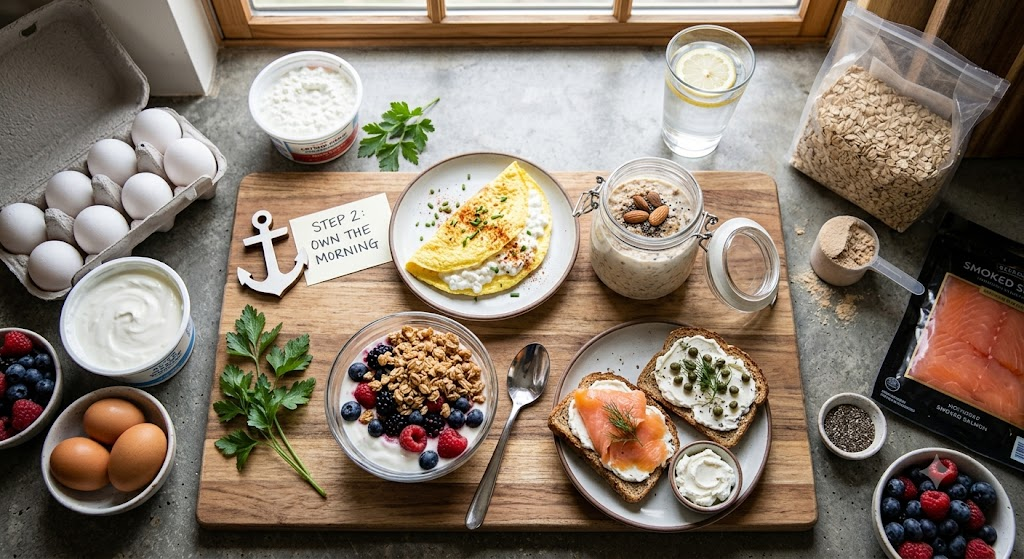
Breakfast is where most people’s protein intake collapses entirely. A bowl of cereal, a slice of toast, a banana — these are carbohydrate-dominant meals that provide almost no protein and guarantee hunger and energy crashes by mid-morning.
Swap to a high-protein breakfast and you’ll spend the rest of the day making better food choices because your hunger hormones are already balanced. Powerful high-protein breakfast options include:
- 3-egg omelette with cottage cheese folded in — approximately 30g protein
- Greek yogurt parfait with protein granola — approximately 25–35g protein
- Overnight oats made with protein powder and milk — approximately 30g protein
- Smoked salmon on whole grain with cream cheese — approximately 25g protein
The morning is your most important protein window. Own it deliberately.
Step 3: Make Greek Yogurt and Cottage Cheese Your Default Snacks
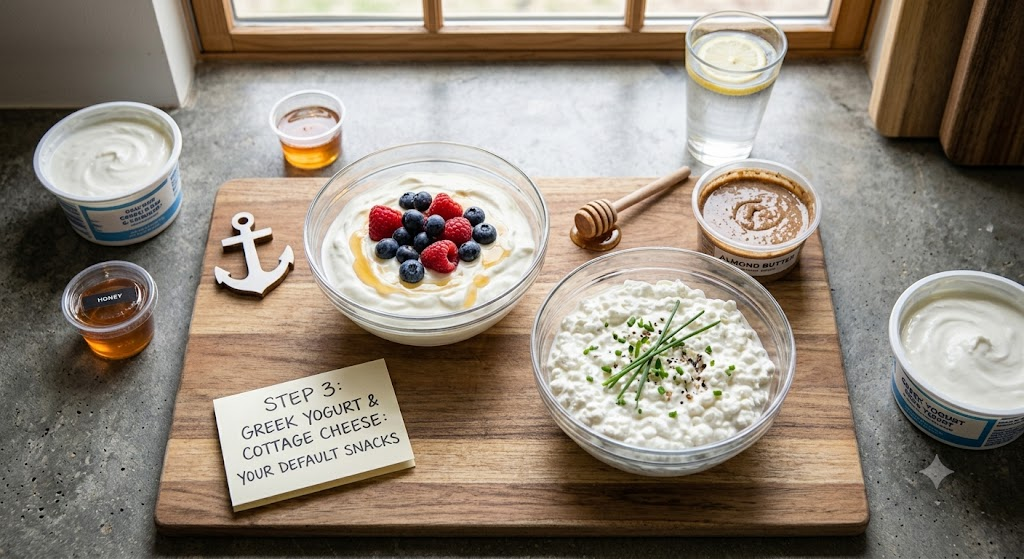
Processed snack foods — crackers, chips, granola bars, fruit pouches — are nutritional dead weight. They deliver calories with minimal protein, minimal fiber, and a blood sugar spike that leaves you hungrier an hour later than when you started.
Greek yogurt and cottage cheese are among the highest protein-per-calorie foods on earth and require zero preparation. A single cup of plain full-fat Greek yogurt delivers 17–20g of protein. A cup of cottage cheese provides 25g. Both are rich in casein protein, a slow-digesting form that provides a sustained amino acid release — making them particularly powerful as evening snacks for overnight muscle recovery.
Keep both stocked in your refrigerator at all times. Add fresh berries, a drizzle of honey, or a tablespoon of nut butter for flavor without undermining the protein density.
Step 4: Cook With Protein Powder Beyond Smoothies

Most people think of protein powder exclusively as a post-workout shake ingredient. This is a dramatic underuse of one of the most versatile high-protein tools available. Protein powder integrates seamlessly into cooking and baking, adding 20–25g of protein per scoop with minimal impact on flavor or texture when used correctly.
Proven culinary applications include:
- Stirred into oatmeal after cooking (off the heat, to prevent clumping)
- Blended into pancake batter — replace ¼ of the flour with vanilla protein powder
- Mixed into crumble toppings, energy balls, and muffin batters
- Whisked into plain yogurt for a thicker, higher-protein parfait base
- Added to homemade pasta sauces — unflavored varieties disappear completely
The key is using vanilla or unflavored varieties for savory applications, and ensuring your batter or mixture contains enough moisture to prevent a dry, chalky result.
Step 5: Choose High-Protein Versions of Foods You Already Eat

You don’t need to overhaul your diet. You need to make smarter swaps within the foods you already enjoy. The food industry has responded to consumer demand for protein, and high-protein alternatives now exist for almost every mainstream food category:
- Regular pasta → Chickpea or lentil pasta (nearly 3x the protein)
- White rice → Quinoa (a complete protein with all nine essential amino acids)
- Regular milk → Fairlife ultra-filtered milk (13g protein vs. 8g per cup)
- Regular bread → High-protein or Ezekiel bread (up to 6g protein per slice)
- Sour cream → Plain Greek yogurt (identical texture, triple the protein)
- Regular flour → Almond flour or chickpea flour in baking
- Regular cheese → Cottage cheese or ricotta blended into sauces
These swaps require no new cooking skills and no change in meal structure. They simply upgrade the nutritional density of food you’re already eating.
Step 6: Leverage the Power of Legumes Daily

Legumes — lentils, black beans, chickpeas, edamame, white beans — are among the most underrated protein sources in the Western diet. They are affordable, shelf-stable, require minimal preparation, and deliver a remarkable combination of protein, fiber, and complex carbohydrates in a single ingredient.
A cup of cooked lentils provides 18g of protein and 16g of fiber. A cup of edamame delivers 17g of protein. Black beans offer 15g per cup. While legumes are not complete proteins on their own, pairing them with a grain source — rice, corn, wheat — provides all essential amino acids and creates a complete protein profile.
Practically, this means:
- Adding a can of white beans to soups and stews
- Blending chickpeas into hummus as a daily snack base
- Using lentils as a meat extender in bolognese or chili
- Roasting chickpeas for a crunchy, high-protein snack
- Adding edamame to salads and grain bowls
Aim to include a legume source at least once per day. The fiber-protein combination is one of the most powerful satiety combinations in nutritional science.
Step 7: Prioritize Protein Timing Around Your Day
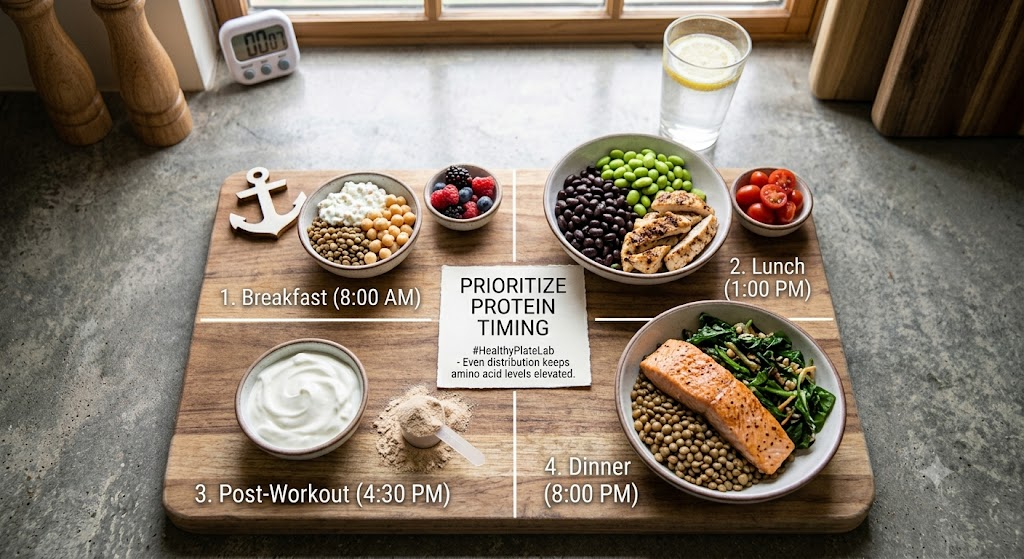
When you eat your protein matters nearly as much as how much you eat. Research consistently shows that distributing protein evenly across meals produces superior muscle protein synthesis and satiety outcomes compared to consuming the same total amount unevenly — for example, eating very little protein at breakfast and lunch and the majority at dinner.
The practical target is to hit 25–40g of protein at each of three meals, with an optional high-protein snack of 15–20g if your daily target requires it. This even distribution keeps amino acid levels in the blood consistently elevated throughout the day, maximizing the muscle-building and muscle-preserving signal at every turn.
Post-exercise protein timing remains important for active individuals. Consuming 25–40g of protein within two hours of a training session — ideally a fast-digesting source like whey protein or eggs — is the single most evidence-backed nutritional strategy for improving body composition over time.
Step 8: Track Your Intake for Just Two Weeks
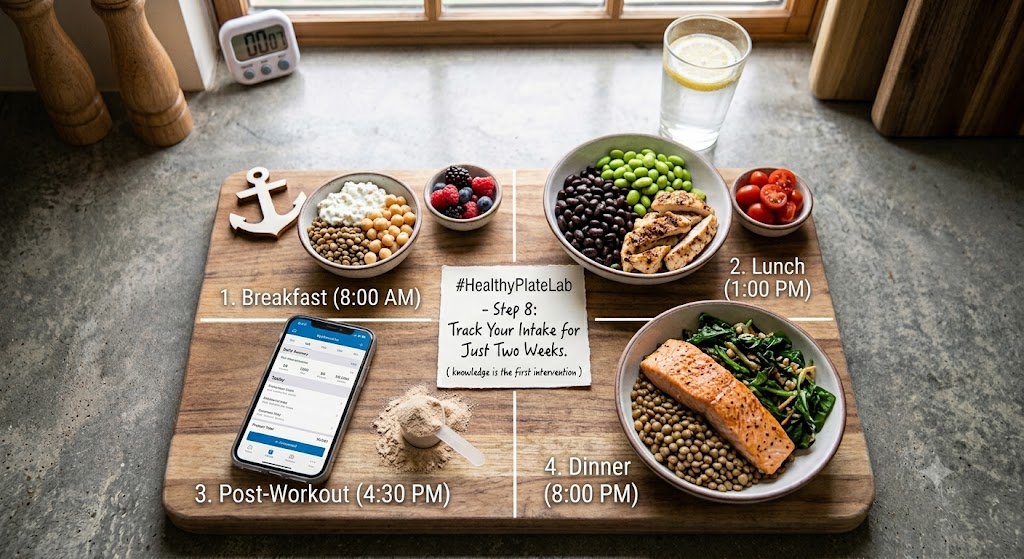
The most common reason people under-eat protein is that they genuinely don’t know how much they’re consuming. Protein targets feel abstract until you see the numbers in real time. Tracking your food intake for just 14 days — using an app like Cronometer, MyFitnessPal, or Carb Manager — creates a nutritional awareness that permanently changes how you approach meals.
You don’t need to track forever. Two weeks is enough to reveal your patterns, identify your weakest protein meals, discover which foods deliver the best protein-per-calorie value in your current diet, and recalibrate your intuition. Most people who complete a two-week protein tracking exercise are genuinely shocked to discover they’ve been hitting only 40–60% of their optimal protein target on average days.
Knowledge is the first intervention. Track briefly, learn deeply, and then apply those lessons intuitively for the long term.
The Healthy Plate Lab Bottom Line
Getting more protein into your diet is not about eating chicken breast six times a day or choking down protein shakes you don’t enjoy. It is about building a systematic, enjoyable, sustainable approach to food that prioritizes the macronutrient your body needs most.
Start with Step 1. Anchor every meal in protein. Then layer in the remaining steps one at a time over the course of a few weeks. The cumulative effect on your energy, body composition, hunger levels, and overall wellbeing will be profound — and entirely measurable.
Your protein goal, simplified:
| Body Weight | Minimum Daily Protein | Optimal Daily Protein |
|---|---|---|
| 130 lbs | 91g | 117–130g |
| 150 lbs | 105g | 135–150g |
| 170 lbs | 119g | 153–170g |
| 190 lbs | 133g | 171–190g |
| 210 lbs | 147g | 189–210g |
Targets based on 0.7g/lb minimum and 0.9–1.0g/lb optimal for active adults. Consult a registered dietitian for personalized guidance.
Content created by The Healthy Plate Lab. Share your protein journey with us using #HealthyPlateLab.