
The Story & Nutritional Philosophy
At The Healthy Plate Lab, we have a deep respect for cornbread. It is one of the most beloved baked goods in American culinary tradition — golden, slightly sweet, tender in the crumb, crisp at the edges, and deeply comforting in every sense of the word. But the classic cast iron cornbread recipe is almost entirely refined carbohydrates and butter, offering very little in the way of fiber, micronutrients, or lasting satiety.
Our Zucchini Cornbread changes that equation entirely — and it does so without sacrificing a single thing that makes cornbread worth eating.
The addition of freshly grated zucchini is the cornerstone of this recipe’s nutritional upgrade. Zucchini is composed of approximately 95% water, which means it releases moisture slowly during baking, keeping the interior of the cornbread extraordinarily tender and moist without requiring the excessive butter or oil that traditional recipes depend on. The result is a crumb that stays soft for days — something most cornbreads famously fail to do.
But zucchini brings far more than moisture. It contributes vitamin C, vitamin B6, potassium, folate, and manganese to every slice, along with soluble fiber that slows the digestion of the cornmeal’s natural starches. This fiber-starch interaction is nutritionally significant — it blunts the glycemic impact of the cornbread, producing a slower, more sustained energy release rather than a sharp blood sugar spike.
We use whole grain yellow cornmeal for its superior fiber and magnesium content over degerminated alternatives, buttermilk for its probiotic properties and the chemical reaction it creates with baking soda to produce an extraordinary lift and tenderness, and sharp cheddar cheese for protein, calcium, and the savory depth that transforms this from a simple side into something genuinely memorable.
The Healthy Plate Lab version of zucchini cornbread is not a compromise. It is a straight upgrade — more nutritious, more moist, more flavorful, and more interesting than the original. And it still belongs in a cast iron skillet, because some traditions are worth keeping.
Ingredients & Nutritional Benefits
For the Cornbread Batter
- 1 cup whole grain yellow cornmeal — The foundation of the recipe. Whole grain cornmeal retains the germ and bran layers, delivering fiber, magnesium, phosphorus, and B vitamins that refined cornmeal loses during processing. It also provides a deeper, more complex corn flavor.
- 1 cup all-purpose flour — Provides structure and gluten network to hold the tender crumb together. For a gluten-free version, a 1:1 gluten-free flour blend works seamlessly.
- 1 tbsp baking powder — The primary leavening agent. Creates the rapid rise and light, airy crumb that defines great cornbread.
- ½ tsp baking soda — Reacts specifically with the buttermilk’s acidity to create additional lift and the characteristic slight tang of Southern-style cornbread.
- 1 tsp kosher salt — Enhances every flavor in the batter and balances the sweetness of the corn and zucchini.
- 1 tbsp honey or pure maple syrup — A minimal, natural sweetener that complements the corn’s inherent sweetness without tipping the recipe into dessert territory. Both honey and maple syrup have a lower glycemic impact than refined white sugar.
- 2 large eggs — Provide structure, richness, and binding. Eggs also contribute lecithin, an emulsifier that creates a more uniform, tender crumb by preventing fat and water from separating during baking.
- 1 cup buttermilk — The acidic environment of buttermilk activates the baking soda and tenderizes the gluten strands in the flour, producing an exceptionally soft crumb. It also contributes beneficial bacteria and a subtle, complex tang that elevates the overall flavor.
- 3 tbsp unsalted butter, melted — Provides richness and flavor. Significantly less than most traditional recipes, because the zucchini’s moisture compensates for the fat reduction without compromising texture.
- 1½ cups freshly grated zucchini, lightly squeezed — The nutritional and textural hero of this recipe. Adds moisture, fiber, vitamins, and subtle sweetness while keeping the fat content low. Grating on the large holes of a box grater produces the ideal texture — present enough to contribute moisture but fine enough to disappear into the crumb.
- 1 cup sharp cheddar cheese, freshly grated — Sharp cheddar is specified deliberately. Its intense, complex flavor means you need less of it to achieve maximum impact. Freshly grated cheese melts more evenly than pre-shredded (which contains anti-caking agents that inhibit melting). Contributes protein and calcium alongside savory depth.
- 3 green onions, thinly sliced — Mild allium flavor, vitamin K, and visual interest throughout the crumb.
- ½ tsp smoked paprika — Adds a whisper of smokiness and a warm, rust-colored hue to the interior crumb. Pairs beautifully with the cheddar and corn.
- ½ tsp garlic powder — Deepens the savory dimension without competing with the other flavors.
Optional Add-Ins
- 1 jalapeño, finely diced — For heat and a Southwestern flavor profile. Remove seeds for mild heat, keep them for serious kick.
- ¼ cup corn kernels (fresh or frozen) — Adds bursts of sweet corn texture and reinforces the corn flavor throughout.
- 2 tbsp fresh chives — A delicate onion note and a vivid green fleck throughout the slices.
Chef’s Prep Secrets & Tips
Zucchini cornbread is forgiving — but these details separate a good loaf from an extraordinary one:
1. Squeeze the zucchini — but not too aggressively. Grate the zucchini on the large holes of a box grater, then place it in a clean kitchen towel and squeeze out the excess moisture. You want to remove roughly half the water, not all of it. Over-squeezing produces a dry crumb; under-squeezing produces a dense, gummy one. Aim for the zucchini to feel damp but not dripping when it goes into the batter.
2. Preheat your cast iron skillet in the oven. This is the single most important technique for cast iron cornbread. Place your skillet in the oven while it preheats to 400°F. When the batter goes into a screaming-hot, buttered cast iron pan, the bottom and sides begin cooking immediately — creating the signature crispy, deep-golden crust that is completely impossible to achieve in a cold pan. The sizzle when the batter hits the hot pan is your confirmation that everything is working correctly.
3. Grate your own cheese. Pre-shredded cheese is coated in cellulose or potato starch to prevent clumping, and these coatings prevent the cheese from melting smoothly into the batter. Freshly grated sharp cheddar from a block melts into silky, even pockets of cheese throughout the crumb and produces a far superior result.
4. Do not overmix. Overmixing develops gluten and produces a tough, dense crumb. Combine the wet and dry ingredients with a spatula using no more than 12–15 folds. Lumps in the batter are not only acceptable — they’re desirable. They bake out completely.
5. Test for doneness correctly. A toothpick inserted into the center should come out with just a few moist crumbs attached — not clean, and not wet with raw batter. Clean means overbaked and dry. Moist crumbs mean perfectly done. The carry-over heat from the cast iron will finish cooking the very center in the 5 minutes of resting time after it comes out of the oven.
6. Rest before cutting. Allow the cornbread to rest in the pan for at least 5–8 minutes after removing from the oven. This allows the crumb to set fully, the steam to redistribute, and the cheese to firm back up slightly. Cutting too early produces crumbling, uneven slices.
Step-by-Step Culinary Method
Step 1: Preheat Oven and Cast Iron
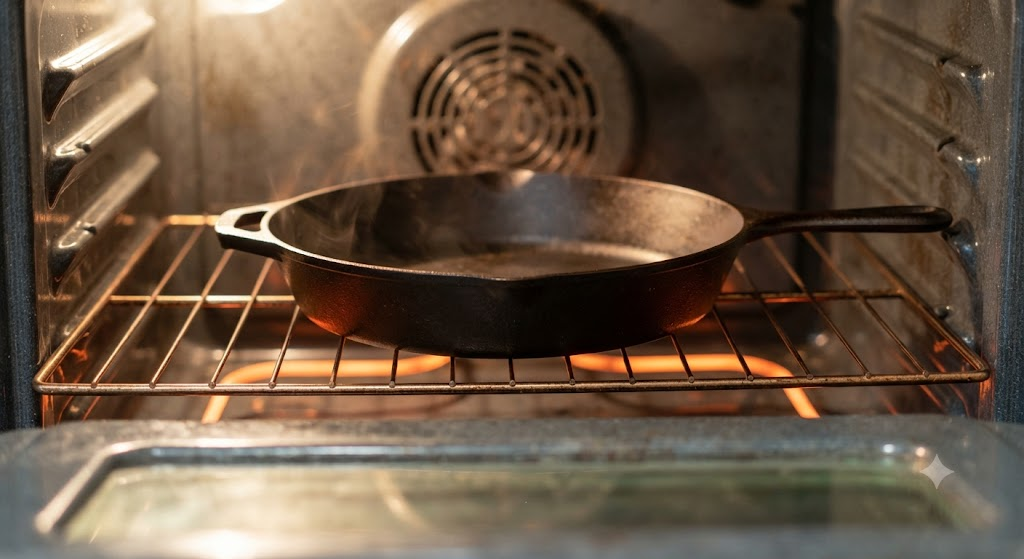
Position a rack in the center of your oven and place a 10-inch cast iron skillet on it. Preheat the oven to 400°F (205°C) with the skillet inside. Allow a full 20–25 minutes of preheating — the cast iron needs to be thoroughly, evenly heated, not just surface warm. While the oven preheats, prepare your batter so it’s ready to go the moment the pan is hot enough.
Step 2: Prepare the Zucchini
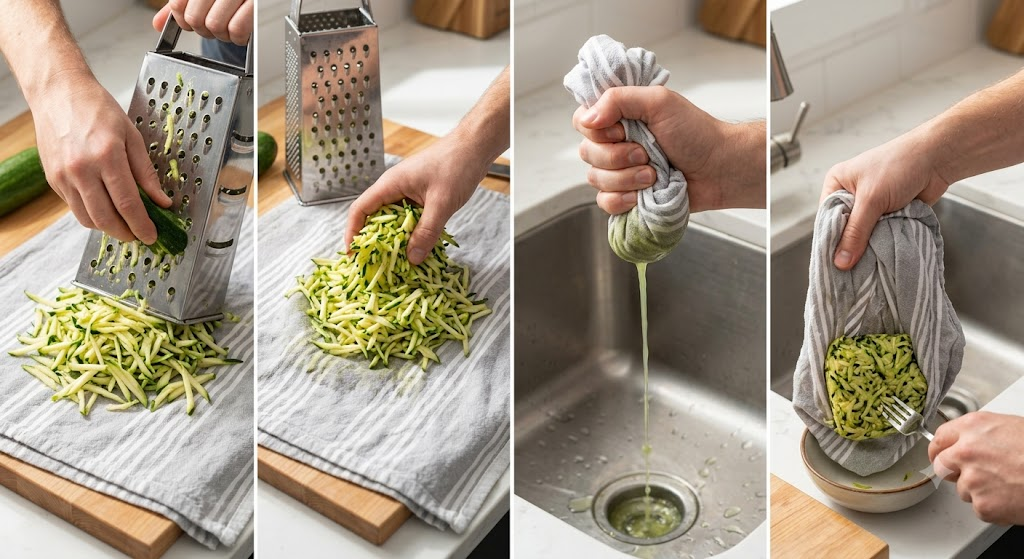
Wash and trim the zucchini. Using the large holes of a box grater, grate directly onto a clean kitchen towel. Gather the towel around the grated zucchini and squeeze firmly over the sink. You’re listening for the sound of water streaming out — a reassuring, liquid rush that confirms you’re removing the right amount of excess moisture. Release the pressure when the dripping slows to an occasional drop. Measure out 1½ cups of lightly squeezed zucchini and set aside. The texture should feel like damp grass — moist, but not waterlogged.
Step 3: Combine the Dry Ingredients
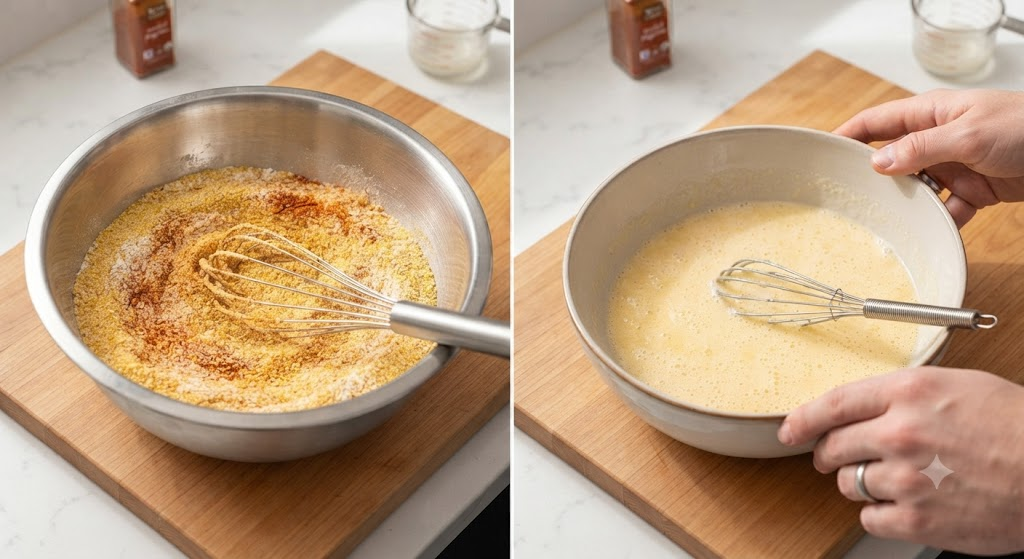
In a large mixing bowl, whisk together the whole grain cornmeal, all-purpose flour, baking powder, baking soda, kosher salt, smoked paprika, and garlic powder. Whisking the dry ingredients thoroughly ensures the leavening agents are evenly distributed — critical for an even, consistent rise across the entire loaf rather than uneven doming or air pockets.
Step 4: Combine the Wet Ingredients
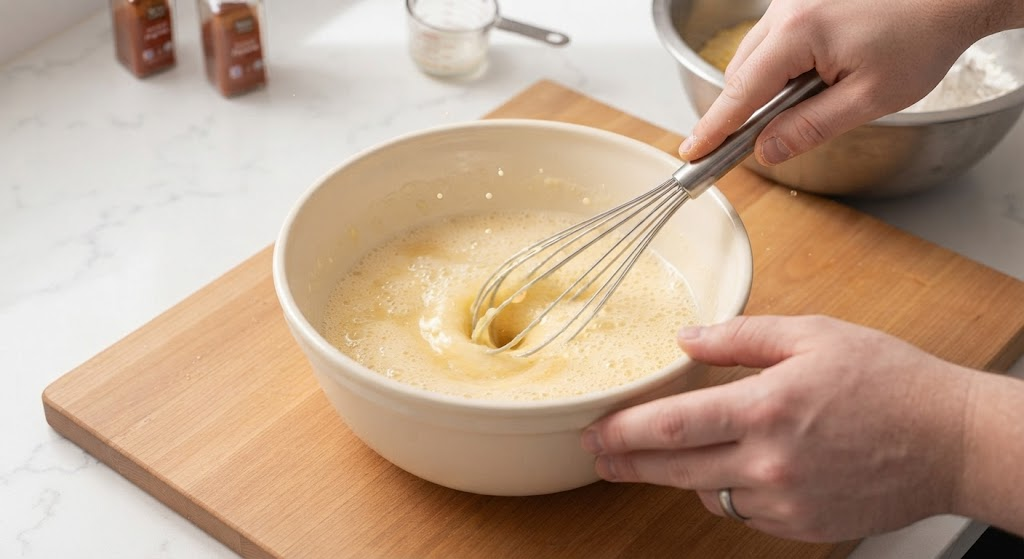
In a separate medium bowl, whisk together the eggs, buttermilk, melted butter, and honey until completely uniform and slightly frothy. The mixture should be smooth, pale yellow, and smell of warm butter and tangy buttermilk — a combination that already promises something wonderful.
Step 5: Bring the Batter Together
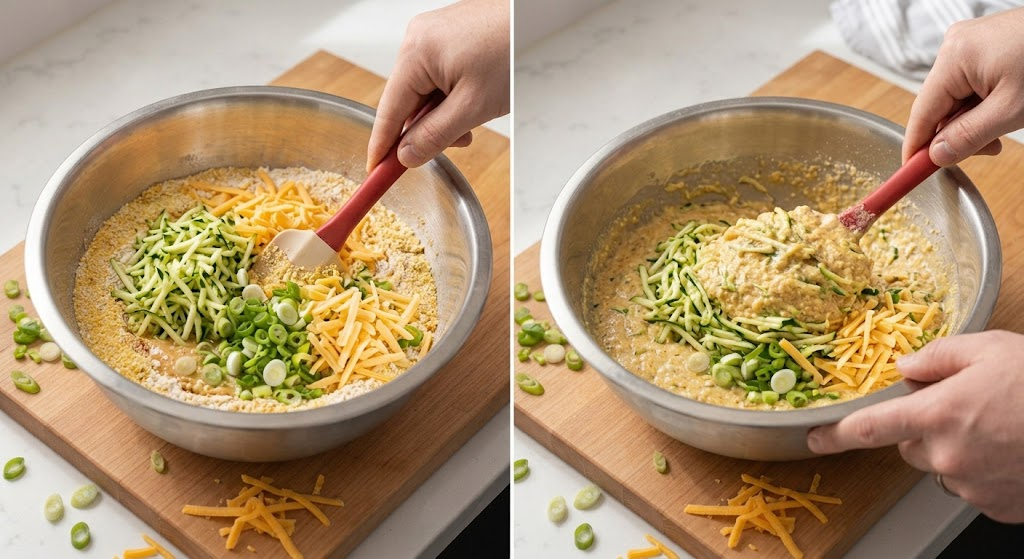
Pour the wet ingredients into the bowl of dry ingredients. Using a rubber spatula, fold together with deliberate, sweeping motions — under and over, rotating the bowl as you go. Count your folds. At fold 8, add the grated zucchini, grated cheddar, and sliced green onions. Continue folding until just combined — no more than 4–5 additional folds after the add-ins go in. The batter will be thick, slightly lumpy, and studded with visible flecks of green zucchini, orange cheddar, and pale green onion. It will smell extraordinary — corn, cheese, and herbs in a rich, eggy base.
Step 6: Into the Hot Pan
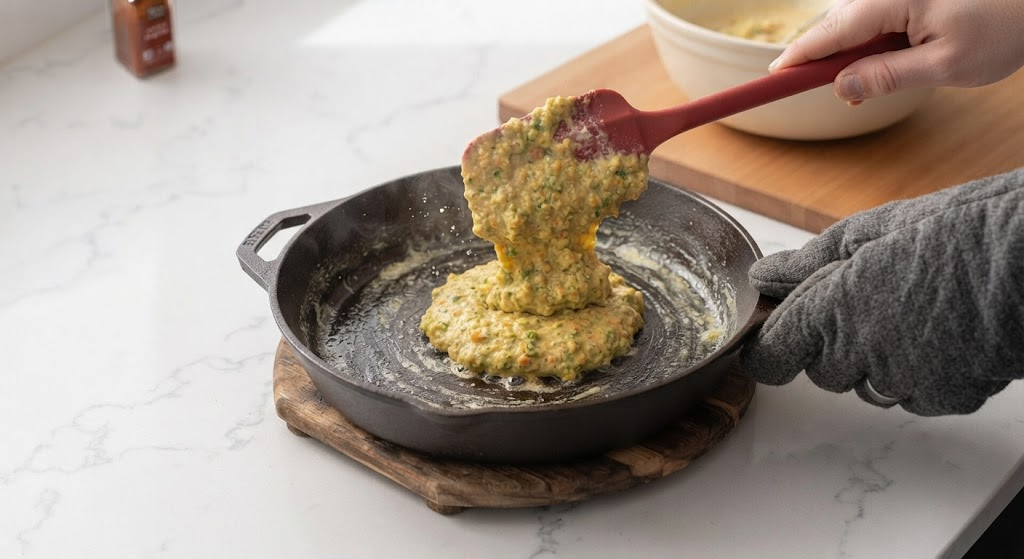
Remove the cast iron skillet from the oven carefully — use heavy oven mitts, as the handle will be as hot as the pan itself. Add 1 tsp of butter to the hot skillet and swirl quickly — it will melt and brown almost instantly, coating the surface in a nutty, golden film. The smell of browning butter in hot cast iron is one of the great sensory signatures of proper cornbread preparation.
Immediately pour the batter into the hot, buttered skillet. You will hear a loud, decisive sizzle as the batter contacts the hot surface — the bottom crust is already forming in real time. Use the spatula to spread the batter to an even thickness. The edges will visibly begin to set and pull away from the sides within 30 seconds. Scatter a small handful of extra grated cheddar and a few sliced green onions across the top for visual appeal and a golden, cheesy crust.
Step 7: Bake to Golden Perfection
Return the skillet to the center rack and bake for 22–26 minutes. Around the 15-minute mark, the kitchen will fill with the smell of baking corn, toasted cheese, and warm butter — a deeply comforting, unmistakably Southern aroma. At 20 minutes, the top will be set and beginning to take on color. At 22 minutes, begin checking: the top should be deep golden brown, the edges visibly pulling away from the cast iron sides, and the center should spring back lightly when pressed with a fingertip. Insert a toothpick into the thickest part of the center — moist crumbs clinging to it mean it’s done.
Step 8: Rest, Slice, and Serve
Remove from the oven and allow to rest in the skillet on a wire cooling rack for 5–8 minutes. The crumb is still setting during this time — the carry-over heat from the cast iron continues working. After resting, run a butter knife around the edge and either slice directly in the pan or invert onto a cutting board to reveal the mahogany-colored, perfectly crisped bottom crust. Slice into wedges or squares and serve warm.
Plating & Final Presentation
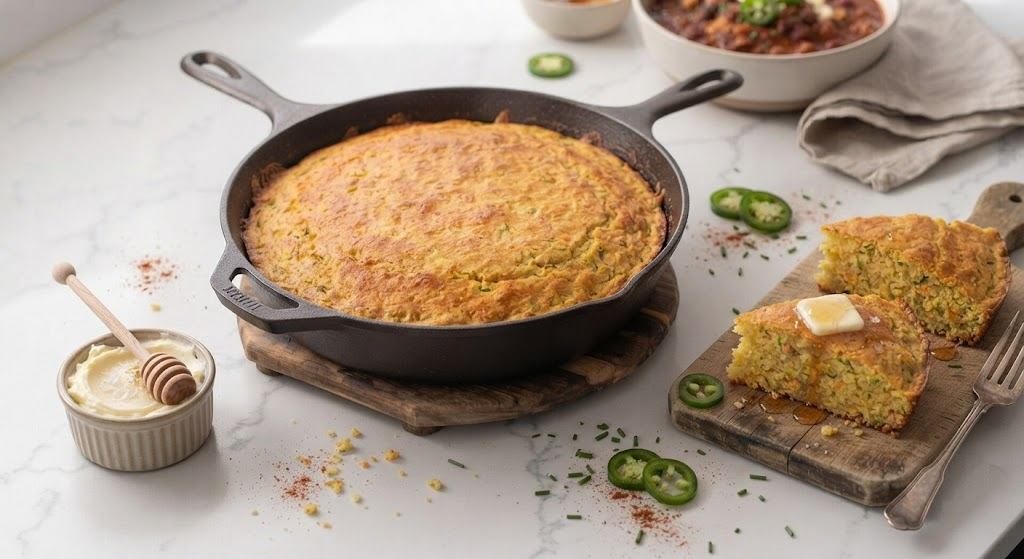
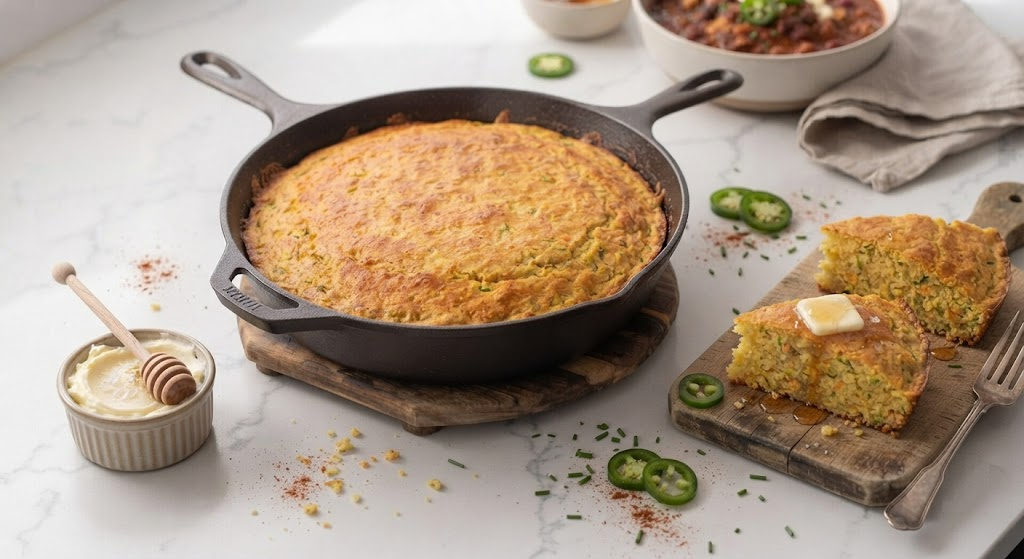
Zucchini cornbread is most beautifully served directly from the cast iron skillet — the rustic visual of golden cornbread in a well-seasoned black pan is one of the most inviting presentations in home cooking. Place the skillet on a wooden trivet or board at the center of the table and allow people to serve themselves.
For individual plating, cut into generous wedges and place cut-side up on a small plate or wooden board. Finish with a thin pat of good quality salted butter placed directly on the warm surface — it will melt slowly into the crumb as you bring it to the table. A drizzle of local honey alongside the butter creates a sweet-savory contrast that is deeply satisfying.
For a more elevated presentation, serve alongside a small ramekin of whipped honey butter — simply beat 4 tbsp of softened butter with 1 tbsp of honey and a pinch of flaky salt until light and airy. Garnish the cornbread with a few thin rings of fresh jalapeño, a scattering of chives, and a light dusting of smoked paprika for color.
This cornbread belongs beside chili, barbecue, slow-cooked greens, roasted chicken, or tomato soup. It is equally at home at a weeknight dinner table as it is at a summer cookout or holiday spread.
Frequently Asked Questions
Do I need a cast iron skillet? It is strongly recommended but not mandatory. A well-seasoned cast iron skillet produces an unmatched crispy bottom crust and even heat distribution. If you don’t have one, an 8×8 inch square baking pan or 9-inch round cake pan will work — grease generously and skip the preheating step. Baking time may increase by 3–5 minutes.
Can I make this gluten-free? Yes. Replace the all-purpose flour with a 1:1 gluten-free baking flour blend (Bob’s Red Mill or King Arthur both work well). The texture will be slightly more crumbly but the flavor remains excellent. Ensure your cornmeal is certified gluten-free if serving to those with celiac disease.
Can I make this dairy-free? Yes. Replace the buttermilk with unsweetened almond milk plus 1 tbsp apple cider vinegar (let it sit for 5 minutes to curdle). Replace butter with melted coconut oil. Use a dairy-free cheddar alternative. The result will be slightly less rich but still very good.
How do I store leftover cornbread? Wrap tightly in plastic wrap or store in an airtight container at room temperature for up to 2 days, or refrigerate for up to 5 days. Reheat slices in a dry skillet over medium heat for 2 minutes per side — far superior to the microwave, which makes cornbread rubbery.
Can I freeze it? Absolutely. Slice, wrap individual pieces in plastic wrap, and freeze for up to 3 months. Thaw at room temperature and warm in a 325°F oven for 8 minutes.
Final Nutrition Facts
Per serving (recipe makes 8 slices):
| Nutrient | Amount per Serving |
|---|---|
| Calories | 235 kcal |
| Total Protein | 9g |
| Total Carbohydrates | 28g |
| Dietary Fiber | 2.5g |
| Net Carbohydrates | 25.5g |
| Total Fat | 10g |
| Saturated Fat | 5.5g |
| Natural Sugar | 4g |
| Sodium | 380mg |
| Vitamin C | 12% DV |
| Calcium | 15% DV |
| Vitamin B6 | 10% DV |
| Magnesium | 8% DV |
| Iron | 8% DV |
Nutritional values are estimates based on USDA standard data. Values will vary based on specific cornmeal brand, cheese quantity, and optional add-ins used.
Recipe developed by The Healthy Plate Lab. Share your bake with us using #HealthyPlateLab — we feature reader remakes every week.