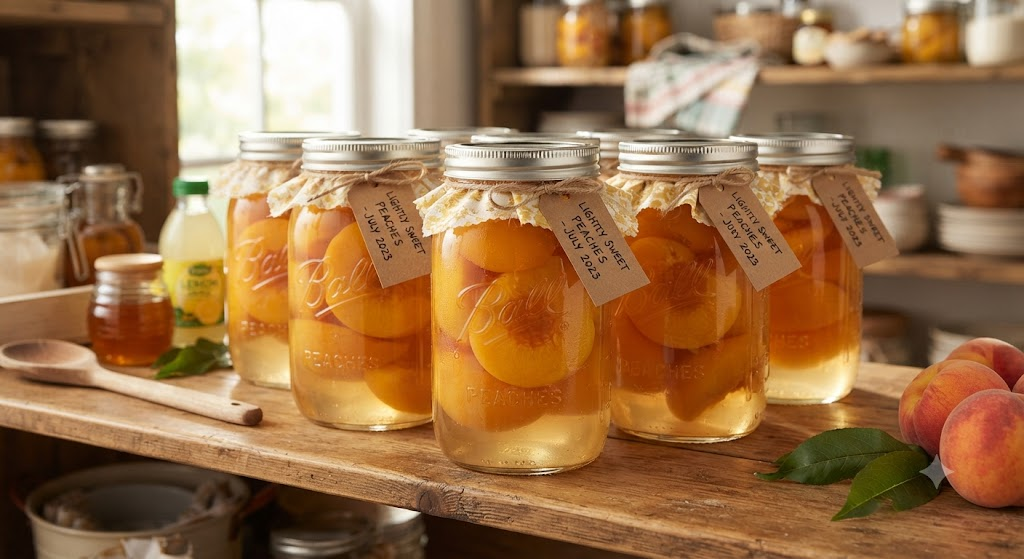
Few things capture the taste of summer quite like a jar of home-canned peaches glowing on the pantry shelf. But traditional canning recipes often rely on a heavy syrup made almost entirely of white sugar — sometimes 4 cups of sugar to just 4 cups of water — turning naturally sweet, fiber-rich fruit into a dessert-level sugar bomb. At The Healthy Plate Lab, our goal with this recipe is to preserve everything that makes canned peaches wonderful — that soft, jammy texture, the golden color, the long shelf life — while dramatically scaling back the added sugar load.
Peaches are naturally rich in vitamin C, vitamin A, and potassium, and they carry a modest amount of fiber that helps slow the absorption of their natural sugars. The problem isn’t the fruit itself; it’s the syrup we drown it in. Our approach uses a light, honey-and-monk-fruit-sweetened syrup, along with a splash of fresh lemon juice, which does double duty: it brightens the flavor and helps stabilize the acidity needed for safe water-bath canning. We also skip the artificial ascorbic acid color-keeper in favor of lemon juice, a more natural way to prevent browning while contributing real nutritional value.
This recipe is naturally gluten-free, vegan, and dairy-free, and it’s designed to let the peaches themselves be the star rather than the syrup. By using a light syrup instead of a heavy one, you cut the added sugar by more than 60% compared to a classic recipe, while still achieving that beautiful, glossy, spoon-tender peach you remember from childhood. It’s a small, intentional swap — but one that turns a seasonal treat into something you can enjoy year-round without the sugar crash that typically follows.
Ingredients & Nutritional Benefits
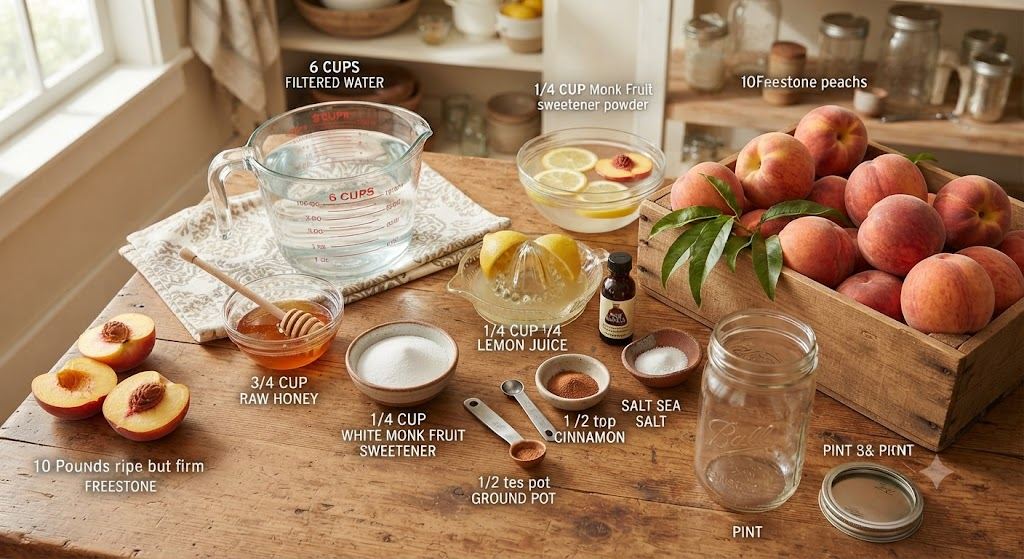
- 8-10 pounds ripe but firm freestone peaches — Naturally sweet, rich in vitamin C and beta-carotene, and the foundation of the entire recipe.
- 6 cups filtered water — The base of the light syrup, keeping total calories low.
- 3/4 cup raw honey — Provides natural sweetness along with trace antioxidants and a gentler glycemic impact than refined sugar.
- 1/4 cup monk fruit sweetener — Boosts sweetness without adding extra sugar grams, allowing the honey quantity to stay modest.
- 1/4 cup fresh lemon juice (plus extra for the soaking bath) — Adds brightness, prevents browning, and helps maintain safe acidity levels for canning.
- 1 teaspoon pure vanilla extract (optional) — Rounds out the flavor with warm, aromatic depth.
- 1/2 teaspoon ground cinnamon (optional) — Adds warmth and a subtle metabolic benefit, as cinnamon has been studied for its potential role in supporting healthy blood sugar levels.
- Pinch of sea salt — Balances sweetness and enhances the overall flavor perception of the fruit.
Each ingredient here is chosen with intention. Honey and monk fruit together create a “sweetness layering” effect — using less of each to achieve the same overall sweetness you’d get from a much larger amount of plain sugar, without monk fruit’s sometimes-noticeable aftertaste dominating the flavor.
Chef’s Prep Secrets & Tips
The key to peaches that hold their shape and color in the jar starts well before the syrup is even made. First, choose peaches that are ripe but still slightly firm to the touch — overripe peaches will turn to mush during processing, while underripe ones stay tough and starchy.
To peel peaches quickly and without waste, use the classic blanch-and-shock method: score a small X at the base of each peach, drop them into boiling water for 30-45 seconds, then immediately transfer them to an ice bath. You’ll see the skins visibly loosen and begin to wrinkle within seconds of hitting the ice water — a clear visual cue that they’re ready to peel. The skins should slip off easily with your fingers or a paring knife, taking almost none of the flesh with them.
As you slice the peeled peaches in half and remove the pits, drop them immediately into a bowl of cold water mixed with a generous splash of lemon juice. This acidic bath prevents the enzymatic browning that turns freshly cut peaches an unappetizing gray-brown within minutes of exposure to air.
One detail that separates good canned peaches from great ones: don’t overcrowd your jars. Pack the peach halves snugly but without forcing or crushing them, leaving the proper headspace (typically 1/2 inch) for the jars to seal correctly during processing.
Step-by-Step Culinary Method
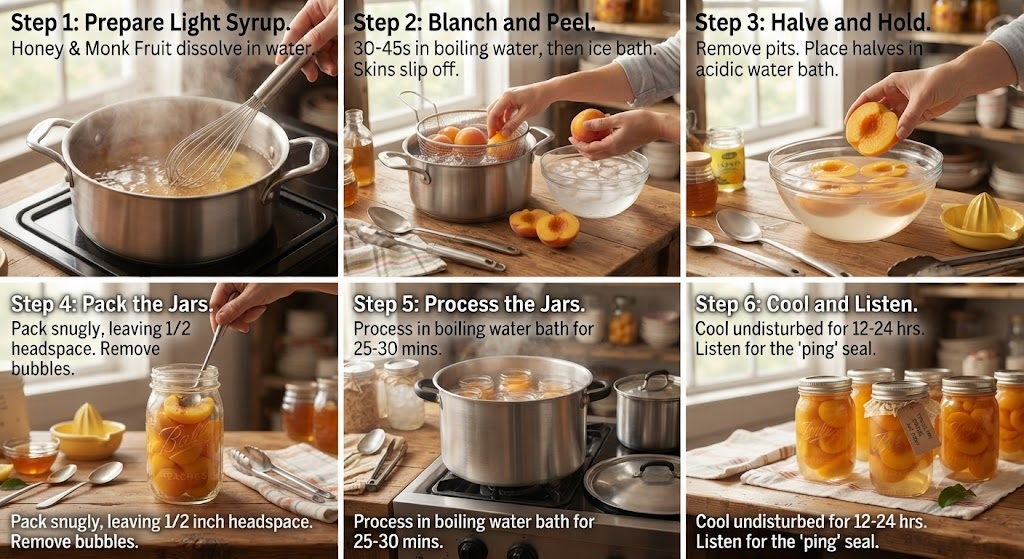
Step 1: Prepare the Light Syrup. In a large saucepan, combine the filtered water, honey, and monk fruit sweetener over medium heat. Stir gently as the mixture warms — you’ll notice the honey slowly unraveling into the water, leaving faint golden ribbons before fully dissolving into a clear, pale amber liquid. Add the lemon juice, vanilla, cinnamon, and salt, and bring the mixture to a low simmer, stirring occasionally. The kitchen will fill with a warm, lightly floral aroma from the honey mingling with the bright citrus note of the lemon. Keep the syrup warm over low heat while you prepare the peaches.
Step 2: Blanch and Peel. Working in batches of 4-5 peaches at a time, lower them into a pot of boiling water for 30-45 seconds. Listen for the gentle bubbling to resume quickly after each batch goes in — that’s your cue the water temperature is holding steady. Transfer immediately to the ice bath; you’ll hear a soft hiss as the hot fruit hits the cold water. Once cool enough to handle, peel each peach with your fingers, feeling the skin slide away almost effortlessly to reveal the smooth, blushing flesh underneath.
Step 3: Halve and Hold. Slice each peach in half along its natural seam, twist gently to separate, and pop out the pit. Place the halves cut-side down into the lemon water bath as you go, watching how the slightly cloudy acidic water keeps the flesh a clean, pale gold instead of darkening.
Step 4: Pack the Jars. Drain the peach halves and pack them snugly into clean, sterilized pint or quart jars, cut-side down for the prettiest presentation, alternating directions slightly to nest them efficiently. Pour the warm syrup over the peaches, making sure every piece is fully submerged. You’ll see small air bubbles rising and escaping as the syrup settles into the gaps between the fruit — run a thin spatula or bubble tool around the inside edge of the jar to release any trapped air pockets.
Step 5: Process the Jars. Wipe the rims clean with a damp cloth to ensure a proper seal, apply the lids and rings, and process in a water-bath canner according to your altitude and jar size (typically 25-30 minutes for pints at sea level). As the jars process, you’ll notice the syrup inside shift from a translucent amber to a slightly deeper, richer gold, while the peaches soften further and take on a glossy, almost lacquered sheen.
Step 6: Cool and Listen. Remove the jars carefully and let them cool undisturbed on a towel-lined counter for 12-24 hours. This is the most satisfying part of the entire process: listen for the distinct, sharp “ping” sound as each lid seals, the center dimpling downward — proof that your jars are safely sealed and shelf-stable.
Plating & Final Presentation
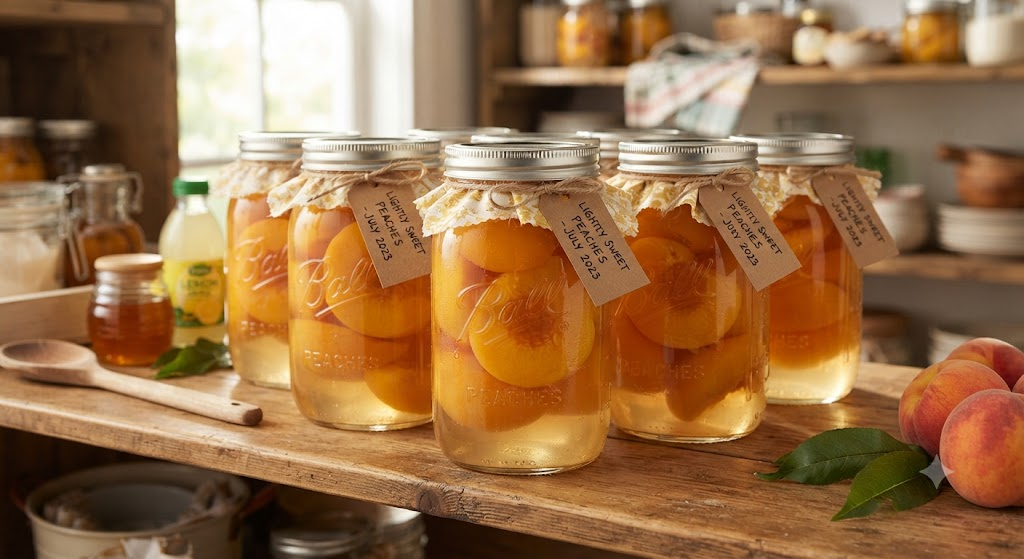
While canned peaches are often eaten straight from the jar, a little presentation goes a long way when serving them fresh. Spoon a few glossy peach halves into a shallow bowl, cut-side up, and drizzle a small spoonful of the syrup over the top so it pools gently around the fruit. A light dusting of extra cinnamon, a few fresh mint leaves, or a small dollop of unsweetened Greek yogurt or coconut yogurt alongside turns this pantry staple into an elegant, brunch-worthy dish. The natural blush-to-gold gradient of the peach flesh, glistening under the light syrup, is striking enough to need very little additional styling.
Frequently Asked Questions
Can I reduce the sweetener further? Yes, you can use a very light syrup of just water and a touch of honey, though the peaches will taste noticeably less sweet and the texture may soften slightly less during processing.
Do I need a pressure canner for this recipe? No — peaches are a high-acid fruit (especially with the added lemon juice), so a standard water-bath canner is safe and appropriate.
How long do sealed jars last? Properly sealed jars stored in a cool, dark pantry will keep for 12-18 months.
Can I use frozen peaches instead of fresh? Fresh is strongly recommended for canning, as frozen peaches release excess water and break down too much during processing.
Why did my syrup turn cloudy? This is usually from using table salt instead of canning or sea salt, or from mineral-heavy tap water — both are cosmetic issues and don’t affect safety.
Final Nutrition Facts Table
Per serving (2 peach halves with 2 tablespoons syrup)
| Nutrient | Amount |
|---|---|
| Calories | 70 kcal |
| Total Carbohydrates | 17 g |
| Dietary Fiber | 2 g |
| Sugars | 14 g (vs. ~32 g in traditional heavy syrup) |
| Net Carbs | 15 g |
| Protein | 1 g |
| Total Fat | 0 g |
| Vitamin C | 12% DV |
| Vitamin A | 8% DV |
| Potassium | 6% DV |
Compared to a traditional heavy-syrup canned peach recipe, this version cuts added sugar by more than 55% and trims overall calories per serving by nearly a third — all while keeping that soft, golden, spoon-tender peach experience intact.