The Story & Nutritional Philosophy
At The Healthy Plate Lab, we have a confession to make: we never got tired of avocado toast. While the internet spent years turning it into a punchline about millennial spending habits, we spent that same time perfecting it — layering flavors, upgrading the bread, engineering the toppings, and understanding exactly why this deceptively simple dish became one of the most nutritionally compelling breakfast and brunch options of the last decade.
Because here is the truth: avocado toast, done properly, is genuinely exceptional food.
The foundation begins with the avocado itself. A single medium avocado delivers approximately 22 grams of heart-healthy monounsaturated fat — the same category of fat found in extra virgin olive oil and directly associated with reduced LDL cholesterol, lower cardiovascular inflammation, and improved HDL function. It provides 10 grams of fiber — more than a third of the recommended daily intake — along with potassium levels that exceed a banana, folate critical for cellular repair and DNA synthesis, and vitamins K, C, B5, and B6 in meaningful quantities.
But what makes avocado fat particularly special from a nutritional science perspective is its role as a nutrient absorption amplifier. Fat-soluble vitamins — A, D, E, and K — and fat-soluble phytonutrients like lycopene and beta-carotene require dietary fat to be absorbed at all. Research published in the Journal of Nutrition demonstrated that adding avocado to a meal increased the absorption of carotenoids from accompanying vegetables by up to 15 times. Every tomato slice, every red pepper flake, every green herb on your avocado toast becomes dramatically more bioavailable because of the fat in the avocado beneath it.
The bread choice is equally critical. We use whole grain sourdough — not because it’s trendy, but because the long fermentation process in sourdough partially breaks down the phytic acid in whole grains, dramatically improving mineral absorption. Sourdough’s lower glycemic index compared to conventional bread means a slower glucose release, and its complex flavor provides the structural and sensory backbone this dish demands.
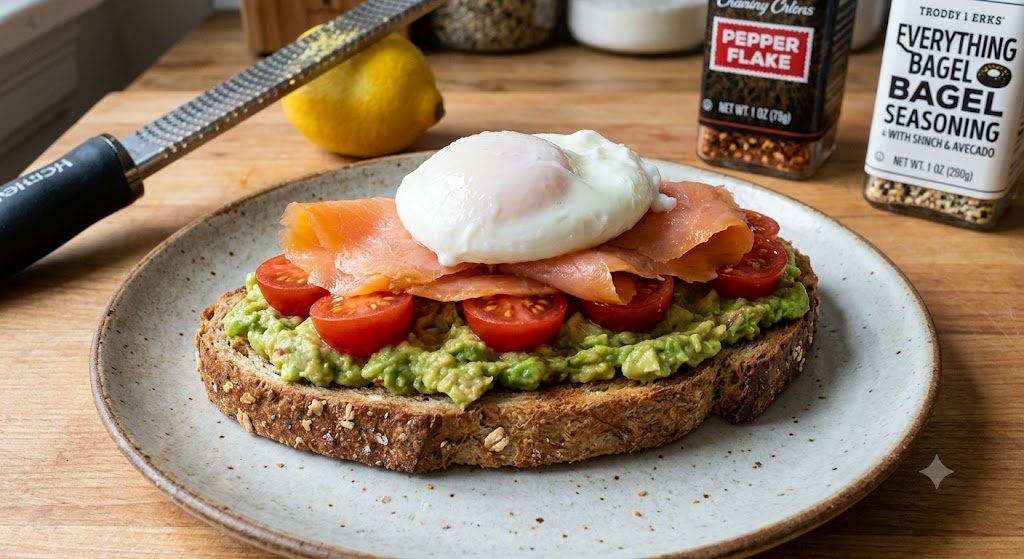
The result — our Healthy Plate Lab Ultimate Avocado Toast — is a breakfast that delivers healthy fats, fiber, complex carbohydrates, and meaningful micronutrients in a format that takes under 10 minutes to prepare and satisfies for hours.
Ingredients & Nutritional Benefits
The Non-Negotiable Base
- 2 slices whole grain sourdough bread, thickly cut — Fermented whole grain bread with a lower glycemic index than conventional bread. The thick cut is structural — it needs to support the weight of the toppings without bending. Look for a loaf with visible whole grains and a tight, chewy crumb.
- 1 large ripe avocado — The star. Select avocados that yield to gentle pressure but don’t feel mushy. A perfectly ripe avocado will be dark green to nearly black on the outside and will release cleanly from the skin when halved. Hass variety is preferred for its superior fat content and rich, buttery flavor over Florida or other varieties.
- 1 tbsp fresh lemon or lime juice — Dual purpose: prevents oxidation (browning) of the avocado flesh and adds brightness and acidity that balances the richness of the fat.
- ¼ tsp flaky sea salt — Flaky salt (Maldon or similar) provides a textural crunch and a slower, more complex salt release than fine table salt. It makes a perceptible difference.
- ¼ tsp freshly cracked black pepper — Contains piperine, which enhances nutrient absorption and adds a gentle heat that cuts through the avocado’s richness.
- ¼ tsp red pepper flakes — Capsaicin provides a mild metabolic boost, a gentle heat, and a vivid visual element against the green avocado.
The Healthy Plate Lab Signature Toppings
- 2 eggs, prepared to your preference — The single most impactful upgrade to avocado toast. Two large eggs add 12–14g of complete protein, transforming this from a fat-and-carb dish into a genuinely balanced, macronutrient-complete meal. Poached eggs are the gold standard — their runny yolk creates a secondary sauce that enriches every bite. Soft-boiled, fried, or scrambled all work beautifully.
- ¼ cup cherry tomatoes, halved — Lycopene-rich and deeply flavorful. The acidity of the tomato provides a counterpoint to the avocado’s creaminess. As noted above, the fat in the avocado dramatically amplifies lycopene absorption.
- 1 tbsp extra virgin olive oil, for finishing — A final drizzle adds richness, shine, and additional monounsaturated fat. Use your best bottle here — it’s raw and unheated, so quality is perceptible.
- Fresh microgreens or arugula — Microgreens contain up to 40 times the nutrient density of their mature counterparts according to USDA research. Arugula contributes glucosinolates — sulfur compounds with studied anti-cancer properties — and a peppery bite that contrasts the creamy base.
- Everything bagel seasoning — A practical flavor bomb: sesame seeds (healthy fats, calcium), poppy seeds (manganese, fiber), dried garlic, dried onion, and flaky salt in a single sprinkle. Adds texture, complexity, and visual appeal simultaneously.
- Lemon zest — Microplaned directly over the finished toast, lemon zest contributes limonene — a phytonutrient with studied anti-inflammatory properties — and an aromatic brightness that lifts the entire dish.
Optional Elevated Additions
- 2 tbsp crumbled feta or goat cheese — Adds a salty, tangy creaminess and a protein boost. Feta is lower in calories than most cheeses while delivering high flavor impact.
- 4 slices smoked salmon — Transforms this into a high-protein, omega-3-rich powerhouse. The combination of avocado’s monounsaturated fat and salmon’s omega-3 polyunsaturated fat creates one of the most heart-healthy fat profiles possible in a single dish.
- Pickled red onion — Thinly sliced red onion pickled in apple cider vinegar for 20 minutes. Adds acidity, crunch, and quercetin — a powerful antioxidant flavonoid concentrated in red onion skins.
- Dukkah — An Egyptian spice and nut blend of hazelnuts, sesame, coriander, and cumin. Adds extraordinary textural complexity and a warm, nutty depth.
- Hemp seeds — 3 tbsp delivers 10g of complete plant protein and a significant dose of omega-3 and omega-6 fatty acids in an ideal 3:1 ratio.
Chef’s Prep Secrets & Tips
Avocado toast is simple enough that the technique details become everything. These are the distinctions that matter:
1. Toast selection and toasting method. The bread must be toasted to a true golden brown — not pale and soft, not dark and brittle. The ideal toast has a crispy outer surface that yields to a slightly chewy interior. Achieve this by toasting in a dry cast iron skillet over medium heat rather than a pop-up toaster. The skillet’s direct, even heat produces superior browning and a crispness that lasts longer under the weight of the toppings without going soggy.
2. The avocado preparation method. There are two schools of thought: smashing versus slicing. Smashing produces a rough, textured spread that holds toppings better and has a more rustic, visually engaging appearance. Slicing produces a cleaner, more restaurant-elegant presentation. For maximum flavor, smash — the rough surface creates pockets that trap olive oil, salt, and lemon juice more effectively than a smooth spread. For visual impact and sharing, slice. We recommend smashing for weekday breakfast and slicing for brunch entertaining.
3. Season the avocado, not just the toast. The most common avocado toast mistake is seasoning the finished dish rather than the avocado itself. Season the smashed or sliced avocado with salt, pepper, and lemon juice before it goes on the bread. This allows the seasoning to penetrate the flesh rather than sitting on top of it.
4. The poached egg technique. Bring a wide saucepan of water to a gentle simmer — not a rolling boil. Add 1 tbsp of white wine vinegar (it helps the whites coagulate faster). Crack each egg into a small cup first, then slide it gently into the water near the surface. Cook for exactly 3 minutes for a fully set white with a completely liquid yolk. Remove with a slotted spoon and rest briefly on a paper towel. The yolk should wobble visibly when the spoon moves.
5. Build in the right order. Toast first. Avocado second, seasoned. Then firm toppings (tomatoes, cheese, salmon). Then the egg. Then delicate toppings (microgreens, herbs). Then finishing elements (olive oil drizzle, lemon zest, flaky salt, red pepper flakes). This order ensures structural integrity and that each delicate element stays pristine.
6. Eat immediately. Avocado toast is not a dish that waits. The bread begins absorbing moisture from the avocado within minutes, and the microgreens wilt, the egg cools, and the lemon zest loses its aromatic volatiles. Prepare everything simultaneously and eat the moment it’s assembled.
Step-by-Step Culinary Method
Step 1: Set Up Your Station
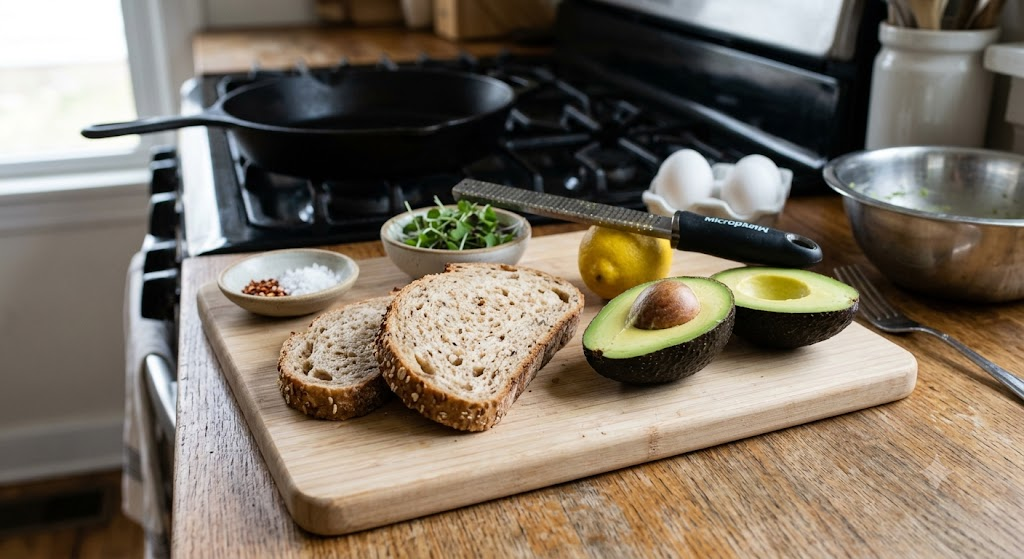
Before anything touches heat, set up your full station. Have your avocado halved and pitted, your toppings washed and ready, your eggs cracked into individual small cups, your lemon zested and juiced, and your finishing elements within arm’s reach. Avocado toast moves fast once it starts, and having everything prepped eliminates the frantic scrambling that leads to overcooked eggs and soggy bread.
Step 2: Toast the Bread
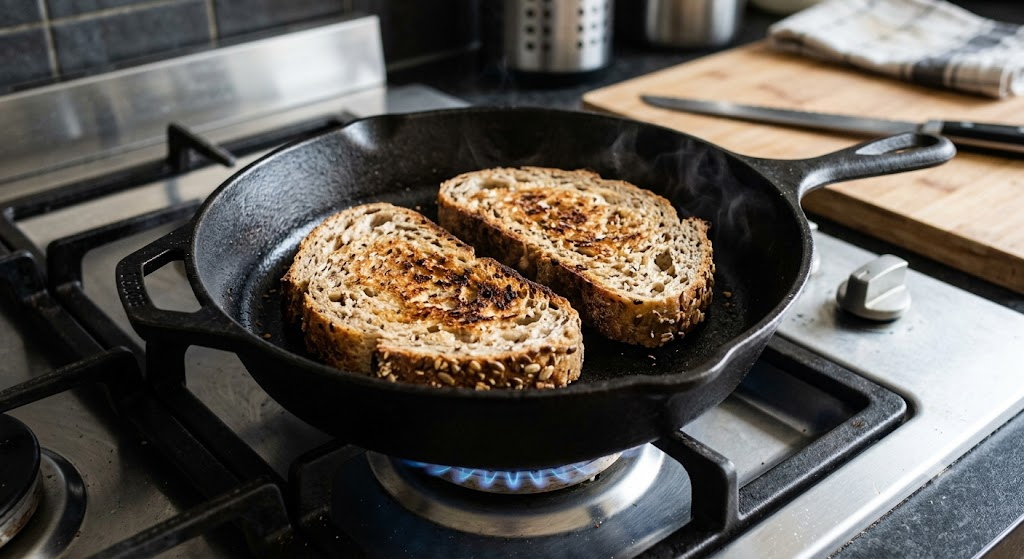
Heat a dry cast iron skillet or heavy pan over medium to medium-high heat for 2 minutes. Place the sourdough slices directly in the dry pan. You’ll hear a very gentle sizzle as the bread’s surface moisture contacts the hot metal — quieter than you might expect, but present. Toast for 2–3 minutes per side without pressing or moving, until each side is deep golden brown with visible caramelization on the raised grain textures of the bread. The kitchen will smell of toasted grain and warm bread — one of the most universally comforting aromas in cooking. Remove and set on your serving plate.
Step 3: Prepare the Avocado
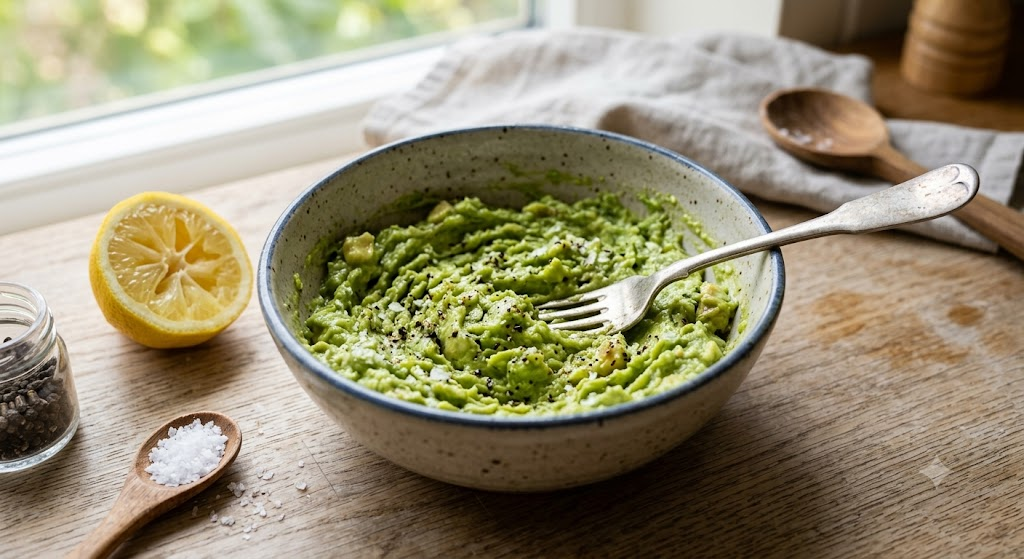
Scoop the avocado flesh from both halves into a small bowl. Add the lemon or lime juice, flaky sea salt, and black pepper directly to the flesh. Using a fork, smash to your preferred consistency — fully smooth for a spread-like texture, or roughly mashed with visible chunks for textural contrast and visual interest. Taste and adjust seasoning. The avocado should taste bright, rich, and well-seasoned on its own before it goes anywhere near the bread.
Step 4: Poach the Eggs
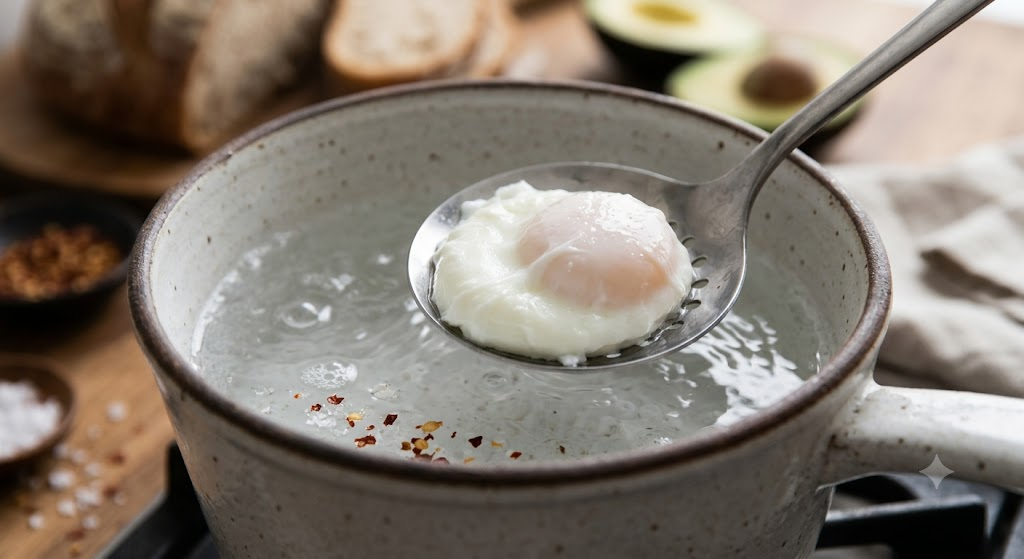
Fill a wide, shallow saucepan with 3 inches of water and bring to a gentle simmer over medium heat — you want small, lazy bubbles rising from the bottom, not a rolling boil. Add 1 tbsp white wine vinegar. Working one at a time, slide each pre-cracked egg from its cup into the water near the surface. The whites will immediately begin to set and cloud around the yolk. Cook for 3 minutes exactly. Use a slotted spoon to gently lift each egg, checking that the white is fully opaque and set. Rest briefly on a folded paper towel to absorb excess water.
Step 5: Assemble
Divide the seasoned avocado between the two slices of toast, spreading it generously to the edges. Press it slightly into the bread’s surface so it anchors. Arrange the halved cherry tomatoes across the avocado layer, pressing them gently into the surface. If using feta or smoked salmon, add those now.
Carefully place one poached egg on each slice, positioning it slightly off-center for visual balance. The egg should sit with confidence — domed, trembling slightly, the white perfectly smooth.
Step 6: Finish and Season
Now work quickly. Scatter microgreens or arugula around the egg. Sprinkle everything bagel seasoning across the full surface. Add a pinch of red pepper flakes. Microplane fresh lemon zest directly over the assembled toast. Finish with a generous drizzle of extra virgin olive oil — start from the egg and let it cascade outward. Add a final pinch of flaky sea salt and a few more cracks of black pepper.
The finished toast should be visually layered, colorful, and fragrant — the warm egg releasing steam, the olive oil glistening, the microgreens standing upright, the red pepper flakes dotting the surface like confetti.
Plating & Final Presentation
Serve on a wide, flat plate — white ceramic or a natural wood board both complement the green and gold color palette of the dish beautifully. Place both slices side by side at a slight angle rather than perfectly parallel, which creates a more dynamic, editorial visual.
A small wedge of lemon on the side allows for an additional squeeze at the table. A few whole cherry tomatoes and a small pile of extra microgreens alongside the toast add color and volume to the plate without overcrowding the main event.
For brunch entertaining, serve on a large wooden board with small ramekins of pickled red onion, crumbled feta, smoked salmon, and everything bagel seasoning arranged around the toast — a build-your-own avocado toast board that is as visually spectacular as it is practical.
The moment of cutting through the poached egg — watching the yolk break and flow golden over the green avocado and down through the toast — is one of the great small pleasures of breakfast. Don’t rush it.
Frequently Asked Questions
How do I keep avocado from browning if I prep ahead? Press plastic wrap directly against the surface of the smashed avocado, eliminating all air contact, and refrigerate for up to 4 hours. The lemon juice in the recipe also significantly slows oxidation. For sliced avocado, leave the pit in the unused half and wrap tightly.
What bread works best besides sourdough? Whole grain rye, multigrain sprouted bread (Ezekiel-style), or a thick-cut whole wheat loaf all work well. Avoid soft sandwich bread — it lacks the structural integrity to support the toppings and becomes soggy quickly. The bread should be dense enough to toast to a firm, standing crispness.
Can I make this vegan? Absolutely. Omit the eggs and replace with sliced firm tofu pan-seared in soy sauce and sesame oil, or simply double the avocado and add hemp seeds for protein. Use nutritional yeast sprinkled over the top for a savory, cheese-like depth without dairy.
What’s the best way to tell if an avocado is ripe? Remove the small stem cap at the top. If the flesh beneath is bright green, the avocado is not yet ripe. If it’s yellow-green, it’s perfectly ripe. If it’s brown, it’s overripe. This stem test is more reliable than the squeeze test alone.
How do I make this higher in protein? Add 2 eggs per slice instead of one, layer smoked salmon beneath the egg, sprinkle 3 tbsp hemp seeds over the surface, and add 2 tbsp crumbled feta. This version delivers approximately 35–40g of protein per serving — a genuinely high-protein breakfast in a single dish.
Final Nutrition Facts
Per serving — 2 slices with 1 avocado, 2 poached eggs, cherry tomatoes, microgreens, olive oil drizzle, and everything bagel seasoning:
| Nutrient | Amount per Serving |
|---|---|
| Calories | 620 kcal |
| Total Protein | 24g |
| Total Carbohydrates | 48g |
| Dietary Fiber | 14g |
| Net Carbohydrates | 34g |
| Total Fat | 38g |
| Monounsaturated Fat | 22g |
| Saturated Fat | 6g |
| Natural Sugar | 4g |
| Sodium | 680mg |
| Vitamin C | 28% DV |
| Vitamin K | 40% DV |
| Folate | 35% DV |
| Potassium | 25% DV |
| Vitamin B12 | 20% DV |
| Iron | 18% DV |
With smoked salmon addition: approximately 720 kcal, 38g protein, 2,200mg omega-3 fatty acids.
Nutritional values are estimates based on USDA standard data. Values will vary based on avocado size, bread brand, and specific toppings used.
Recipe developed by The Healthy Plate Lab. Share your version with us using #HealthyPlateLab — we feature reader remakes every week.