
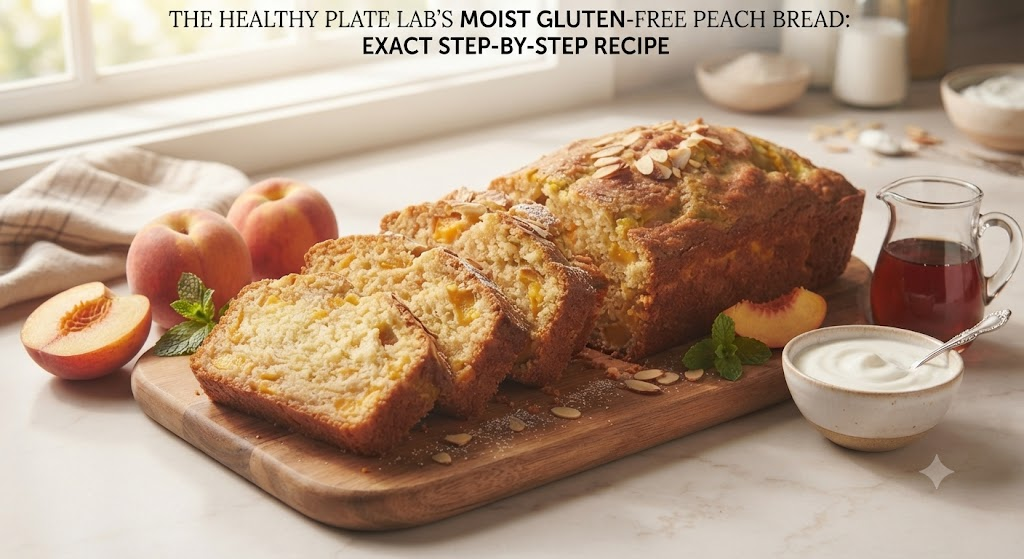
Peach bread sits at a beautiful intersection of breakfast and dessert — moist, fruit-studded, and just sweet enough to feel like a treat without tipping into cake territory. Traditional quick bread recipes, however, often rely on a full cup or more of refined sugar, several tablespoons of vegetable oil, and standard all-purpose flour that offers little in the way of fiber or sustained energy. At The Healthy Plate Lab, we wanted to build a peach bread that holds onto its tender, bakery-style crumb while quietly upgrading nearly every ingredient working behind the scenes.
The foundation of this recipe is a thoughtfully built gluten-free flour blend, combining almond flour and a measured cup-for-cup gluten-free baking blend. Almond flour brings healthy monounsaturated fats, protein, and a naturally moist texture, which helps compensate for the structure that gluten typically provides in conventional baking. This isn’t just a substitution for the sake of avoiding gluten — for those with celiac disease, gluten sensitivity, or simply a preference for lower-gluten eating, it means this bread delivers the same comforting texture without compromise.
On the sugar front, fresh peaches do a lot of the heavy lifting. Ripe, in-season peaches are naturally sweet and packed with fiber, vitamin C, and vitamin A, which means we can scale back significantly on added sugar without sacrificing flavor. We use a blend of coconut sugar and a small amount of pure maple syrup, both of which bring a deeper, more complex sweetness than plain white sugar while offering trace minerals that refined sugar lacks. For fat, we replace the bulk of the oil with unsweetened applesauce and Greek yogurt, two swaps that dramatically reduce overall fat content while actually increasing moisture and adding a meaningful protein boost. The result is a peach bread that’s higher in fiber and protein than its traditional counterpart, naturally gluten-free, and built to keep you satisfied rather than sending you searching for a second slice an hour later.
Ingredients & Nutritional Benefits
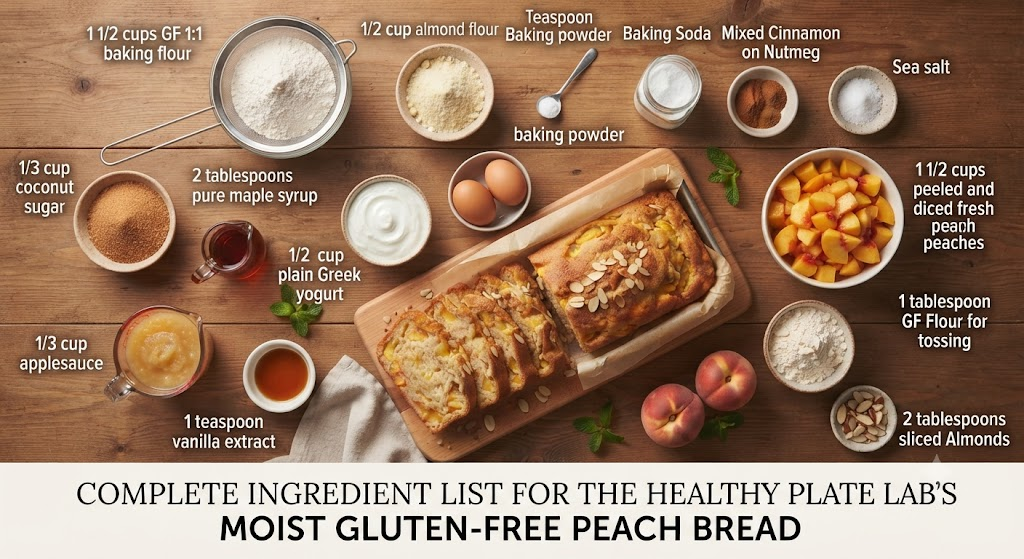
- 1 1/2 cups gluten-free 1:1 baking flour blend — Provides the structural base of the bread without gluten, ideal for those with sensitivities.
- 1/2 cup almond flour — Adds healthy fats, protein, and a naturally moist, tender crumb.
- 1 teaspoon baking powder — Provides lift for a properly risen loaf.
- 1/2 teaspoon baking soda — Works with the acidity in the yogurt and peaches for additional rise.
- 1/2 teaspoon ground cinnamon — Adds warmth and may support healthy blood sugar response.
- 1/4 teaspoon ground nutmeg — Deepens the spice profile with minimal effort.
- 1/4 teaspoon sea salt — Balances sweetness and enhances overall flavor.
- 1/3 cup coconut sugar — Adds caramel-like sweetness with a lower glycemic impact than refined white sugar.
- 2 tablespoons pure maple syrup — Contributes moisture and a deeper sweetness, along with trace minerals.
- 1/3 cup unsweetened applesauce — Replaces the bulk of traditional oil, reducing fat while adding moisture.
- 2 large eggs — Provides structure, protein, and richness.
- 1/2 cup plain Greek yogurt — Adds moisture, tang, and a meaningful protein boost.
- 1 teaspoon pure vanilla extract — Rounds out the flavor with warm, aromatic depth.
- 1 1/2 cups fresh peaches, peeled and diced small — The star ingredient, contributing natural sweetness, fiber, vitamin C, and vitamin A.
- 1 tablespoon gluten-free flour (for tossing peaches) — Prevents the fruit from sinking to the bottom of the loaf during baking.
- Optional: 2 tablespoons sliced almonds, for topping — Adds healthy fats, crunch, and visual appeal.
This ingredient list is built around a simple principle: every swap should add nutritional value, not just subtract calories. The applesauce and yogurt aren’t just lower-fat alternatives, they’re active contributors to the bread’s moisture and protein content.
Chef’s Prep Secrets & Tips
The single biggest factor in preventing a soggy, dense peach bread is properly drying your diced peaches before folding them into the batter. Fresh peaches release a surprising amount of liquid once cut, so after dicing, spread the pieces on a paper towel-lined plate and let them sit for 5-10 minutes, gently patting away any surface moisture before tossing them in the tablespoon of flour. This light flour coating does double duty: it absorbs any remaining moisture and helps suspend the peach pieces evenly throughout the loaf rather than letting them sink to the bottom.
Because gluten-free flour blends behave differently than wheat flour, resist the urge to overmix the batter. Gluten-free batters can actually become gummy if overworked, unlike traditional batters where overmixing leads to toughness. Mix just until the dry ingredients disappear into the wet, with a few small lumps remaining.
Room-temperature eggs and yogurt matter more in gluten-free baking than people expect — cold ingredients can cause the batter to seize slightly, leading to uneven texture. Set them out 20-30 minutes before baking if you can.
Finally, choose peaches that are ripe but still hold their shape when diced. Overripe peaches will essentially dissolve into the batter, while peaches with a slight firmness hold distinct, juicy pockets throughout the finished loaf — exactly the texture you want.
Step-by-Step Culinary Method
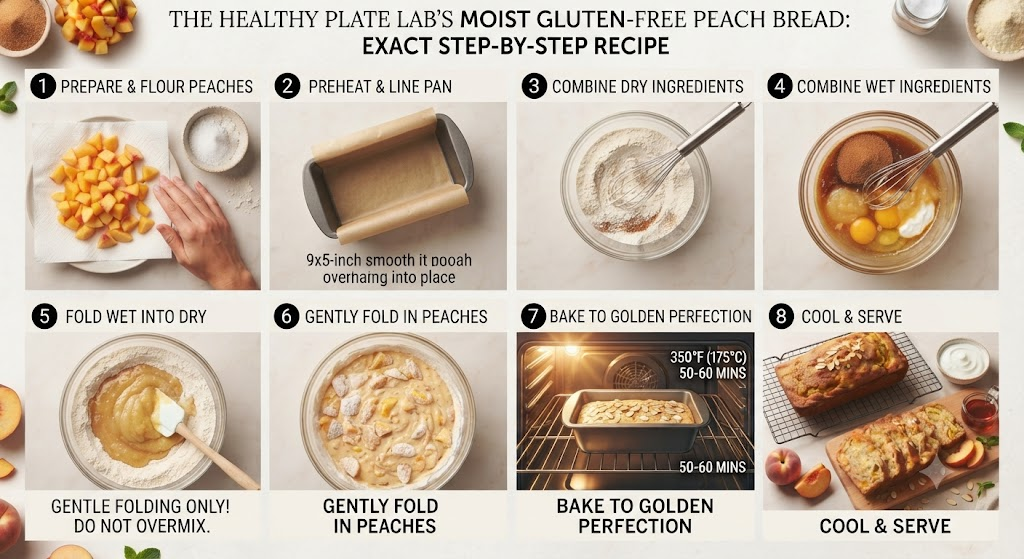
Step 1: Prepare the Peaches. Peel and dice your peaches into small, even 1/4-inch pieces. Spread them on a paper towel-lined plate and let them rest for 5-10 minutes. You’ll notice small beads of juice forming on the surface of the fruit and on the towel beneath — this is exactly the moisture you want to remove before it ends up in your batter. Pat the pieces dry, then toss gently with the tablespoon of gluten-free flour until lightly coated.
Step 2: Preheat and Prepare the Pan. Preheat your oven to 350°F (175°C) and line a 9×5-inch loaf pan with parchment paper, leaving an overhang on the long sides for easy removal later. Lightly grease any exposed pan edges.
Step 3: Combine the Dry Ingredients. In a medium bowl, whisk together the gluten-free flour blend, almond flour, baking powder, baking soda, cinnamon, nutmeg, and salt. As you whisk, you’ll notice the mixture aerate slightly, taking on a lighter, fluffier texture compared to when it first went into the bowl — a small but important step for an evenly textured loaf.
Step 4: Combine the Wet Ingredients. In a separate large bowl, whisk together the coconut sugar, maple syrup, applesauce, eggs, Greek yogurt, and vanilla extract. Whisk vigorously for about a minute — you’ll see the mixture transform from a slightly grainy, separated texture into a smooth, glossy, pale amber blend, with small bubbles forming on the surface as air incorporates into the eggs.
Step 5: Fold Wet into Dry. Pour the wet mixture into the bowl of dry ingredients. Using a spatula, fold gently in broad strokes, scraping from the bottom of the bowl up and over. You’ll feel the batter thicken and come together within 15-20 strokes, transitioning from two distinct mixtures into one cohesive, thick batter with a slightly nubby, rustic texture characteristic of gluten-free baking. Stop mixing as soon as no dry streaks remain.
Step 6: Fold in the Peaches. Gently fold the flour-coated peach pieces into the batter, using as few strokes as possible to distribute them evenly without crushing the delicate fruit. The batter will take on small flecks of orange-gold color throughout, with the diced peaches visibly suspended rather than clumped in one area.
Step 7: Bake to Golden Perfection. Pour the batter into the prepared loaf pan, smoothing the top with a spatula. If using, scatter the sliced almonds evenly over the surface. Place in the oven and bake for 50-60 minutes. Around the 35-minute mark, you’ll notice a warm, fruity, cinnamon-spiced aroma filling the kitchen, and the top of the loaf will begin to deepen from pale to a rich golden brown. The bread is done when a toothpick inserted into the center comes out clean or with just a few moist crumbs, and the top springs back gently when lightly pressed.
Step 8: Cool Completely. Let the loaf cool in the pan for 15 minutes, during which you’ll notice the edges pull away slightly from the parchment paper as it sets. Use the parchment overhang to lift the loaf out and transfer it to a wire rack, cooling for at least another 45 minutes before slicing. This cooling period is essential in gluten-free baking — slicing too early can cause the loaf to crumble, since the structure is still finishing its setting process even after it leaves the oven.
Plating & Final Presentation
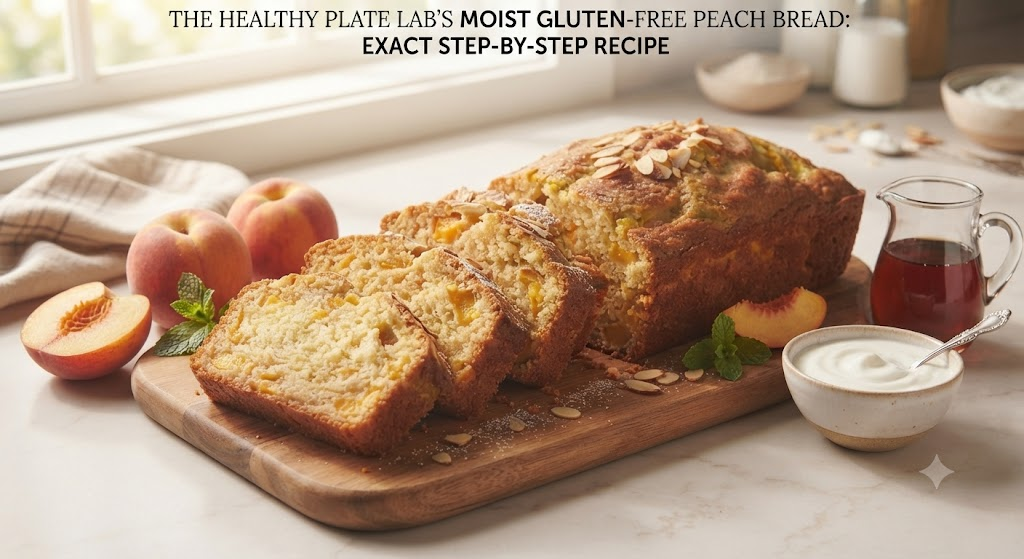
Slice the cooled peach bread into thick, even pieces and arrange them slightly overlapping on a wooden board or rustic platter, allowing the warm, golden crumb studded with soft peach pieces to take center stage. A light dusting of cinnamon across the top of the loaf before slicing adds visual warmth, while a few fresh peach slices and a sprig of mint alongside the platter tie the presentation back to the fresh fruit inside. For a brunch-table moment, serve with a small dish of extra Greek yogurt or a light drizzle of warmed maple syrup on the side.
Frequently Asked Questions
Can I use frozen peaches instead of fresh? Yes — thaw, drain thoroughly, and pat very dry first, as frozen peaches release significantly more liquid than fresh ones.
Can I make this dairy-free? Yes, substitute the Greek yogurt with a plain, unsweetened dairy-free yogurt alternative of similar thickness.
Why is my gluten-free bread gummy in the middle? This usually means it needs more bake time or wasn’t cooled long enough before slicing — gluten-free loaves continue to set as they cool.
Can I reduce the sugar further? Yes, very ripe peaches can support a slight reduction in coconut sugar without significantly affecting the final sweetness.
How should I store leftovers? Store tightly wrapped at room temperature for 2 days, or refrigerated for up to a week; this bread also freezes well for up to 3 months.
Final Nutrition Facts Table
Per slice (based on 10 slices total)
| Nutrient | Amount |
|---|---|
| Calories | 165 kcal |
| Total Carbohydrates | 21 g |
| Dietary Fiber | 2 g |
| Sugars | 9 g (vs. ~18 g in traditional recipe) |
| Net Carbs | 19 g |
| Protein | 5 g |
| Total Fat | 7 g |
| Saturated Fat | 1.5 g |
| Sodium | 130 mg |
| Vitamin C | 8% DV |
| Vitamin A | 6% DV |
Compared to a traditional peach bread recipe, this version cuts added sugar by roughly 50% and reduces overall fat by nearly a third, while boosting fiber and protein through the almond flour, yogurt, and applesauce swaps — all without sacrificing that moist, tender, bakery-style crumb.