

Muffins have a strange reputation in the wellness world — marketed as a “healthier” breakfast option while often containing as much sugar and fat as a slice of cake, just dressed up in a smaller, more portable shape. A typical bakery-style peach muffin can carry 300+ calories, 20+ grams of sugar, and a significant dose of refined oil before you’ve even added the optional streusel topping. At The Healthy Plate Lab, we wanted to build a peach muffin that actually earns its place at breakfast — satisfying, naturally sweetened, and structured to keep you full rather than triggering a mid-morning crash.
The foundation of this recipe is a thoughtful flour blend combining white whole wheat flour with a portion of almond flour. White whole wheat flour offers a meaningfully higher fiber content than refined all-purpose flour while maintaining a light, tender crumb — it’s milled from a different wheat variety than traditional whole wheat, which is why it bakes up softer and less dense. The almond flour adds healthy monounsaturated fats and protein, contributing to a moister texture and a slower, steadier release of energy after eating.
Fresh peaches once again do much of the sweetening work naturally, allowing us to cut the added sugar dramatically. We use a combination of coconut sugar and a touch of pure maple syrup, both of which bring deeper, more complex sweetness than plain white sugar along with trace minerals it lacks. For fat, we replace the bulk of the oil with unsweetened applesauce and a portion of Greek yogurt — a combination that cuts overall fat substantially while actually increasing both moisture and protein content. The result is a muffin that’s higher in fiber and protein than a traditional bakery version, lower in added sugar and fat, and genuinely satisfying enough to function as a real breakfast rather than a disguised dessert. This recipe is easily made gluten-free with a 1:1 gluten-free flour swap and works beautifully for meal prep, freezing well for busy mornings.
Ingredients & Nutritional Benefits
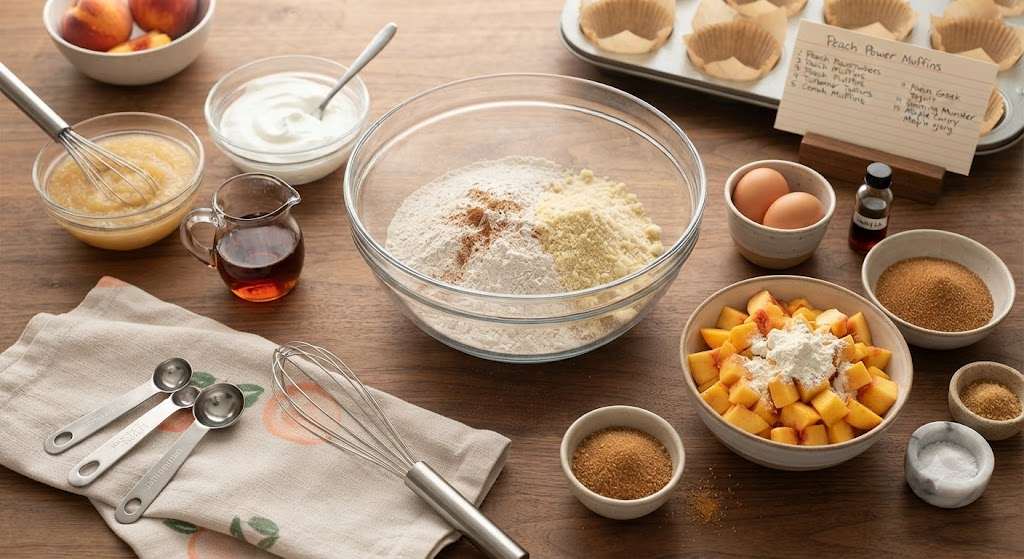
- 1 1/4 cups white whole wheat flour — Provides meaningful fiber while keeping a light, tender muffin texture.
- 1/2 cup almond flour — Adds healthy fats, protein, and moisture to the crumb.
- 1 1/2 teaspoons baking powder — Provides lift for a properly domed muffin top.
- 1/2 teaspoon baking soda — Works with the acidity in the yogurt and peaches for additional rise.
- 1/2 teaspoon ground cinnamon — Adds warmth and may support healthy blood sugar response.
- 1/4 teaspoon ground nutmeg — Deepens the spice profile with minimal effort.
- 1/4 teaspoon sea salt — Balances sweetness and enhances overall flavor.
- 1/3 cup coconut sugar — Adds caramel-like sweetness with a lower glycemic impact than refined white sugar.
- 2 tablespoons pure maple syrup — Contributes moisture and deeper sweetness along with trace minerals.
- 1/3 cup unsweetened applesauce — Replaces the bulk of traditional oil, reducing fat while adding moisture.
- 2 large eggs — Provides structure, protein, and richness.
- 1/3 cup plain Greek yogurt — Adds moisture, tang, and a meaningful protein boost.
- 1 teaspoon pure vanilla extract — Rounds out the flavor with warm, aromatic depth.
- 1 1/2 cups fresh peaches, peeled and diced small — The star ingredient, contributing natural sweetness, fiber, vitamin C, and vitamin A.
- 1 tablespoon flour (for tossing peaches) — Prevents the fruit from sinking to the bottom of each muffin during baking.
- Optional: 2 tablespoons turbinado sugar, for topping — A light sprinkle adds a satisfying crunchy crust without significantly raising the sugar count per muffin.
This combination keeps the muffin’s energy release slow and steady — the fiber from the whole wheat flour and the protein from the eggs and yogurt work together to prevent the quick spike-and-crash pattern typical of a sugar-heavy bakery muffin.
Chef’s Prep Secrets & Tips
The most common mistake in muffin baking — healthy or not — is overmixing the batter. Once the wet and dry ingredients meet, gluten begins developing immediately in wheat-based flours, and overmixing leads to dense, tough, tunnel-riddled muffins instead of light, tender ones. Mix only until the dry streaks disappear; a few small lumps remaining in the batter is a good sign, not a flaw.
As with the peach bread recipe, properly drying your diced peaches before folding them in is essential. Spread the diced fruit on a paper towel-lined plate for 5-10 minutes, pat away surface moisture, and toss with the tablespoon of flour. This step prevents excess liquid from making the batter too thin and helps suspend the peach pieces evenly throughout each muffin rather than letting them all sink to the bottom of the tin.
For the best domed muffin tops, start your oven slightly hotter for the first several minutes of baking — this initial blast of heat causes a quick rise before the structure sets, creating that classic bakery-style dome. Filling your muffin liners generously, close to the top rather than the typical two-thirds mark, also contributes to a taller, more substantial finished muffin.
Finally, let your eggs and yogurt come to room temperature before mixing. Cold ingredients can cause the melted fats in the batter to seize slightly, leading to a denser, less evenly textured crumb.
Step-by-Step Culinary Method
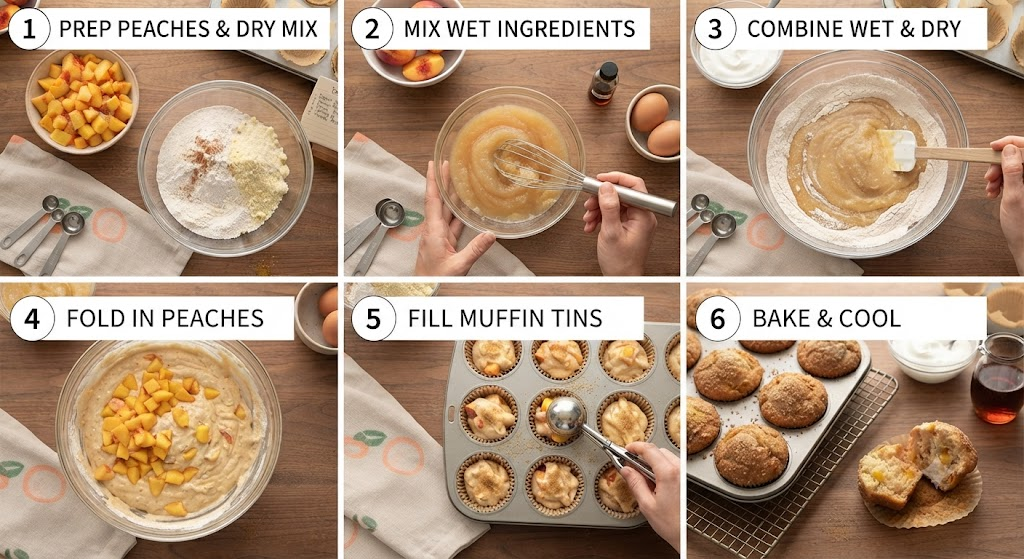
Step 1: Prepare the Peaches. Peel and dice your peaches into small, even 1/4-inch pieces. Spread them on a paper towel-lined plate and let them rest for 5-10 minutes. You’ll notice small beads of juice forming on the surface as excess moisture draws out — pat the pieces dry, then toss gently with the tablespoon of flour until lightly coated.
Step 2: Preheat and Prepare the Pan. Preheat your oven to 425°F (220°C) for the first few minutes of baking — you’ll lower it shortly after the muffins go in. Line a standard 12-cup muffin tin with paper liners or grease generously.
Step 3: Combine the Dry Ingredients. In a medium bowl, whisk together the white whole wheat flour, almond flour, baking powder, baking soda, cinnamon, nutmeg, and salt. As you whisk, you’ll notice the mixture lighten and aerate slightly, taking on a fluffier texture than when it first went into the bowl.
Step 4: Combine the Wet Ingredients. In a separate large bowl, whisk together the coconut sugar, maple syrup, applesauce, eggs, Greek yogurt, and vanilla extract. Whisk for about a minute — you’ll see the mixture transform from a slightly grainy texture into a smooth, glossy, pale amber blend, with small bubbles forming on the surface as air incorporates.
Step 5: Fold Wet into Dry. Pour the wet mixture into the bowl of dry ingredients. Using a spatula, fold gently in broad strokes, scraping from the bottom of the bowl up and over. The batter will thicken and come together within 15-20 strokes, transitioning into one cohesive, slightly thick batter. Stop as soon as no dry streaks remain — a few small lumps are perfectly fine.
Step 6: Fold in the Peaches. Gently fold the flour-coated peach pieces into the batter using as few strokes as possible. You’ll see small flecks of orange-gold fruit distribute evenly throughout, suspended rather than clumped.
Step 7: Fill and Bake. Divide the batter evenly among the prepared muffin cups, filling each nearly to the top. If using, sprinkle the turbinado sugar lightly over each muffin top for a crunchy finish. Place in the oven at 425°F and bake for 5 minutes, then reduce the oven temperature to 350°F (175°C) without opening the door, and continue baking for another 15-18 minutes. Around the 12-minute mark of the lower-temperature bake, you’ll notice a warm, fruity, cinnamon-spiced aroma filling the kitchen, and the tops will deepen from pale to a rich golden brown with a satisfying domed shape. The muffins are done when a toothpick inserted into the center comes out clean or with just a few moist crumbs.
Step 8: Cool in the Pan, Then Transfer. Let the muffins cool in the pan for 5-10 minutes — you’ll notice the edges pull away slightly from the liners as they set. Transfer to a wire rack to finish cooling for at least 15-20 minutes before serving, allowing the crumb to fully set for clean, tender slices.
Plating & Final Presentation

Arrange the cooled muffins on a tiered stand or rustic wooden board, with a few halved fresh peaches and a scattering of mint leaves tucked between them for a fresh, vibrant presentation. Split one muffin open to showcase the moist, peach-flecked interior alongside the others, giving the display an inviting, just-baked quality. For a brunch spread, serve alongside a small dish of extra Greek yogurt or a light drizzle of warmed maple syrup for those who want an extra touch of sweetness.
Frequently Asked Questions
Can I use frozen peaches instead of fresh? Yes — thaw, drain thoroughly, and pat very dry first, as frozen peaches release significantly more liquid than fresh ones.
Can I make these gluten-free? Yes, substitute the white whole wheat flour with a 1:1 gluten-free baking blend for similar results.
Can I make these dairy-free? Yes, substitute the Greek yogurt with a plain, unsweetened dairy-free yogurt alternative of similar thickness.
How should I store these muffins? Store in an airtight container at room temperature for 2 days, refrigerated for up to a week, or frozen for up to 3 months.
Why did my muffins turn out dense? This is almost always from overmixing the batter once the wet and dry ingredients combine — mix just until no dry streaks remain.
Final Nutrition Facts Table
Per muffin (based on 12 muffins total)
| Nutrient | Amount |
|---|---|
| Calories | 155 kcal |
| Total Carbohydrates | 20 g |
| Dietary Fiber | 2 g |
| Sugars | 9 g (vs. ~17 g in traditional recipe) |
| Net Carbs | 18 g |
| Protein | 5 g |
| Total Fat | 6 g |
| Saturated Fat | 1 g |
| Sodium | 110 mg |
| Vitamin C | 7% DV |
| Vitamin A | 5% DV |
Compared to a traditional bakery-style peach muffin, this version cuts added sugar by nearly half and reduces overall fat significantly through the applesauce-and-yogurt swap, while boosting fiber and protein — turning a disguised dessert into a muffin that genuinely supports your morning.