There’s a specific kind of sound that tells you peach salsa is about to be extraordinary — the wet, rhythmic thud of a knife through a perfectly ripe peach, followed by the sharp citrus hiss of fresh lime hitting diced fruit. It’s a sound that belongs to summer, and it’s the sound behind this recipe.
The Story & Nutritional Philosophy
At The Healthy Plate Lab, we believe the best “healthy” recipes don’t feel like compromises — they feel like discoveries. Peach salsa is one of those rare dishes that requires almost no nutritional engineering, because it starts from a place of natural virtue: whole, unprocessed produce, minimal added fat, and zero refined sugar.
This recipe is naturally vegan, gluten-free, and low-calorie, clocking in at roughly 45 calories per half-cup serving. But “low-calorie” doesn’t mean nutrient-poor. Peaches are rich in vitamin C and provitamin A carotenoids, both of which support skin health and immune function, while their natural fructose delivers sweetness without the blood-sugar spike associated with refined sugar because it’s buffered by fiber. Red onion and jalapeño contribute quercetin and capsaicin respectively — both compounds studied for anti-inflammatory and metabolism-supporting properties. Cilantro and lime round things out with a hit of vitamin K and vitamin C, plus that unmistakable acid-forward brightness that makes salsa taste like it’s good for you, because it is.
Our Healthy Plate Lab approach here was simple: let the produce lead. No added oils, no added sugar, no cooking required — just precise knife work, balanced acidity, and controlled heat from the jalapeño. The result is a condiment so versatile it can double as a topping for grilled fish, a dip for baked tortilla chips, or a bright counterpoint to a heavier entrée.
Ingredients & Nutritional Benefits
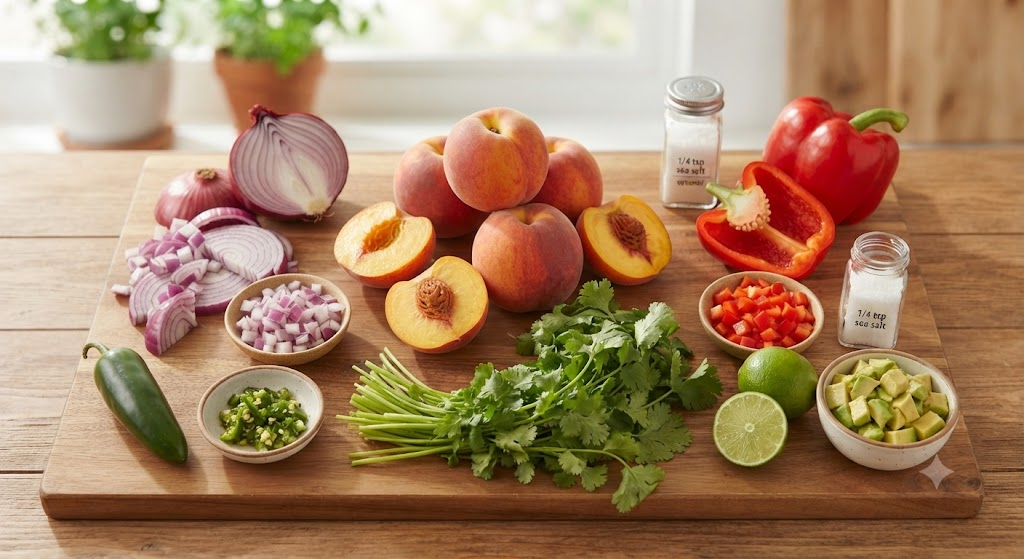
- 4 ripe peaches, diced — natural sweetness, vitamin C, fiber that slows sugar absorption
- 1/2 red onion, finely diced — quercetin, a natural anti-inflammatory flavonoid
- 1 jalapeño, seeded and minced — capsaicin, shown to modestly boost metabolism
- 1/3 cup fresh cilantro, chopped — vitamin K, chlorophyll, digestive support
- 1 lime, juiced — vitamin C, acidity that brightens and preserves color
- 1/2 red bell pepper, diced — crunch, vitamin A, additional vitamin C
- 1/4 tsp sea salt — enhances natural sweetness without needing added sugar
- Optional: 1/4 avocado, diced — heart-healthy monounsaturated fat for satiety
Chef’s Prep Secrets & Tips
The single biggest mistake home cooks make with peach salsa is under-ripe fruit. A peach that isn’t fully ripe will be starchy and tart, and no amount of lime or salt can fix that foundational flaw. Look for peaches that yield gently to thumb pressure at the stem end and smell fragrant even before you cut into them.
Our knife-work tip: dice the peaches last, right before combining everything, and toss them in lime juice within sixty seconds of cutting. This isn’t just about flavor — it’s a functional step. The ascorbic acid in lime juice slows the oxidation (browning) reaction, keeping your salsa visually vibrant for hours instead of turning muddy and gray.
For the jalapeño, always remove the seeds and the white pith (the membrane), since that’s where most of the capsaicin — and therefore most of the heat — actually lives. If you want a milder salsa, this single step controls the spice level far more effectively than reducing the amount of pepper you use.
Another underrated tip: taste your peaches before you commit to the recipe. If they’re on the sweeter side, you may want to increase the lime and jalapeño slightly to keep the salsa balanced rather than dessert-like. Salsa should always finish savory, even when built on fruit.
Step-by-Step Culinary Method
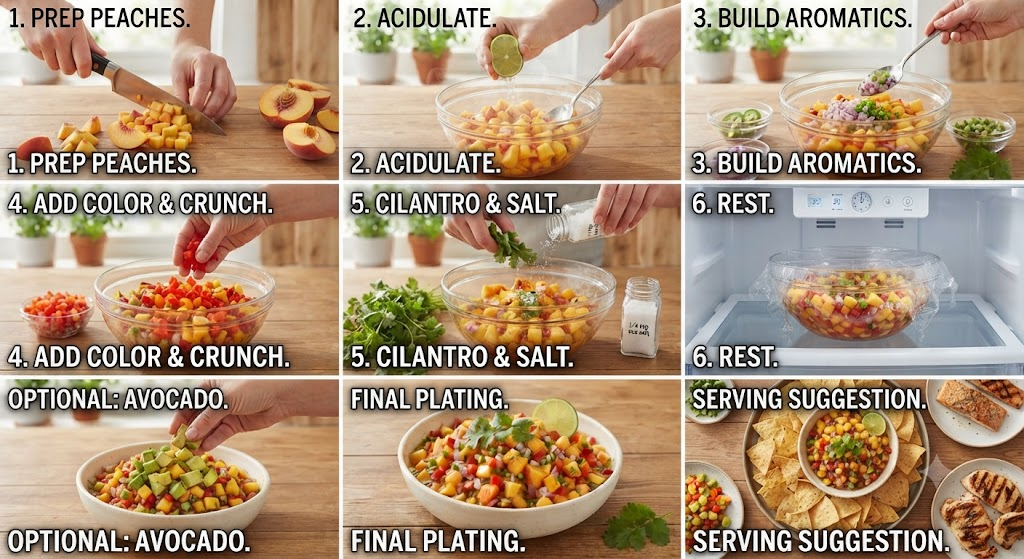
Unlike most Healthy Plate Lab recipes, this one asks for restraint rather than heat — the “cooking” here is entirely about technique, timing, and texture control. But don’t mistake simplicity for lack of craft; every step is calibrated for maximum flavor development.
Step 1: Prep your peaches. Halve each peach and twist to separate from the pit. Slice into wedges, then dice into ¼-inch cubes — small enough to distribute evenly in every bite, large enough to retain a distinct, juicy texture. You’ll notice the flesh releases a light, sticky nectar as you cut; that’s concentrated peach sugar, and it’s exactly what you want clinging to the fruit.
Step 2: Acidulate immediately. Transfer the diced peaches to a large mixing bowl and squeeze the lime juice over them right away, tossing gently with a spoon. Listen for the faint fizz as the acid meets the fruit’s surface — that’s the oxidation-blocking reaction beginning in real time.
Step 3: Build the aromatics. Add the diced red onion and minced jalapeño. Fold them in with a light hand; you’re not trying to mash the peaches, just distribute the heat and pungency evenly. The kitchen should start smelling distinctly savory-sweet here, with the onion’s sharpness tempering the peach’s sugar.
Step 4: Add color and crunch. Fold in the diced red bell pepper. This is where the salsa transforms visually — flecks of orange-red peach, white-green onion, and glossy red pepper create the kind of textural contrast that makes a dish feel alive rather than mushy.
Step 5: Finish with cilantro and salt. Chop the cilantro at the last possible moment — its volatile aromatic oils degrade quickly once cut, and pre-chopping it even twenty minutes ahead will noticeably mute its brightness. Fold it in along with the sea salt, tasting as you go. The salt does double duty here: it seasons, but it also draws out a touch more juice from the peaches, naturally loosening the salsa’s texture into something closer to a chunky, spoonable sauce.
Step 6: Rest before serving. This is the step most people skip, and it’s the one that matters most. Let the salsa sit, covered, in the refrigerator for at least 20 minutes. During this rest, the flavors macerate together — the onion mellows, the jalapeño’s heat integrates rather than sitting on top of the palate, and the lime juice fully penetrates the peach flesh. You’ll notice the salsa’s color deepens slightly and its juices pool at the bottom of the bowl, a visual cue that the flavors have fully married.
If you’re adding avocado, this is the moment to fold it in — right before serving, so it stays firm and doesn’t turn the salsa creamy or brown. Give everything one final gentle toss and taste for salt and acid balance; a great salsa should hit sweet, tart, savory, and spicy in quick succession.
Plating & Final Presentation
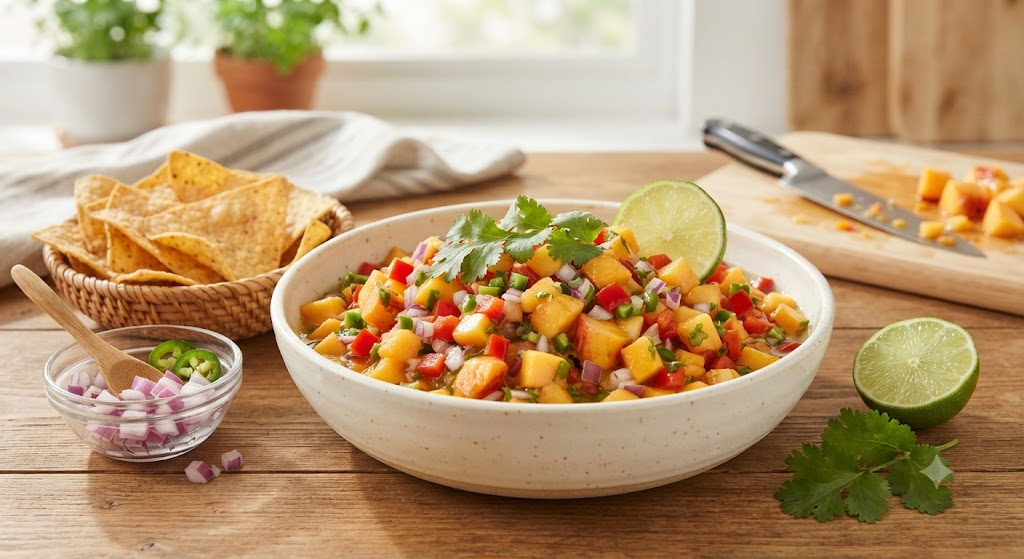
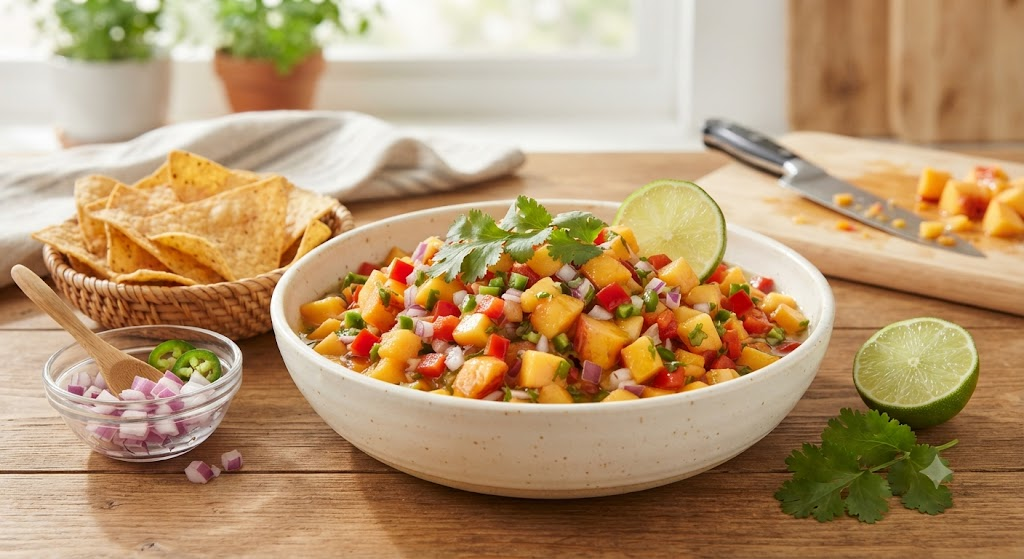
Presentation matters even for something as rustic as salsa. Spoon it into a wide, shallow bowl rather than a deep one — this maximizes surface area and shows off the color contrast between peach, pepper, and herb. Garnish with a few whole cilantro leaves and a thin lime wheel perched on the rim. For an elevated look, serve it alongside grilled fish or baked tortilla chips arranged in a loose fan, or spoon it over a piece of simply grilled chicken or white fish for an instant flavor upgrade with virtually no added calories.
Frequently Asked Questions
Can I use frozen peaches? Yes, but thaw and drain them thoroughly first — excess water will dilute the salsa’s flavor and make it soupy.
How long does it keep? Stored airtight in the fridge, this salsa stays fresh for 3–4 days, though the peaches will soften slightly over time.
Is it spicy? As written, it has a mild-to-moderate kick. Removing the jalapeño’s seeds and pith keeps it gentle; leave some seeds in for more heat.
Can I make it ahead for a party? Absolutely — in fact, we recommend it. The 20-minute rest is a minimum; flavors continue to deepen for up to 24 hours.
What can I substitute for cilantro? If you’re not a cilantro fan, fresh mint or basil offers a different but equally bright herbal note.
Final Nutrition Facts Table (Per ½-Cup Serving)
| Nutrient | Amount |
|---|---|
| Calories | 45 kcal |
| Protein | 1 g |
| Total Fat | 0.3 g |
| Carbohydrates | 11 g |
| Fiber | 2 g |
| Sugars | 8 g (naturally occurring) |
| Sodium | 100 mg |
| Vitamin C | 20% DV |