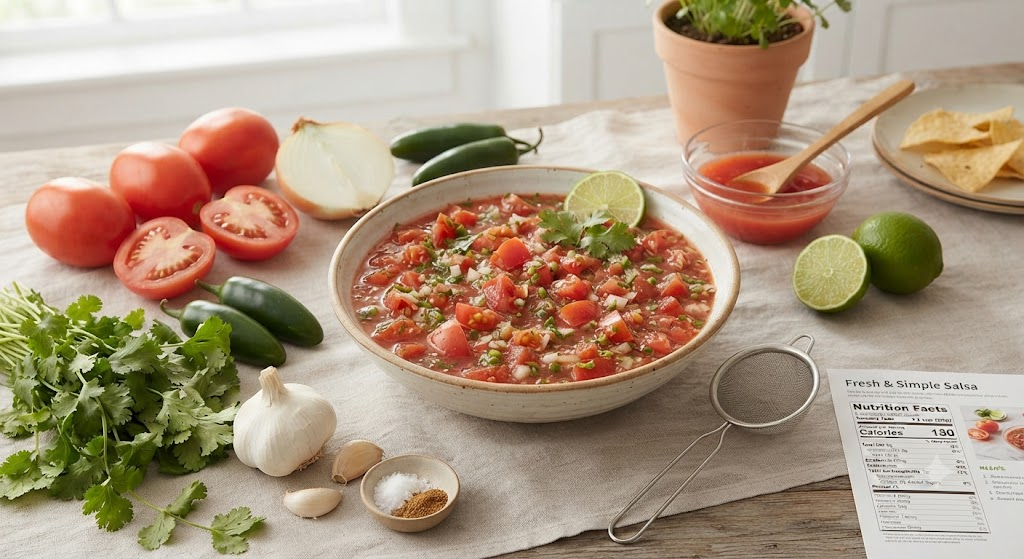
Fresh, vibrant, and endlessly versatile, a great homemade salsa is one of the easiest ways to eat well without feeling like you’re “on a diet.” At The Healthy Plate Lab, this recipe is our benchmark for what salsa should be: bright acidity, natural sweetness from ripe tomatoes, a clean kick of heat, and virtually none of the added sugar or sodium bombs found in most jarred versions.
The Story & Nutritional Philosophy
Store-bought salsa has a reputation as a “healthy” condiment, but read the label on most jars and you’ll often find added sugar, preservatives, and sodium levels that can exceed 200mg per two tablespoons — meaning a modest serving can eat up nearly 10% of your daily recommended sodium intake before you’ve even reached for a chip. At The Healthy Plate Lab, our approach starts with the same question we ask of every recipe: what is doing the flavor work here, and can we get there through whole ingredients instead of processing shortcuts?
For salsa, the answer is refreshingly simple. Ripe, in-season tomatoes are naturally sweet and acidic enough that no added sugar is needed. A generous hit of fresh lime juice replaces the vinegar-heavy preservation methods used in commercial versions, while fresh garlic, jalapeño, and cilantro do the flavor-building that manufacturers typically outsource to sodium and citric acid. The result is a salsa that’s low in calories (under 15 per quarter-cup serving), naturally vegan and gluten-free, and rich in vitamin C and lycopene — the antioxidant compound responsible for tomatoes’ red color, which research has linked to heart health benefits. Because it’s fresh rather than cooked or canned, this salsa also retains more of its natural vitamin content, since heat processing tends to degrade water-soluble vitamins like vitamin C over time.
This is a recipe built on restraint: a handful of whole ingredients, minimal prep, and zero shortcuts that compromise nutrition.
Ingredients & Nutritional Benefits
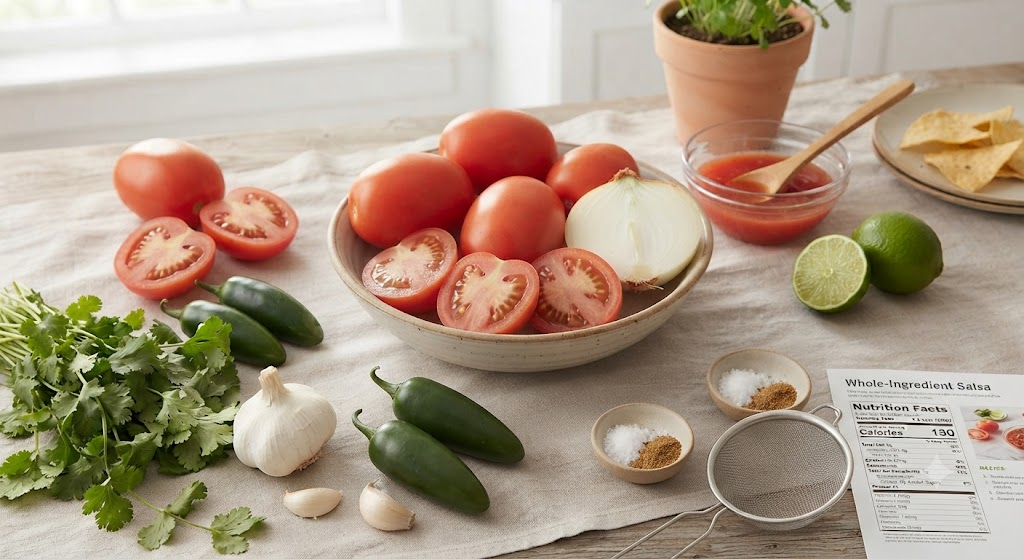
- 6 ripe roma or vine tomatoes, diced (rich in lycopene and vitamin C; roma tomatoes have less water content, giving the salsa a thicker, less watery texture)
- ½ medium white onion, finely diced (adds prebiotic fiber and a natural sulfur-compound sharpness that balances the tomato’s sweetness)
- 1–2 jalapeños, seeded and minced (capsaicin from the peppers has been shown to give a mild, temporary metabolism boost)
- 2 cloves garlic, minced (contains allicin, a compound linked to anti-inflammatory benefits)
- ½ cup fresh cilantro, chopped (adds chlorophyll and a bright, herbaceous top note)
- Juice of 2 limes (vitamin C plus the acidity that “cooks” and brightens the raw vegetables)
- ½ tsp sea salt (just enough to enhance flavor without excess sodium)
- ¼ tsp ground cumin (optional, for a subtle smoky depth)
Each of these ingredients is doing real nutritional work, not just filling space. The onion and garlic combination isn’t only about flavor — both are allium vegetables associated with cardiovascular benefits when eaten raw, since some of their beneficial sulfur compounds break down when exposed to high heat. Keeping this salsa entirely raw preserves that nutritional integrity.
Chef’s Prep Secrets & Tips
- Seed your tomatoes for the best texture. Excess tomato seeds and liquid can make salsa watery. Slice tomatoes in half, gently squeeze out the seeds and juice over a bowl (save that liquid — more on that below), then dice the flesh.
- Don’t skip the resting time. Fresh salsa always tastes better after sitting for at least 20–30 minutes; this allows the salt to draw out moisture and the flavors to meld into something more cohesive rather than tasting like separate chopped ingredients.
- Control the heat with the membrane, not the seeds. Most of a jalapeño’s capsaicin lives in the white pith, not the seeds themselves. Removing just the pith and leaving a few seeds gives you control over spice level without losing all the heat.
- Salt in stages. Add half your salt while prepping, then taste again after the resting period — flavors shift as the vegetables release liquid, and you may need less than you think.
- Save that reserved tomato liquid. A small splash whisked back in at the end loosens the texture if your salsa turns out too thick, without diluting flavor the way plain water would.
Step-by-Step Culinary Method
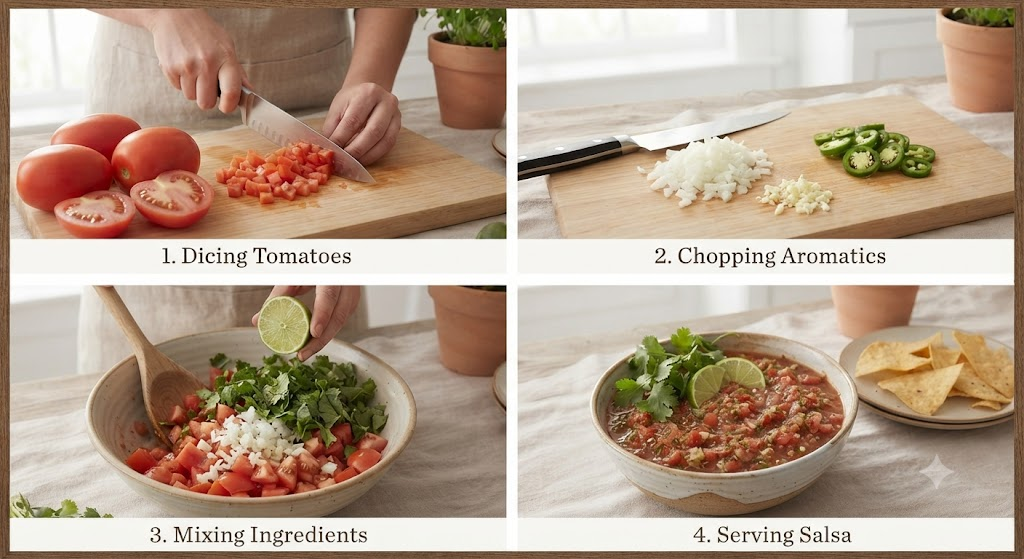
Step 1: Prep the tomatoes. Halve each tomato and gently squeeze over a bowl to release the seeds and excess liquid, reserving that liquid to the side. Dice the remaining tomato flesh into small, even pieces — roughly a quarter-inch cube is ideal. You’ll notice the tomatoes release a faint, sweet, almost grassy aroma as you cut into them, a good sign of ripeness. Transfer to a large mixing bowl.
Step 2: Prep the aromatics. Finely dice the onion, mince the garlic, and mince the jalapeño (removing the pith and seeds if you prefer a milder salsa). As you work through the garlic and onion, the smell will sharpen noticeably — that pungent, slightly sulfurous scent is a sign the allicin compounds are being activated by the knife’s cutting action, which is when many of their health benefits become most bioavailable.
Step 3: Combine and season. Add the diced onion, garlic, and jalapeño to the bowl with the tomatoes. Roughly chop the cilantro and fold it in, followed by the lime juice, salt, and cumin if using. Stir gently with a spoon rather than a vigorous mix — you want to combine everything without crushing the tomato pieces into mush. The mixture should look glossy and loose, with the lime juice pooling slightly at the bottom of the bowl.
Step 4: Rest and taste. Cover the bowl and let the salsa sit at room temperature for 20–30 minutes, or refrigerate for up to an hour if you’re not serving immediately. During this rest, you’ll notice the color deepen slightly as the tomatoes release more juice and the onion softens in texture, losing some of its raw bite. Taste and adjust: add more lime for brightness, more salt to sharpen flavors, or a splash of the reserved tomato liquid if the mixture feels too thick.
Step 5: Final check before serving. Give the salsa one more gentle stir just before serving, since ingredients tend to settle. The finished texture should be chunky but scoopable — never watery, never paste-like.
Plating & Final Presentation
Serve salsa in a wide, shallow bowl rather than a deep one — this keeps the ingredients visible and prevents the bottom layer from becoming waterlogged by pooling liquid. For a professional, market-fresh presentation, garnish with a few whole cilantro leaves and a thin lime wheel perched on the rim. If you’re serving alongside a main dish rather than chips, a small quenelle of salsa spooned over grilled chicken or fish adds color contrast and a fresh, acidic counterpoint to richer proteins.
Frequently Asked Questions
How long does fresh salsa last? Stored in an airtight container in the refrigerator, fresh salsa keeps for 3–4 days. Because it contains no preservatives, it won’t last as long as jarred versions, but the flavor is far superior.
Can I make this salsa less watery? Yes — seeding the tomatoes thoroughly before dicing is the single biggest factor. You can also strain the finished salsa briefly through a fine-mesh sieve if it’s still too loose.
Is this salsa low-sodium friendly? Absolutely. At just ½ teaspoon of salt for the entire batch, this recipe is significantly lower in sodium than most store-bought versions, and you can reduce it further and lean on lime juice and cumin for flavor instead.
Can I freeze salsa? Fresh salsa doesn’t freeze particularly well due to the high water content of raw tomatoes, which becomes mushy upon thawing. It’s best made fresh and enjoyed within a few days.
What can I serve this with besides chips? Try it over scrambled eggs, grilled fish, baked sweet potatoes, or stirred into a grain bowl for a low-calorie flavor boost.
Final Nutrition Facts Table
| Nutrient | Per ¼ Cup Serving |
|---|---|
| Calories | 14 kcal |
| Protein | 0.6 g |
| Total Fat | 0.1 g |
| Carbohydrates | 3.2 g |
| Fiber | 0.9 g |
| Sugar | 1.7 g |
| Sodium | 95 mg |
Compared to most store-bought salsas, which can run 20–25 calories and 150–230mg of sodium per equivalent serving, this fresh, whole-ingredient version delivers big flavor with a fraction of the sodium — proof that the healthiest version of a recipe is often also the simplest.