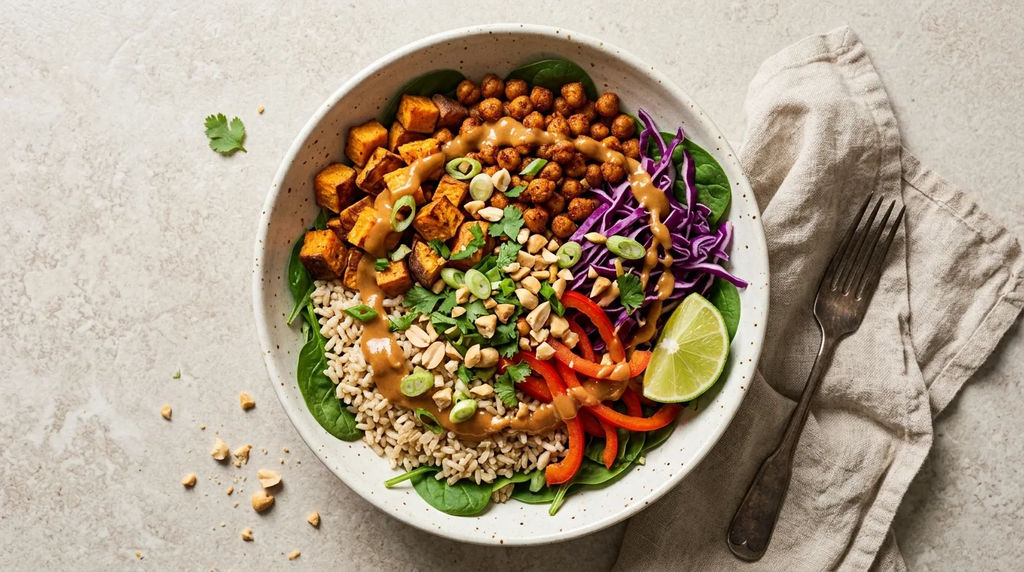
Roasted sweet potatoes and crispy chickpeas over brown rice, finished with a silky Thai-style peanut sauce and crunchy cabbage.
A Vegan Dinner That Actually Fills You Up
This Thai peanut sweet potato Buddha bowl combines roasted vegetables, crispy chickpeas, wholesome grains, and a creamy peanut sauce for a plant-based dinner full of color and texture. Sweet potatoes develop golden, caramelized edges in the oven, while the chickpeas add a savory crunch. Brown rice provides a hearty base, and fresh spinach, purple cabbage, and red bell pepper bring freshness to every bite.
The highlight is the Thai-inspired peanut sauce. Natural peanut butter, soy sauce, lime juice, ginger, garlic, and a little maple syrup create a balance of savory, sweet, tangy, and spicy flavors. It takes only a few minutes to whisk together and brings all the individual ingredients into one cohesive meal.
With approximately 19 grams of plant-based protein and 16 grams of fiber per serving, this bowl makes a satisfying choice for anyone looking to incorporate more vegetables and legumes into their meals. It’s also convenient for meal prep because the grains, roasted ingredients, and sauce can be prepared ahead and assembled when needed.
Why You’ll Love This Recipe
- Naturally vegan. Every ingredient is plant-based, with no special substitutes required.
- Rich in fiber. Chickpeas, sweet potatoes, and brown rice contribute to an estimated 16 grams of fiber per bowl.
- Flavorful peanut sauce. Simple pantry ingredients create a creamy dressing with sweet, savory, tangy, and spicy notes.
- A mix of textures. Roasted sweet potatoes are tender, chickpeas add crunch, and fresh cabbage provides a crisp finish.
- Convenient for meal prep. The cooked components and sauce keep well when stored separately.
- Easy to customize. Swap the grain, adjust the heat, or use different vegetables based on what you have available.
- Built around whole foods. Beans, vegetables, brown rice, and natural peanut butter make up the heart of this nourishing meal.
Time Breakdown & Servings
Prep Time: 15 minutes
Cook Time: 40 minutes
Total Time: 55 minutes
Servings: 4 bowls
Ingredients You’ll Need
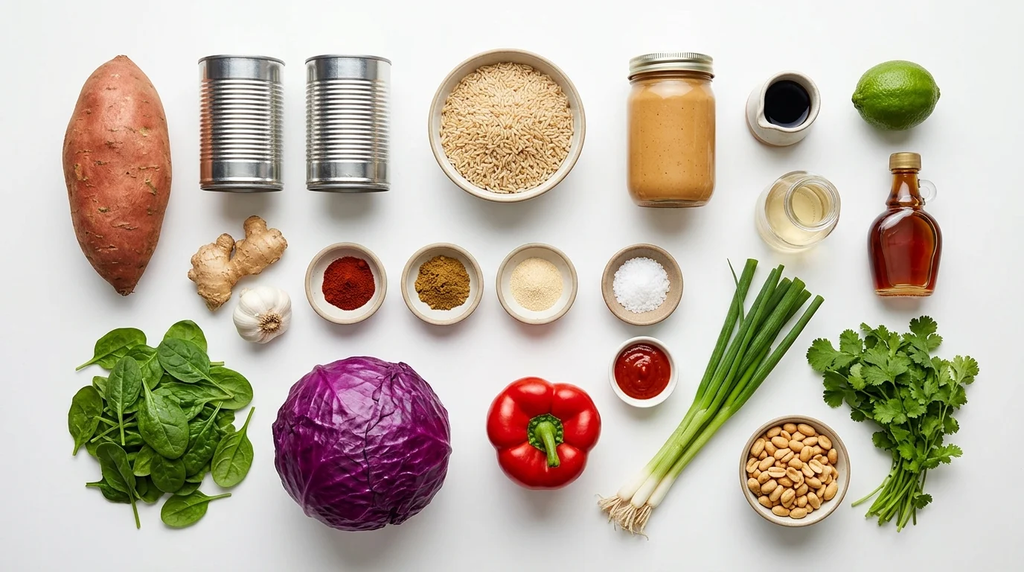
- 2/3 cup uncooked long-grain brown rice
- 1 1/3 cups water
- 1 pound sweet potatoes (about 1 large), peeled and cut into 1/2-inch cubes
- 2 cans (15 ounces each) chickpeas, drained, rinsed, and patted very dry
- 1 tablespoon avocado oil
- 1 teaspoon smoked paprika, divided
- 1/2 teaspoon ground cumin, divided
- 1/2 teaspoon garlic powder, divided
- 1 teaspoon kosher salt, divided
- 3 tablespoons natural creamy peanut butter
- 2 tablespoons low-sodium soy sauce or tamari
- 2 limes (2 tablespoons juice for the sauce, remainder cut into wedges)
- 1 tablespoon pure maple syrup
- 1 tablespoon rice vinegar
- 2 teaspoons freshly grated ginger
- 1 clove garlic, finely minced
- 1 teaspoon sriracha
- 1/4 cup warm water, plus more as needed
- 2 cups baby spinach
- 2 cups shredded purple cabbage
- 1 red bell pepper, thinly sliced
- 2 scallions, thinly sliced
- 1/4 cup chopped fresh cilantro
- 2 tablespoons chopped roasted peanuts
Ingredient Notes & Practical Substitutions
- Natural peanut butter: Choose a creamy variety made primarily from peanuts, with or without a little salt. Stir it well before measuring. Almond butter or sunflower seed butter can replace it, although the sauce will taste different.
- Chickpeas: Patting them dry is essential for better browning. If you prefer another protein source, use baked tofu cubes or drained cannellini beans, adjusting the cooking time as needed.
- Tamari: This is a useful gluten-free alternative to soy sauce when the product is labeled gluten-free. Coconut aminos also work but tend to be sweeter, so you may want to reduce the maple syrup.
- Brown rice: Quinoa, jasmine rice, or another preferred grain can replace the brown rice. Follow the package instructions for the correct cooking time and water ratio.
- Sriracha: Add less for a mild sauce or substitute red pepper flakes or sambal oelek. For a completely mild bowl, leave out the chili sauce.
Kitchen Tools You’ll Need
- Two rimmed baking sheets
- Medium saucepan with lid
- Small mixing bowl or jar
- Sharp knife and cutting board
- Fine-mesh strainer
Step-by-Step Instructions
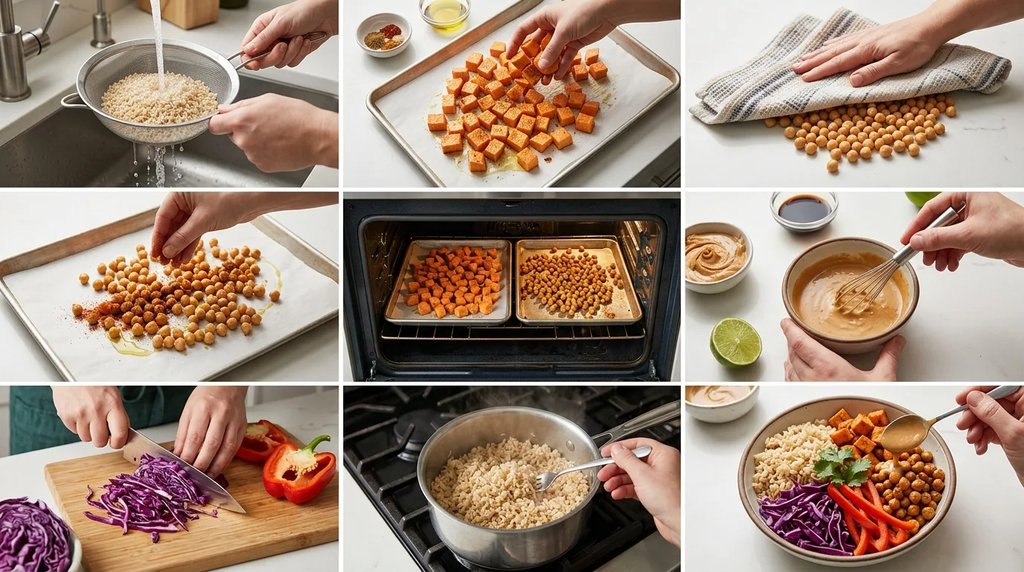
- Start the rice. Rinse the brown rice in a fine-mesh strainer. Combine it with the water in a saucepan and bring to a boil. Reduce the heat to low, cover, and cook according to the package directions, usually around 40 minutes. Let it rest, covered, for 10 minutes, then fluff with a fork. If the water is absorbed before the rice becomes tender, add a little more water and continue cooking.
- Heat the oven. While the rice cooks, preheat the oven to 425°F. Line two rimmed baking sheets with parchment paper to make cleanup easier.
- Season the sweet potatoes. Toss the sweet potato cubes with 2 teaspoons of the avocado oil, 1/2 teaspoon smoked paprika, 1/4 teaspoon cumin, 1/4 teaspoon garlic powder, and 1/2 teaspoon salt. Spread them in a single layer on one baking sheet.
- Season the chickpeas. Pat the rinsed chickpeas thoroughly dry. Toss them on the second baking sheet with the remaining 1 teaspoon avocado oil and the remaining paprika, cumin, garlic powder, and salt.
- Roast both pans. Bake for 25–30 minutes, stirring or turning the ingredients halfway through. The sweet potatoes should be fork-tender with browned edges, while the chickpeas should be golden and slightly crisp. If one pan finishes first, remove it while the other continues cooking.
- Make the peanut sauce. In a small bowl, whisk together the peanut butter, soy sauce, 2 tablespoons lime juice, maple syrup, rice vinegar, ginger, garlic, and sriracha. Gradually whisk in the warm water until the sauce is smooth and easy to drizzle. Add more water a teaspoon at a time if needed.
- Prepare the fresh toppings. Thinly slice the red bell pepper and scallions, shred the purple cabbage, and chop the cilantro. Cut the remaining lime into wedges for serving.
- Assemble the bowls. Divide the spinach and cooked brown rice among four bowls. Add the roasted sweet potatoes, chickpeas, cabbage, and bell pepper. Drizzle generously with peanut sauce and finish with scallions, cilantro, chopped peanuts, and a lime wedge.
Expert Tips for Best Results
- Dry the chickpeas thoroughly. Spread them on a clean kitchen towel and pat away excess moisture before seasoning. This helps them brown instead of steam.
- Give everything room to roast. Use separate baking sheets and avoid overcrowding so the vegetables soften and the chickpeas develop color.
- Warm the peanut butter slightly if needed. A few seconds of gentle warming can make thick peanut butter easier to whisk into the sauce.
- Balance the sauce to taste. Add lime juice for more tang, maple syrup for sweetness, or sriracha for heat.
- Keep the chickpeas separate until serving. Adding the sauce too early softens their roasted exterior.
Common Mistakes To Avoid
- Cutting the sweet potatoes unevenly. Uniform cubes cook more consistently and are less likely to burn at the edges before the centers soften.
- Skipping the rice rinse. Rinsing removes excess surface starch and helps keep the grains from becoming overly sticky.
- Making the sauce too thick. Peanut butter thickens as it sits. Add warm water gradually until the dressing reaches a pourable consistency.
- Overcrowding the baking sheets. Ingredients packed too closely together release steam and may not brown properly.
- Using sweetened peanut butter. Added sugar can make the sauce overly sweet and alter its balance with the lime and soy sauce.
Recipe Variations
- Chickpea curry bowl: Toss the chickpeas with curry spices before roasting, or simmer them in a separate pan with red curry paste and coconut milk for a creamy variation.
- Higher-protein version: Add shelled edamame or baked tofu to increase the plant-based protein content.
- Quinoa bowl: Replace the brown rice with cooked quinoa for a different texture and a slightly different nutritional profile.
- Cauliflower rice base: Use cauliflower rice instead of brown rice for a lower-carbohydrate option.
- Noodle bowl: Serve the roasted sweet potatoes and chickpeas over rice noodles, then toss with additional peanut sauce.
What to Serve With This Dish
- Steamed edamame
- Cucumber sesame salad
- Vegetable spring rolls
- Sliced mango
- Iced green tea with lime
Storage & Reheating Guide
Storage: Keep the cooked rice, roasted sweet potatoes, chickpeas, fresh toppings, and peanut sauce in separate airtight containers in the refrigerator for up to 3–4 days. Refrigerate leftovers promptly and keep the sauce chilled until serving.
Reheating: Warm the rice and sweet potatoes in the microwave for about 60–90 seconds, adjusting the time to the portion size. Reheat the chickpeas separately in a skillet or oven if you’d like to restore some crispness. Add the fresh vegetables and peanut sauce after reheating.
Estimated Nutrition Information
| Nutrient | Per Serving (1 bowl) |
|---|---|
| Calories | 560 |
| Protein | 19 g |
| Carbs | 89 g |
| Fat | 17 g |
| Fiber | 16 g |
| Sugar | 16 g |
Nutrition information is an estimate based on standard ingredient databases. Actual values may vary depending on the brands used, drained chickpea weights, peanut butter composition, and serving sizes.
Frequently Asked Questions
- How do I make peanut sauce for chickpeas?Whisk peanut butter with soy sauce, lime juice, maple syrup, rice vinegar, ginger, garlic, sriracha, and warm water until smooth. Adjust the water gradually until the sauce is easy to drizzle over the bowl.
- Can I make this bowl gluten-free?Yes. Use gluten-free tamari instead of regular soy sauce and check the labels on the rice vinegar, sriracha, and other packaged ingredients. Cross-contact during preparation should also be considered when necessary.
- How long does the peanut sauce keep?Store it in a sealed container in the refrigerator for up to 5 days. It may thicken as it chills, so stir in a little warm water before serving.
- Can I use canned sweet potatoes?Fresh sweet potatoes are preferable because they hold their shape and develop browned edges when roasted. Canned sweet potatoes are generally softer and may break apart, so they won’t provide the same texture.
- Can I make it nut-free?Replace the peanut butter with sunflower seed butter and omit the chopped peanuts. Check the labels on packaged ingredients if you’re cooking for someone with a serious allergy.
Conclusion
This Thai peanut sweet potato Buddha bowl brings together caramelized sweet potatoes, roasted chickpeas, brown rice, crunchy vegetables, and a creamy, tangy peanut sauce. It’s a colorful plant-based dinner that works for weeknight meals and make-ahead lunches, with plenty of flexibility to suit different tastes. Save it to your healthy dinner board on Pinterest for a fresh addition to your meal-prep rotation.