
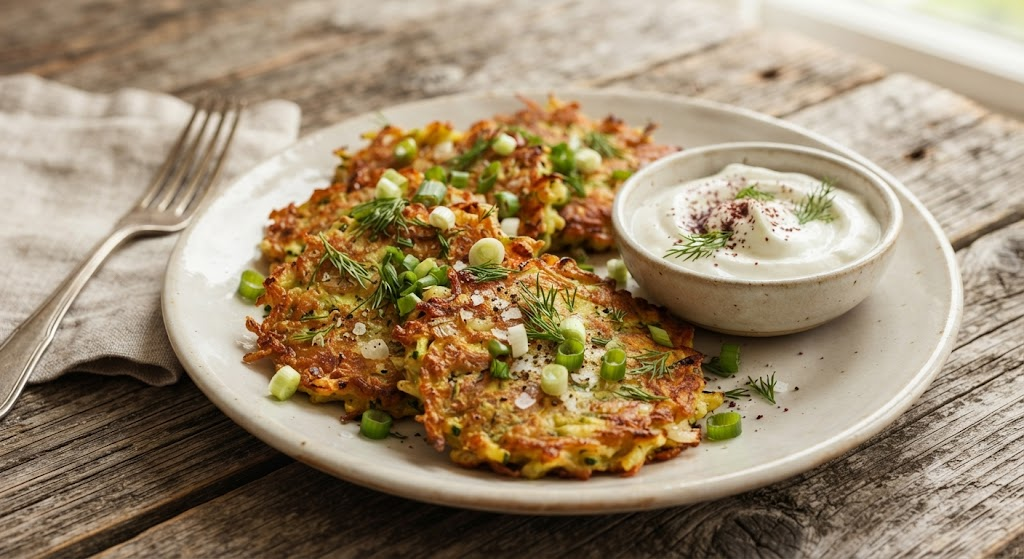
Zucchini fritters have a reputation problem. Done the traditional way, they’re shallow-fried in a generous pool of oil, bound together with a heavy dose of all-purpose flour, and often served swimming in a creamy, mayonnaise-based sauce — turning a vegetable-forward dish into something that absorbs more fat than it contains nutrients. At The Healthy Plate Lab, our mission with this recipe was to keep everything that makes fritters genuinely craveable — the crisp, golden exterior, the tender interior, the savory depth — while rebuilding the technique and ingredient list around better nutrition.
Zucchini itself is a quietly excellent vegetable: low in calories, a good source of potassium and vitamin C, and made up of roughly 95% water. That high water content, though, is exactly why most fritter recipes fail nutritionally and texturally — cooks compensate for excess moisture by adding more flour and more oil, which dilutes the vegetable’s benefits and adds unnecessary calories. Our approach starts with proper moisture extraction through salting and pressing, which means we can use significantly less binder and far less oil while still achieving fritters that hold together and crisp up beautifully.
For the binder, we use a combination of almond flour and a small amount of whole wheat or chickpea flour instead of straight refined all-purpose flour, adding fiber, protein, and healthy fats that a traditional fritter simply doesn’t offer. We also fold in a beaten egg and a modest amount of feta or parmesan, which contributes protein and bold flavor in small quantities, meaning you need less salt overall to achieve a satisfying, savory result. Most importantly, we shift the cooking method from a deep, oil-heavy shallow fry to a light pan-sear in a thin layer of avocado oil, finished in a hot oven if needed for extra crispness — a technique that cuts the fat absorbed by each fritter dramatically. The result is a dish that’s higher in protein and fiber than traditional zucchini fritters, lower in fat and refined carbohydrates, and naturally adaptable to a gluten-free version with the right flour swap. It’s proof that a vegetable side dish can be both genuinely indulgent and genuinely good for you.
Ingredients & Nutritional Benefits
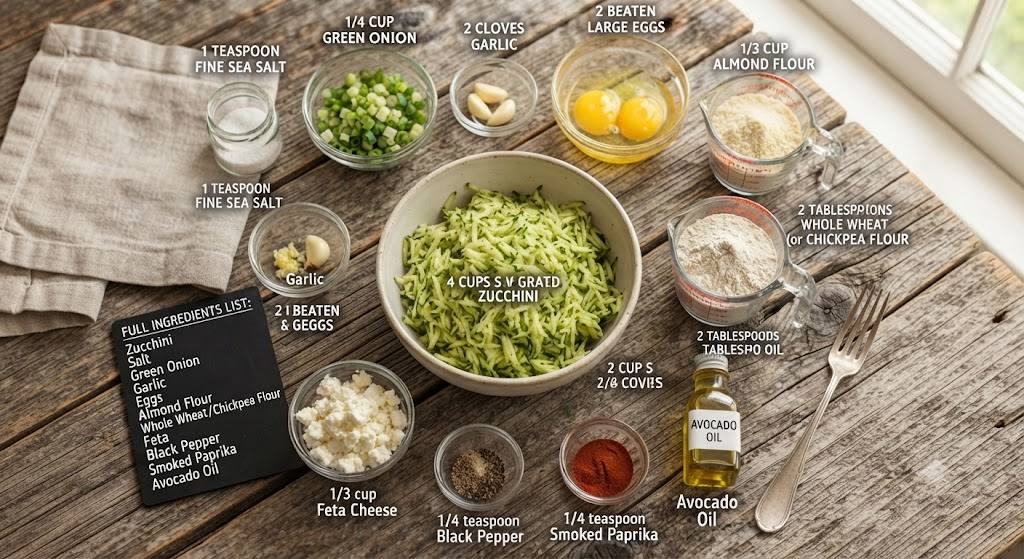
- 4 cups grated zucchini (about 3 medium zucchini) — Low in calories, hydrating, and a good source of potassium and vitamin C.
- 1 teaspoon fine sea salt (for the draw-out step) — Pulls excess water from the zucchini, the key to crisp, non-soggy fritters.
- 1/4 cup finely chopped green onion — Adds a mild, sharp flavor along with a small dose of prebiotic fiber.
- 2 cloves garlic, minced — Adds aromatic depth and trace antioxidant compounds.
- 2 large eggs, beaten — Provides structure and a meaningful protein boost without relying on excess flour.
- 1/3 cup almond flour — Adds healthy fats, protein, and helps absorb residual moisture without a starchy, gummy texture.
- 2 tablespoons whole wheat flour or chickpea flour — Provides additional binding and fiber; chickpea flour keeps the recipe fully gluten-free.
- 1/3 cup crumbled feta or grated parmesan — Adds bold, salty flavor in a small quantity, reducing the need for added salt.
- 1/4 teaspoon black pepper — Adds gentle warmth and enhances overall flavor perception.
- 1/4 teaspoon smoked paprika (optional) — Adds a subtle smoky depth without extra sodium.
- 2 tablespoons avocado oil, divided for pan-searing — A heat-stable, heart-healthy fat used sparingly compared to a traditional deep fry.
Every ingredient here is pulling double duty — the eggs and cheese provide both flavor and protein structure, while the almond and chickpea flour blend adds fiber and healthy fat in place of empty refined carbohydrates.
Chef’s Prep Secrets & Tips
The single most important step in this entire recipe — more important than any spice or technique — is properly removing moisture from the grated zucchini. Skip this step, and no amount of flour will save you from soggy, oil-soaked fritters that fall apart in the pan. After grating, place the zucchini in a colander, toss with the teaspoon of salt, and let it sit for 15-20 minutes. You’ll watch a surprising amount of liquid pool in the bowl beneath as the salt draws water out through osmosis.
Once the resting time is up, transfer the zucchini to a clean kitchen towel or several layers of paper towel, gather the edges, and squeeze firmly over the sink. Don’t be gentle here — you want to remove as much liquid as physically possible, and you’ll be amazed at how much the volume reduces, often by close to half. This single step is the difference between a fritter that crisps beautifully in the pan and one that steams into a soggy disappointment.
For the most consistent texture, use a box grater on the large holes rather than a food processor, which can shred zucchini too finely and release excess liquid too quickly to manage. When forming the fritters, use a measuring cup or cookie scoop for uniform sizing, which ensures even cooking — undersized fritters burn before the center sets, while oversized ones stay raw in the middle long after the exterior browns.
Finally, resist the urge to crowd the pan. Fritters need space to develop a proper crisp crust; overcrowding traps steam and leads to a softer, less golden result.
Step-by-Step Culinary Method
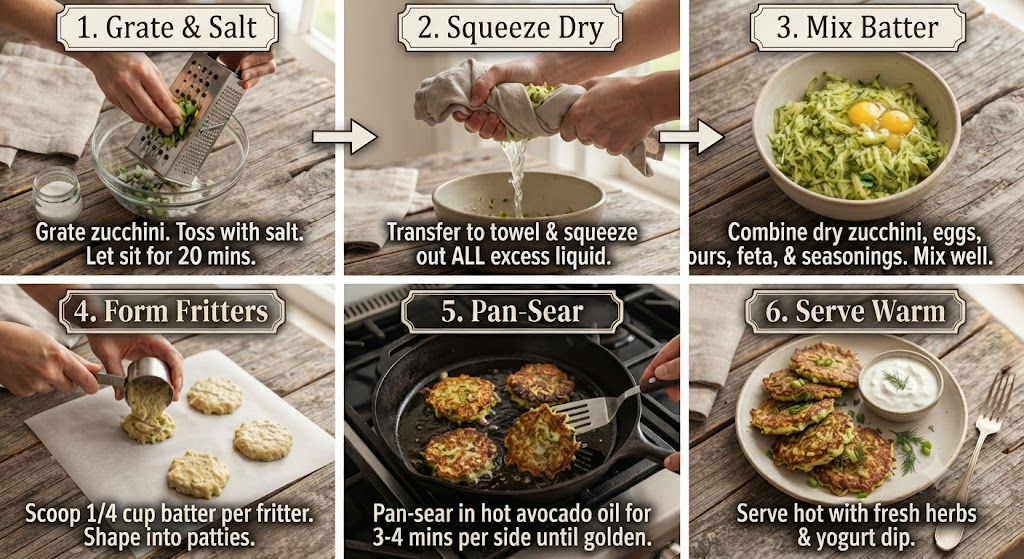
Step 1: Salt and Drain the Zucchini. Grate the zucchini using the large holes of a box grater, then transfer it to a colander set over a bowl. Sprinkle with the teaspoon of salt and toss gently to distribute. Let it rest for 15-20 minutes — you’ll see beads of liquid forming almost immediately on the surface of the shreds, and within 10 minutes, a visible pool of pale, slightly cloudy liquid will collect in the bowl beneath.
Step 2: Squeeze Out Excess Moisture. Transfer the salted zucchini to a clean kitchen towel, gather the edges into a bundle, and squeeze firmly over the sink. You’ll feel the bundle go from heavy and saturated to noticeably lighter and drier in your hands, with a steady stream of liquid running out as you twist and press. Don’t stop until the stream slows to just a few drops — this thoroughness is what separates crisp fritters from soggy ones.
Step 3: Build the Batter. In a large mixing bowl, combine the well-drained zucchini, chopped green onion, and minced garlic. Add the beaten eggs and stir to combine, watching the mixture take on a slightly glossy sheen as the egg coats the shredded vegetable evenly. Fold in the almond flour, whole wheat or chickpea flour, feta or parmesan, black pepper, and smoked paprika if using. As you mix, you’ll notice the batter shift from loose, separated shreds into a cohesive mixture that holds together when pressed between two fingers — this is your visual cue that the ratio of binder to vegetable is correct.
Step 4: Heat the Pan. Set a large non-stick or cast iron skillet over medium heat and add 1 tablespoon of the avocado oil, swirling to coat the bottom in a thin, even layer. Let the pan heat for a full 2 minutes before adding any batter — you’ll know it’s ready when a small test spoonful sizzles immediately and steadily on contact, rather than sitting silently or smoking aggressively.
Step 5: Form and Cook the First Batch. Using a 1/4-cup measure, scoop the batter and place it in the hot pan, gently flattening each mound with the back of a spoon into a disc about 1/2-inch thick. Leave at least an inch of space between each fritter. Cook undisturbed for 3-4 minutes, listening for a steady, gentle sizzle throughout — if it goes quiet, your heat is too low; if it crackles aggressively, lower the heat slightly to avoid burning the exterior before the center cooks through. You’ll see the edges of each fritter transition from pale green-flecked batter to a deepening golden-brown color, with small bubbles occasionally breaking the surface.
Step 6: Flip and Finish. Once the bottoms are deeply golden and the fritters release easily from the pan without resistance, flip each one carefully with a thin spatula. Cook for another 3-4 minutes on the second side. You’ll notice the fritters firm up considerably during this stage, going from slightly jiggly and soft to set and sturdy when gently pressed. The aroma at this point shifts from a mild, vegetal scent to a warm, toasty, slightly cheesy smell as the feta or parmesan caramelizes at the edges. Transfer finished fritters to a wire rack (not a paper towel-lined plate, which traps steam and softens the crust) while you repeat with the remaining batter, adding the second tablespoon of oil as needed.
Plating & Final Presentation
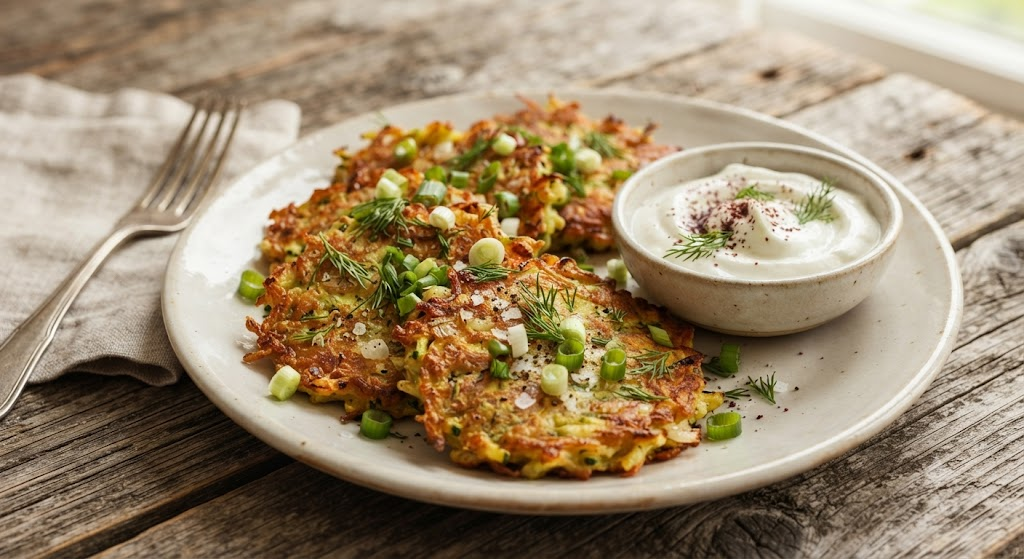
Arrange the warm fritters in a slightly overlapping row or fan on a rustic wooden board or wide plate, allowing their deeply golden, crisp edges to take center stage. A small bowl of Greek yogurt mixed with lemon juice, fresh dill, and a touch of garlic makes an excellent lighter alternative to a traditional sour cream or mayonnaise-based dip, served alongside for dipping or drizzling. A scatter of extra chopped green onion or fresh dill across the top adds a final pop of color and freshness, while a few lemon wedges tucked around the board invite a bright squeeze just before eating.
Frequently Asked Questions
Can I bake these instead of pan-frying? Yes — bake at 425°F (220°C) on a parchment-lined sheet for 20-25 minutes, flipping halfway, though the texture will be slightly less crisp than pan-searing.
Can I make these dairy-free? Yes, omit the feta or parmesan and add an extra pinch of salt and a tablespoon of nutritional yeast for a similar savory depth.
Why are my fritters falling apart? This almost always traces back to insufficiently drained zucchini — excess moisture prevents the batter from binding properly.
Can I make these ahead of time? Yes, they reheat well in a dry skillet or air fryer for a few minutes to restore crispness; avoid the microwave, which makes them soggy.
Is this recipe gluten-free? Yes, as long as you use chickpea flour instead of whole wheat flour in the binder.
Final Nutrition Facts Table
Per serving (2 fritters, based on 6 servings total)
| Nutrient | Amount |
|---|---|
| Calories | 145 kcal |
| Total Carbohydrates | 8 g |
| Dietary Fiber | 2 g |
| Sugars | 2 g |
| Net Carbs | 6 g |
| Protein | 8 g |
| Total Fat | 9 g |
| Saturated Fat | 2.5 g |
| Sodium | 280 mg |
| Vitamin C | 18% DV |
| Vitamin A | 8% DV |
Compared to a traditional deep-fried zucchini fritter, this version cuts overall fat by more than half through lighter pan-searing, while boosting protein and fiber through the egg, almond flour, and chickpea flour swaps — a savory, satisfying side dish that earns its place at the table on flavor alone.