
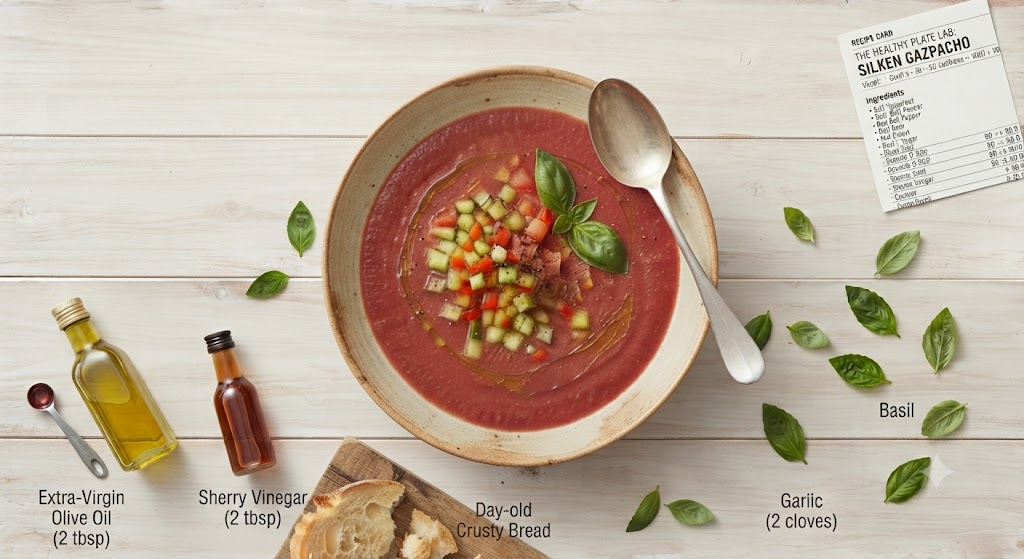
There’s a moment in gazpacho-making when the blender goes from chunky to silk — a shift in pitch, the whir deepening as tomatoes, peppers, and cucumber surrender their structure and become something closer to liquid velvet. That transformation, cold and vivid and impossibly fresh, is the entire appeal of this dish.
The Story & Nutritional Philosophy
At The Healthy Plate Lab, we’re drawn to recipes that do more nutritional work than they appear to. Gazpacho looks like a simple chilled soup, but it’s actually one of the most efficient ways to consume a full spectrum of vegetables in a single sitting — no cooking, no nutrient loss from heat, no added fat beyond a modest, intentional drizzle of olive oil.
This recipe is vegan, gluten-free, and low-calorie, landing around 90 calories per generous cup. The tomato base alone delivers a meaningful dose of lycopene, a carotenoid antioxidant that’s actually more bioavailable when tomatoes are blended raw with a touch of fat, which is exactly what the olive oil here accomplishes. Cucumber contributes hydration and a mild diuretic effect thanks to its high water content, while bell pepper adds one of the highest vitamin C concentrations of any raw vegetable — often more per gram than citrus fruit. Garlic and sherry vinegar bring allicin and acetic acid respectively, both linked in research to modest blood-sugar and cardiovascular benefits.
The Healthy Plate Lab philosophy here is about restraint and ratio: enough olive oil to carry the fat-soluble nutrients and round out the acidity, but not so much that a “vegetable soup” turns into a calorie-dense indulgence. Every ingredient is raw, whole, and doing real nutritional work — this is a dish where health and craft are the same pursuit.
Ingredients & Nutritional Benefits
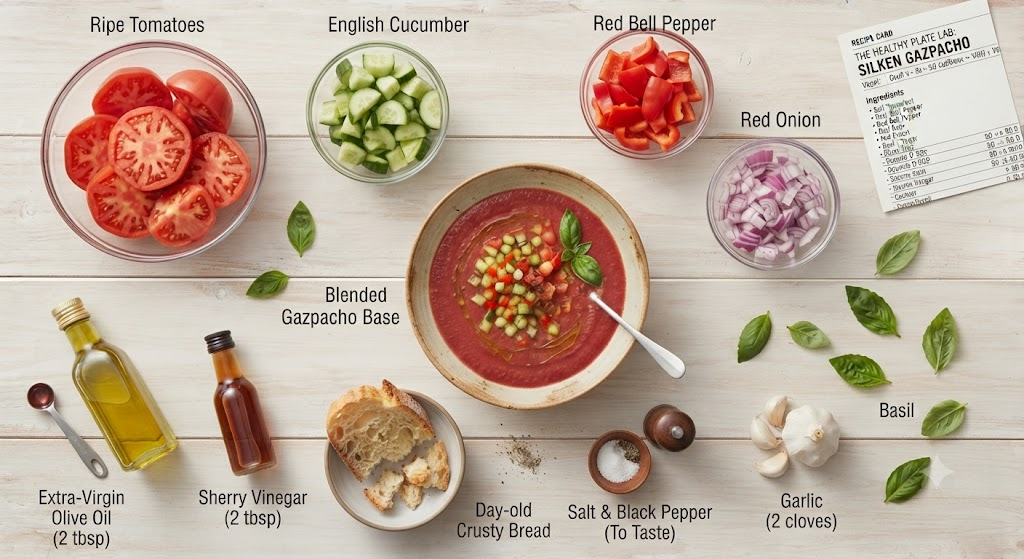
- 6 large ripe tomatoes, cored and chopped — lycopene, vitamin C, natural umami depth
- 1 English cucumber, peeled and chopped — hydration, potassium, mild bitterness for balance
- 1 red bell pepper, chopped — exceptional vitamin C, natural sweetness
- 1/2 red onion, chopped — quercetin, sharp aromatic backbone
- 2 garlic cloves — allicin, antimicrobial and cardiovascular support
- 2 tbsp extra-virgin olive oil — monounsaturated fat, boosts lycopene absorption
- 2 tbsp sherry vinegar — acetic acid, brightens and balances sweetness
- 1 slice day-old crusty bread (optional, omit for gluten-free) — traditional thickener
- Salt and black pepper, to taste
Chef’s Prep Secrets & Tips
The quality of your gazpacho is determined almost entirely by the quality of your tomatoes. This is a dish with nowhere to hide — use the ripest, most fragrant, in-season tomatoes you can find, ideally ones that feel heavy for their size and smell sweetly earthy at the stem.
Our chilling tip: gazpacho tastes dramatically better after resting in the refrigerator for at least two hours, and ideally overnight. Cold temperature mutes sweetness perception, so a gazpacho that tastes perfectly balanced warm can taste flat once chilled — always season it slightly more assertively than feels necessary, then adjust again just before serving.
If you’re using the optional bread for a more traditional, silkier texture, soak it in a bit of the vegetable juice or water first so it blends smoothly rather than leaving gritty flecks. For a fully gluten-free version, simply omit it; the soup will be a touch lighter and brothier, which many people actually prefer.
Reserve a small handful of finely diced cucumber, pepper, and tomato before blending — these raw, unblended pieces make for a beautiful textural garnish and signal freshness the moment the bowl hits the table.
Step-by-Step Culinary Method
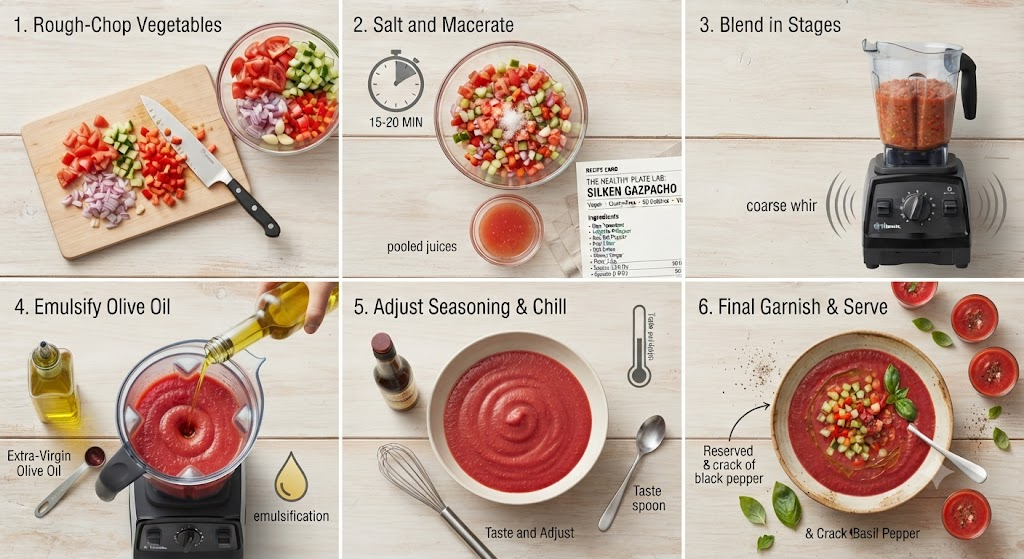
Gazpacho is a study in patience disguised as simplicity — the technique is minimal, but the sequencing matters enormously for both texture and flavor development.
Step 1: Rough-chop everything. Cut the tomatoes, cucumber, bell pepper, and red onion into roughly one-inch pieces. Uniform sizing helps the blender process everything evenly, so no single ingredient turns to mush while another stays chunky.
Step 2: Salt and macerate. Place the chopped vegetables in a large bowl, season generously with salt, and let them sit for 15–20 minutes at room temperature. You’ll notice liquid pooling at the bottom of the bowl — this is the salt drawing out the vegetables’ natural juices through osmosis, concentrating flavor before you even turn on the blender.
Step 3: Blend in stages. Working in batches if needed, add the macerated vegetables along with their released juices, the garlic, and the optional soaked bread to a high-powered blender. Start on low speed, then increase gradually. Listen for the sound shift: a coarse, chunky whir at first, smoothing into a deeper, steadier hum as the mixture liquefies into a uniform, vividly red purée.
Step 4: Emulsify the olive oil. With the blender running on medium speed, drizzle in the olive oil in a slow, steady stream. This is the most technique-sensitive step in the whole recipe — adding the oil gradually while blending allows it to emulsify into the liquid rather than pooling on the surface, giving the finished soup its characteristic silky, slightly opaque body instead of a thin, oil-slicked broth.
Step 5: Balance the acid. Add the sherry vinegar and blend briefly to incorporate. Taste immediately — the soup should taste bright and savory, with the acidity cutting cleanly through the tomato’s sweetness rather than sitting on top of it. Adjust with additional vinegar, salt, or a pinch of black pepper as needed.
Step 6: Strain for silkiness (optional). For an ultra-refined, restaurant-style texture, pass the blended soup through a fine-mesh sieve, pressing gently with the back of a ladle. This removes tomato skins and seeds, leaving a glassy, uniformly smooth liquid. Skip this step if you prefer a heartier, more rustic texture.
Step 7: Chill thoroughly. Transfer the gazpacho to an airtight container and refrigerate for a minimum of two hours, though overnight is ideal. As it chills, the flavors continue to meld and the soup thickens slightly as the natural pectins settle. Give it a good stir before serving, since some separation is normal and simply a sign of a truly fresh, minimally processed soup.
Plating & Final Presentation
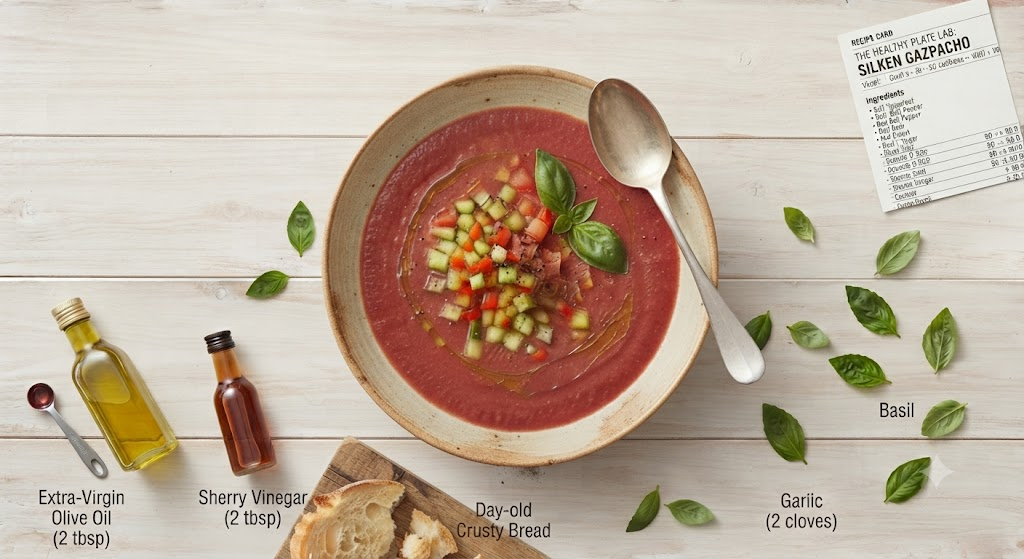
Serve gazpacho in shallow, wide bowls to showcase its deep red color, or in small glasses for an elegant amuse-bouche presentation. Top each portion with the reserved diced tomato, cucumber, and pepper for textural contrast, then finish with a thin drizzle of good olive oil across the surface and a light crack of black pepper. A few torn basil leaves or a scattering of croutons add a final layer of visual and textural interest without disrupting the soup’s clean, chilled character.
Frequently Asked Questions
Can I make gazpacho ahead of time? Yes — in fact, you should. Gazpacho improves with at least a few hours of chilling, and it keeps well in the refrigerator for up to 3 days.
Is gazpacho supposed to be this thick, or should it be thinner? Traditional gazpacho ranges from soup-like to nearly juice-thin depending on regional style; if yours is too thick, whisk in a splash of cold water until it reaches your preferred consistency.
Can I freeze it? It’s best fresh, as freezing can slightly separate the emulsified olive oil and dull the vegetables’ bright flavor upon thawing.
What’s the best tomato to use? Vine-ripened or heirloom tomatoes in peak summer season produce the best results; out-of-season tomatoes tend to yield a flatter, less vibrant soup.
Can I add protein to make it a full meal? Yes — a few pieces of seared shrimp or a soft-boiled egg on top turns this light starter into a satisfying, protein-balanced lunch.
Final Nutrition Facts Table (Per 1-Cup Serving)
| Nutrient | Amount |
|---|---|
| Calories | 90 kcal |
| Protein | 2 g |
| Total Fat | 5 g |
| Carbohydrates | 11 g |
| Fiber | 2.5 g |
| Sugars | 6 g (naturally occurring) |
| Sodium | 190 mg |
| Vitamin C | 90% DV |