
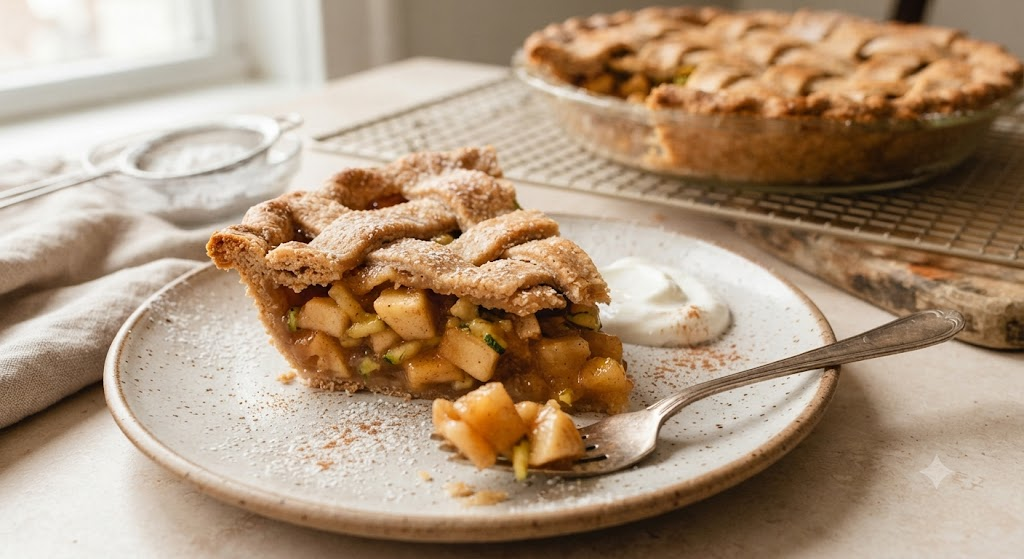
There’s a specific sound that tells you an apple pie filling has reached the right consistency — a slow, thick bubbling, almost a soft glug, as cinnamon-spiced juices reduce and cling to tender fruit rather than pooling thin and watery. In this version, that same sound carries an extra layer of texture, thanks to a vegetable most people would never guess is hiding inside.
The Story & Nutritional Philosophy
At The Healthy Plate Lab, zucchini apple pie is one of our favorite demonstrations of a core principle: a well-chosen vegetable can quietly upgrade a dessert’s nutritional profile without asking the eater to notice or sacrifice anything in flavor. Zucchini has a mild, almost neutral flavor and a texture that, once cooked down with warm spices and apples, becomes virtually indistinguishable from the fruit itself — while contributing fiber, potassium, and volume that let us meaningfully reduce the sugar and thickener typically needed in a traditional apple pie.
This recipe is built around reduced-sugar, added-fiber principles. By blending shredded zucchini roughly 1:1 with diced apples, we cut the pie’s overall sugar content by about 30% compared to an all-apple filling, since the apples alone are doing less of the sweetening work and the zucchini’s natural moisture reduces the need for a heavy sugar-based syrup. Zucchini also brings meaningful fiber and potassium to a dessert category that’s typically nutrient-sparse, while the apples still deliver their own fiber, vitamin C, and quercetin. We use a lattice of whole wheat pastry for the crust, which adds a nutty depth and a modest fiber boost without the dense, tough texture that whole wheat crusts sometimes develop.
The result is a pie that tastes fully, recognizably like a classic apple pie — warm cinnamon, tender fruit, buttery crust — while quietly delivering more fiber and fewer grams of added sugar per slice than the traditional version.
Ingredients & Nutritional Benefits
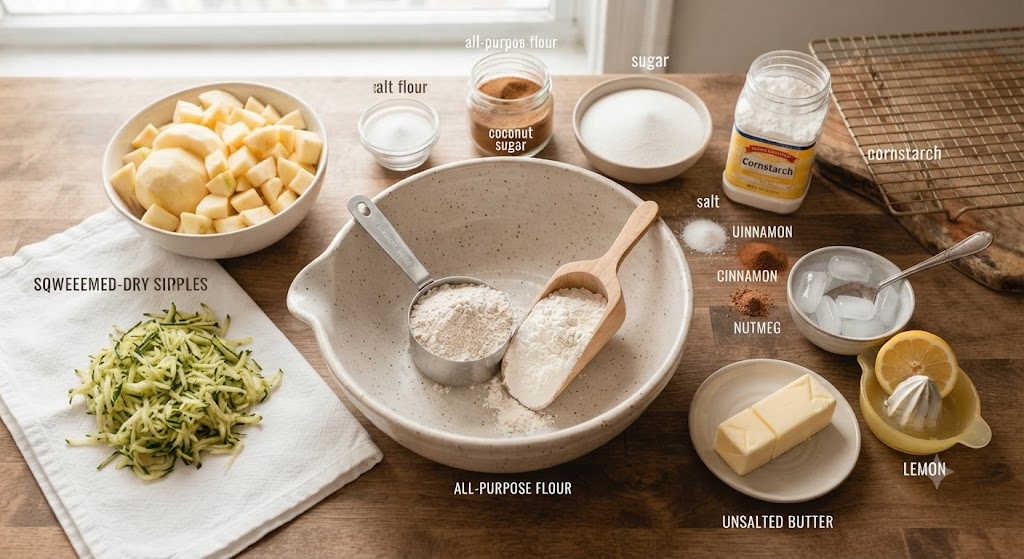
For the filling:
- 3 cups apples, peeled and diced (Honeycrisp or Granny Smith) — fiber, vitamin C, quercetin, natural sweetness
- 2 cups shredded zucchini, squeezed dry — fiber, potassium, moisture without excess sugar
- 1/3 cup coconut sugar — lower glycemic sweetness
- 2 tbsp cornstarch or arrowroot — thickens filling naturally
- 1 1/2 tsp cinnamon — warmth, blood-sugar-supportive compounds
- 1/4 tsp nutmeg — aromatic depth
- 1 tbsp fresh lemon juice — brightens flavor, prevents browning
- 1/4 tsp salt — balances sweetness
For the crust:
- 1 1/4 cups white whole wheat flour — fiber, magnesium, nutty flavor
- 3/4 cup all-purpose flour — tenderness and structure
- 1/2 tsp salt — flavor balance
- 1 tbsp sugar — subtle sweetness in the crust itself
- 10 tbsp cold unsalted butter, cubed — flaky texture
- 6–8 tbsp ice water — binds dough without overworking gluten
Chef’s Prep Secrets & Tips
The most critical step in this recipe is moisture management for the zucchini, exactly as it is in our chocolate zucchini bread. Shred the zucchini on the large holes of a box grater, then wring it out thoroughly in a clean kitchen towel. Skipping this step is the number one cause of a soggy, underbaked pie bottom, since unaddressed zucchini water has nowhere to go but into your crust.
Our texture-matching tip: dice your apples to roughly the same size as your shredded zucchini strands. This ensures both components cook at the same rate and distribute evenly throughout each slice, rather than creating pockets that are all-apple or all-zucchini.
For the crust, keep every ingredient as cold as possible, including the flour and even the mixing bowl if your kitchen runs warm. Cold butter that stays in small, distinct pieces through the mixing process is what creates steam pockets in the oven, and steam pockets are what create flakiness. If your butter starts to soften and the dough feels greasy rather than crumbly, stop and refrigerate everything for 15 minutes before continuing.
Step-by-Step Culinary Method
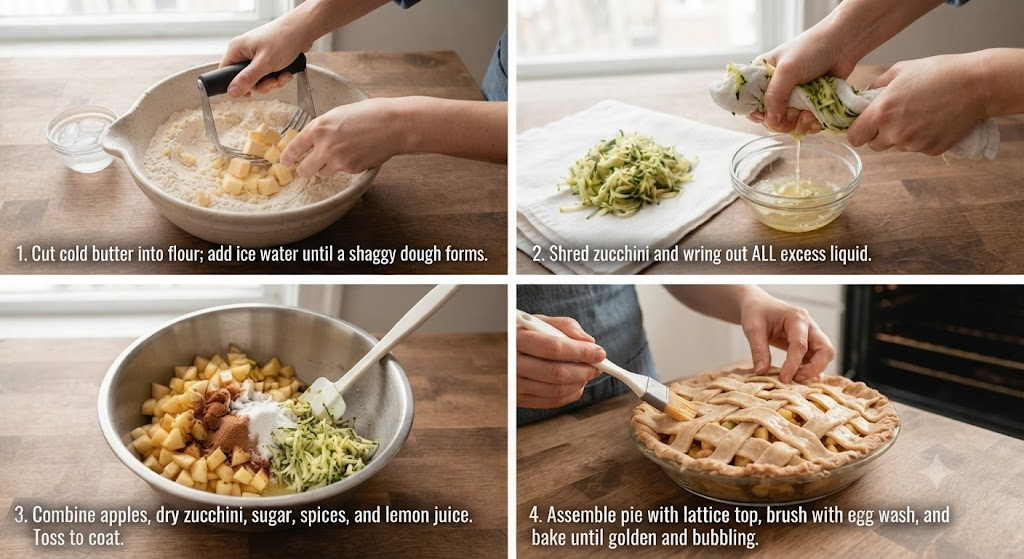
This pie has two components that come together only at assembly, so we’ll walk through the crust, then the filling, then the bake.
Step 1: Make the crust. In a large bowl, whisk together both flours, salt, and sugar. Add the cold cubed butter and work it into the flour using your fingertips or a pastry cutter, until the mixture resembles coarse crumbs with some pea-sized pieces of butter still visible. Add ice water one tablespoon at a time, mixing gently, until the dough just comes together when pressed. Divide the dough in two, flatten into discs, wrap, and refrigerate for at least 30 minutes.
Step 2: Prep the zucchini. Shred the zucchini and wring it out thoroughly in a kitchen towel, squeezing until you notice the towel has absorbed a visible amount of liquid and the zucchini feels noticeably lighter and drier in your hand.
Step 3: Build the filling. In a large bowl, combine the diced apples, squeezed zucchini, coconut sugar, cornstarch, cinnamon, nutmeg, lemon juice, and salt. Toss thoroughly with a spatula until every piece of fruit and vegetable is evenly coated. Let the mixture sit for 10 minutes; you’ll notice a light syrup beginning to form at the bottom of the bowl as the sugar and salt draw out a bit of natural moisture.
Step 4: Roll out the bottom crust. On a lightly floured surface, roll one dough disc into a 12-inch circle. Transfer it to a 9-inch pie dish, pressing gently into the corners without stretching the dough, which can cause shrinkage during baking. Trim any excess overhang to about an inch.
Step 5: Fill the pie. Pour the apple-zucchini filling into the crust, mounding it slightly in the center since the fruit will settle and reduce in volume as it bakes.
Step 6: Top and seal. Roll out the second dough disc and either lay it whole over the filling, cutting a few slits for steam, or slice it into strips for a lattice top. Trim, fold the edges under, and crimp decoratively. Brush the top crust with a little milk or beaten egg for a deep golden finish.
Step 7: Bake. Preheat your oven to 400°F (200°C). Bake the pie for 20 minutes, then reduce the temperature to 350°F (175°C) and continue baking for another 35–40 minutes. Around the halfway mark, you’ll start to notice a warm, spiced aroma filling the kitchen, thick and cinnamon-forward, with the filling beginning to bubble visibly at the edges — a strong sign it’s approaching doneness. The pie is finished when the crust is deep golden brown and the filling bubbles thickly through the vents, rather than looking thin or watery.
Step 8: Cool before slicing. Let the pie cool on a wire rack for at least 2 hours before slicing. This rest allows the cornstarch-thickened filling to fully set; slicing too early will result in a filling that runs rather than holds its shape.
Plating & Final Presentation
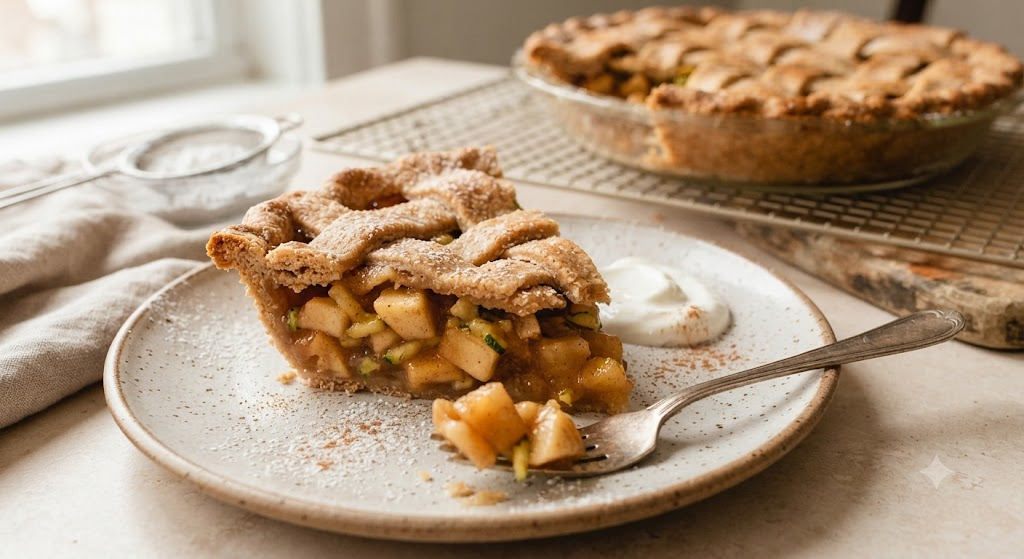
Serve slices slightly warm or at room temperature, showcasing the golden lattice crust and the deep amber filling peeking through the vents. For an elevated presentation, dust the top lightly with powdered sugar just before serving, or add a small dollop of lightly sweetened Greek yogurt alongside each slice for a protein-forward contrast to the classic à la mode pairing. A light scatter of cinnamon across the plate finishes the presentation without adding meaningful calories.
Frequently Asked Questions
Can you actually taste the zucchini? No — once cooked with the apples, cinnamon, and sugar, the zucchini’s flavor becomes essentially undetectable, contributing only texture and moisture.
Why is my pie filling runny? This typically means the zucchini wasn’t wrung out thoroughly enough, or the pie wasn’t cooled long enough before slicing to let the cornstarch fully set.
Can I make this gluten-free? Yes — substitute a 1:1 gluten-free pie crust blend; the filling itself is naturally gluten-free as written.
Can I use a different squash? Yellow summer squash works as a near-identical substitute, following the same moisture-wringing method.
How should I store leftovers? Cover and refrigerate for up to 4 days; the crust is best re-crisped briefly in a low oven before serving.
Final Nutrition Facts Table (Per Slice, 8 Slices Total)
| Nutrient | Amount |
|---|---|
| Calories | 265 kcal |
| Protein | 4 g |
| Total Fat | 12 g |
| Carbohydrates | 36 g |
| Fiber | 3.5 g |
| Sugars | 15 g |
| Sodium | 200 mg |
| Vitamin C | 10% DV |