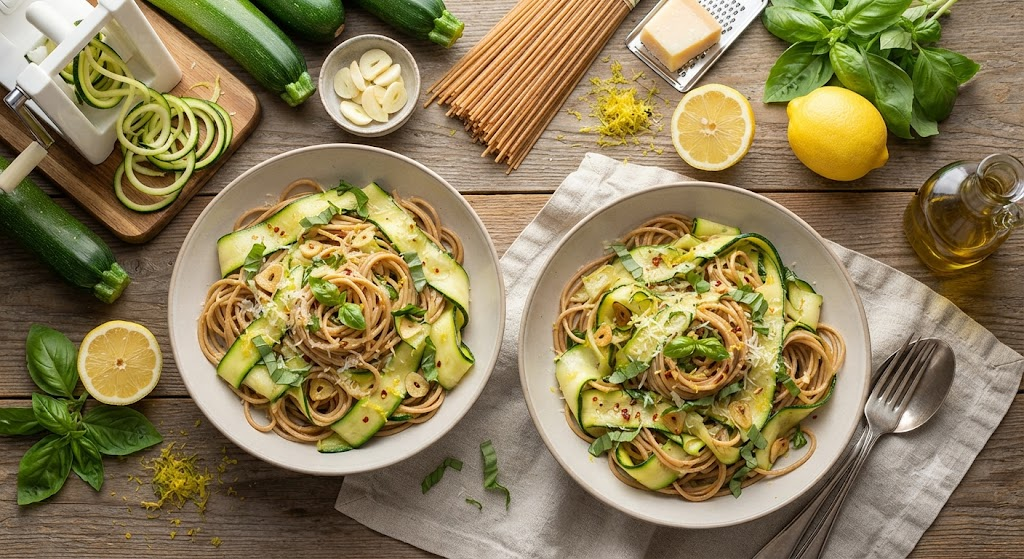
There’s a specific sound that signals this dish is coming together correctly — the sharp sizzle of garlic hitting warm olive oil, followed seconds later by the soft, squeaky friction of zucchini ribbons tumbling into the pan. Add the bright citrus snap of fresh lemon zest hitting hot oil, and you have a dish that smells like spring before it even hits the plate.
The Story & Nutritional Philosophy
At The Healthy Plate Lab, lemon zucchini pasta represents one of our favorite categories of recipe: the volume swap. Rather than eliminating pasta entirely, which can feel restrictive and unsustainable, we reduce the pasta portion and replace the missing volume with spiralized or ribboned zucchini. The result is a bowl that looks and eats like a generous plate of pasta, but delivers meaningfully more fiber and fewer refined carbohydrates per serving than a traditional preparation.
This recipe is naturally lower-calorie and higher-fiber, using a roughly 50/50 ratio of whole wheat pasta to zucchini by volume. Zucchini’s high water content and mild flavor make it an ideal pasta extender — it absorbs the lemon and garlic-infused oil beautifully while contributing almost no calories of its own, along with potassium and vitamin C. We use whole wheat pasta rather than white to add fiber and slow the meal’s glycemic impact, and we finish with real Parmesan rather than a larger quantity of oil, since a small amount of a intensely flavorful, savory ingredient goes further than a larger amount of a neutral one. Fresh lemon juice and zest do double duty here, brightening the dish enough that it needs very little added salt to taste vibrant and complete.
Our Healthy Plate Lab approach to this dish was about proportion, not elimination — proving that a genuinely craveable pasta dinner can still deliver a full serving of vegetables in every bowl.
Ingredients & Nutritional Benefits
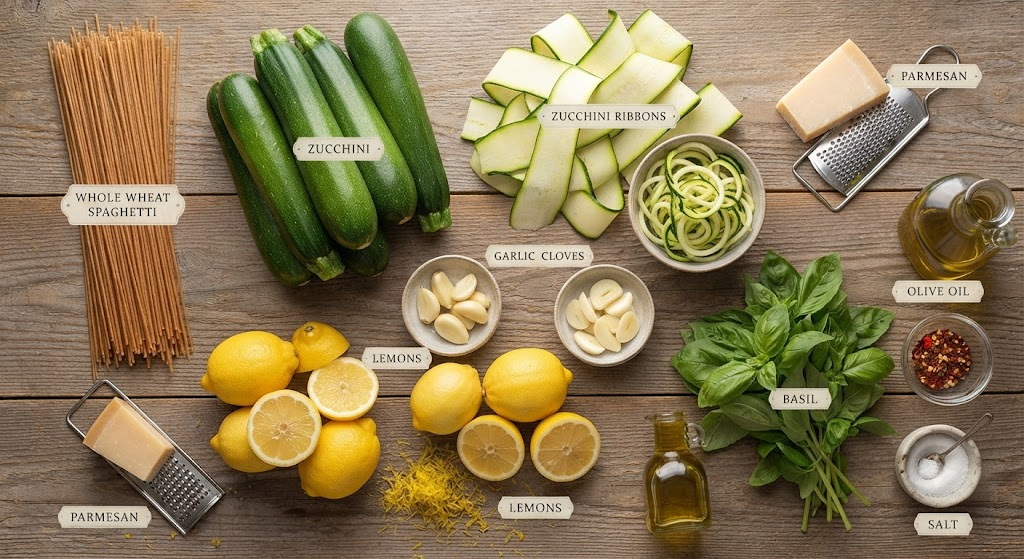
- 8 oz whole wheat spaghetti or linguine — fiber, sustained energy, lower glycemic impact than white pasta
- 3 medium zucchini, spiralized or cut into ribbons — hydration, potassium, vitamin C, adds volume without calories
- 3 tbsp extra-virgin olive oil — monounsaturated fat, carries flavor and fat-soluble nutrients
- 4 garlic cloves, thinly sliced — allicin, aromatic backbone
- Zest and juice of 2 lemons — vitamin C, bright acidity that reduces need for added salt
- 1/2 cup reserved pasta water — starch that helps emulsify the sauce
- 1/2 cup freshly grated Parmesan — savory depth, calcium, protein
- 1/4 cup fresh basil, torn — aromatic finish, antioxidant flavonoids
- 1/4 tsp red pepper flakes (optional) — gentle heat
- Salt and black pepper, to taste
Chef’s Prep Secrets & Tips
The most important technical decision in this recipe is how you cut your zucchini. A spiralizer produces long, noodle-like strands that mimic pasta most convincingly, but a simple vegetable peeler works nearly as well, creating wide, flat ribbons that hold sauce beautifully. Avoid dicing the zucchini into cubes — the whole appeal of this dish is the visual and textural illusion of a unified noodle bowl.
Our texture tip: salt your zucchini ribbons lightly and let them sit in a colander for 10 minutes before cooking, then pat them dry. This draws out excess water up front, so the zucchini doesn’t release a flood of liquid into the pan later and dilute your sauce.
Always reserve pasta water before draining. The starch suspended in that water is what allows the olive oil, lemon juice, and Parmesan to emulsify into a silky, cohesive sauce rather than separating into an oily layer on top of a watery one.
Add the zucchini to the pan raw and toss it only briefly with residual heat rather than actively cooking it for long — overcooked zucchini turns watery and limp, losing the pleasant, slightly crisp bite that makes it a convincing pasta stand-in.
Step-by-Step Culinary Method
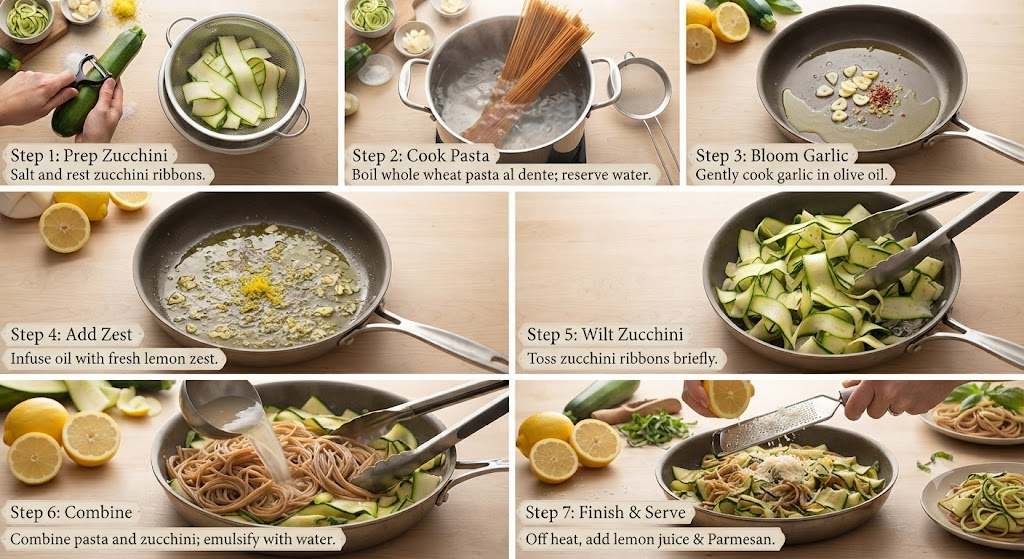
This dish comes together quickly, so have every ingredient prepped and within reach before you start cooking — the final assembly moves fast.
Step 1: Salt and rest the zucchini. Spiralize or ribbon the zucchini, place it in a colander set over a bowl, and toss lightly with a pinch of salt. Let it sit for 10 minutes. You’ll notice small beads of moisture forming on the surface — this is excess water leaving the vegetable before it ever hits the pan. Pat dry with a clean towel.
Step 2: Cook the pasta. Bring a large pot of generously salted water to a boil. Cook the whole wheat pasta according to package instructions until just al dente, since it will continue softening slightly once combined with the hot sauce. Just before draining, scoop out and reserve the 1/2 cup of starchy pasta water.
Step 3: Bloom the garlic. While the pasta cooks, heat the olive oil in a large skillet over medium-low heat. Add the sliced garlic and red pepper flakes if using, and cook gently, swirling occasionally, for about 90 seconds. Watch closely — you’re listening for a light, steady sizzle, not an aggressive pop, and looking for the garlic to turn pale gold, not brown. Burnt garlic turns bitter and will undermine the whole dish.
Step 4: Add the lemon zest. Stir the lemon zest into the warm oil and let it infuse for about 30 seconds. The aroma shifts noticeably here, from purely garlicky to bright and citrus-forward, as the oil pulls the fragrant compounds out of the zest.
Step 5: Add the zucchini. Raise the heat slightly to medium and add the salted, dried zucchini ribbons to the pan. Toss continuously with tongs for just 1–2 minutes, until the zucchini turns a slightly deeper green and softens just at the edges while still retaining a gentle bite. This brief window is the difference between a fresh, springy texture and a mushy one.
Step 6: Combine with pasta. Add the drained pasta directly to the skillet along with a splash of the reserved pasta water. Toss everything together vigorously, adding more pasta water a little at a time, until the starches emulsify with the oil into a light, glossy coating over every strand.
Step 7: Finish with lemon juice and cheese. Remove the pan from heat and stir in the fresh lemon juice and grated Parmesan. Toss quickly and continuously as you add the cheese, since off-heat, gentle tossing prevents the Parmesan from clumping into a gluey mass and instead lets it melt into a silky, cohesive sauce.
Plating & Final Presentation
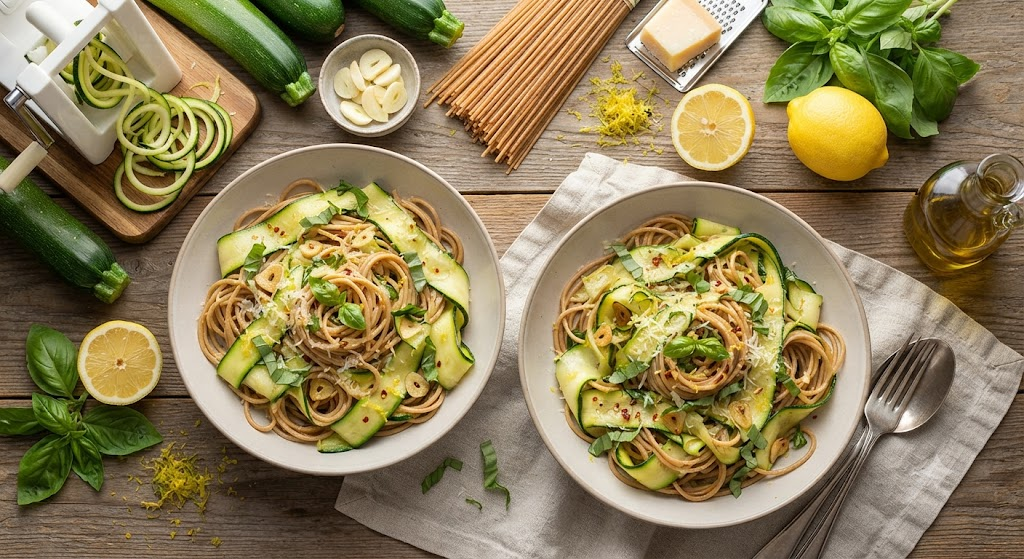
Twirl portions into shallow, wide bowls using tongs, letting the zucchini ribbons and pasta strands intertwine visibly. Finish each bowl with a generous scatter of torn fresh basil, an extra light grating of Parmesan, and a few thin curls of lemon zest for color and aromatic lift. A final light drizzle of good olive oil across the top adds sheen and a last layer of flavor right before serving.
Frequently Asked Questions
Can I make this gluten-free? Yes — substitute your favorite gluten-free pasta; the technique and sauce remain identical.
Can I make it vegan? Swap the Parmesan for a plant-based hard cheese alternative or a couple tablespoons of nutritional yeast for a similar savory depth.
Why did my sauce turn watery? This usually means the zucchini wasn’t salted and dried beforehand, releasing too much liquid into the pan during cooking.
Can I use yellow squash instead of zucchini? Yes, it works as a near-identical substitute with the same prep method.
Can I add protein? Grilled chicken, shrimp, or white beans all work well folded in at the final tossing step for a more complete meal.
Final Nutrition Facts Table (Per Serving, 4 Servings Total)
| Nutrient | Amount |
|---|---|
| Calories | 340 kcal |
| Protein | 12 g |
| Total Fat | 14 g |
| Carbohydrates | 44 g |
| Fiber | 6 g |
| Sugars | 4 g |
| Sodium | 260 mg |
| Vitamin C | 35% DV |