
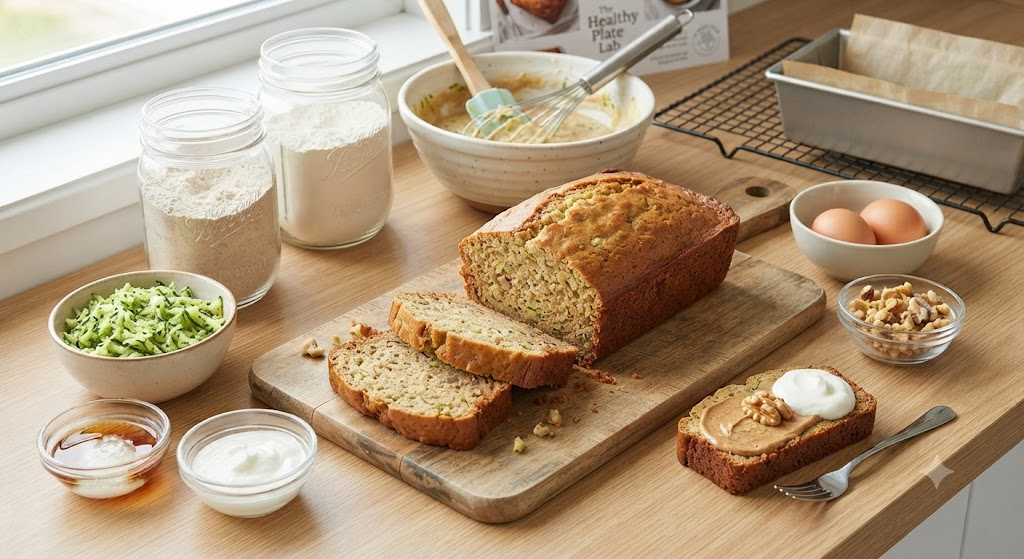
Zucchini bread has a bit of an identity crisis. It gets marketed as a way to “sneak in vegetables,” but most traditional recipes bury that zucchini under so much oil and sugar that any nutritional benefit gets canceled out. A typical loaf can pack in a full cup of sugar and nearly a cup of oil, turning what should be a genuinely useful way to use up garden zucchini into dessert wearing a vegetable costume.
At The Healthy Plate Lab, our goal with this recipe was to let the zucchini actually do something nutritionally, instead of just adding moisture and color. Zucchini is naturally high in water content and contains a modest amount of fiber, potassium, and vitamin C — but those benefits only matter if the rest of the recipe isn’t overwhelming them with excess sugar and fat.
So we rebuilt the ratios. We cut the sugar significantly, leaning on a combination of maple syrup and the natural moisture of the zucchini itself to keep the bread from tasting dry or flat. We swapped a portion of the oil for Greek yogurt, which reduces total fat while adding a protein boost that traditional zucchini bread doesn’t have. And we brought in whole wheat flour for a portion of the base, adding fiber without making the texture dense or gritty.
The result is a loaf that’s genuinely easy to make — no mixer required, one bowl, minimal cleanup — while being meaningfully lighter and more protein-forward than the version most of us grew up with. It’s the kind of recipe you can actually feel good about reaching for at breakfast, not just dessert.
Ingredients & Nutritional Benefits
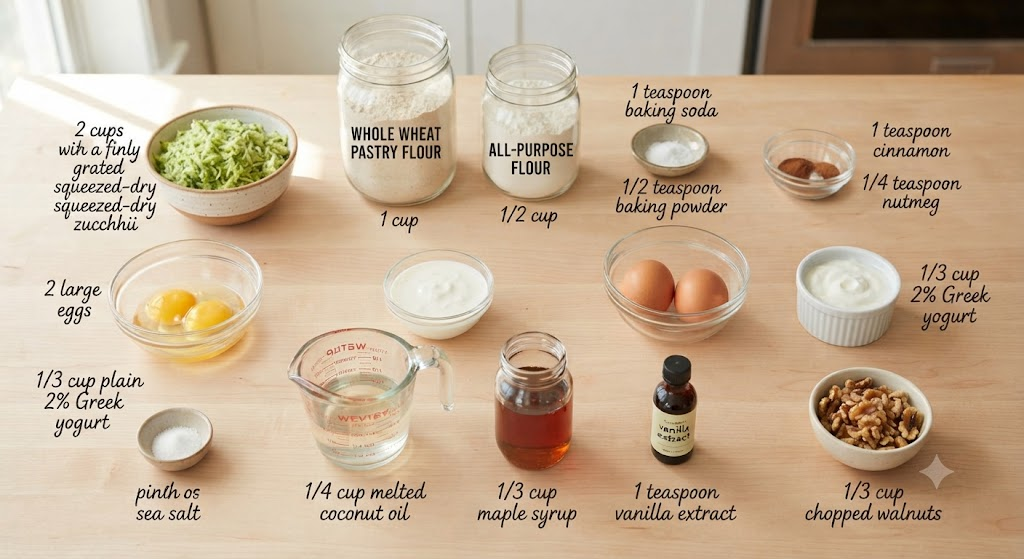
- 2 cups grated zucchini (about 1 medium-large zucchini), moisture squeezed out — The star of the recipe, contributing natural moisture, a bit of fiber, and potassium, without adding much in the way of calories.
- 1 cup whole wheat pastry flour — Adds fiber and a slightly nutty flavor while keeping the crumb light.
- ½ cup all-purpose flour — Balances the whole wheat flour so the loaf stays tender rather than dense.
- 1 teaspoon baking soda — Gives the loaf its rise and light texture.
- ½ teaspoon baking powder — Works alongside the baking soda for consistent, even lift.
- 1 teaspoon ground cinnamon — Adds warmth that pairs naturally with the mild zucchini flavor.
- ¼ teaspoon ground nutmeg — A small but important layer of depth.
- ½ teaspoon sea salt — Balances the sweetness and sharpens the overall flavor.
- 2 large eggs — Provide structure and a solid dose of protein.
- ⅓ cup plain 2% Greek yogurt — Our key swap, reducing added fat while boosting protein and keeping the crumb moist.
- ¼ cup melted coconut oil or olive oil — Just enough fat for richness and a tender texture.
- ⅓ cup maple syrup — The primary sweetener, chosen for its lower glycemic impact compared to refined white sugar.
- 1 teaspoon vanilla extract — Rounds out the flavor and enhances the perceived sweetness.
- ⅓ cup chopped walnuts (optional) — Adds crunch, healthy fats, and extra plant protein.
Chef’s Prep Secrets & Tips
The single most important step in good zucchini bread is squeezing the water out of your grated zucchini before mixing it into the batter. Zucchini is over 90% water, and if you skip this step, that extra liquid has nowhere to go but into your batter, resulting in a loaf that’s gummy in the center or takes far longer to bake through. Grate the zucchini, place it in a clean kitchen towel or several layers of paper towel, and wring it out firmly over the sink until the towel stops releasing liquid.
Second, don’t overmix once the wet and dry ingredients come together. Zucchini bread batter should be stirred just until the flour disappears — a few small lumps are completely fine. Overmixing develops gluten, which can make the finished loaf tough and rubbery instead of soft and tender.
Third, resist the urge to slice into the bread while it’s still hot. Zucchini bread continues to set as it cools, and cutting it too early often makes it seem underdone even when it’s fully baked. A food scale is genuinely useful here too, particularly for measuring flour accurately — scooping flour directly with a measuring cup tends to pack it down and can throw off the whole recipe.
Step-by-Step Culinary Method
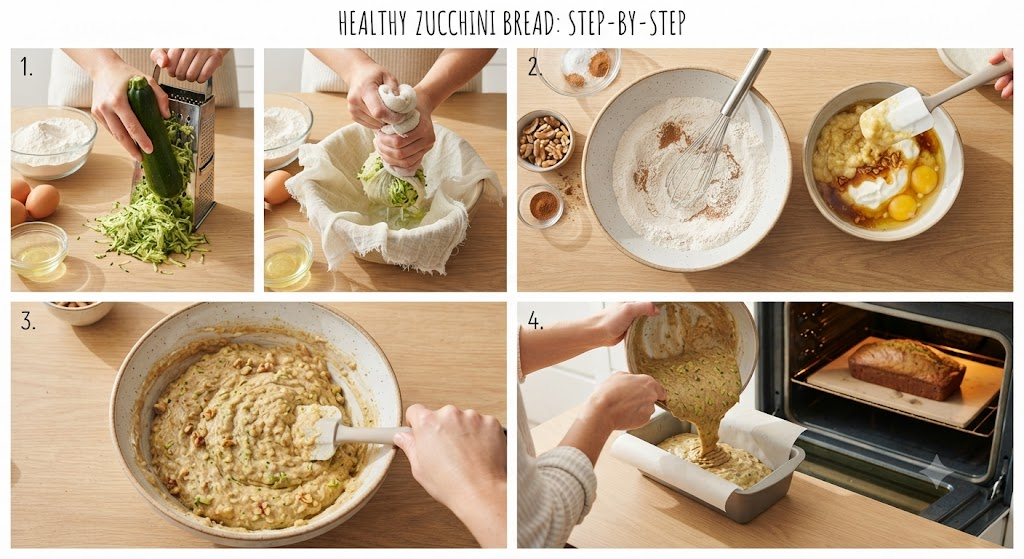
Step 1: Prep the zucchini. Grate the zucchini using the large holes of a box grater. Transfer it to a clean kitchen towel, gather the edges, and squeeze firmly over the sink until you’ve removed as much liquid as possible. You’ll be surprised how much water comes out — this step alone can be the difference between a great loaf and a soggy one.
Step 2: Preheat and prep the pan. Preheat your oven to 350°F and line a standard loaf pan with parchment paper, leaving a slight overhang on the sides for easy removal later.
Step 3: Combine the dry ingredients. In a large mixing bowl, whisk together the whole wheat pastry flour, all-purpose flour, baking soda, baking powder, cinnamon, nutmeg, and salt until evenly combined.
Step 4: Mix the wet ingredients. In a separate bowl, whisk the eggs until slightly frothy, then whisk in the Greek yogurt, melted oil, maple syrup, and vanilla extract until smooth. The mixture should look glossy and slightly thickened, with a warm caramel color from the maple syrup.
Step 5: Bring it together. Pour the wet ingredients into the dry ingredients and stir gently with a spatula just until the flour streaks disappear. Fold in the squeezed zucchini and chopped walnuts, if using, stirring only enough to distribute them evenly. The batter should look thick, flecked with green, and slightly rustic rather than perfectly smooth.
Step 6: Bake. Pour the batter into the prepared loaf pan, smoothing the top with your spatula. Bake for 50 to 60 minutes. Around the 40-minute mark, your kitchen should be filled with a warm, cinnamon-spiced aroma, and the top of the loaf will have turned a deep golden brown with a few natural cracks forming across the surface — a good sign of proper rise.
Step 7: Check for doneness. Insert a toothpick into the center of the loaf. It’s ready when the toothpick comes out clean or with just a few moist crumbs clinging to it, not wet batter. If the top is browning too quickly before the center is done, loosely tent it with foil for the remaining bake time.
Plating & Final Presentation
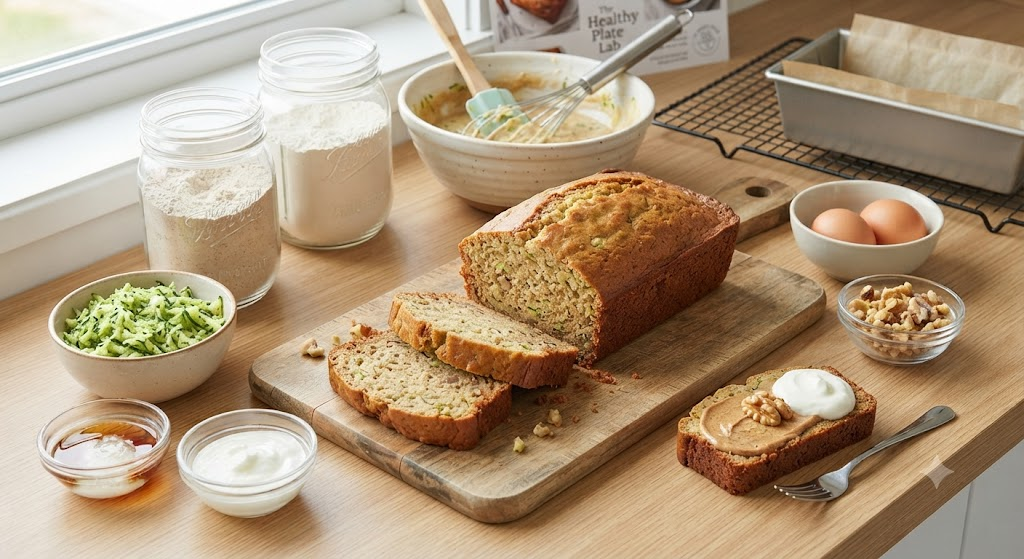
Let the loaf cool in the pan for about 15 minutes, then use the parchment overhang to lift it out onto a wire rack to cool completely before slicing — this patience pays off in a cleaner, more even cut. Slice into thick pieces and serve as is, or lightly toast individual slices for a warm, slightly crisp edge. A light spread of nut butter or a dollop of Greek yogurt on top turns a slice into a more balanced snack. For a simple presentation, arrange slices on a wooden board with a few whole walnuts scattered around for texture and visual interest.
Frequently Asked Questions
Do I need to peel the zucchini? No — the skin softens completely during baking and adds a bit of extra fiber and color to the loaf.
Can I freeze zucchini bread? Yes. Wrap the cooled loaf tightly in plastic wrap and foil, and it will keep well in the freezer for up to 3 months.
Can I make this gluten-free? Substitute a 1:1 gluten-free baking flour blend for both the whole wheat and all-purpose flour; texture may be slightly denser.
Why did my loaf turn out dense or gummy? This is almost always from not squeezing enough moisture out of the zucchini before mixing, or from overmixing the batter.
How should I store leftovers? Store at room temperature in an airtight container for up to 3 days, or in the fridge for up to a week.
Final Nutrition Facts Table
Per slice (recipe makes about 10 slices):
| Nutrient | Amount |
|---|---|
| Calories | 165 |
| Protein | 5g |
| Carbohydrates | 21g |
| Fat | 7g |
This version delivers real fiber from the zucchini and whole wheat flour, a protein boost from the eggs and Greek yogurt, and a noticeably lighter sugar and fat load than a traditional zucchini bread recipe — while still tasting like the warm, moist loaf it’s meant to be.