
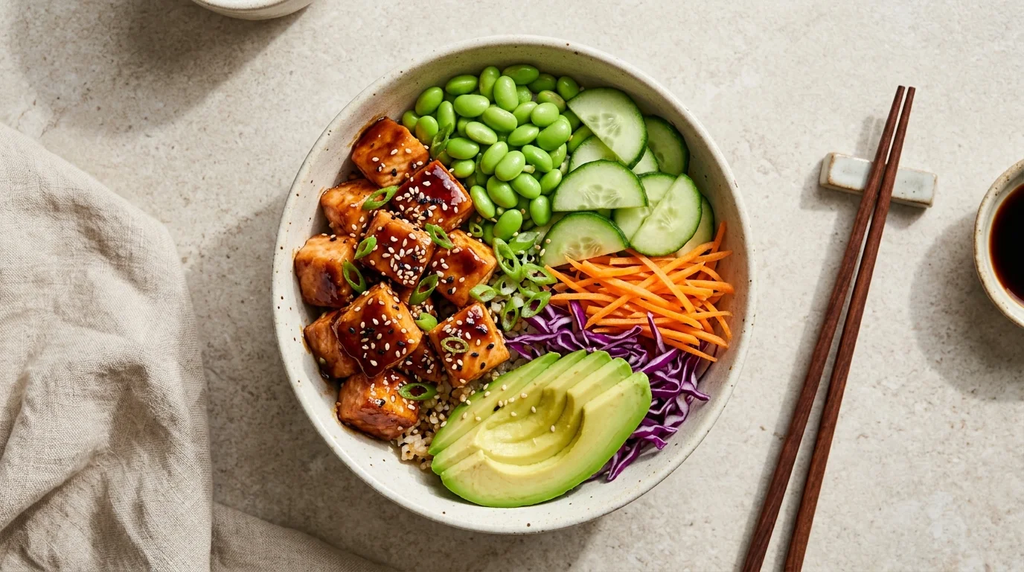
Savory sesame-soy salmon, seasoned sushi rice, edamame, and crisp vegetables, packed into four grab-and-go lunches.
The Poke Bowl You Can Actually Prep Ahead
Poke bowls are known for their fresh ingredients, colorful toppings, and savory sauces. Traditional versions often feature raw fish, which isn’t ideal for lunches you want to prepare several days in advance. This poke bowl meal prep recipe uses baked salmon instead, giving you tender, flavorful fish that’s convenient to portion and refrigerate.
The salmon is coated in a sesame-ginger sauce made with soy sauce, rice vinegar, honey, garlic, lime juice, and a touch of sriracha. It sits over seasoned sushi rice alongside edamame, cucumber, shredded carrots, and purple cabbage. Scallions and sesame seeds finish each bowl with extra crunch and flavor.
Each serving provides an estimated 34 grams of protein and 7 grams of fiber, making this a satisfying lunch for busy workdays. The components are easy to prepare in advance, and storing the dressing separately helps keep the rice and vegetables from becoming soggy. Add freshly sliced avocado when you’re ready to eat for a creamy finish.
Why You’ll Love This Recipe
- Made for meal prep. Cooked salmon, rice, and vegetables are easy to portion into individual containers for convenient lunches.
- Protein-rich. Salmon and edamame contribute to approximately 34 grams of protein per bowl.
- Flavorful, satisfying fats. Salmon and toasted sesame oil provide richness, while the ginger-soy dressing adds a savory finish.
- One versatile sauce. The sesame-ginger mixture seasons the salmon and doubles as a dressing when reserved before contacting the raw fish.
- Fresh and colorful. Cucumber, carrots, and purple cabbage add crunch, color, and variety.
- Easy to customize. Change the grain, protein, or vegetables to suit your preferences.
- A practical alternative to takeout. Preparing four portions at home makes it easier to plan lunches ahead.
Time Breakdown & Servings
Prep Time: 20 minutes
Cook Time: 25 minutes
Total Time: 45 minutes
Servings: 4 bowls
Ingredients You’ll Need
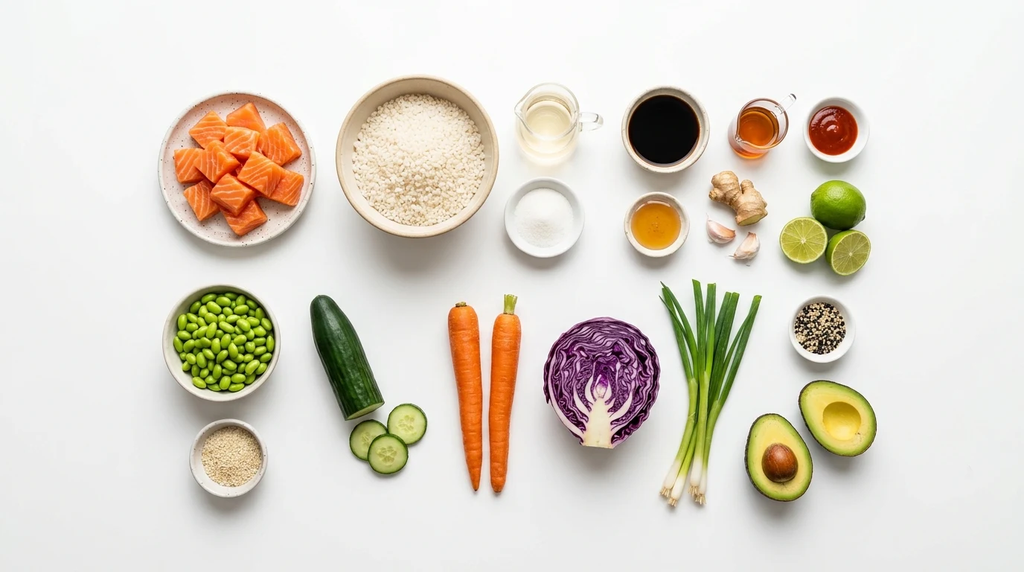
- 1 pound skinless salmon fillet, cut into 3/4-inch cubes
- 3/4 cup uncooked sushi rice
- 1 cup water
- 1 tablespoon rice vinegar, plus 1 tablespoon for the sauce
- 1 teaspoon granulated sugar
- 3 tablespoons low-sodium soy sauce
- 1 tablespoon toasted sesame oil
- 1 teaspoon honey
- 2 teaspoons freshly grated ginger
- 1 clove garlic, minced
- 1 teaspoon sriracha
- 1 tablespoon fresh lime juice
- 1 cup shelled edamame, cooked and cooled
- 1 English cucumber, thinly sliced
- 1 cup shredded carrots
- 2 cups shredded purple cabbage
- 3 scallions, thinly sliced
- 1 ripe avocado
- 1 tablespoon sesame seeds
Ingredient Notes & Practical Substitutions
- Salmon: Fresh or properly thawed frozen salmon works well. Cooked shrimp or cubed extra-firm tofu can also be used, but their cooking times will differ.
- Sushi rice: Short-grain rice provides the slightly sticky texture associated with poke bowls. Brown rice or quinoa offers a different texture, while cauliflower rice is an alternative for those seeking fewer carbohydrates.
- Low-sodium soy sauce: Tamari is a suitable alternative when you need a gluten-free option; check the label to confirm. Coconut aminos can work for a soy-free version, although the sauce will be sweeter.
- Avocado: Add avocado shortly before eating to help preserve its color and texture. A squeeze of lime can slow browning.
- Sriracha: Adjust the amount to suit your heat preference, substitute chili garlic sauce, or omit it for a milder dressing.
Kitchen Tools You’ll Need
- Rimmed baking sheet and parchment paper
- Medium saucepan with lid
- Small mixing bowl
- Sharp knife and cutting board
- Four meal prep containers
Step-by-Step Instructions
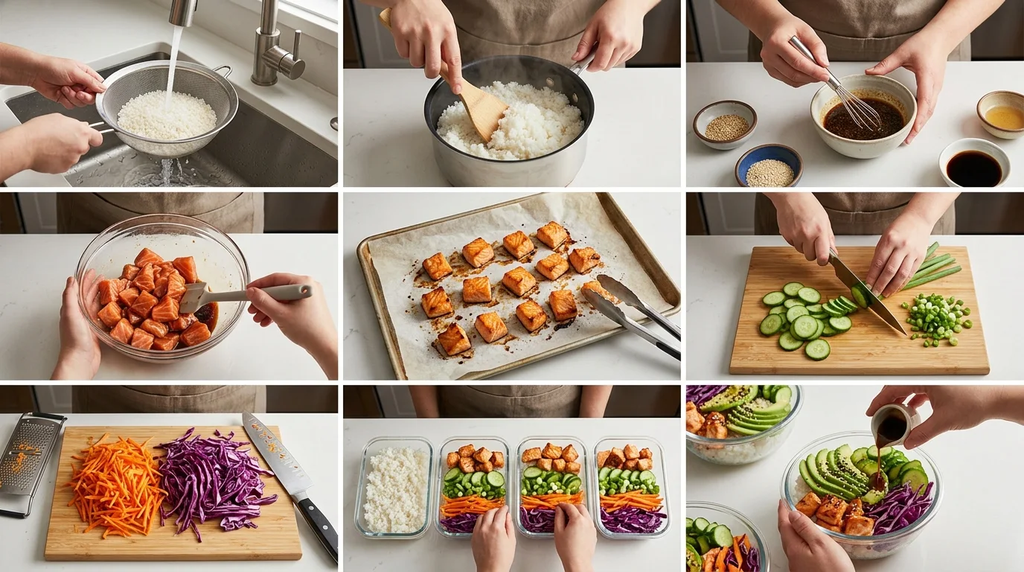
- Cook the rice. Rinse the sushi rice under cold water until the water runs mostly clear. Combine the rice and water in a saucepan and bring to a boil. Cover, reduce the heat to the lowest setting, and cook for about 15 minutes, or follow the package directions. Remove from the heat and let it rest, covered, for 10 minutes.
- Season the rice. Stir 1 tablespoon rice vinegar and the sugar together until the sugar dissolves. Gently fold the mixture into the warm rice using a spatula. Spread the rice in a shallow dish to help it cool more quickly.
- Prepare the poke sauce. In a small bowl, whisk together the soy sauce, sesame oil, the remaining 1 tablespoon rice vinegar, honey, ginger, garlic, sriracha, and lime juice. Transfer half the sauce to a separate clean container and refrigerate it for serving. Keep this reserved portion away from the raw salmon.
- Marinate the salmon. Preheat the oven to 400°F and line a rimmed baking sheet with parchment paper. Toss the salmon cubes with the remaining sauce in the mixing bowl and let them marinate in the refrigerator for about 15 minutes.
- Bake the salmon. Arrange the salmon cubes in a single layer on the prepared baking sheet. Bake for approximately 8–12 minutes, depending on the size of the pieces, until the salmon is cooked through and reaches an internal temperature of 145°F. Let it cool briefly before portioning.
- Prepare the vegetables. Thinly slice the cucumber and scallions, shred the carrots and purple cabbage, and cook the edamame according to the package directions if it isn’t already prepared. Allow the edamame to cool before packing.
- Pack the containers. Divide the cooled rice among four meal prep containers. Arrange the cooked salmon, edamame, cucumber, carrots, and cabbage in separate sections. Keep the reserved dressing in individual sealed cups.
- Finish and serve. Refrigerate the containers promptly. When ready to eat, slice the avocado and add it to the bowl. Drizzle with the reserved dressing and finish with scallions and sesame seeds.
Expert Tips for Best Results
- Reserve the dressing first. Set aside the portion for serving before adding any raw salmon to the marinade. Never reuse marinade that has contacted raw fish unless it is thoroughly cooked first.
- Cut the salmon evenly. Similar-sized cubes cook at a more consistent rate and are less likely to dry out unevenly.
- Cool components before sealing. Allow the rice and salmon to cool briefly, then refrigerate promptly in shallow containers rather than leaving them at room temperature for an extended period.
- Keep fresh toppings separate when practical. Store cucumber and other wet vegetables away from the rice if you want to preserve their texture.
- Toast the sesame seeds. A brief toast in a dry skillet enhances their nutty aroma. Let them cool before adding them to the bowls.
Common Mistakes To Avoid
- Overbaking the salmon. Smaller cubes cook quickly, so check their internal temperature toward the lower end of the suggested cooking time.
- Marinating for too long. The acidic lime juice and salty soy sauce can affect the salmon’s texture. A short, refrigerated marinade is sufficient for these small pieces.
- Packing avocado too early. Cut it shortly before serving to reduce browning.
- Adding all the dressing in advance. The rice can absorb the sauce and the vegetables may soften. Keep the dressing separate until mealtime.
- Skipping the rice rest. Resting the covered rice allows the remaining steam to finish cooking the grains and improves their texture.
Recipe Variations
- Lower-carbohydrate poke bowl: Replace the sushi rice with cauliflower rice and add extra cucumber or avocado.
- Same-day raw tuna poke: Raw tuna is an option for a freshly prepared bowl when sourced and handled specifically for raw consumption. Prepare it just before eating and follow appropriate seafood safety guidance; it is not the option for several days of meal prep.
- Shrimp poke bowl: Substitute cooked shrimp and adjust the cooking time to suit their size. Cook until opaque and properly done.
- Vegan poke bowl: Use baked tofu cubes and additional edamame in place of the salmon.
- Spicy poke bowl: Add more sriracha to the dressing or drizzle with a small amount of sriracha mixed with Greek yogurt for a creamy finish.
What to Serve With This Dish
- Miso soup
- Seaweed salad
- Pickled ginger
- Steamed vegetable gyoza
- Iced green tea
Storage & Reheating Guide
Storage: Store the cooked salmon and rice in separate or divided airtight containers, with the vegetables and dressing kept separate when possible. Refrigerate promptly at 40°F or below and use the cooked salmon within 3–4 days, following safe food-handling practices. Add fresh avocado just before eating.
Reheating: The rice and salmon can be enjoyed cold or gently reheated. For a warm bowl, microwave them in short intervals until heated through, then add the cold vegetables, avocado, and dressing. Avoid repeatedly reheating the same portion.
Estimated Nutrition Information
| Nutrient | Per Serving (1 bowl) |
|---|---|
| Calories | 580 |
| Protein | 34 g |
| Carbs | 50 g |
| Fat | 28 g |
| Fiber | 7 g |
| Sugar | 8 g |
Nutrition information is an estimate based on standard ingredient databases. Actual values may vary depending on the type of salmon, portion sizes, sauce ingredients, and brands used.
Frequently Asked Questions
- Can I use raw fish for this poke bowl meal prep?Raw fish is best reserved for a freshly prepared bowl rather than lunches intended to sit in the refrigerator for several days. This recipe uses cooked salmon for meal prep. If you prefer raw fish, prepare a same-day bowl with appropriately sourced seafood and follow safe handling guidance.
- What are the basic poke bowl ingredients?A typical poke bowl includes a base such as rice, a protein, fresh vegetables, a flavorful sauce, and toppings such as sesame seeds or avocado. The ingredients can be adjusted to suit different tastes and dietary needs.
- Can I freeze these bowls?Cooked salmon and rice can generally be frozen separately, although their texture may change after thawing. Fresh cucumber, cabbage, and avocado are better prepared fresh because freezing affects their texture. Thaw frozen portions safely in the refrigerator.
- How do I make the poke bowl dressing thicker?Whisk in a small amount of tahini or Greek yogurt for a creamier consistency. This will change the flavor and nutritional profile slightly.
- Is this a balanced poke bowl recipe?It combines protein-rich salmon and edamame with rice, vegetables, and a sesame-soy dressing. Adjusting the rice portion or adding more vegetables can change the balance to suit your preferences.
Conclusion
This poke bowl meal prep recipe brings together sesame-soy salmon, seasoned sushi rice, edamame, and crunchy vegetables in convenient portions for busy days. The ginger-lime dressing adds plenty of flavor, while keeping the components separate makes it easier to maintain their texture until lunchtime. Save it to your healthy lunch board on Pinterest for a colorful addition to your weekly meal-prep routine.