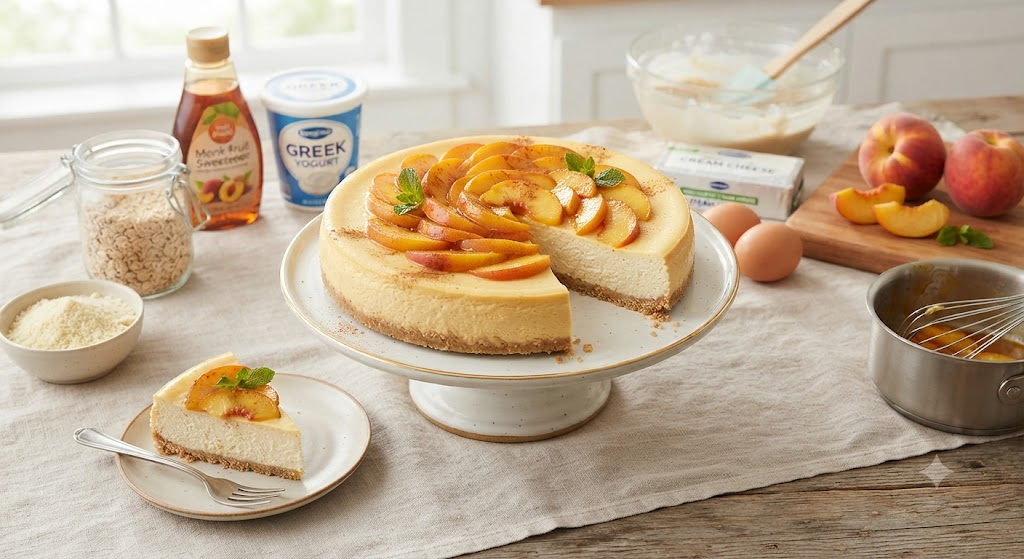
There’s something about a peach cheesecake that feels like summer distilled into a single bite — the tang of cream cheese meeting the honeyed sweetness of ripe stone fruit, all sitting on a crust that shatters just right under your fork. But traditional cheesecake is a nutritional landmine: a single slice can carry upward of 500 calories, 35 grams of fat, and enough refined sugar to make your blood glucose do a little dance. At The Healthy Plate Lab, we don’t believe indulgence and nutrition have to be enemies. This recipe is our lab-tested, macro-friendly reimagining of the classic — high in protein, lower in sugar, and built on ingredient swaps that don’t sacrifice an ounce of flavor.
The Story & Nutritional Philosophy
Every recipe that comes out of The Healthy Plate Lab starts with the same question: what is this dish actually doing to the body eating it? Classic cheesecake is a triumph of texture — dense, cool, silky — but it achieves that texture almost entirely through full-fat cream cheese, refined white sugar, and a butter-laden graham crust. None of those ingredients are “bad,” but stacked together, they turn a celebratory dessert into a caloric splurge that leaves you sluggish rather than satisfied.
Our philosophy is simple: identify the ingredient doing the heavy lifting for flavor or texture, then find the swap that preserves that function while improving the nutritional profile. For this peach cheesecake, that meant three key interventions. First, we blend Greek yogurt into the cream cheese base, which cuts fat significantly while actually increasing protein content — Greek yogurt carries nearly double the protein of standard cream cheese by weight, thanks to the straining process that removes whey and lactose. Second, we swap refined sugar for a combination of monk fruit sweetener and the natural fructose in ripe peaches, which lowers the glycemic impact without dulling sweetness. Third, we rebuild the crust using almond flour and oats instead of graham crackers, adding fiber and healthy fats while dropping the refined carbohydrate load.
The result is a cheesecake that tastes indulgent but behaves nutritionally like a high-protein snack. It’s naturally gluten-free, can be made keto-adjacent with a few tweaks, and delivers roughly 40% fewer calories per slice than a traditional New York-style cheesecake — all without you noticing the difference on your palate.
Ingredients & Nutritional Benefits
For the Crust:
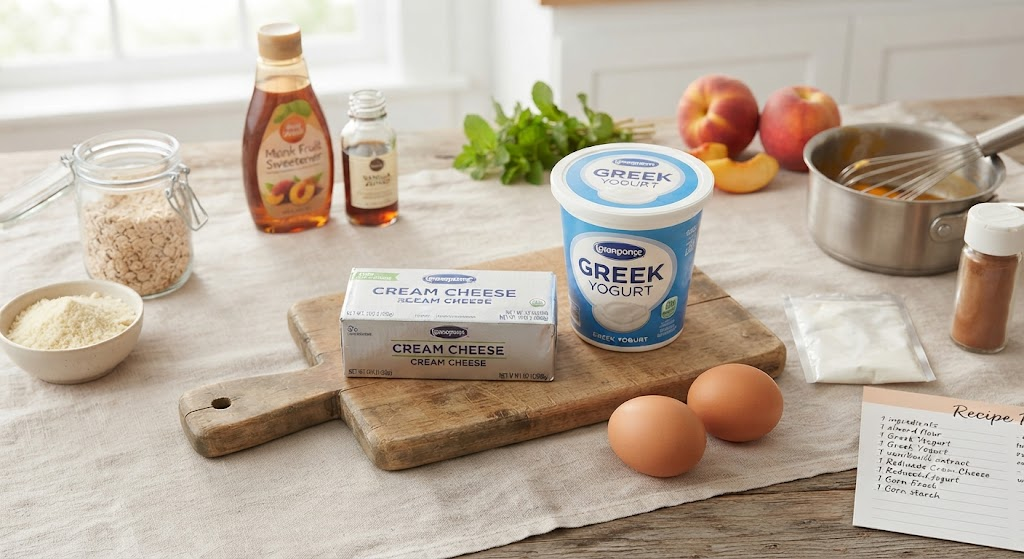
- 1½ cups almond flour (adds healthy monounsaturated fats and nearly 3x the protein of graham crumbs)
- ½ cup rolled oats, pulsed fine (brings soluble fiber that slows sugar absorption)
- 3 tbsp melted coconut oil (a swap for butter that reduces saturated fat)
- 2 tbsp monk fruit sweetener
- Pinch of sea salt
For the Filling:
- 16 oz reduced-fat cream cheese, softened (the flavor backbone, cut from full-fat)
- 1 cup plain Greek yogurt, full-fat or 2% (boosts protein, cuts overall fat)
- 2 large eggs (structural protein that helps the custard set)
- ⅓ cup monk fruit sweetener or allulose
- 1 tsp vanilla extract
- 1 tbsp fresh lemon juice (brightens flavor and balances sweetness perception)
For the Peach Topping:
- 3 ripe peaches, thinly sliced
- 1 tbsp honey or monk fruit syrup
- ½ tsp cinnamon
- 1 tsp cornstarch or arrowroot (for a light glaze without excess sugar)
Each ingredient here is chosen with intention. The Greek yogurt isn’t just a diet substitution — it’s a textural upgrade, adding a subtle tang that plays beautifully against the sweetness of the peaches. Almond flour, unlike graham crumbs, brings vitamin E and magnesium to the party, while the oats contribute beta-glucan fiber, the same compound linked to improved cholesterol management. Even the lemon juice is doing double duty: beyond flavor, its acidity helps stabilize the eggs during baking, reducing the chance of cracks.
Chef’s Prep Secrets & Tips
The difference between a good cheesecake and a great one almost always comes down to prep discipline, not the actual baking. Here are the details that matter most:
- Room temperature is non-negotiable. Cold cream cheese refuses to blend smoothly, leaving lumps that no amount of mixing will fix later. Pull it out at least an hour before you start.
- Don’t overbeat the eggs. Once they’re incorporated, stop mixing. Overbeating introduces excess air, which causes the cheesecake to puff dramatically in the oven and then collapse into cracks as it cools.
- Pat your peaches dry. Sliced peaches release juice quickly; excess moisture on top of the batter can create a soggy, uneven surface.
- Use a water bath for the smoothest texture. Wrapping your springform pan in foil and setting it in a larger pan of hot water insulates the cheesecake from direct heat, preventing the surface from overcooking while the center is still setting — this is the single biggest trick professional bakers rely on to avoid the dreaded crack.
- Toast the almond flour crust briefly before filling. A five-minute pre-bake at 325°F firms up the base so it doesn’t turn soggy once the wet filling is added.
Step-by-Step Culinary Method
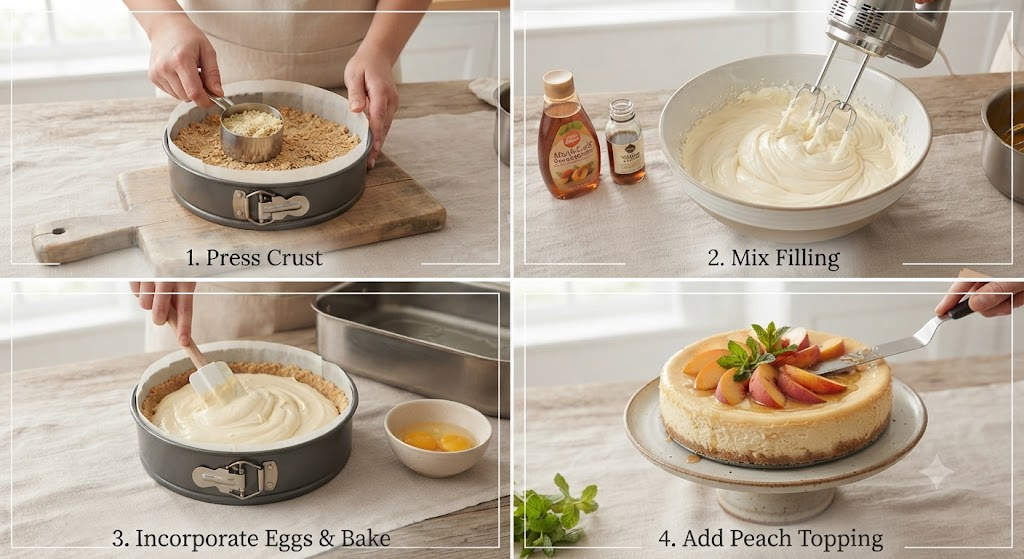
Step 1: Build the crust. In a mixing bowl, combine the almond flour, pulsed oats, melted coconut oil, monk fruit sweetener, and salt. The mixture should look like damp, coarse sand — press it firmly into the bottom of a 9-inch springform pan using the flat bottom of a measuring cup. You’ll hear a faint crunch as the oats compress against the pan; that resistance is exactly what you want. Bake at 325°F for 8–10 minutes, just until the edges turn a pale golden brown and the kitchen fills with a warm, nutty aroma. Set aside to cool slightly while you prepare the filling.
Step 2: Whip the base. In a large bowl, beat the softened cream cheese on medium speed until it turns glossy and completely smooth — about 2 minutes. Add the Greek yogurt and continue mixing; you’ll notice the texture loosen slightly and take on a lighter, almost mousse-like sheen. Add the monk fruit sweetener, vanilla, and lemon juice, mixing just until combined. The batter should ribbon off the beater in a thick, satiny stream.
Step 3: Incorporate the eggs. Add the eggs one at a time, mixing on low speed and stopping as soon as each one disappears into the batter. This is the moment where restraint pays off — the goal is a dense, uniform custard, not a fluffy one. The batter will deepen slightly in color and take on a silkier consistency, almost like thick pancake batter.
Step 4: Bake low and slow. Pour the filling over the cooled crust, smoothing the top with an offset spatula. Place the springform pan into a larger roasting pan and fill it with hot water halfway up the sides — this is your water bath. Bake at 325°F for 50–55 minutes. You’re looking for a cheesecake that’s set around the edges but still has a gentle, Jell-O-like wobble in the center, roughly the size of a silver dollar. This subtle jiggle is your cue that carryover heat will finish the job without drying out the custard.
Step 5: Cool gradually. Turn off the oven, crack the door, and let the cheesecake sit inside for an hour. This slow temperature drop is essential — a sudden change in heat is the number one cause of surface cracking. Afterward, refrigerate for a minimum of four hours, though overnight is ideal; the flavors deepen and the texture firms into that dense, sliceable consistency people associate with bakery-quality cheesecake.
Step 6: Prepare the peach topping. While the cheesecake chills, toss the sliced peaches with honey, cinnamon, and cornstarch in a small saucepan over medium heat. Cook for 4–5 minutes, stirring gently, until the peaches soften slightly and release a fragrant, caramel-like steam. The sauce will thicken into a light glaze that clings to the fruit rather than pooling. Let it cool completely before topping the cheesecake — warm topping on a cold cheesecake will cause unwanted melting at the surface.
Plating & Final Presentation
Once fully chilled, run a thin knife around the edge of the pan before releasing the springform latch — this prevents the delicate crust from tearing. Arrange the glazed peach slices in an overlapping spiral across the top, letting a bit of the glaze drip artfully down the sides. For a restaurant-style finish, add a light dusting of ground cinnamon, a few torn mint leaves, and a light drizzle of extra honey just before serving. Use a warm, dry knife (run it under hot water and wipe between cuts) to slice clean, professional-looking wedges without dragging the filling.
Frequently Asked Questions
Can I make this dairy-free? Yes — substitute the cream cheese and Greek yogurt with high-quality dairy-free alternatives made from cashews or coconut. Note that texture may be slightly softer, so add an extra egg or a tablespoon of arrowroot for structure.
Is this recipe keto-friendly? Nearly. Swap the oats for additional almond flour and use allulose instead of monk fruit sweetener (which can spike blood sugar slightly less predictably in some individuals) to bring net carbs down further per slice.
Why did my cheesecake crack? Cracking is almost always caused by overmixing the eggs, skipping the water bath, or cooling too quickly. Follow the gradual oven-cooling method in Step 5 for the smoothest results.
Can I use frozen peaches? Yes, thaw and drain them thoroughly first — excess liquid will thin out your glaze and make the topping runny.
How long does it keep? Covered and refrigerated, this cheesecake stays fresh for up to 5 days, and it also freezes well for up to 2 months.
Final Nutrition Facts Table
| Nutrient | Per Slice (1/10th of cheesecake) |
|---|---|
| Calories | 245 kcal |
| Protein | 10 g |
| Total Fat | 16 g |
| Saturated Fat | 6 g |
| Carbohydrates | 17 g |
| Fiber | 3 g |
| Sugar | 9 g |
| Sodium | 180 mg |
Compared to a traditional slice of New York cheesecake (averaging 450–500 calories, 32g fat, and 30g+ sugar), this Healthy Plate Lab version delivers a 40–45% calorie reduction and nearly double the protein, proving once again that smart ingredient science — not deprivation — is the real secret to a dessert you can feel good about.