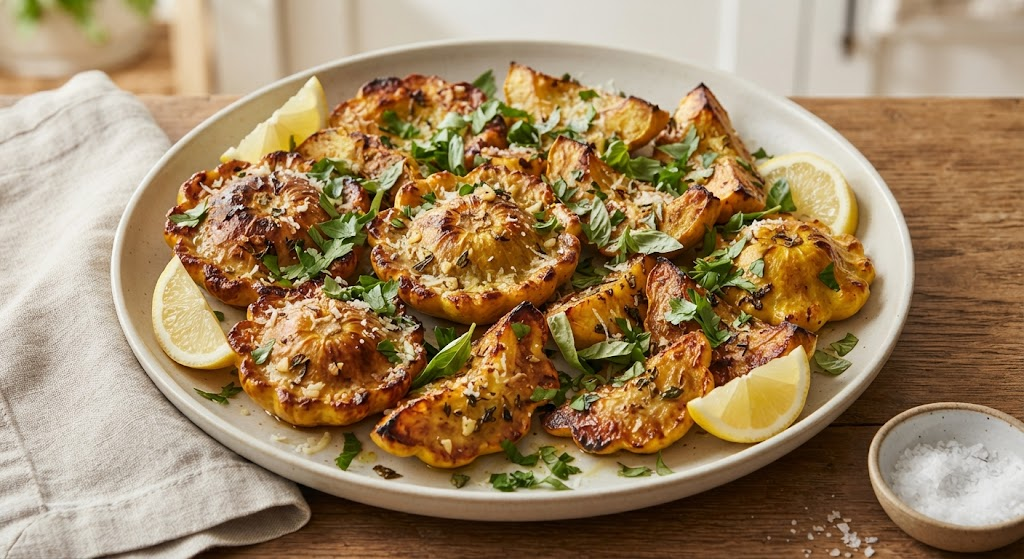
Patty pan squash doesn’t get nearly the attention it deserves. With its distinctive scalloped, UFO-like shape and delicate, slightly nutty flavor, it’s a summer squash variety that often gets relegated to farmers market curiosity rather than a regular dinner rotation staple. At The Healthy Plate Lab, we wanted to change that by building a recipe that highlights this vegetable’s natural texture and flavor while keeping the preparation light, simple, and genuinely nutrient-forward — no heavy breading, no deep frying, no sauce drowning out what makes patty pan squash worth seeking out in the first place.
Nutritionally, patty pan squash shares much in common with its zucchini and yellow squash cousins — low in calories, high in water content, and a reasonable source of vitamin C, vitamin A, and potassium. What sets it apart is its slightly firmer, denser flesh compared to zucchini, which means it holds up beautifully to roasting and grilling without turning mushy, a common complaint with other summer squashes. This textural advantage means we can use less oil than many squash recipes require, since patty pan doesn’t need to be coated heavily to develop a satisfying roasted exterior.
Our approach here centers on high-heat roasting, a technique that caramelizes the squash’s natural sugars and develops genuine savory depth without relying on butter, cream, or cheese-heavy preparations. We season with fresh herbs, garlic, and a modest amount of good olive oil, then finish with a bright squeeze of lemon and a light dusting of parmesan — just enough to add umami depth without overwhelming the vegetable’s own flavor. This recipe is naturally gluten-free, vegetarian, and easily made fully vegan with a simple cheese omission or plant-based parmesan swap. It’s proof that an underrated vegetable, treated with the right technique, can become a genuinely craveable side dish rather than an afterthought.
Ingredients & Nutritional Benefits
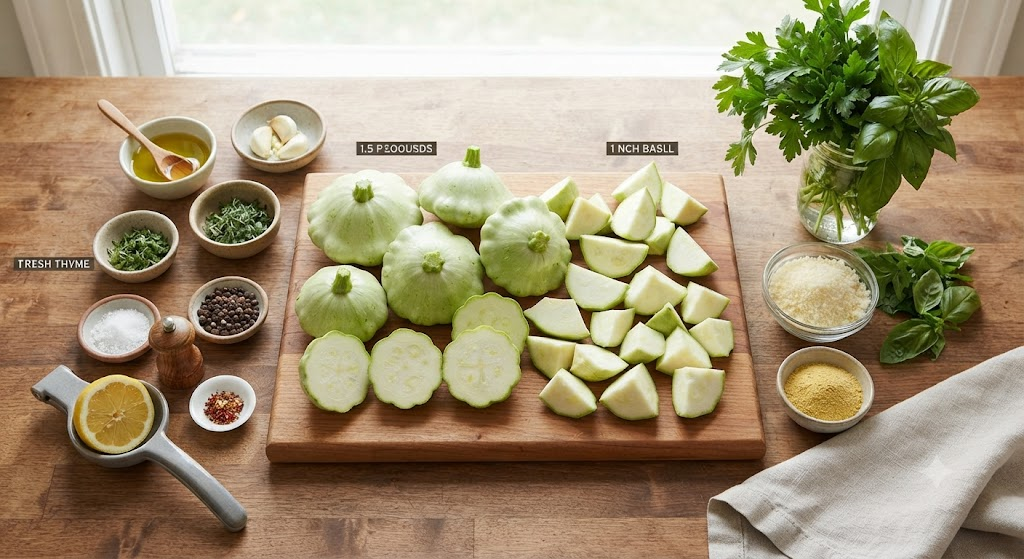
- 1.5 pounds patty pan squash, halved or quartered depending on size — Low in calories, hydrating, and a good source of vitamin C, vitamin A, and potassium.
- 2 tablespoons extra virgin olive oil — Provides heart-healthy monounsaturated fat that helps the body absorb the squash’s fat-soluble nutrients.
- 3 cloves garlic, minced — Adds aromatic depth and trace antioxidant compounds.
- 1 tablespoon fresh thyme leaves (or 1 teaspoon dried) — Adds an earthy, slightly minty aromatic note.
- 1/2 teaspoon sea salt — Used in a measured amount, allowing the herbs and lemon to carry additional flavor.
- 1/4 teaspoon black pepper — Adds gentle warmth and enhances overall flavor perception.
- 1/4 teaspoon red pepper flakes (optional) — Adds a subtle background heat.
- 2 tablespoons fresh lemon juice — Brightens the finished dish and balances the savory, roasted flavors.
- 2 tablespoons grated parmesan (optional) — Adds bold umami flavor in a small quantity, reducing the need for additional salt or oil.
- 2 tablespoons fresh parsley or basil, chopped, for garnish — Adds a fresh, vibrant finishing note and a small additional dose of antioxidants.
This ingredient list keeps the focus squarely on the squash itself — every addition here is meant to enhance, not mask, its natural texture and subtly sweet, nutty flavor.
Chef’s Prep Secrets & Tips
The key to choosing good patty pan squash is size: smaller specimens, roughly 2-3 inches in diameter, have thinner skins, fewer seeds, and a more tender, less watery texture than larger ones. If you can only find larger squash, you may need to scoop out the seedy center before cooking, similar to preparing a small pumpkin.
Cutting technique matters significantly here. For smaller squash, simply halving them through the stem creates an attractive scalloped cross-section that crisps beautifully at the edges. For larger squash, cut into wedges or 1-inch chunks to ensure even cooking and to expose more surface area for caramelization.
Unlike zucchini, patty pan squash doesn’t require a salting and draining step before cooking, since its flesh is naturally denser and holds significantly less excess water. This is actually one of the reasons it’s such a convenient vegetable for quick weeknight roasting — there’s no advance prep required beyond washing and cutting.
For the best caramelization, make sure your squash pieces aren’t overcrowded on the baking sheet. Overcrowding traps steam, which results in squash that softens and sweats rather than roasting and browning at the edges. Use two baking sheets if necessary rather than piling everything onto one.
Step-by-Step Culinary Method
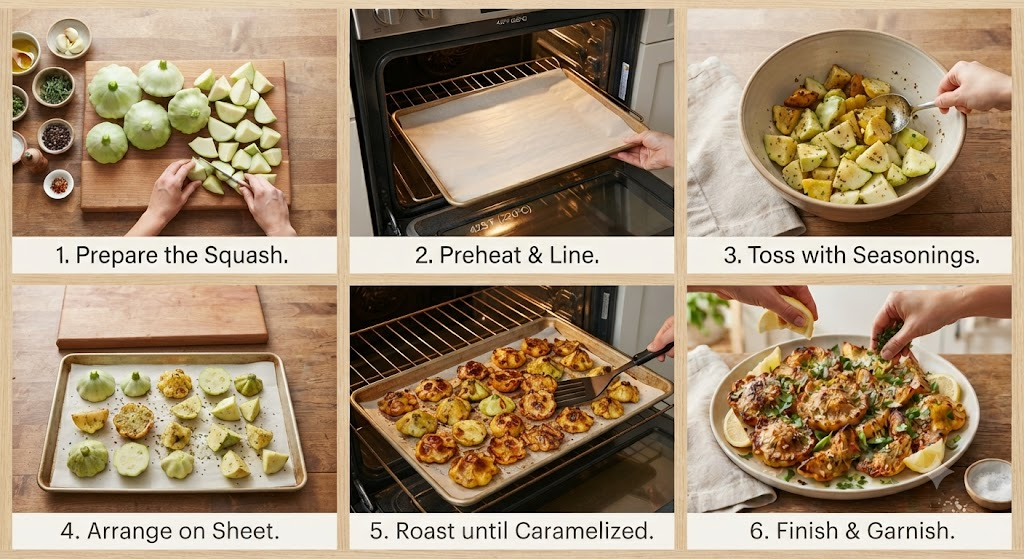
Step 1: Prepare the Squash. Wash the patty pan squash thoroughly, scrubbing away any dirt from the scalloped grooves along the edges. Trim the stem end and halve smaller squash through the center, or cut larger ones into 1-inch wedges. As you cut, you’ll notice the firm, slightly springy resistance of the flesh — a good sign of freshness, in contrast to the softer give of an overripe summer squash.
Step 2: Preheat the Oven. Preheat your oven to 425°F (220°C) and line a large baking sheet with parchment paper for easy cleanup and to help the squash develop a clean, even caramelization without sticking.
Step 3: Season the Squash. In a large bowl, toss the squash pieces with the olive oil, minced garlic, thyme, salt, pepper, and red pepper flakes if using. Use your hands to toss thoroughly, making sure every piece is lightly and evenly coated. You’ll notice the squash take on a light sheen as the oil coats the surface, with the garlic and thyme clinging visibly to the cut edges and scalloped grooves.
Step 4: Arrange on the Baking Sheet. Spread the seasoned squash in a single layer on the prepared baking sheet, cut-side down where possible to maximize the surface area in direct contact with the hot pan. Leave space between each piece — you should be able to see the parchment paper between most pieces rather than a tightly packed mass.
Step 5: Roast Until Caramelized. Place the baking sheet in the oven and roast for 20-25 minutes, flipping the pieces halfway through. Around the 12-minute mark, you’ll start to smell a warm, slightly sweet, garlicky aroma filling the kitchen as the squash’s natural sugars begin caramelizing. By the time you flip the pieces, the cut sides facing the pan should show deep golden-brown patches, with a slight crackling sound audible as you turn them with a spatula. After the second half of roasting, the squash should be fork-tender with visibly blistered, browned edges and a slightly glossy, caramelized surface.
Step 6: Finish with Lemon and Cheese. Remove the squash from the oven and immediately drizzle with the fresh lemon juice while still hot — you’ll hear a faint sizzle as the cold, acidic juice hits the warm squash, and the bright citrus aroma will rise immediately, cutting through the roasted, garlicky scent. If using, sprinkle the grated parmesan over the top while the squash is still warm enough to let it soften slightly and cling to the surface.
Plating & Final Presentation
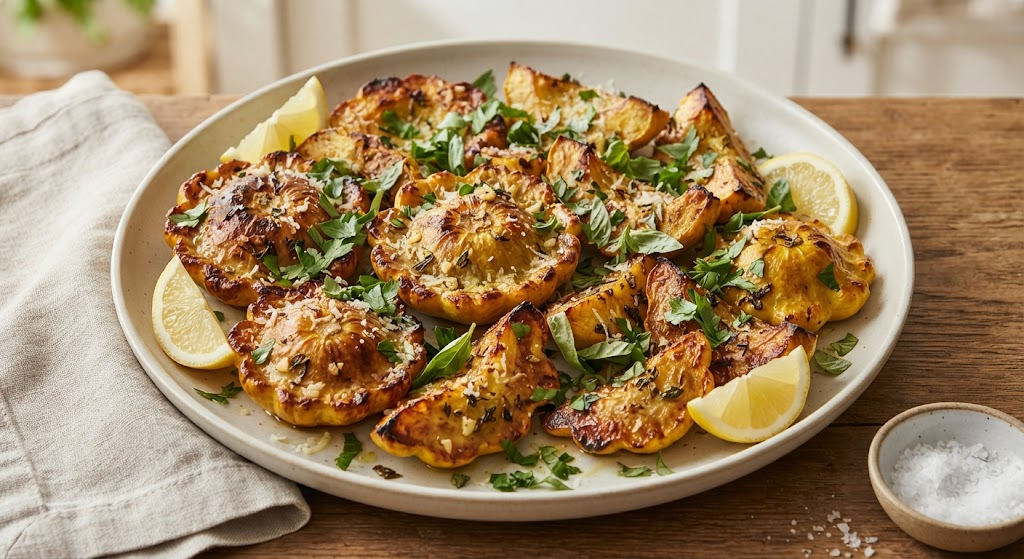
Arrange the roasted patty pan squash on a wide, shallow platter, allowing their distinctive scalloped shape and golden-brown caramelized edges to take visual center stage. Scatter the fresh chopped parsley or basil generously over the top just before serving, along with a few extra lemon wedges tucked around the edges of the platter for anyone who wants an additional bright squeeze. A light final drizzle of good olive oil adds a subtle sheen that highlights the squash’s natural color and roasted texture, making this simple side dish feel like a genuinely composed, restaurant-worthy plate.
Frequently Asked Questions
Can I grill patty pan squash instead of roasting it? Yes — grill over medium-high heat for 4-5 minutes per side until tender and lightly charred, which adds a smoky flavor dimension the oven version doesn’t offer.
Can I make this dish dairy-free? Yes, simply omit the parmesan or substitute a small amount of nutritional yeast for a similar savory, umami-rich finish.
Why is my squash mushy instead of caramelized? This almost always traces back to overcrowding the baking sheet, which traps steam and prevents proper browning; use two sheets if needed.
Can I use this recipe with other summer squash? Yes, zucchini or yellow squash both work well with this same method, though you may want to salt and drain zucchini briefly first due to its higher water content.
How should I store leftovers? Store in an airtight container in the refrigerator for up to 4 days; reheat in a hot oven or air fryer for a few minutes to help restore some of the original crisp, caramelized texture.
Final Nutrition Facts Table
Per serving (based on 4 servings total)
| Nutrient | Amount |
|---|---|
| Calories | 95 kcal |
| Total Carbohydrates | 8 g |
| Dietary Fiber | 2 g |
| Sugars | 4 g |
| Net Carbs | 6 g |
| Protein | 3 g |
| Total Fat | 6 g |
| Saturated Fat | 1.5 g |
| Sodium | 310 mg |
| Vitamin C | 22% DV |
| Vitamin A | 6% DV |
This simple, herb-roasted patty pan squash delivers a satisfying, caramelized side dish for minimal calories and effort — proof that an underrated vegetable, given the right technique, deserves a permanent spot in your regular dinner rotation.