
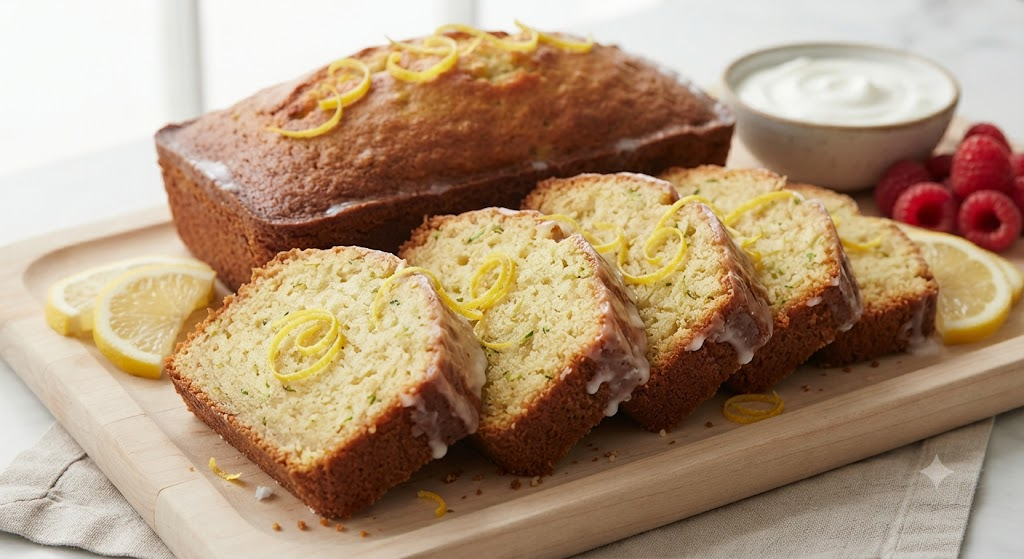
Lemon zucchini bread occupies a clever middle ground between a virtuous vegetable-forward bake and a genuinely bright, dessert-like treat. Traditional recipes, though, tend to bury the zucchini’s nutritional contribution under a full cup or more of refined sugar and a generous pour of vegetable oil, while the lemon often shows up as little more than a sweet glaze rather than a real flavor presence. At The Healthy Plate Lab, our goal with this recipe was to let both the zucchini and the lemon actually do meaningful work — nutritionally and flavor-wise — rather than serving as background players in a sugar-heavy loaf.
Zucchini brings more to a quick bread than most people realize. Beyond its low calorie count and high water content, it contributes potassium, vitamin C, and a modest amount of fiber, and its natural moisture means we can significantly cut back on added oil without sacrificing a tender, moist crumb. The trick lies entirely in proper preparation: zucchini’s water content can work against you if it’s not handled correctly, turning a loaf gummy and dense, but managed well, it becomes the secret to a genuinely lighter bread that doesn’t taste lightened at all.
We build this loaf with a flour blend of white whole wheat flour and almond flour, the latter contributing healthy fats and protein while keeping the crumb tender. For sweetness, a modest amount of coconut sugar pairs with fresh lemon zest and juice, which brightens the entire loaf and allows us to use noticeably less sugar than a traditional recipe, since acidity enhances the perception of sweetness without adding any actual sugar. We replace most of the oil with unsweetened applesauce and a portion of Greek yogurt, a combination that cuts fat substantially while adding both moisture and a meaningful protein boost. The result is a loaf that’s higher in fiber and protein than a traditional lemon zucchini bread, lower in added sugar and fat, and bursting with genuine citrus brightness in every slice. This recipe is easily made gluten-free with a 1:1 gluten-free flour swap and freezes beautifully for make-ahead breakfasts.
Ingredients & Nutritional Benefits
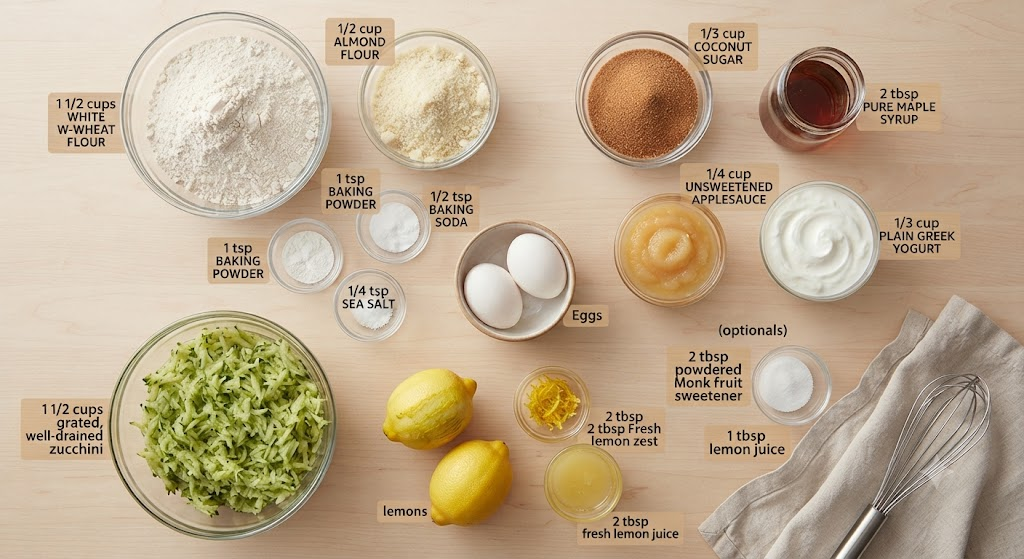
- 1 1/2 cups white whole wheat flour — Provides meaningful fiber while keeping a light, tender crumb.
- 1/2 cup almond flour — Adds healthy fats, protein, and moisture to the loaf.
- 1 teaspoon baking powder — Provides lift for a properly risen loaf.
- 1/2 teaspoon baking soda — Works with the acidity in the yogurt and lemon juice for additional rise.
- 1/4 teaspoon sea salt — Balances sweetness and enhances overall flavor.
- 1/3 cup coconut sugar — Adds light caramel sweetness with a lower glycemic impact than refined white sugar.
- 2 tablespoons pure maple syrup — Contributes moisture and a touch of additional sweetness along with trace minerals.
- 1/4 cup unsweetened applesauce — Replaces the bulk of traditional oil, reducing fat while adding moisture.
- 2 large eggs — Provides structure, protein, and richness.
- 1/3 cup plain Greek yogurt — Adds moisture, tang, and a meaningful protein boost.
- 2 tablespoons fresh lemon juice — Brightens the entire loaf and enhances the perception of sweetness without added sugar.
- 2 tablespoons fresh lemon zest (from about 2 lemons) — Delivers concentrated citrus oils and aromatic intensity throughout the crumb.
- 1 1/2 cups grated zucchini, well-drained (about 1 medium-large zucchini) — Naturally adds moisture, fiber, potassium, and vitamin C.
- Optional light glaze: 2 tablespoons powdered monk fruit sweetener + 1 tablespoon fresh lemon juice — A thin, citrus-forward finish that adds shine without a heavy sugar load.
This loaf leans on lemon’s natural acidity to do real flavor work, meaning less sugar is needed overall to achieve a loaf that tastes bright, balanced, and satisfying rather than one-note sweet.
Chef’s Prep Secrets & Tips
The single most important step in this entire recipe is properly draining the grated zucchini, and it matters even more here than in a standard zucchini bread because we’re using less oil to begin with. After grating, place the zucchini in a clean kitchen towel, gather the edges, and squeeze firmly over the sink. You’ll be surprised by how much liquid releases — don’t stop until the stream slows to just a few drops. Skipping this step results in a dense, gummy loaf no matter how carefully you measure everything else.
For maximum lemon flavor, zest your lemons before juicing them, and consider rubbing the zest into the coconut sugar with your fingertips before mixing it into the batter. This simple technique releases the citrus oils trapped in the zest more effectively than simply stirring it in, infusing the sugar itself with a noticeably stronger lemon aroma.
As with all gluten-containing quick breads, avoid overmixing once the wet and dry ingredients combine. Gluten development begins immediately, and overmixing leads to a dense, tough loaf rather than a tender one. Mix just until the dry streaks disappear, folding in the zucchini last with the gentlest possible hand.
Finally, let your eggs and yogurt reach room temperature before mixing. Cold ingredients can cause the fats in the batter to seize slightly, resulting in an unevenly textured crumb once baked.
Step-by-Step Culinary Method
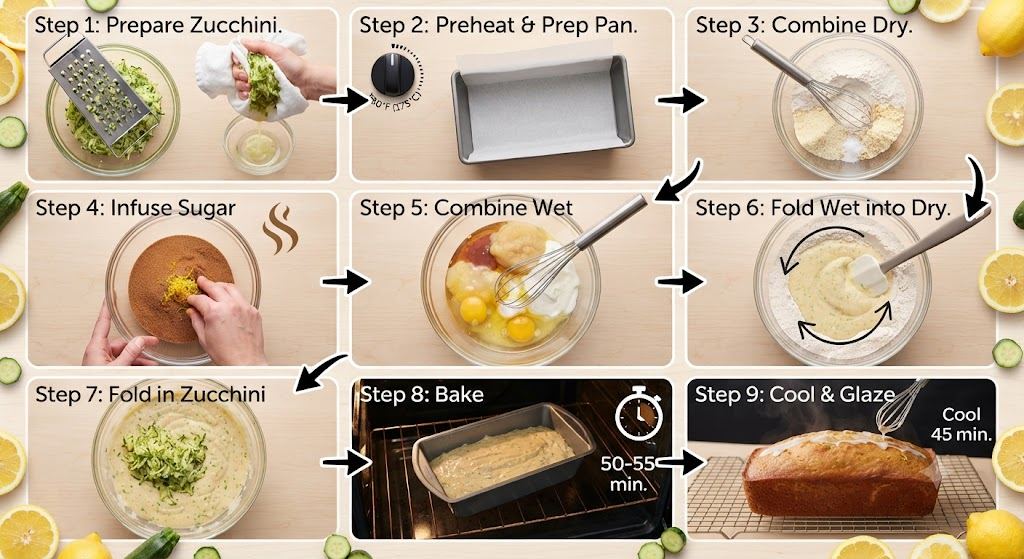
Step 1: Prepare the Zucchini. Grate the zucchini using the large holes of a box grater, then transfer to a clean kitchen towel. Gather the edges and squeeze firmly over the sink. You’ll feel the bundle shift from heavy and saturated to noticeably lighter as a steady stream of liquid releases — continue until it slows to just a few drops, which typically takes 30-45 seconds of firm squeezing.
Step 2: Preheat and Prepare the Pan. Preheat your oven to 350°F (175°C) and line a 9×5-inch loaf pan with parchment paper, leaving overhang on the long sides for easy removal.
Step 3: Combine the Dry Ingredients. In a medium bowl, whisk together the white whole wheat flour, almond flour, baking powder, baking soda, and salt. Set aside.
Step 4: Infuse the Sugar with Lemon. In a separate large bowl, combine the coconut sugar and fresh lemon zest. Rub the zest into the sugar with your fingertips for about 30 seconds — you’ll notice the sugar take on a slightly damp, fragrant quality as the citrus oils release, and a bright, intense lemon aroma will rise immediately from the bowl.
Step 5: Combine the Wet Ingredients. Add the maple syrup, applesauce, eggs, Greek yogurt, and fresh lemon juice to the lemon-sugar mixture. Whisk thoroughly for about a minute, until the mixture turns smooth, glossy, and pale, with small bubbles forming across the surface as air incorporates.
Step 6: Fold Wet into Dry. Pour the wet mixture into the bowl of dry ingredients and fold gently with a spatula in broad strokes, scraping from the bottom up. The batter will thicken and come together within 15-20 strokes. Stop as soon as no dry streaks remain.
Step 7: Fold in the Zucchini. Gently fold the well-drained zucchini into the batter using as few strokes as possible. You’ll see small flecks of green distribute evenly throughout the pale, lemon-scented batter, with the zucchini barely visible once fully incorporated — a sign of properly fine, even grating and thorough draining.
Step 8: Bake to Golden Perfection. Pour the batter into the prepared loaf pan, smoothing the top with a spatula. Bake for 50-55 minutes. Around the 35-minute mark, you’ll notice a bright, citrusy aroma filling the kitchen, layered over a warm, slightly nutty baked-good scent. The top of the loaf will deepen from pale to a rich golden brown, and the bread is done when a toothpick inserted into the center comes out clean or with just a few moist crumbs.
Step 9: Cool and Glaze. Let the loaf cool in the pan for 15 minutes, then use the parchment overhang to transfer it to a wire rack. Cool for at least 45 minutes before slicing or glazing. If using the optional glaze, whisk the powdered monk fruit sweetener with the lemon juice until smooth and drizzle over the cooled loaf — you’ll watch it settle into thin, glossy ribbons that set within a few minutes into a light, shiny finish.
Plating & Final Presentation
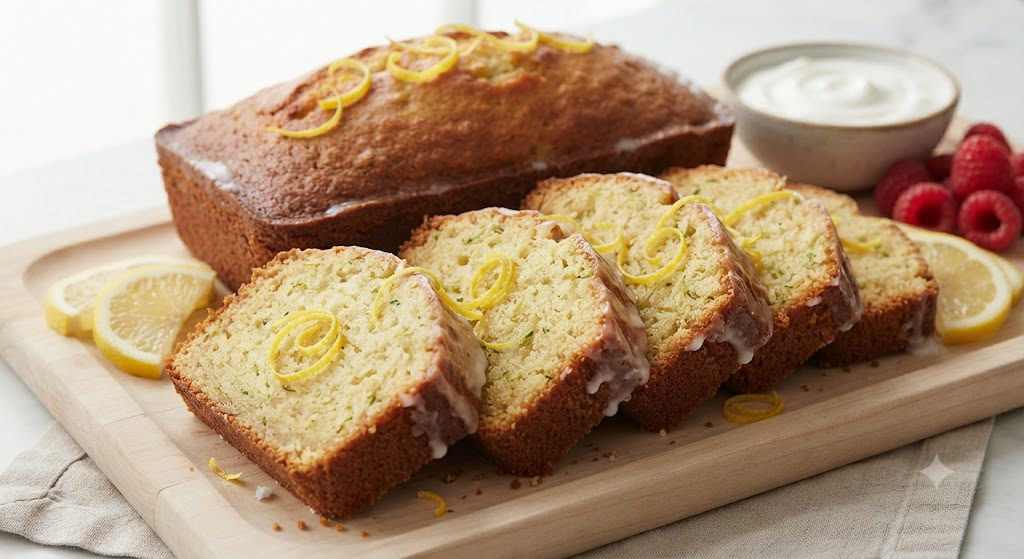
Slice the cooled loaf into thick, even pieces and arrange them slightly overlapping on a light-colored platter or wooden board, letting the pale golden crumb flecked with green zucchini take center stage against the bright white glaze drizzle. A few curls of fresh lemon zest and a thin lemon slice or two tucked alongside the platter reinforce the citrus theme visually. For a brunch spread, serve with a small dish of extra Greek yogurt or fresh berries on the side for a complete, refreshing presentation.
Frequently Asked Questions
Can I make this bread gluten-free? Yes, substitute the white whole wheat flour with a 1:1 gluten-free baking blend for similar results.
Can I make this dairy-free? Yes, substitute the Greek yogurt with a plain, unsweetened dairy-free yogurt alternative of similar thickness.
Why is my bread dense or gummy? This is almost always from insufficiently drained zucchini or overmixing the batter — both issues are easy to avoid with careful technique.
How should I store this bread? Store tightly wrapped at room temperature for 2 days, refrigerated for up to a week, or frozen for up to 3 months.
Can I add poppy seeds for a lemon-poppy seed variation? Yes, fold in 1-2 tablespoons of poppy seeds along with the zucchini for a classic flavor variation with added visual texture.
Final Nutrition Facts Table
Per slice (based on 10 slices total, without glaze)
| Nutrient | Amount |
|---|---|
| Calories | 150 kcal |
| Total Carbohydrates | 19 g |
| Dietary Fiber | 2 g |
| Sugars | 8 g (vs. ~16 g in traditional recipe) |
| Net Carbs | 17 g |
| Protein | 5 g |
| Total Fat | 6 g |
| Saturated Fat | 1 g |
| Sodium | 115 mg |
| Vitamin C | 10% DV |
| Vitamin A | 3% DV |
Compared to a traditional lemon zucchini bread, this version cuts added sugar by roughly 50% and reduces overall fat significantly through the applesauce-and-yogurt swap, while boosting fiber and protein — delivering a loaf with genuine, vibrant lemon flavor in every nutrient-forward slice.